
Fairy-Like Headpieces: Lace, Pearls, and Soft Royal Mood
A first-gallery look at fairy-like bridal headpieces—lace, pearls, silk blooms, and atmosphere-first styling that leaves construction details for a later pass.
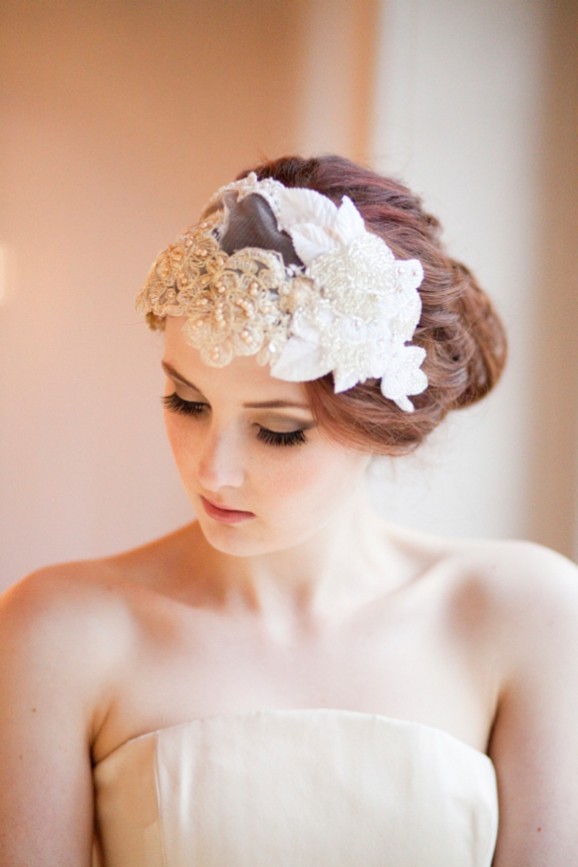
Fairy-tale dressing often begins above the eyes. Before the gown reads, before the bouquet settles, a headpiece decides whether the look feels merely formal or quietly enchanted. This collection gathers fairy-like headpieces in their softest register: lace, pearls, silk petals, feather tips, and light that behaves like mist. The mood is royal inspiration filtered through garden air — courtly without coronation weight, bridal without stiff pageantry.
Some royal inspiration for your fairy tale moments.
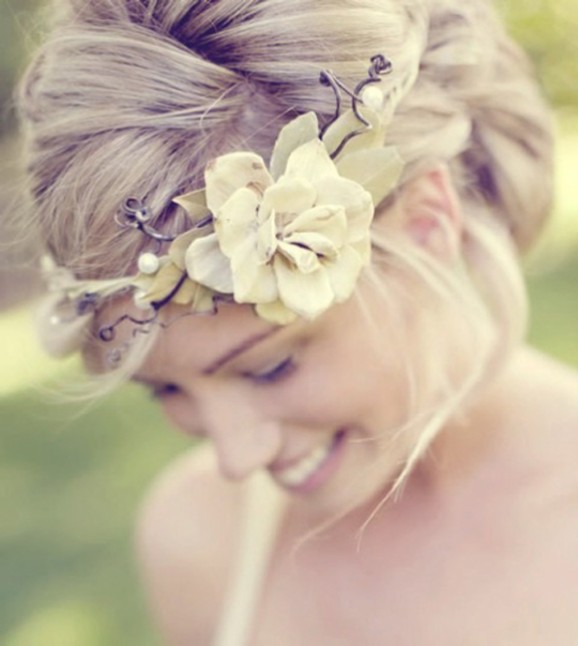
The opening portrait shows the formula at its calmest. An asymmetric lace-and-pearl piece rests against a low bun; cream beads catch studio light while fine netting lifts floral motifs so they seem to hover. Eyes nearly closed, strapless neckline plain — the ornament does the storytelling. That imbalance is intentional. Fairy styling thrives when the face stays soft and the headpiece carries the fantasy. You are not looking at a costume prop so much as a small weather of lace.
What “fairy-like” means in jewelry language
Fairy-like is easy to say and easy to overdo. In wearable design it usually means a handful of concrete choices rather than a pile of glitter:
- Materials that catch air — lace, tulle, feathers, silk petals.
- Organic silhouettes — blooms, vines, and wing shapes suggested more than literalized.
- Pearl and crystal scatter — dewdrop logic instead of one solid jewel block.
- Asymmetry or soft crowns — less parade regalia, more woodland court.
- Palettes near white and champagne — moonlight colors that photograph as glow.
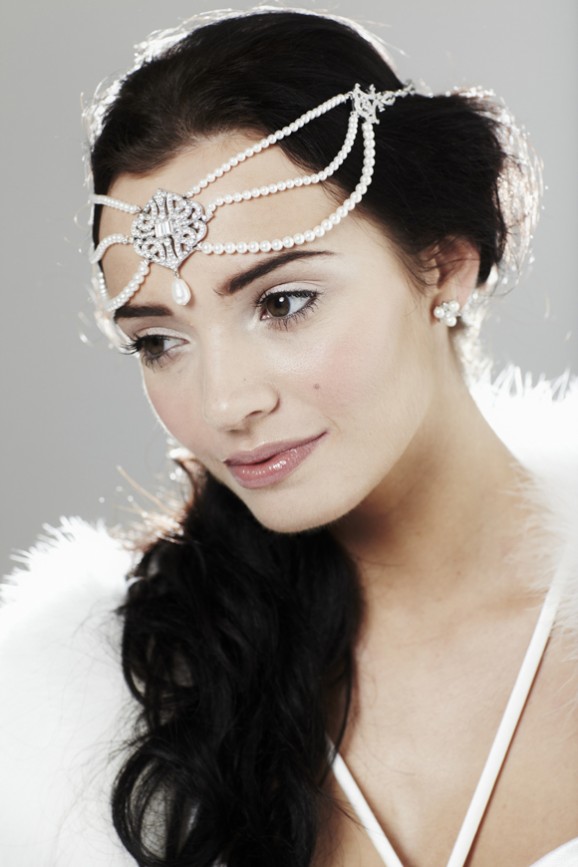
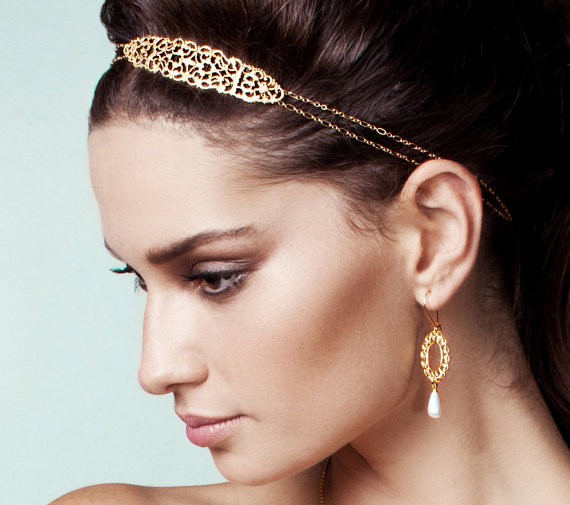
Royal inspiration enters through posture and pearl language, not through heavy metal hardware. A tiara can be fairy-like when it dissolves into flowers. A side comb can feel royal when pearls are ranked with quiet discipline. The court is imaginary; the manners are still elegant. That mix — folklore softness plus ceremonial polish — is why these looks work for weddings as easily as for styled portraits.
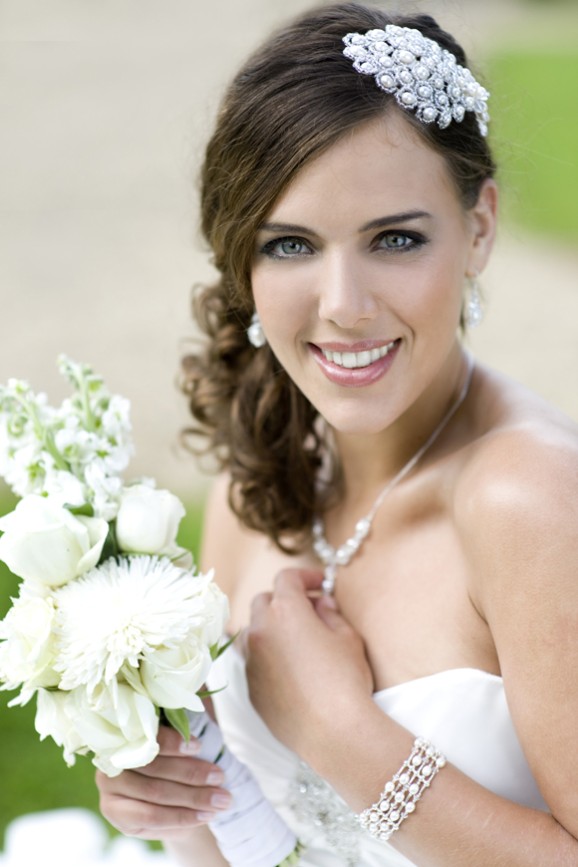
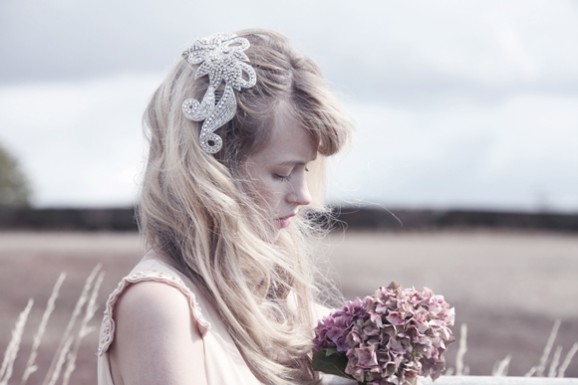
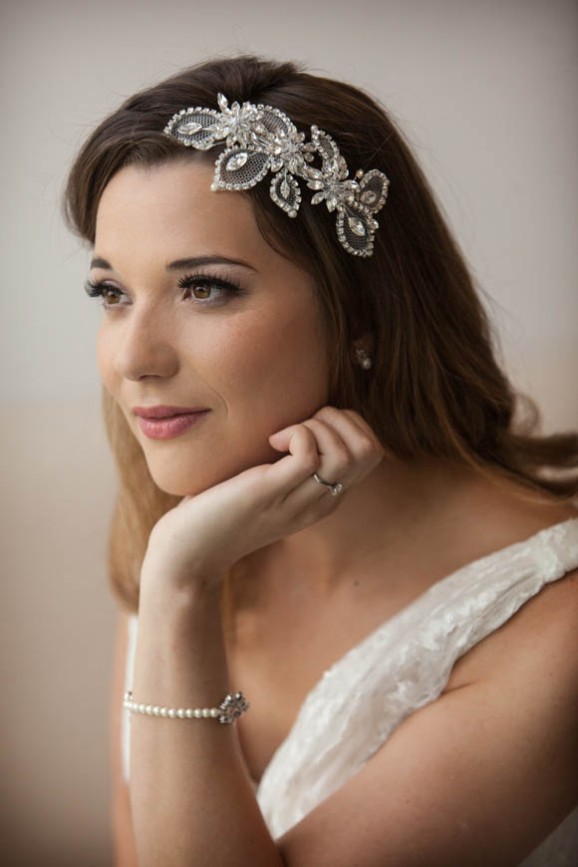
Outdoors, a silver floral cluster pinned into loose waves shows another register: smiling, bouquet in hand, pearl earrings and bracelet echoing the headpiece. Here the fairy note is bridal daylight rather than twilight hush. The same vocabulary — pearls, filigree, white blooms — simply meets sun instead of a softbox. Matching jewelry matters. Multi-strand pearls and teardrop earrings repeat the dewdrop logic of the headpiece without competing for the same vertical drama. When the bracelet, necklace, and hair ornament speak one dialect, the whole figure reads as composed rather than decorated in pieces.
Atmosphere first
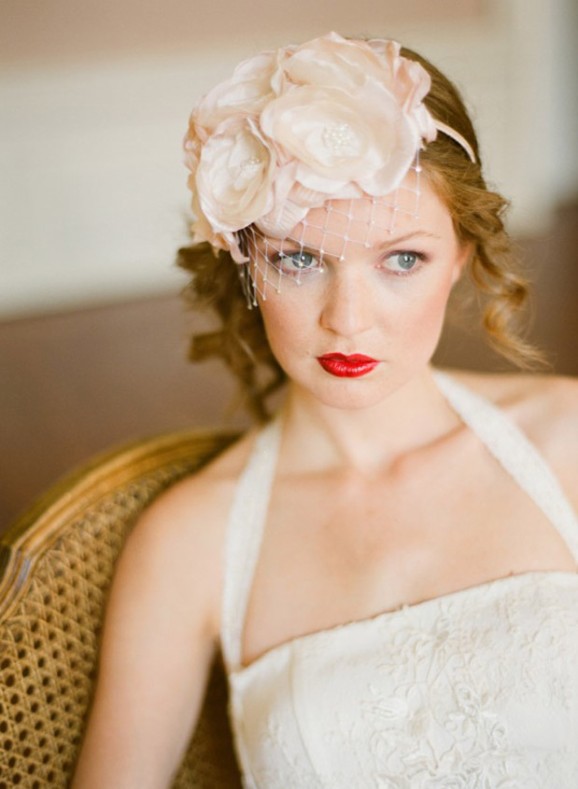
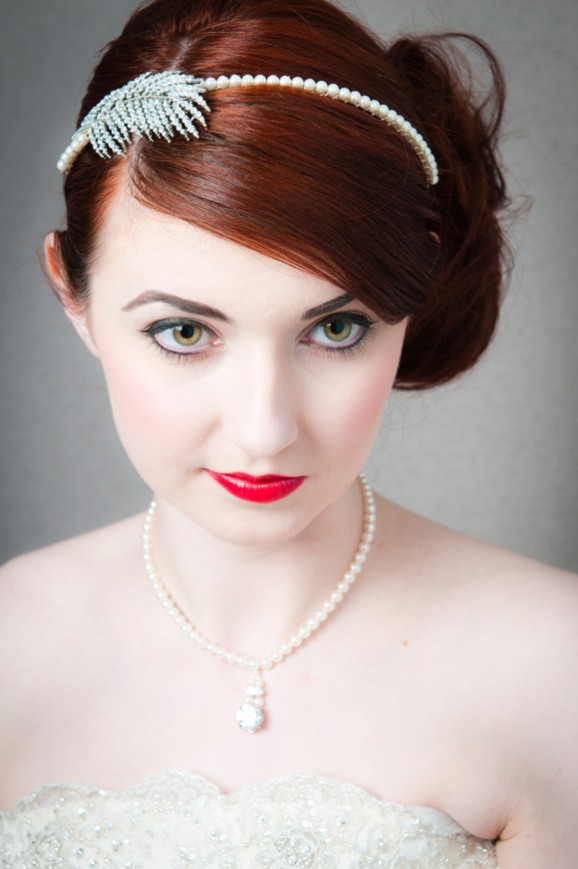
These images sell feeling before they sell construction. That is the right order for a first gallery through fairy headpieces. You notice the downturned glance, the red lip against cream petals, the way crystals drip past a cheek like frozen rain. Only afterward do you wonder how a band is wired or how lace is stiffened. Atmosphere is the product; hardware is the means.
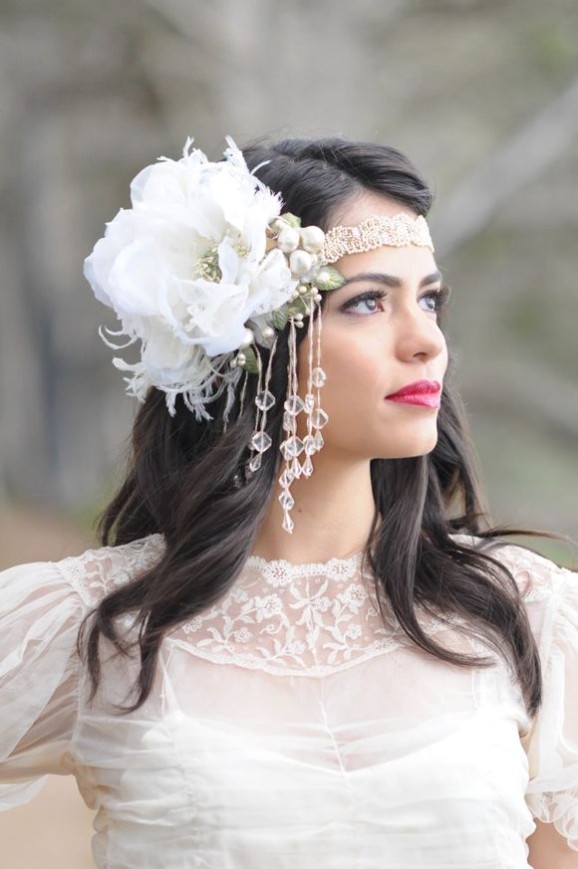
A wide lace brow band crowned with a full silk bloom, feathers, green leaves, and hanging crystal strands is almost a weather system for the face. Profile pose, vintage lace neckline, blurred garden behind — the headpiece becomes climate. That climate is what people mean when they say a look feels fairy-tale. The object is jewelry; the effect is environment. Occasional green leaves hint at garden origin without turning the piece into a literal wreath of twigs. Suggestion beats costume. A single leaf cluster can imply forest; a full vine helmet can tip into theater props.
Hair as the second half of the design
No fairy headpiece works alone. Hair is the mounting board. Low buns create a calm pedestal for asymmetric lace. Loose waves let a side cluster nest without looking glued on. Soft parts and visible forehead bands borrow from historical circlets while staying bridal.
When hair is too sleek and severe, pearl scatter can tip into evening glamour instead of woodland romance. When hair is too messy, delicate lace disappears into the texture. The sweet spot in these portraits is controlled softness: enough polish for ceremony, enough movement for myth. Think of the hairstyle as negative space that frames the ornament the way a mat frames a print. If the mat fights the art, neither wins.
Color stories that keep the spell intact
Nearly every piece here lives in white, ivory, champagne, and soft metallics. That narrow range is not a lack of imagination; it is a lighting strategy. Pale ornaments bounce ambient light back toward skin and eyes. Darker stones would puncture the fairy register and push the look toward nightclub sparkle.
Champagne gold and silver filigree behave differently under daylight versus tungsten, which is why outdoor portraits and studio portraits in this set feel related but not identical. Daylight silver reads crisp and garden-fresh. Warm indoor light turns cream pearls into candle tones. Choosing a headpiece partly means choosing which light you expect to live in for the photographs that matter — aisle light, garden light, or evening reception glow.
Occasions that suit this softer court
These headpieces belong most naturally to weddings, vow renewals, styled portrait sessions, and midsummer parties where dress codes allow romance without apology. They also suit theatrical shoots that want fairy energy without foam wings. Proportion is the practical rule: if the gown is already heavily beaded, choose a lighter head ornament; if the dress is plain, let the headpiece bloom.
Neckline coordination matters as much as hair. Strapless and soft scoop necks leave a clear runway for cascading crystals. High lace collars can compete with brow bands unless one element stays quieter. Bouquets should echo the headpiece’s scale — white roses and stock beside pearl clusters feel continuous; a huge tropical spray can erase the face ornament in photographs. The whole upper third of the body is one composition. Treat it that way and the fairy mood holds.
How to look at this set
Move through the portraits with mood questions before maker questions:
- Does the piece feel like dawn or midnight?
- Does it sit like a secret or a proclamation?
- Does it borrow more from royal pearl language or from flower-crown folklore?
- Would it still read if the dress were removed from the frame?
- Does the hair support the ornament, or does it compete?
Those answers help you choose a direction for a real event without turning the search into a hardware catalog. There will be room, in a later gallery, for denser construction talk — wiring, veil joins, weight balance, and the more architectural ornaments that push luxury into sculptural territory. Here the focus is the first enchantment: faces framed by lace and light, headpieces that make ordinary hair look borrowed from a quieter kingdom. If one portrait stops you, ask which material did the stopping — pearl, petal, feather, or crystal drip — and start your own search from that single cue.

Comments
Continue reading
Fairy-Like Headpieces, Part 2: How to Wear Crystal, Floral, and Deco Pieces
Beyond the royal gallery: candlelight tests for crystal clusters, outdoor vine crowns, pearl dangles for bridal portraits, and Art Deco forehead pieces—plus hair and veil pairing rules.
Attic Bathroom Design Ideas: Light, Layout, and Roof-Friendly Fixtures
Design ideas for converting an attic into an extra bathroom—working with slopes, skylights, wet-zone materials, eaves storage, and fixture placement.
Ladder Shelving Repurpose Ideas: DIY Bookcases, Dividers & More
Turn an old ladder into shelving, a room divider, towel rack, or narrow desk—practical DIY steps, safety checks, and styling tips with photo ideas.