
Fairy-Like Headpieces, Part 2: How to Wear Crystal, Floral, and Deco Pieces
Beyond the royal gallery: candlelight tests for crystal clusters, outdoor vine crowns, pearl dangles for bridal portraits, and Art Deco forehead pieces—plus hair and veil pairing rules.
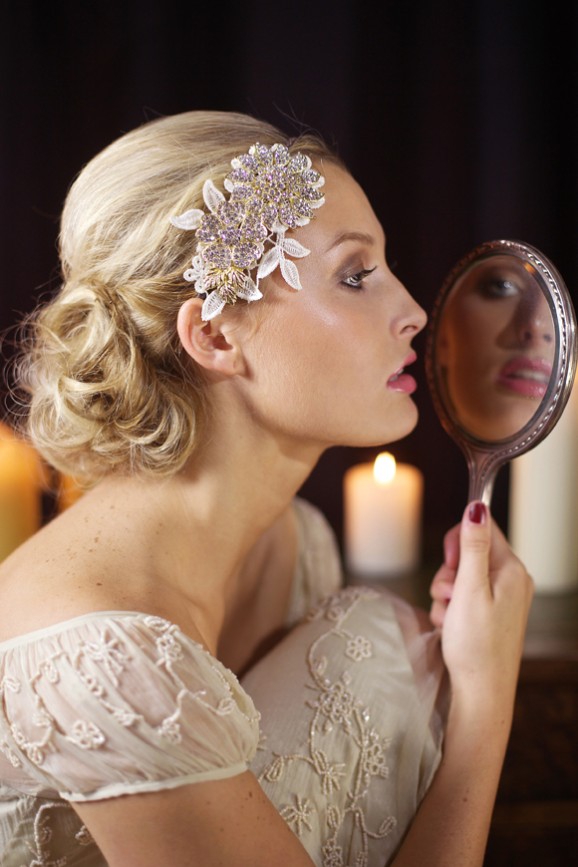
If the first gallery was about royal silhouettes—how a crown or tiara announces itself from across a room—this second chapter is about how fairy-like headpieces actually behave once they leave the mood board: how they sit in hair, how they catch candlelight versus daylight, and which dress necklines they negotiate with. The pieces below are less about “more sparkle” and more about fit, scale, and occasion.
Browse the earlier inspiration set here: Fairy Like Headpieces. Use this page when you already love the fantasy and need to decide how to wear it.
Candlelight tests crystal better than boutique LEDs
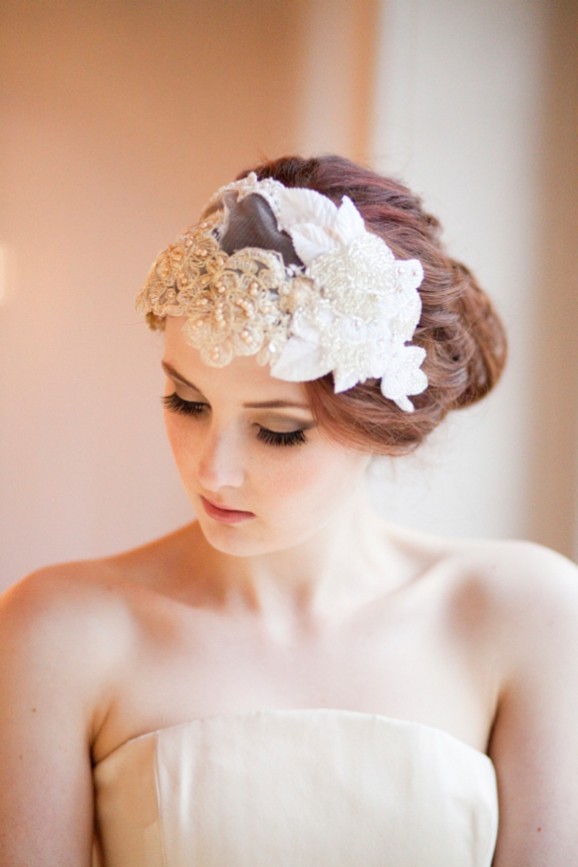
A side-mounted cluster of crystal-and-lace florals can look merely pretty under flat store lighting and then turn cinematic under real candles. Warm flame brings out lavender and pale-pink cast in rhinestones that cold LEDs flatten. If your ceremony or dinner includes candlelight, try the headpiece in a dim room with a few pillar candles before you commit—exactly the kind of setting where a low bun and a hand-mirror profile shot suddenly make sense.
Scale matters as much as sparkle. Large circular floral clusters sit best on one side of an updo, not centered like a traditional tiara. That asymmetry is what reads “fairy” rather than pageant: the eye travels from face to shoulder, then back. Pair it with sheer embroidered sleeves or soft ivory fabric so the headpiece stays the brightest surface in the frame.
Outdoor floral crowns want living texture, not plastic shine
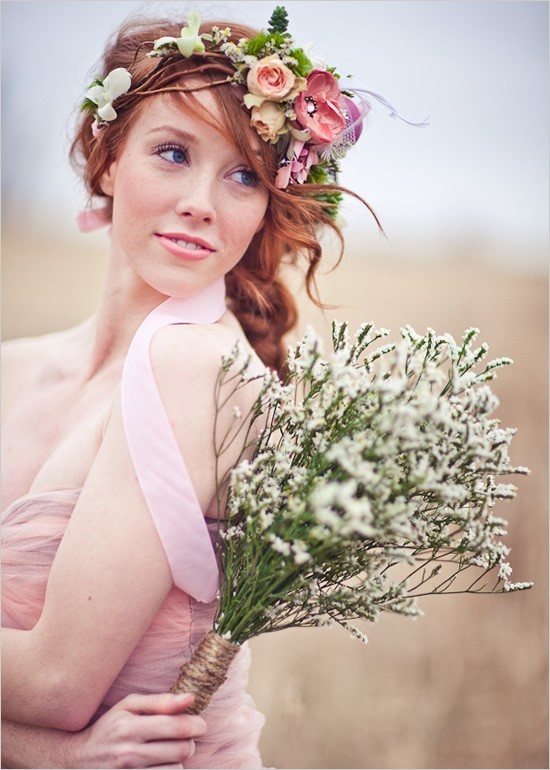
A vine-and-twig crown with peach roses, a dark-centered anemone, and small orchids belongs outdoors. Soft overcast light and tall dry grass flatter loose braids and wildflower bouquets wrapped in twine. This is the opposite job from crystal clusters: here the headpiece should feel gathered from the landscape, not mined from a jewelry case.
When you choose a floral crown, check three practical points:
- Weight: wire and dried stems can dig after an hour; ask for a padded band or soft ribbon ties.
- Color temperature: peach and dusty pink against auburn hair glow; pure white can bleach out in midday sun.
- Bouquet echo: either match your blooms or contrast deliberately—identical flowers in hair and hands often look costume-y in photos.
Fairy-like, here, means slightly imperfect: wisps of hair, a side glance over the shoulder, fabric that moves. Over-polishing kills the spell.
Pearl dangles for bridal close-ups
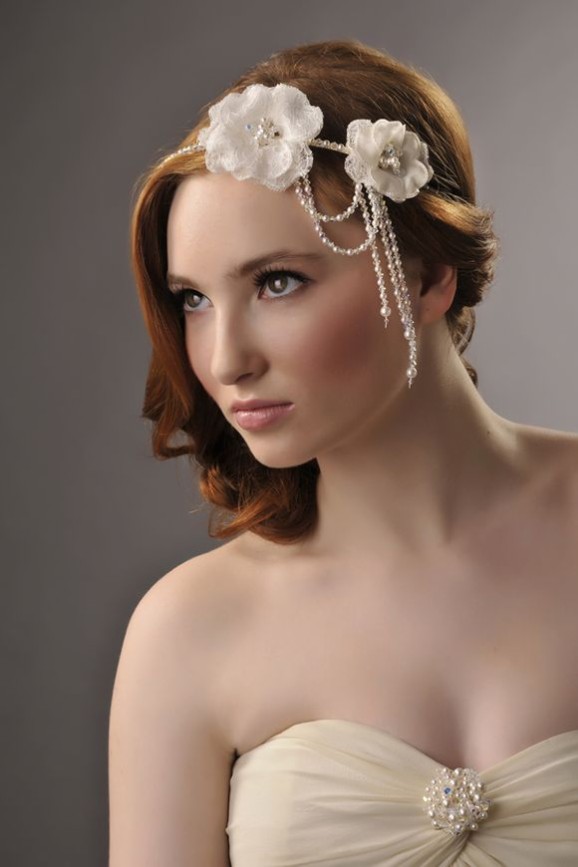
Studio portraits reward quieter construction: lace flowers on a slim crystal band, pearl loops, and longer strands that end in droplet crystals. These pieces photograph best in three-quarter view because the dangles need space to fall along the cheek and neck. A deep side part and vintage waves keep the forehead clear so the band reads as jewelry, not clutter.
If your gown already carries a large pearl-and-crystal brooch at the bodice, keep the headpiece delicate. Two loud focal points—forehead and chest—split attention. Fairy detail works when one zone leads: either the headpiece whispers while the bodice sparkles, or the reverse.
Movement test: turn your head left and right slowly. Strands should swing without tangling in earrings. If they catch, shorten them before the day, not after the first aisle photo.
Art Deco forehead pieces for evening glamour
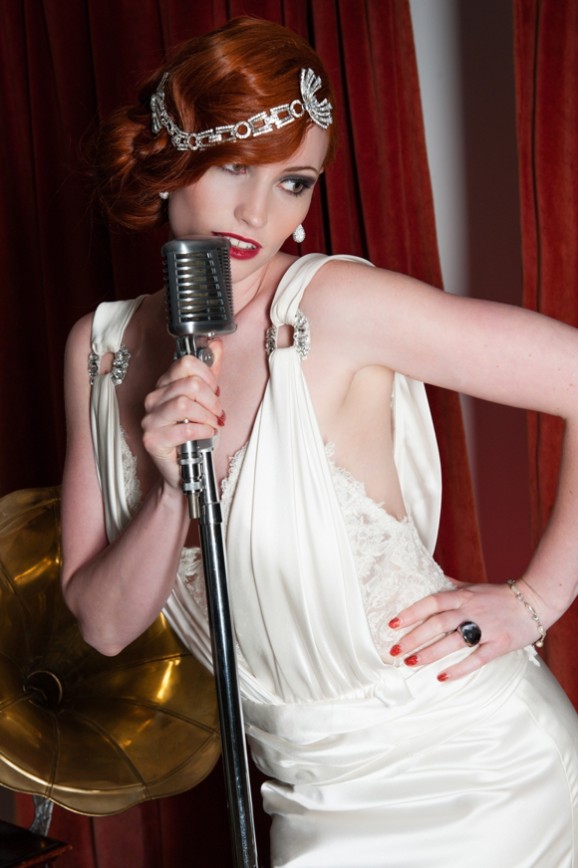
Not every fairy-like headpiece is woodland soft. A geometric silver forehead piece with fan-like crystal work belongs to evening: satin gowns, velvet curtains, chrome microphones, gramophone horns—the vintage performance mood. Bold red lip and a structured updo complete the story; soft pink makeup undercuts the Deco geometry.
This style sits differently on the head. It crosses the forehead and anchors into the hairline, so comfort and security matter more than floral crowns. Use clear pins and a light mist of spray where metal meets hair. Avoid heavy side earrings that compete with the forehead line; small drops or studs keep the silhouette clean.
Hair architecture decides whether the piece looks intentional
The same accessory can fail or succeed based on the hairstyle under it:
- Low bun or chignon: best for large side clusters and crystal florals; leaves the temple and crown free.
- Loose side braid: best for vine crowns and outdoor florals; soft face-framing pieces feel natural.
- Side-parted waves: best for pearl dangles and slim bands; shows the jewelry path.
- High vintage updo: best for Art Deco forehead pieces; gives the metal a stage.
Bring the headpiece to the hair trial—not a photo of it. Pins, combs, and elastic loops behave differently on your hair density than on a mannequin. If the stylist needs more than a few anchors, the piece may be too heavy for your intended style.
Matching neckline, veil, and jewelry
Fairy-like does not mean stacking every romantic signal. Use a simple pairing rule:
- High sparkle headpiece → quieter earrings, simpler necklace (or none).
- Floral crown → maybe a thin gold chain or botanical earrings; skip a heavy collar.
- Pearl dangles → pearl or crystal studs only; let the strands lead.
- Forehead Deco piece → statement ring or bracelet is fine; keep the neckline of the dress architectural, not frilly.
Veils complicate everything. A cathedral veil over a large side cluster can crush or hide it. Birdcage and shoulder-length veils usually play better with forehead pieces and slim bands. If you want both a dramatic veil and a dramatic headpiece, plan two looks—ceremony and reception—rather than forcing both at once.
A quick wear checklist before you buy
- Can you wear it for two hours without adjusting every five minutes?
- Does it still look balanced when you turn in profile?
- Will rain, wind, or dancing destroy it (especially fresh florals)?
- Does it photograph in both warm and cool light without looking fake?
- Would you still choose it if nobody else commented—only you and the mirror?
The first gallery answers “what fantasy looks like.” This one asks whether that fantasy will stay on your head, in your light, and in proportion to the dress you already love. Try the candlelit profile, the field braid, the pearl swing, and the Deco forehead line in person—then keep the one that still feels like you when the photographer steps back.

Comments
Continue reading
Fairy-Like Headpieces: Lace, Pearls, and Soft Royal Mood
A first-gallery look at fairy-like bridal headpieces—lace, pearls, silk blooms, and atmosphere-first styling that leaves construction details for a later pass.
Attic Bathroom Design Ideas: Light, Layout, and Roof-Friendly Fixtures
Design ideas for converting an attic into an extra bathroom—working with slopes, skylights, wet-zone materials, eaves storage, and fixture placement.
Ladder Shelving Repurpose Ideas: DIY Bookcases, Dividers & More
Turn an old ladder into shelving, a room divider, towel rack, or narrow desk—practical DIY steps, safety checks, and styling tips with photo ideas.