
DIY Personalized Door Mats: Paint, Stencils, and Porch Personality
Turn a plain coir or rubber blank into a custom door mat with paint, stencils, lettering, seasonal motifs, and durable outdoor finishes that still scrape dirt.
A door mat is the first surface guests touch with their shoes and the last thing you see when you leave. Store-bought mats do the job; a personalized one does the job and signals that someone at this address likes making things. Paint, stencils, lettering, seasonal motifs, and even stone or rope constructions can turn a plain coir or rubber blank into a mat that matches your porch personality without a custom-order price tag.
The roundup spirit behind personalized door-mat projects has always been the same: start with a tough base, add a design that survives weather and foot traffic, and keep the message short enough to read in two steps.
Choose a base that can take abuse
Coir (coconut fiber) mats grip dirt and accept paint reasonably well. Rubber and rubber-backed mats shed water and suit covered entries. Indoor-outdoor carpet blanks work for apartment hallways where true outdoor coir might shed. Avoid thin decorative rugs as outdoor mats—they curl, stain, and trap moisture against wood thresholds.
Size matters. The mat should fit the door swing and leave a stable landing when the door is open. A mat that sticks out into a walkway becomes a trip hazard. Measure the width of your door and buy a blank that is slightly narrower, with enough depth for two footfalls.
If you rent, choose a design you can reverse or cover later. Painted coir is hard to undo; a stenciled rubber mat or a removable layered design is kinder to future you.
Paint and stencil techniques that survive shoes
Outdoor acrylics and porch paints flex better than indoor craft paint. For coir, dry-brush or stipple rather than flooding the fibers—too much paint mats the pile and reduces scraping power. Let each color dry before the next. A clear outdoor sealer helps, but expect touch-ups every season; door mats live hard lives.
Stencils keep lettering crisp. Hold them down with spray adhesive made for stencils or with weights at the edges. Dab paint with a foam brush; brushing side-to-side forces pigment under the stencil. Short words work best: HELLO, WELCOME, the house number, a family name, or a dry joke that still makes sense after the tenth guest reads it.
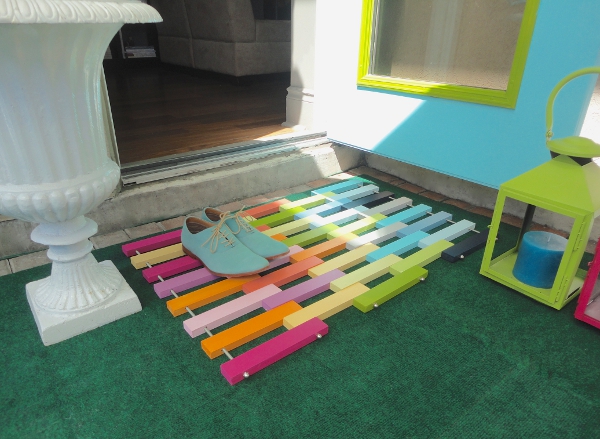
Color-block mats—like the bold graphic field in the photo above—rely on large shapes more than tiny illustration. Mask big zones with tape, paint, remove tape carefully, and seal. High contrast (deep teal on natural coir, black on cream rubber, coral on charcoal) reads from the sidewalk. Low contrast looks muddy once dirt arrives.
Humor, geek references, and seasonal play
Funny mats work when the joke is visual and quick: a false perspective, a fake warning, a fandom nod that does not require a paragraph. Keep text large. Guests should not need to squat to decode a punchline in six-point font.
Halloween and holiday mats are perfect temporary projects. Painted witches’ legs “stuck” under the door, candy-corn borders, or simple pumpkin silhouettes can be done on an inexpensive blank you store the rest of the year. Involve kids with sponge shapes and washable outdoor paints; adults handle lettering and sealing. When the season ends, flip the mat to a plain side if you painted only one face, or retire it to the garage.
Geeky welcome mats—pixel hearts, simple icon silhouettes, coordinate grids—age better if you avoid licensed logos you do not own. Original iconography keeps the mat personal and sidesteps awkward trademark issues on a porch that faces the street.
Beyond paint: stone, rope, and mixed media
Stone welcome mats arrange flat pebbles or mosaic tiles on a sturdy outdoor board or in a shallow tray with outdoor adhesive. They look sculptural and drain well if gaps remain between stones. Weight is the trade-off: stone mats are heavy to move for cleaning and can scratch soft decking if dragged. Lift, do not slide.
Rope or knot mats use outdoor rope coiled and sewn or glued into an oval. They feel nautical and scrape mud surprisingly well. Use synthetic rope that tolerates rain; natural rope mildews in damp climates unless it dries fully between storms.
Layered looks—painted coir on top of a thin non-slip pad—protect floors inside apartment doors. Never trap moisture against hardwood; if the entry is wood, choose a mat that breathes or lift it weekly to let the floor dry.
Lettering, house numbers, and brand-of-home cues
House numbers on a mat help delivery drivers and guests on dark streets. Use a stencil font with open shapes; closed, ornate scripts fill with dirt and become unreadable. Reflective paint is optional and mostly useful if your porch light is weak.
Names and monograms feel personal. Initials in a simple block letter often look cleaner than a full last name in script. If privacy matters, skip the surname and use a symbol, a color story, or a non-identifying phrase instead.
Match the mat to the door color or hardware finish for a pulled-together entry. A black door loves a mat with black graphics; a red door can carry a mat with a single red accent so the whole threshold does not shout.
Care, safety, and longevity
Shake mats weekly. Hose rubber mats; beat coir mats outdoors and let them dry fully before returning them to a covered entry. Mold under a constantly wet mat damages thresholds and smells like a basement. In snowy climates, a second utilitarian scraper mat in winter and a decorative mat in fair weather saves your painted masterpiece.
Edges should lie flat. Curling corners are trip hazards—trim, weight, or replace. Keep mats clear of heater vents and do not block egress. If your building has fire or HOA rules about hallway items, keep indoor mats low-profile and non-flammable where required.
- Buy a blank sized to the door.
- Sketch the design on paper at full size first.
- Paint in thin layers; seal when dry.
- Test the joke or phrase on a housemate before committing.
- Plan a cleaning habit so the design stays visible.
Start with one strong graphic idea—color blocks, a house number, or a short welcome—and finish that mat before inventing a second theme. A porch with one clear handmade signal beats a pile of half-painted blanks in the shed. When the paint is dry and the first guest wipes their feet without noticing the work you did, the mat is doing its quiet job; when they smile at the lettering, it is doing the fun one too.

Comments
Continue reading
DIY Dollar Store Decoration: Lamps, Vases, Mirrors, Sconces, and Candle Holders
Turn dollar-aisle glass, mirrors, and candle holders into lava-style light jars, enamel vases, a silverware starburst mirror, stone-look sconces, and finished candle bases.
How to Make Mason Jar Candles: Pour, Tint, Hang, and Gift
Clean jars, size the wick, pour wax safely, then branch into coloured glass, hanging lanterns, lavender scents, remelted stubs, floating lights, and favor-ready finishes.
Colorful Paper Lantern DIY: Garlands, Flowers, Geometry, and Chandeliers
Build festive paper lanterns with safe LED lighting—garlands, floral skins, geometric overlays, and clustered chandeliers—using materials and a build order that actually hold up.