
The Digital Art Debate: Talent Shows in Any Medium
Why digital art still faces skepticism, how training and craft persist on screens, and what prizes like the 2016 Lumen Award say about legitimacy.
Digital art has a public-relations problem. Because the work is made with computers, tablets, and software, some viewers still treat it as less serious, less original, and less creative than painting, drawing, or sculpture done only with traditional tools. Similar suspicion once trailed photography and, in another register, forms of electronic music. The tools look new; the doubt sounds old.
That doubt is not entirely invented. The same software that enables ambitious work also makes it easy to publish shallow results at high volume. Loop-based tracks, heavy-handed filters, and template-driven images flood feeds every day. When gimmicks are cheap, audiences learn to flinch. The mistake is treating every digital file as if it belongs to that pile.
Where the suspicion comes from
Traditional media have friction built in. Oil paint dries slowly. Marble resists the chisel. A bad drawing on paper still costs time and materials, so fewer empty experiments reach a wide audience. Digital tools lower that friction. Undo is infinite. Samples are plentiful. A competent interface can hide weak draftsmanship behind effects.
Critics are right to call out work that substitutes presets for invention. They are wrong to assume that every artist who opens Photoshop, a 3D package, or a pressure-sensitive tablet is taking a shortcut. Ease of distribution is not the same as ease of mastery. A piano is also “just buttons” until someone learns to play it.
Photography offers a useful parallel. When cameras became widespread, painters and critics argued about whether a machine could make art. The argument faded not because cameras became magical, but because photographers demonstrated intention, craft, and vision that could not be reduced to the shutter click. Digital art is still living through a version of that debate—louder now because anyone with a laptop can publish overnight.
Training does not vanish when the canvas is a screen
Many digital artists train in conventional drawing, painting, and composition before or alongside their software skills. Art-school foundations—gesture, value, color theory, anatomy, perspective—still apply when the brush is a stylus. Some practitioners remain largely self-taught; that path exists in every medium. What separates durable work from novelty is not the brand of tablet. It is whether the maker understands light, emotion, structure, and editing well enough to make choices rather than accept defaults.
Software can amplify skill or conceal its absence. Minimal processing can still yield striking results when the underlying drawing or design is strong. Heavy processing can also be the point—glitch, collage, generative systems—when the artist is using those operations as language rather than camouflage. The fair question is never “Was a computer involved?” It is “What decisions did the artist make, and do those decisions hold up under attention?”
Craft, feeling, and the work that moves people
Serious digital artists walk many of the same roads as painters and sculptors: study, revision, dead ends, and the long effort to make an image or experience that comments on human nature, power, memory, or joy. Tools change the physical steps. They do not automatically change the ambition. Hobbyists can enjoy new gadgets without that ambition; professionals and dedicated independents treat software as a medium with its own physics to learn.
When digital work succeeds, it does what strong art always does. It arrests attention. It makes a feeling precise. It leaves a residue after the screen goes dark. Magazines and online galleries regularly showcase pieces that could not have been made with a single traditional process—layered photographic constructions, 3D environments, interactive pieces—yet still read as authored visions rather than demos. The medium is visible; the authorship is, too.
The Lumen Prize and institutional recognition
One clear signal that digital practice has a serious public life is the Lumen Prize, an international award dedicated to art created digitally. By the mid-2010s it was already acting as a gathering point for the field—part competition, part touring exhibition platform—founded to celebrate imagination and technical invention rather than treat the computer as a guilty secret.
In 2016, its fifth year, the prize drew hundreds of submissions from dozens of countries. Category awards spanned still image, moving image, interactive work, web-based pieces, games, 3D and sculpture, and mixed or virtual reality. The Gold Award that year went to Italian collaborators Fabio Giampietro and Alessio De Vecchi for Hyperplanes of Simultaneity, a project that used a VR headset to push painted scenes into navigable, destabilizing space—an explicit bridge between traditional painting and new display technology.
Juries have included curators and directors from major museums and art institutions, not only software specialists. That matters for the legitimacy argument. When people steeped in conventional art histories are willing to judge digital work on imagination, originality, and impact, the medium is no longer waiting politely outside the building. It is already in the conversation, even if popular skepticism lags behind.
What “talent” looks like when tools keep changing
Talent in any medium shows up as control plus surprise: the artist can do what they intend, and they intend something worth noticing. In digital art that may mean line quality on a tablet, a custom brush set built for a personal style, code that generates form under constraints the artist designed, or an interactive system that responds to viewers without collapsing into a gadget demo.
It also means knowing when not to use a feature. Restraint is a skill. The artist who can achieve a quiet portrait with limited effects may be demonstrating more judgment than the artist who stacks every filter available. Traditional media teach restraint through scarcity. Digital media require the artist to invent scarcity on purpose.
Viewers can train their eyes the same way they learned to separate tourist snapshots from strong photography. Look for coherent light. Look for composition that feels chosen. Look for emotional specificity rather than generic “wow.” Ask whether removing the flashiest effect would leave anything standing. If the answer is yes, you are probably looking at craft. If the answer is no, you may be looking at a tutorial outcome—and tutorials are not the whole medium.
Time is the long jury
Every established art form was new once. Oil painting, printmaking, photography, video—each attracted defenses and dismissals before the culture decided which works would last. Digital art will face the same slow sorting. Pieces that still matter decades from now will not matter because they were made on a computer. They will matter because someone used the computer to say something durable.
Until that long jury finishes its work, a fairer short test is available. Look at the dedication on display: study, revision, risk, and the refusal to confuse a tool with a vision. Judged by commitment and by results that move people, digital artists stand in the same arena as makers whose materials never needed a power cable.
So the next time a feed serves both a lazy filter collage and a carefully built digital world, resist the urge to average them. Dismiss the empty work. Take the serious work seriously. The medium did not erase talent. It only made the difference between talent and noise harder to ignore—and easier to scroll past if you are not paying attention.

Comments
Continue reading

Funny Animal Signs That Warn People (While Animals Ignore Them)
From a seagull on a no-birds disc to classic zoo and park ironies—why animal warning signs get funny, and what the rules are still for.

How to Find Local Amenities on Vacation: Mechanics, Haircuts & More
Locate trustworthy local services and everyday spots while traveling or settling in—using publications, reviews, map apps, neighbor tips, and low-pressure exploration.
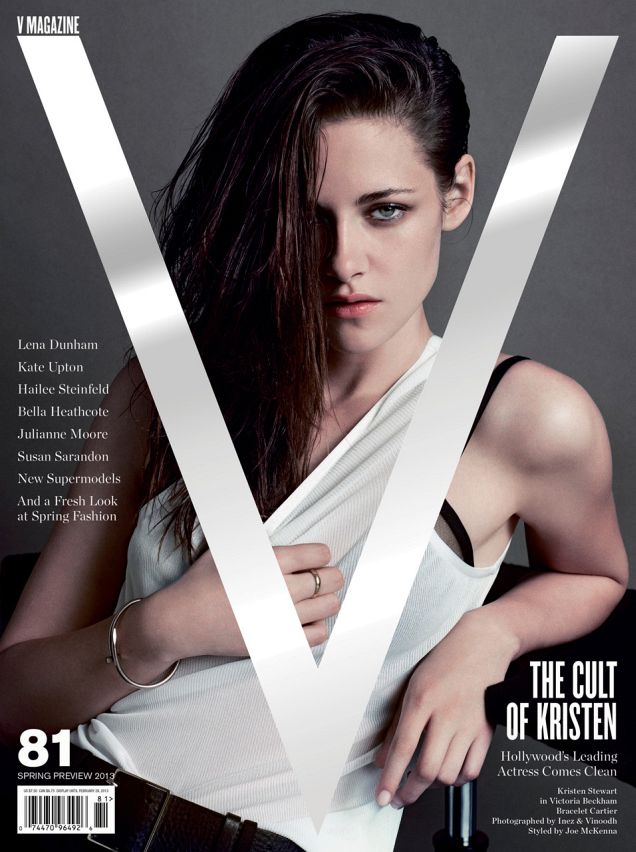
Kristen Stewart for V Magazine, Spring Preview 2013
V81’s Wild at Heart cover story—Kristen Stewart shot by Inez & Vinoodh, styled by Joe McKenna, in pale minimal spring glamour.