
3D Wooden Sculptures by AJ Fosik
AJ Fosik’s handmade wooden animal sculptures—layered, painted, totem-like beasts that mix folk craft, taxidermy display, and cryptic symbols.
AJ Fosik builds animals that refuse to sit quietly on a shelf. His handmade wooden creatures—layered, painted, bristling with teeth, claws, and cryptic symbols—look like folk-art taxidermy dreamed by someone who grew up on signage, street walls, and ritual objects. They intrigue because they are beautiful; they provoke because they borrow the visual authority of totems and trophies while twisting the meanings those forms usually carry.
By the early 2010s, when galleries and illustration magazines were circulating his work widely, Fosik had already locked in a signature language: hundreds of cut wood pieces assembled into fur, feathers, and facial architecture, then finished in high-chroma color. Wall-mounted busts echo hunting-lodge displays. Freestanding figures claim floor space like idols. Either way, the first impression is physical density—craft you can count in facets, then forget as soon as the creature’s stare takes over.
Detroit roots, Parsons training, and a hand-built method
Born and raised in Detroit, Fosik studied illustration at Parsons School of Design in New York, graduating in the early 2000s. Early practice included two-dimensional work and the graphic urgency of street art. Woodworking became the channel that made his voice unmistakable. Profiles describe a largely hand-built process: cutting, painting, and assembling piece by piece, often without leaning on digital fabrication as the primary author. Lattice-like layering creates the illusion of hide or plumage; varnish and paint lock the color into something closer to enamel signage than rustic raw timber.
That labor is not hidden. Up close, you see seams, overlaps, and the decision rhythm of someone solving a three-dimensional puzzle one shingle at a time. From across a room, the creature resolves into a single aggressive silhouette. The dual read—construction and character—is part of the pleasure, especially for illustrators who think in both line and mass.
Fosik has shown across the United States and internationally, with press in outlets such as Hi-Fructose. In 2011 he designed the cover art for Mastodon’s album The Hunter, a crossover moment that pushed his beasts beyond gallery regulars into a wider rock and design audience. Later projects, including collaborations in which other artists customized his trademark figures, extended the same creature language into dialogue with fellow makers. Portland has often been cited as a base later in his path, but the work’s sensibility still carries Detroit’s tough graphic clarity.
Animals that behave like uneasy gods
The subjects are animals and anthropomorphized beings, yet the content is rarely natural history. Gallery statements around Fosik’s practice talk about empathy and synthesis, about totems and fetishes, about the chaotic feel of existence. Theological icons appear less as devotion than as raw material to be rearranged. The creatures can read like a cast of invented anti-idols: fierce, colorful, and slightly blasphemous in how casually they wear sacred posture.
Cryptic symbols—geometric marks, ritualizing gestures, exaggerated eyes and maws—keep interpretation open. Viewers project stories; Fosik has noted pleasure in that multiplicity. One person sees carnival. Another sees shrine. Another sees a joke about masculinity and trophies. The work holds all three without collapsing into a single slogan, which is why the sculptures repay second and third looks.
Taxidermy is a key reference, especially in wall-mounted pieces that occupy the same psychological niche as a stag head above a mantel. Traditional taxidermy freezes a kill as status. Fosik’s mounts freeze a fiction as confrontation. You get the trophy format without the hunt’s literal corpse—yet the teeth still argue that something wild is being displayed for human rooms. That tension between décor and threat is the charge people mean when they say the work “provokes.”
Color, folk craft, and street clarity
Americana, folk carving, and commercial sign painting all leave fingerprints. Colors are rarely shy: saturated reds, yellows, blues, metallics that catch gallery light like enamel on a truck. The brightness can feel celebratory until the mouth opens and the celebration turns predatory. That tonal whip is classic Fosik—party palette, serious bite.
Street-art roots show in graphic clarity. Shapes read at distance. Symmetry appears, then breaks. Patterns tile across flanks like scales or quilting. The sculptures reward both quick glancing and slow walking around a freestanding piece where every angle offers a new joint or painted edge. In an illustration magazine context, that readability is gold: the image survives reduction to a small web thumbnail without losing identity.
Calling the objects simply “3D art” undersells the hybrid. They are painting, woodworking, assemblage, and character design at once. Fosik has been described as hesitant to reduce them to one medium label, which fits. The finished beast is a system. Remove the paint and you have carpentry. Remove the carpentry and the paint has nowhere to live. The creature only exists when both insist.
How to look, and what to take away
If you meet the work in person, move between near and far. From afar, name the animal—or admit you cannot. Up close, count the pieces and watch how paint turns carpentry into fur. Notice where symbols interrupt anatomy. Ask whether the piece feels like a guardian, a joke, a god, or a warning, and sit with the answer changing as you circle.
For makers, the practical lesson is patience as surface. Each wooden facet is a decision; the sum feels inevitable only after the labor disappears into character. Digital tools can simulate facets; they do not automatically supply the stubbornness of hand assembly, where a bad angle forces a redo you can feel in your wrists.
There is also a cultural lesson about borrowing. Fosik draws on ritual and religious visual languages without offering a tidy catechism. In an era quick to flatten every symbol into brand décor, his creatures keep a residual unease. They can decorate a room and still ask what decoration is for when it wears teeth.
AJ Fosik’s wooden animals intrigue because they are meticulously made. They provoke because they refuse to be only decorative wildlife. Between those two facts lives the charge that made his sculptures a recurring reference in early-2010s contemporary art and design media—and that still works when a new viewer meets the first set of painted fangs on a gallery wall.
via: inspirefirst (period circulation)

Comments
Continue reading
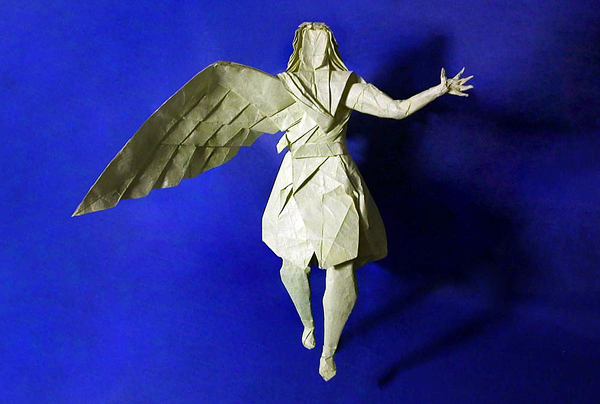
3D Origami Sculptures by Jaroslav Mishchenko
Kyiv artist Jaroslav Mishchenko folds painted three-dimensional origami sculptures—animals, objects, and abstract forms—where crease, color, and careful light share the work.
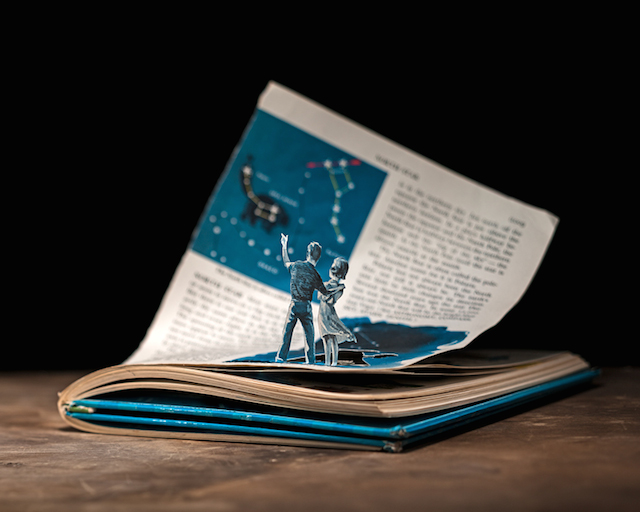
Thomas Allen’s Book-Cut Illustrations
Michigan illustrator Thomas Allen cuts pulp paperback figures into 3D tableaux, photographs them in shallow focus, and gathers the practice in his Aperture book Uncovered.
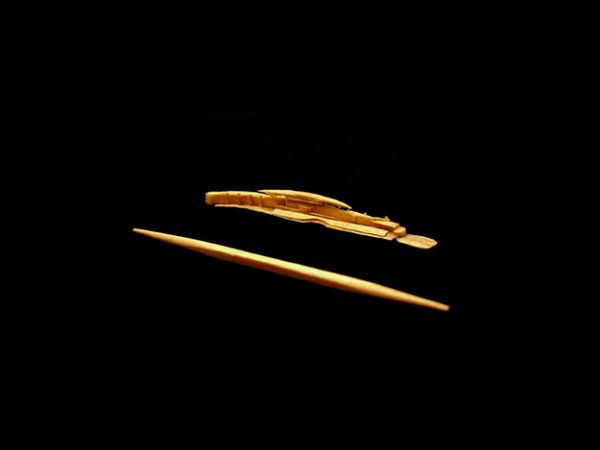
Steven Backman’s Mini Toothpick Sculptures
San Francisco artist Steven Backman assembles miniature sculptures from toothpicks and glue—compact lattices where joinery, patience, and structural logic replace fancy materials.