
Beyoncé for Vogue US, March 2013 Power Issue
Beyoncé on the March 2013 Vogue US Power Issue—Patrick Demarchelier’s period editorial of fashion, control, and cover-star glamour.
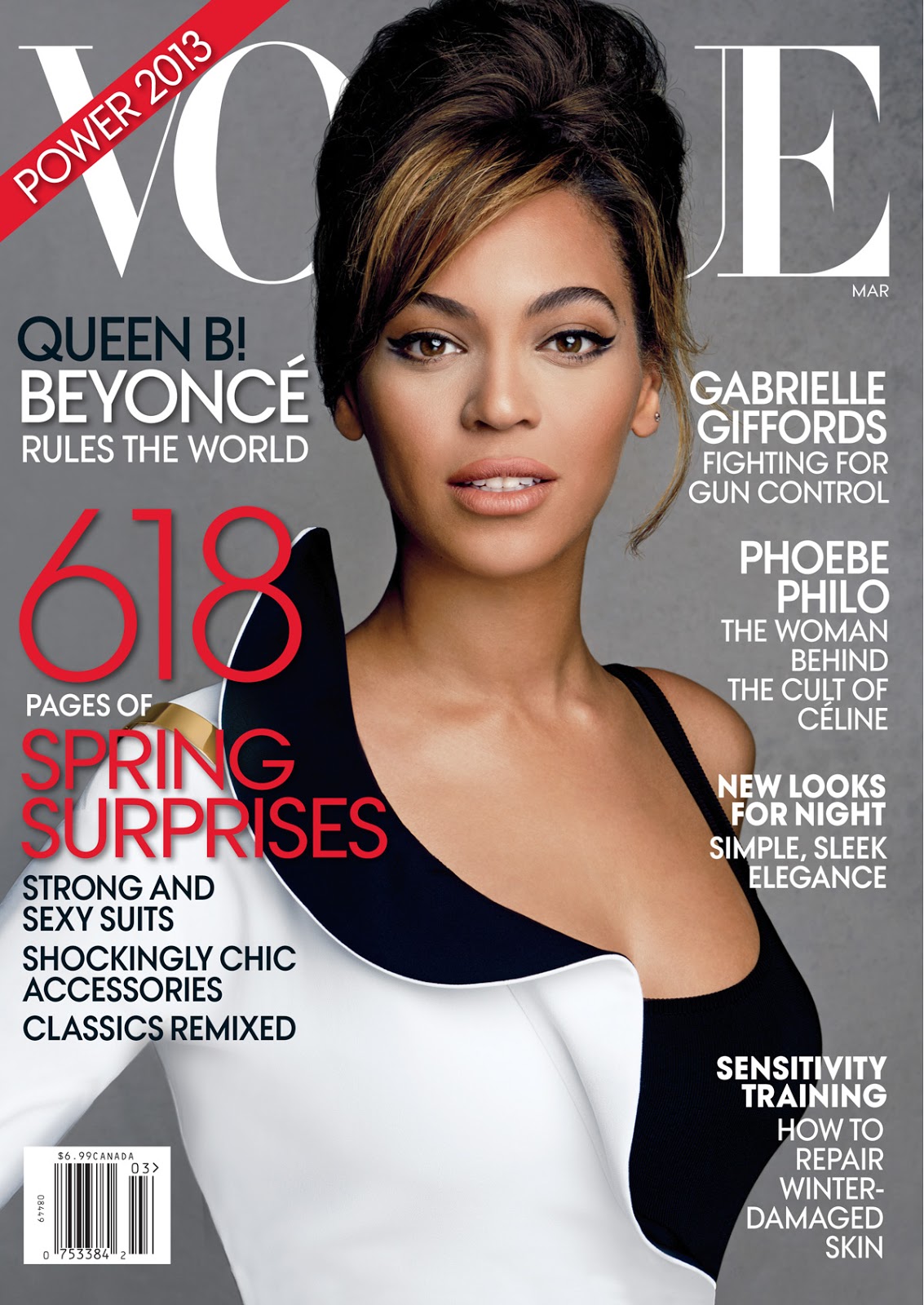
In early 2013, American Vogue’s March “Power Issue” put Beyoncé on the cover—and on a run of editorial frames shot by Patrick Demarchelier. The timing was deliberate. She had just delivered a Super Bowl halftime performance that kept her in the cultural foreground, and the magazine wanted a subject who already read as both pop machinery and fashion-ready glamour. What followed was not a casual celebrity snapshot set. It was a classic Condé Nast construction: high fashion, controlled light, and a star whose public image could carry the word “power” without irony.
The notes below stay inside that March 2013 editorial moment: why the casting made sense, how Demarchelier’s camera handled Beyoncé’s presence, and why the published images still circulate as period documents of early-2010s gloss.
March 2013: the Power Issue slot
American Vogue’s March issues have long carried institutional weight—collections chatter, spring wardrobes, and cover stars meant to feel definitive rather than disposable. Labeling the package a Power Issue sharpened the brief. Editors were not asking for novelty casting; they were asking for a face that already suggested command of stage, market, and myth. Beyoncé fit that brief with little explanation required.
By 2013 her catalog, tours, and visual albums had made her one of the most recognizable entertainers alive. Motherhood with Blue Ivy was already part of the public conversation, and the Vogue interview space—typical for this kind of feature—leaned into adulthood, control, and the next creative chapter rather than pure chart gossip. Fashion coverage around the shoot pointed to designers such as Alexander McQueen, Marni, Oscar de la Renta, Rochas, and Givenchy by Riccardo Tisci: names that photograph as architecture on a body as much as as “clothes.”
Styling for the editorial was associated with Camilla Nickerson; hair and makeup credits in period roundups commonly named Kim Kimble and Francesca Tolot. Those names matter less as trivia than as proof of process. A Vogue cover of this scale is a temporary studio nation—photographer, fashion editor, hair, makeup, production design—assembled to produce images that can survive newsstand type and still look intentional when cropped for blogs.
Patrick Demarchelier’s camera language
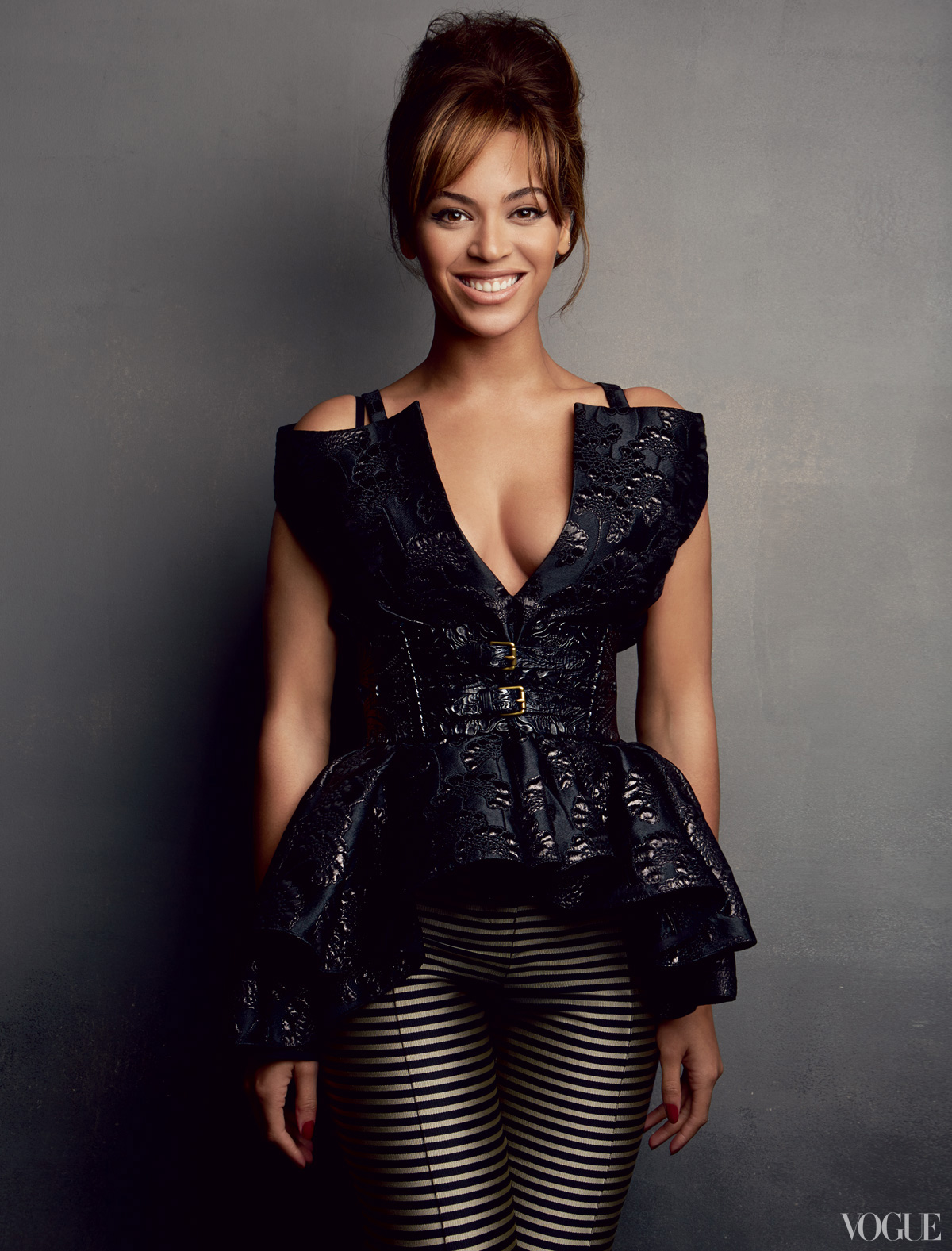
Patrick Demarchelier brought a long Vogue history to the assignment: clarity, elegance, and a preference for subjects who can hold a frame without visual chaos. His best celebrity work rarely relies on gimmick props. It relies on posture, fabric, and light that flatters without dissolving the person into pure product. With Beyoncé, that approach met a performer already trained by years of stage lighting and music-video direction. She knew how to arrive in an image.
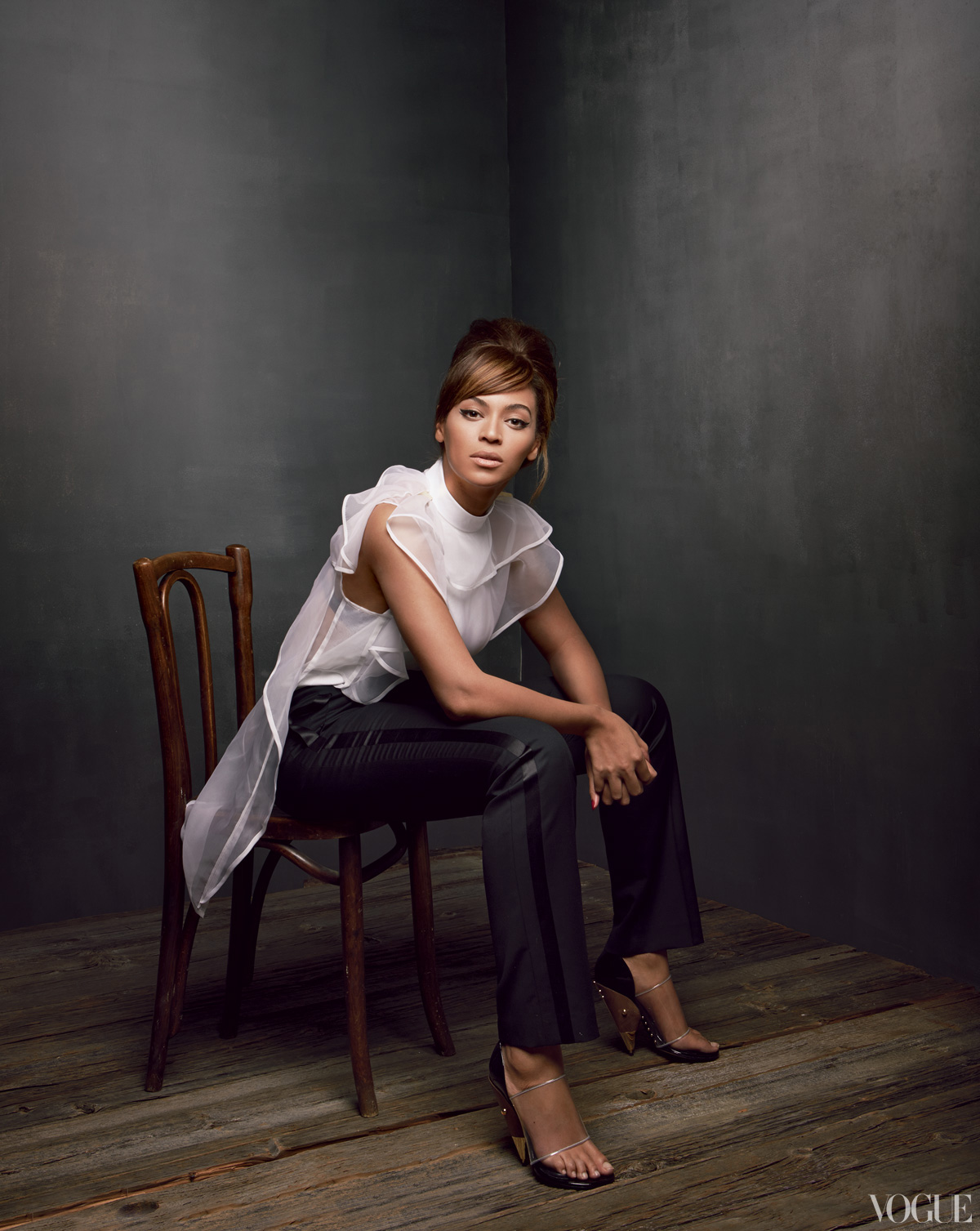
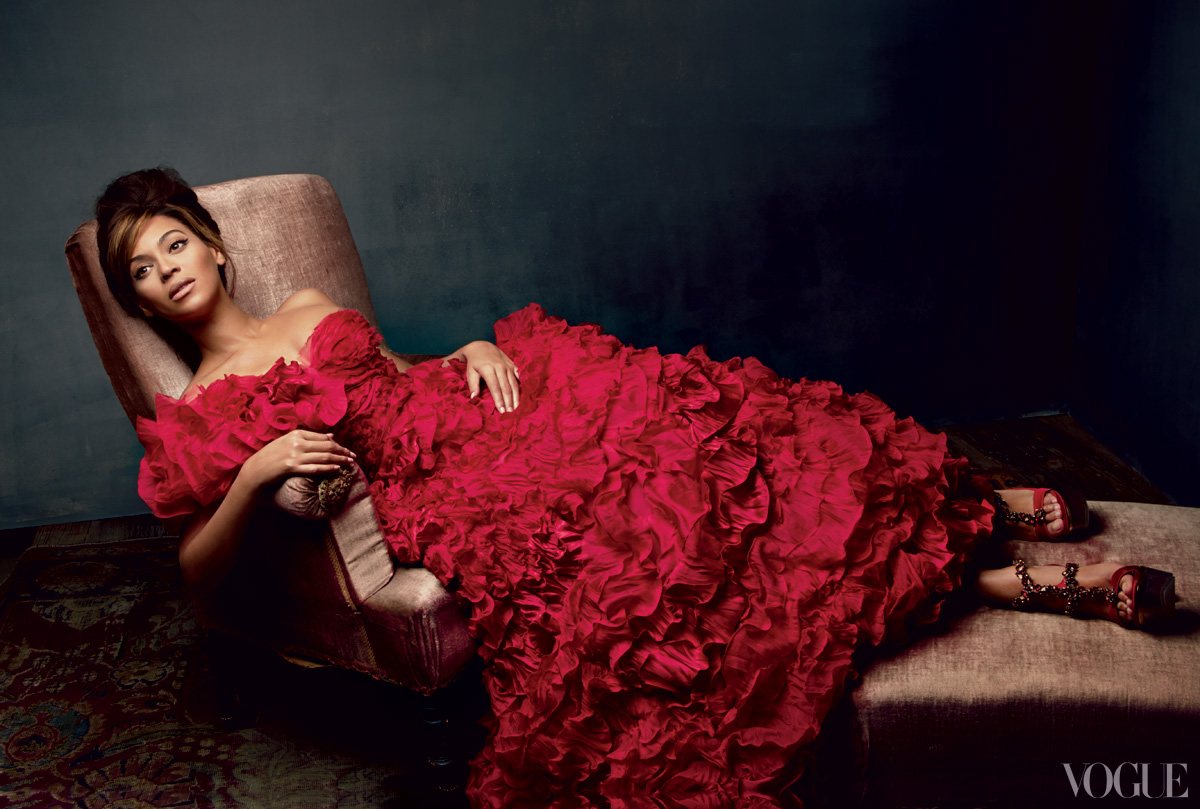
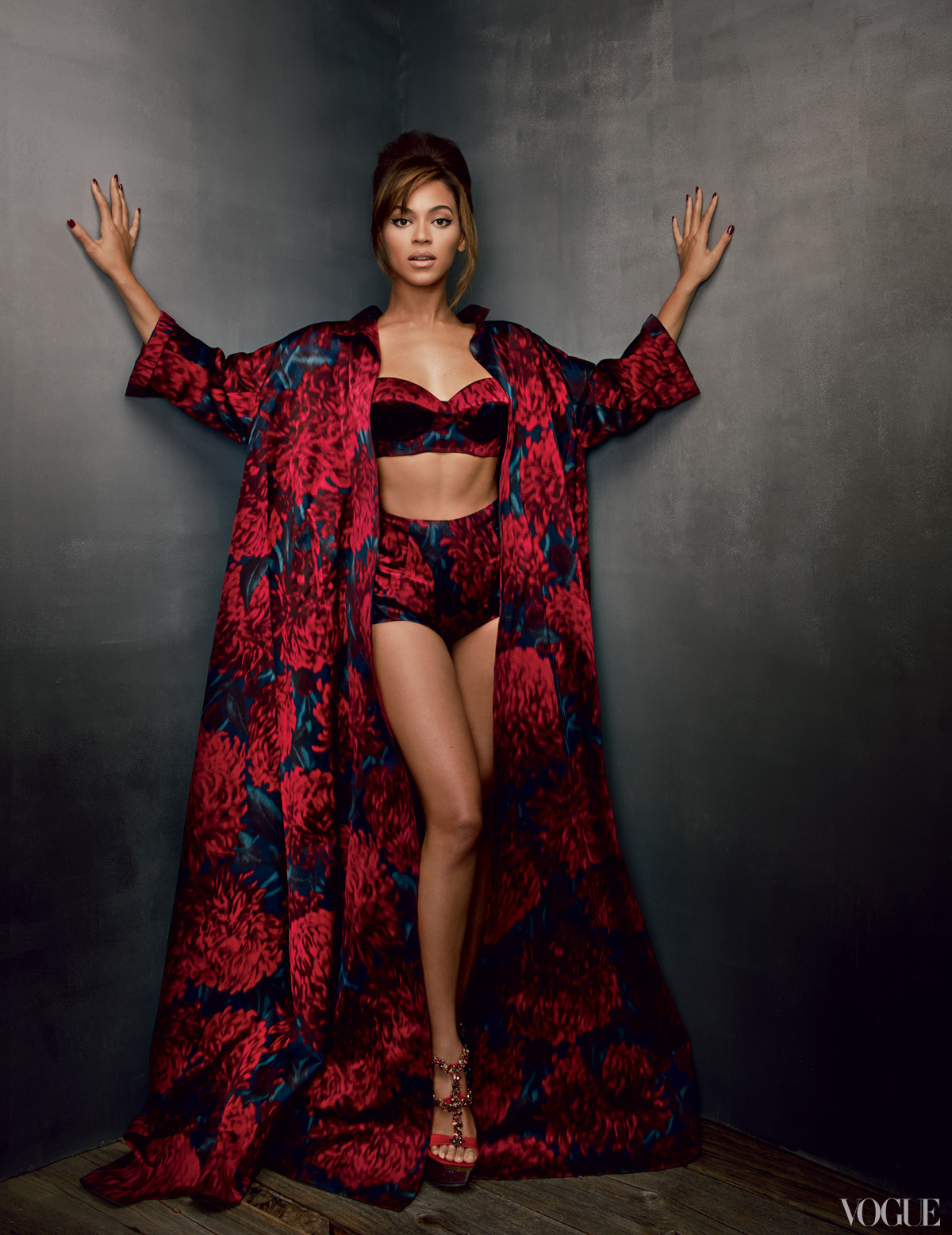
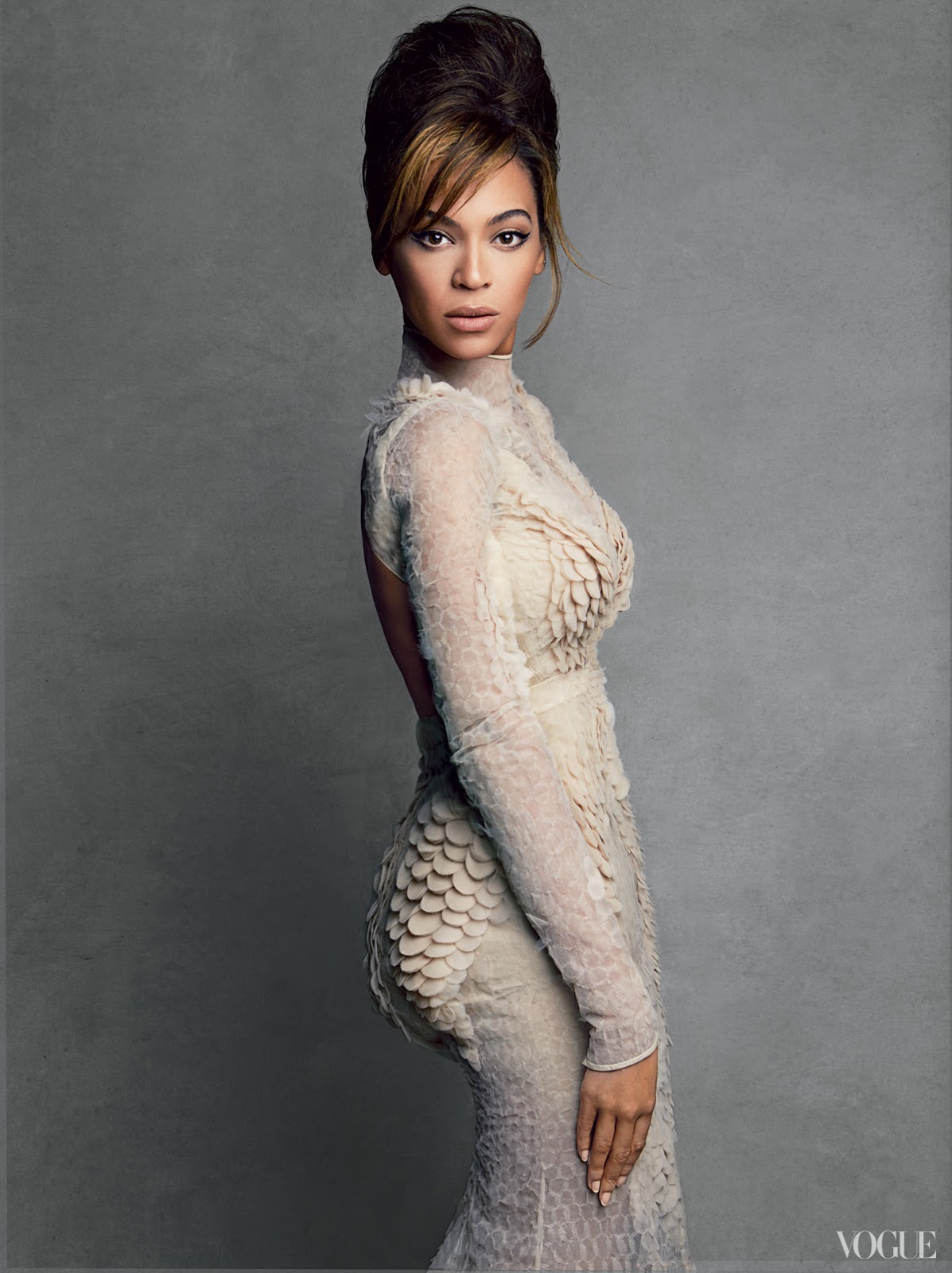
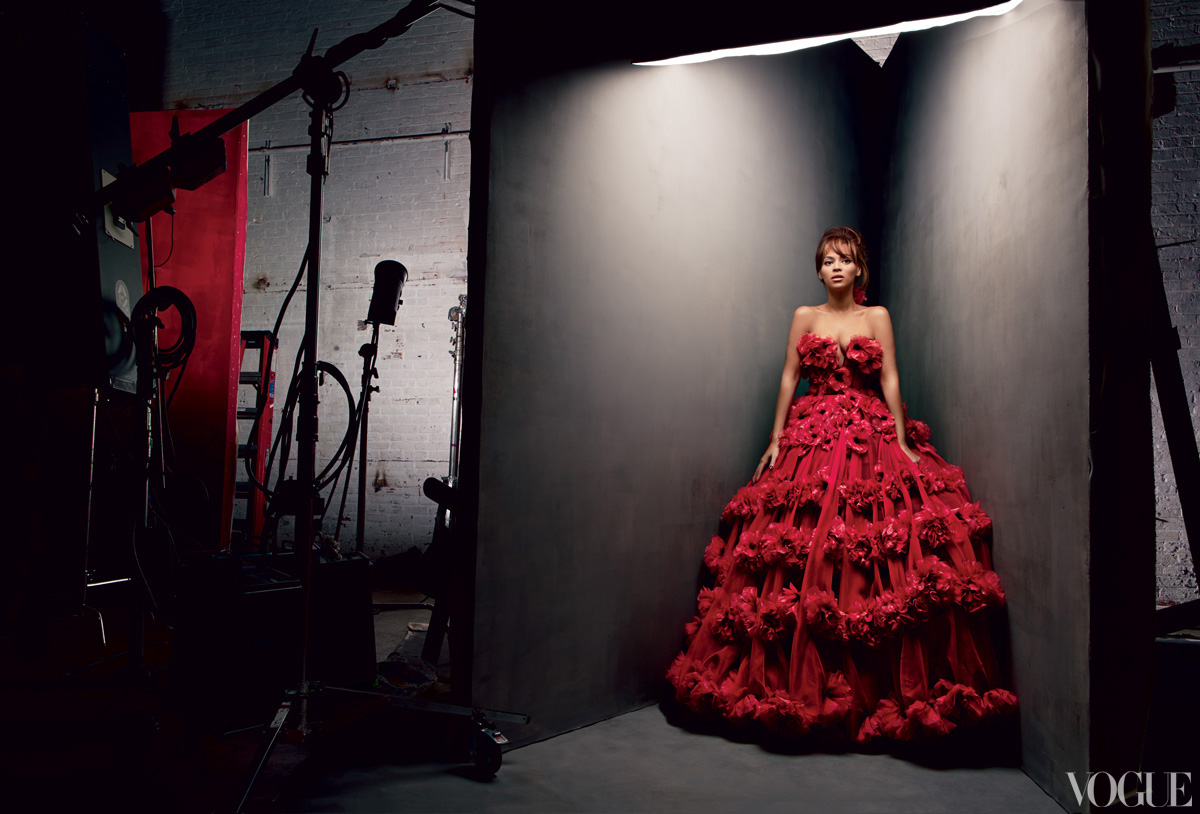
Look at the portraits associated with the March package and you see a recurring argument: Beyoncé as composed center. Dresses with volume and embroidery—red organza, flowered surfaces, crisp whites—give the photographs silhouette drama. Striped trousers and structured tops push toward a sharper, more editorial modernity. The wardrobe changes do the seasonal selling; her face and stance do the continuity. That is how a multipage fashion story holds together when readers flip quickly.
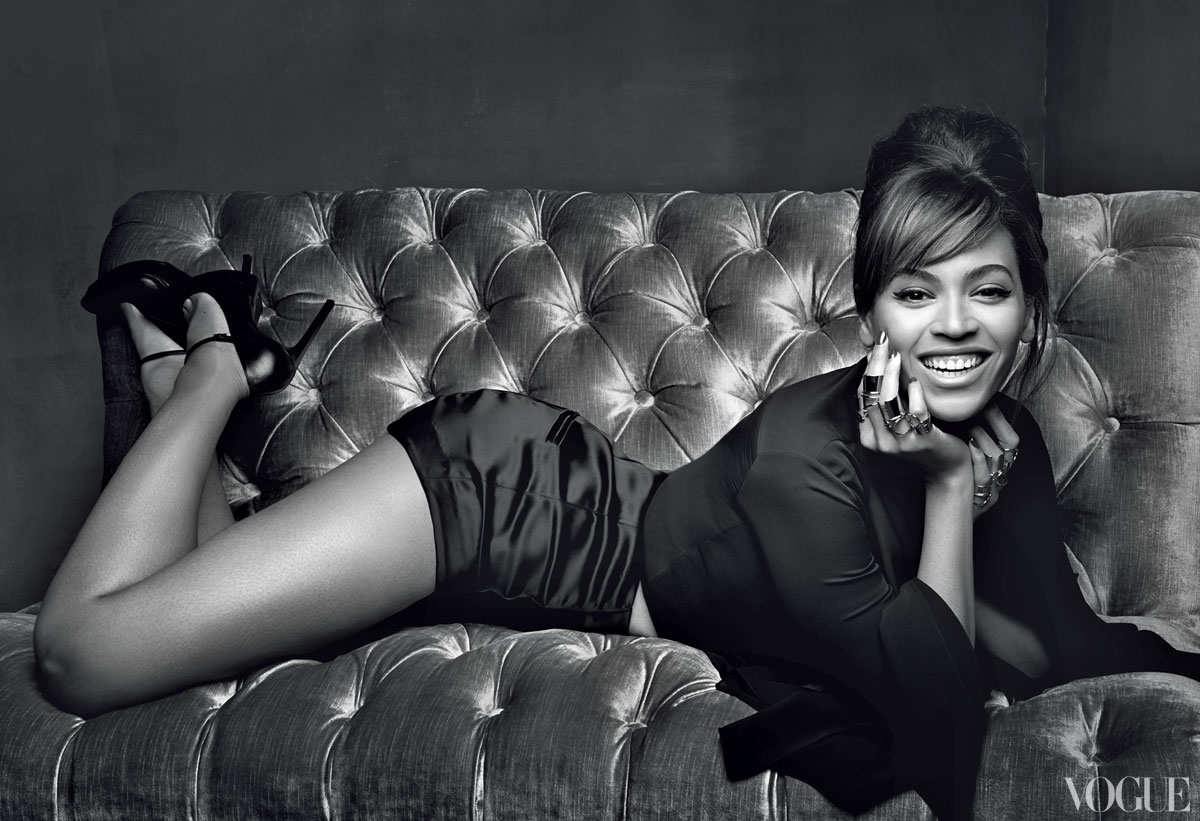
Demarchelier’s frames also negotiate distance. Some images feel theatrical, almost stage-lit; others sit closer to classic beauty portraiture. The common thread is control. Nothing reads accidental. In 2013 that mattered because Beyoncé’s public narrative was already about authorship—of albums, of image, of the terms under which she appeared. A Power Issue cover that looked improvised would have undercut the thesis.
Fashion as architecture, not costume
The strongest looks from the shoot treat clothing as structure. Organza and embroidery catch light the way sculpture does. High-waisted shorts and an opera coat read as deliberate silhouette experiments rather than red-carpet safety. A Givenchy white organza dress with blouse and trousers suggests formality rebuilt into something more modern and graphic. These are not “casual Friday” choices. They are magazine clothes—pieces meant to survive reproduction on coated paper and on early-2010s screens still hungry for high-resolution celebrity fashion.
That is also why the editorial aged as a style reference. Trends from 2013 come and go; the underlying grammar—volume against a clean backdrop, saturated color against skin, jewelry used as punctuation—still teaches how Vogue preferred to present mega-stardom then. Beyoncé did not need to be invented as a fashion subject. The clothes simply had to meet the scale of the person already known.
For readers in February and March 2013, when previews and behind-the-scenes clips circulated ahead of the issue, the images functioned as both news and aspiration. You were meant to recognize the star instantly, then linger on texture and cut. Musician covers remain valuable to fashion titles for exactly that double job: the face sells the issue; the wardrobe sells a mood of power dressed as beauty.
What the feature asked Beyoncé to carry
Magazine interviews of this type rarely stay inside discography alone. They braid career talk with personal philosophy, motherhood, creative control, and the language of empowerment that women’s and fashion titles favored in the early 2010s. Period coverage of the March 2013 package highlighted conversation about an album still being shaped, about life documented on camera, and about the shift into a freer adult chapter. Whether any given quote lived longest in the print feature or in blog excerpts, the genre was clear: Beyoncé as author of her own narrative, photographed accordingly.
That framing matched the Power Issue headline logic. Power, here, was not only chart dominance. It was the ability to set terms—how much of private life to show, how a next album would arrive, how a public woman remained legible as both performer and person. Demarchelier’s images did not illustrate every sentence of the interview. They illustrated the thesis: composure under scrutiny.
It is worth keeping the calendar honest. This was 2013—before later visual albums and later cultural chapters rewrote parts of the public story again. The March Vogue moment is a fixed point, not a summary of an entire career. Treating it as period editorial keeps the page useful as cultural history rather than as a blurry greatest-hits collage.
How the images traveled
Once Vogue released cover previews and on-set video in February 2013, individual frames detached quickly into style blogs, celebrity galleries, and social feeds. A single strong portrait could live as “Beyoncé for Vogue” without the full interview beside it. That circulation pattern defined early-2010s fashion media: the magazine remained the source; the web made the image portable.
Looking at the set today, you can still read 2013 beauty standards—smooth skin, defined eyes, deliberate hair—as period style as much as personal preference. You can also still read Beyoncé’s particular gift for camera stillness: the sense that the photograph is an extension of performance craft, not a break from it. That is why these frames keep company with other Demarchelier celebrity classics rather than feeling like disposable promo art.
For fans, the March 2013 Vogue shoot is another chapter in a long visual archive. For fashion watchers, it is evidence of how American Vogue preferred to package mega-stardom at the start of that decade—luxurious fabric, clean authority, and a cover line that treated “Queen B” as newsstand shorthand rather than joke. For anyone tracing how Black women artists were framed on major U.S. fashion covers in that era, the package remains primary-source adjacent: commercial, carefully produced, and unmistakably of its moment.
Beyoncé on the March 2013 Vogue US Power Issue was never a surprising casting. It was a confirmation. Demarchelier’s photographs keep that confirmation visible—red organza under lights, graphic black-and-silver lines, white Givenchy formality, flowered surfaces in bloom—each frame arguing the same simple case the magazine wanted that spring: power, dressed, and centered.

Comments
Continue reading
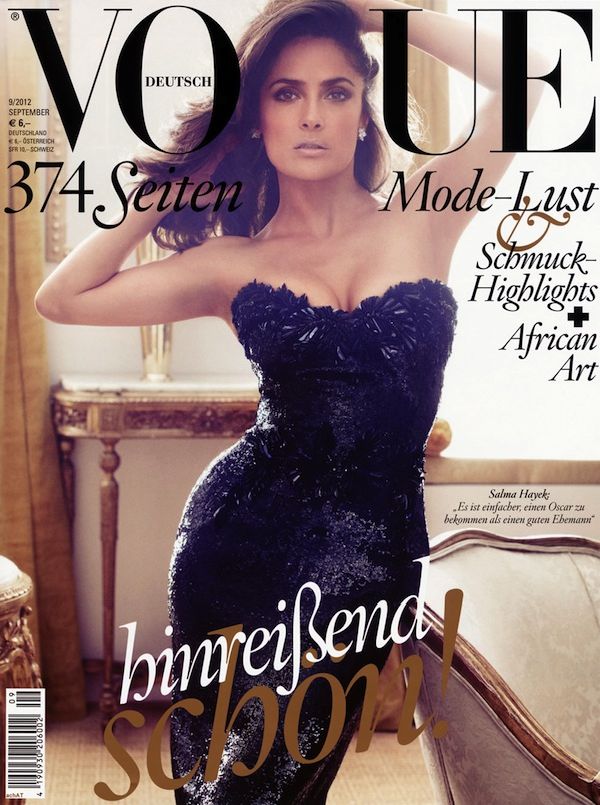
Salma Hayek by Alexi Lubomirski for Vogue Germany, September 2012
Period look at Salma Hayek’s September 2012 Vogue Germany cover story—photographed by Alexi Lubomirski in an after-hours fashion editorial.
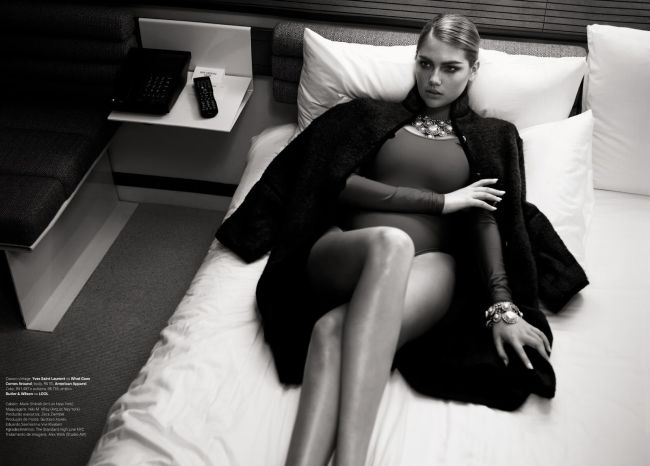
Kate Upton on Vogue Brasil July 2013: E o Novo Sexy
Henrique Gendre and Luis Fiod put Kate Upton on Vogue Brasil’s July 2013 cover in Miu Miu—a Brazilian newsstand thesis on “the new sexy.”
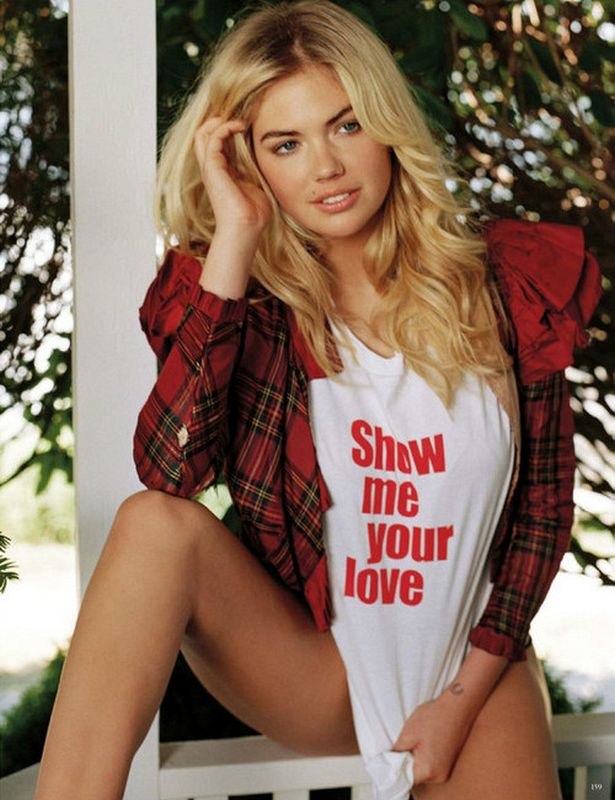
Kate Upton for Vogue Germany January 2013: Bruce Weber
Bruce Weber and Anne Christensen’s January 2013 Vogue Germany feature—outdoor European wardrobe romance, from Ackermann to Eres.