
Kate Upton on Vogue Brasil July 2013: E o Novo Sexy
Henrique Gendre and Luis Fiod put Kate Upton on Vogue Brasil’s July 2013 cover in Miu Miu—a Brazilian newsstand thesis on “the new sexy.”
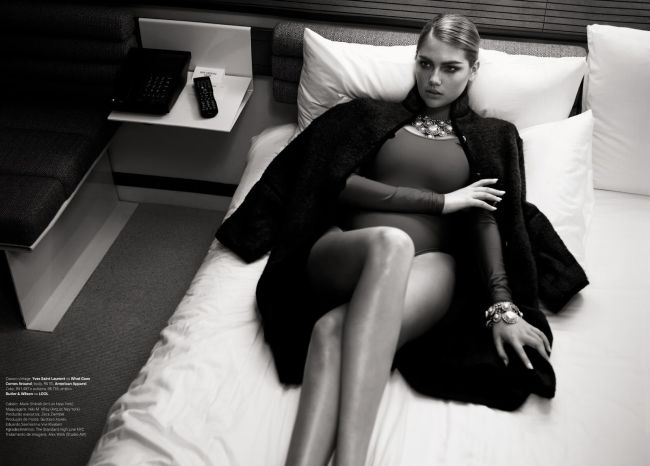
Vogue Brasil’s July 2013 issue put Kate Upton on the cover in a Miu Miu look photographed by Henrique Gendre and styled by Luis Fiod. The related fashion story, framed in period coverage as E o novo sexy—“and the new sexy”—asked a Brazilian Condé Nast edition to define contemporary glamour through pencil skirts, bustiers, faux fur, and luxury houses ranging from Miu Miu and Prada to Brazilian labels such as Reinaldo Lourenço and Adriana Degreas. Shot in New York for a São Paulo–facing newsstand, the package is market translation: an American model already loud in U.S. media, remade for Latin American Vogue’s idea of sensual polish.
Upton was twenty-one when the issue circulated. She had already carried Sports Illustrated’s Antarctica cover energy earlier the same year and a Vogue US June moment; this Brazilian cover is a different editorial job. National Vogue editions do not simply reprint New York’s agenda. They negotiate local taste, local advertisers, and local definitions of allure. The July 2013 cover context stays in view—Gendre’s camera, Fiod’s styling, the “new sexy” brief—without sliding into gossip. The artifact is a dated magazine cover for a specific market, and the surviving frame still has to answer a newsstand question: who is she for Brazilian Vogue this month, and what kind of sexy is on offer?
What a Brazilian Vogue cover was selling in 2013
Vogue Brasil in the early 2010s sat inside Condé Nast’s international lattice with a strong local fashion industry behind it—São Paulo Fashion Week energy, Brazilian designers in the mix, and a readership that expected international faces translated into Brazilian editorial heat. Putting Upton on the July cover after her Vogue US run was both affirmation and remix. Affirmation: she had crossed into high-fashion legitimacy beyond swimsuit fame. Remix: Gendre and Fiod’s “new sexy” vocabulary—pencil skirts, bustier tops, faux fur, evening-adjacent daywear—leans toward polished urban sensuality rather than polar expedition fantasy, Meisel’s latex Newton tribute, or Faena’s ironic hotel fiction.
Period fashion blogs noted Miu Miu spring 2013 on the cover and listed houses across the interior story: Prada, Chanel, Alaïa, Saint Laurent, Animale, Forum, Nicole Miller, Butler & Wilson jewelry punctuation. Hair by Marki Shkreli and makeup by Niki M’Nray complete the A-team credits typical of a Vogue country edition cover package. Those names matter for identification. People who land on this slug usually want to confirm which Vogue, which month, which photographer, and which fashion thesis. A cover without those coordinates becomes interchangeable glamour wallpaper.
Brazilian Vogue’s newsstand also operates in a different competitive field than U.S. SI or Milan’s Vogue Italia. Local editions compete with domestic titles, celebrity weeklies, and a fashion culture that prizes body-conscious glamour without always needing Newton citation or polar logistics. “The new sexy” is a claim aimed at that field: update the sensual ideal through clothes that look expensive, structured, and night-ready, while still readable from three meters away on a magazine rack.
“E o novo sexy” as an editorial sentence
Magazine titles do rhetorical work. E o novo sexy claims a definition rather than a destination. SI 2013 claimed Antarctica. V Magazine claimed discreet charm and irony. Vogue Italia claimed seductive Newton-era urban eroticism. Vogue Germany claimed Weber’s outdoor romance. Vogue Brasil claimed an updated sexy for its market: structured clothes, fur texture, body-conscious tops, glamour that reads as city night more than beach noon. Even when only a cover frame survives in a gallery, that sentence should stay attached to the image. Without it, the cover collapses into generic praise.
Gendre’s New York shoot location adds another layer. The production is geographically American; the publication is Brazilian. That split is common in international fashion—talent and photographers often work in New York or Paris for covers that land on newsstands in other countries—but it still shapes the pictures. Studio and city-glamour lighting replace ice glare or hotel-room narrative clutter. The cover has to read instantly: face, clothes, logo, thesis. Cover energy here is market energy, not expedition energy and not indie-fashion scene energy.
Fiod’s styling choices make the thesis visible in silhouette. Pencil skirts narrow the line. Bustiers and structured tops emphasize torso architecture. Faux fur adds tactile luxury without requiring a full couture narrative. International houses supply recognizable logos for a globalized Brazilian luxury reader; local designers such as Reinaldo Lourenço and Adriana Degreas keep the book from looking like a pure import. That mix is the editorial politics of a national Vogue cover in 2013.
How this cover differs from Upton’s other 2012–2013 Vogue chapters
Keep the map clear. Vogue Italia, November 2012: Steven Meisel, Carlyne Cerf de Dudzeele, Helmut Newton–inspired latex mistress mythology for Franca Sozzani’s Milan title—fashion seriousness as erotic urban theater. Vogue Germany, January 2013: Bruce Weber, Anne Christensen, outdoor and wardrobe-story romance for a German edition—American photographer language inside European Vogue. Vogue US, June 2013: U.S. flagship affirmation in the same broad season. Vogue Brasil, July 2013: Gendre and Fiod defining “the new sexy” with Miu Miu lead and mixed international–Brazilian wardrobe. Same surname on the cover line; different institutional voices.
That differentiation is the reason this URL exists separately from the SI Antarctica gallery or the V spring preview. Collapsing them into one “Kate Upton magazine dump” erases what each edition paid for. Brazilian Vogue paid for a cover thesis about contemporary sex appeal in structured fashion. SI paid for polar destination myth with Derek Kettela. V paid for ironic housewife fiction with Sebastian Faena. Readers who care about fashion history need those jobs kept distinct, especially when galleries look similar after years of compression and re-uploads.
It also helps to remember audience temperature. Italia’s Meisel story speaks to fashion-reference literacy. Germany’s Weber story speaks to outdoor luxury romance. Brasil’s Gendre cover speaks to a Latin American luxury newsstand that wants sensual modernity with recognizable houses. None of those audiences bought the same fantasy, even if they recognized the same face.
Credits worth keeping beside the image
- Publication: Vogue Brasil, July 2013.
- Photographer: Henrique Gendre.
- Fashion editor / styling: Luis Fiod.
- Cover house signal: Miu Miu (spring 2013), with a wider story mix including Prada and Brazilian designers.
- Editorial thesis: E o novo sexy—urban, structured, market-specific glamour.
- Hair / makeup: Marki Shkreli / Niki M’Nray, per period credit lists.
- Production note: photographed in New York for a Brazilian edition.
How to look at the surviving cover frame
Even a single strong cover image can carry a full historical reading if you refuse to treat it as wallpaper. Ask what the clothes are doing: are they expedition props, narrative costumes, or newsstand glamour armor? Ask what market the logo serves. Ask what “sexy” means in the accompanying story title. For this July 2013 Brasil cover, the answers point to polished city sensuality for a Latin American Vogue audience, photographed by Gendre, styled by Fiod, led by Miu Miu.
If you are sorting Upton’s early-2010s print run, file this under national-edition cover translation—not under swimsuit franchise, not under indie spring preview, not under Meisel’s Italia myth, not under Weber’s German outdoor romance. The newsstand in Brazil is the co-star, even when the set was New York. That is the cover’s real geography.

Comments
Continue reading
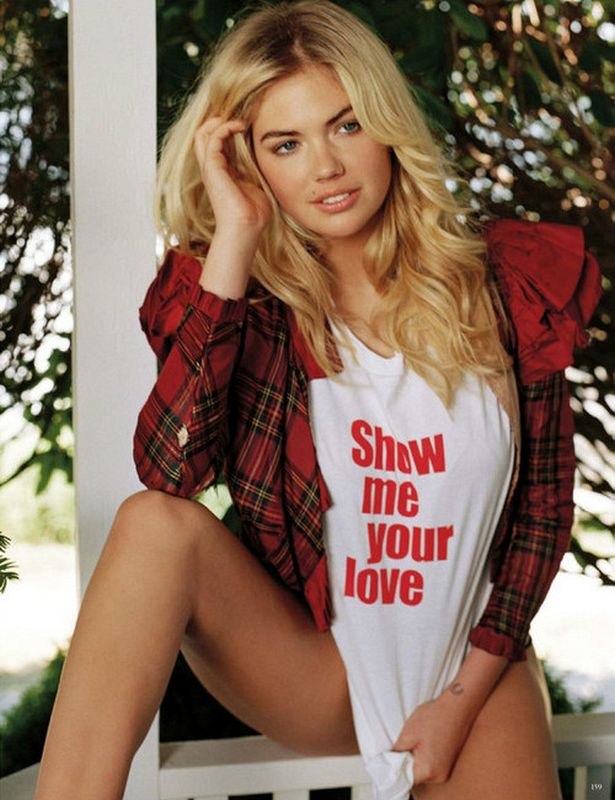
Kate Upton for Vogue Germany January 2013: Bruce Weber
Bruce Weber and Anne Christensen’s January 2013 Vogue Germany feature—outdoor European wardrobe romance, from Ackermann to Eres.
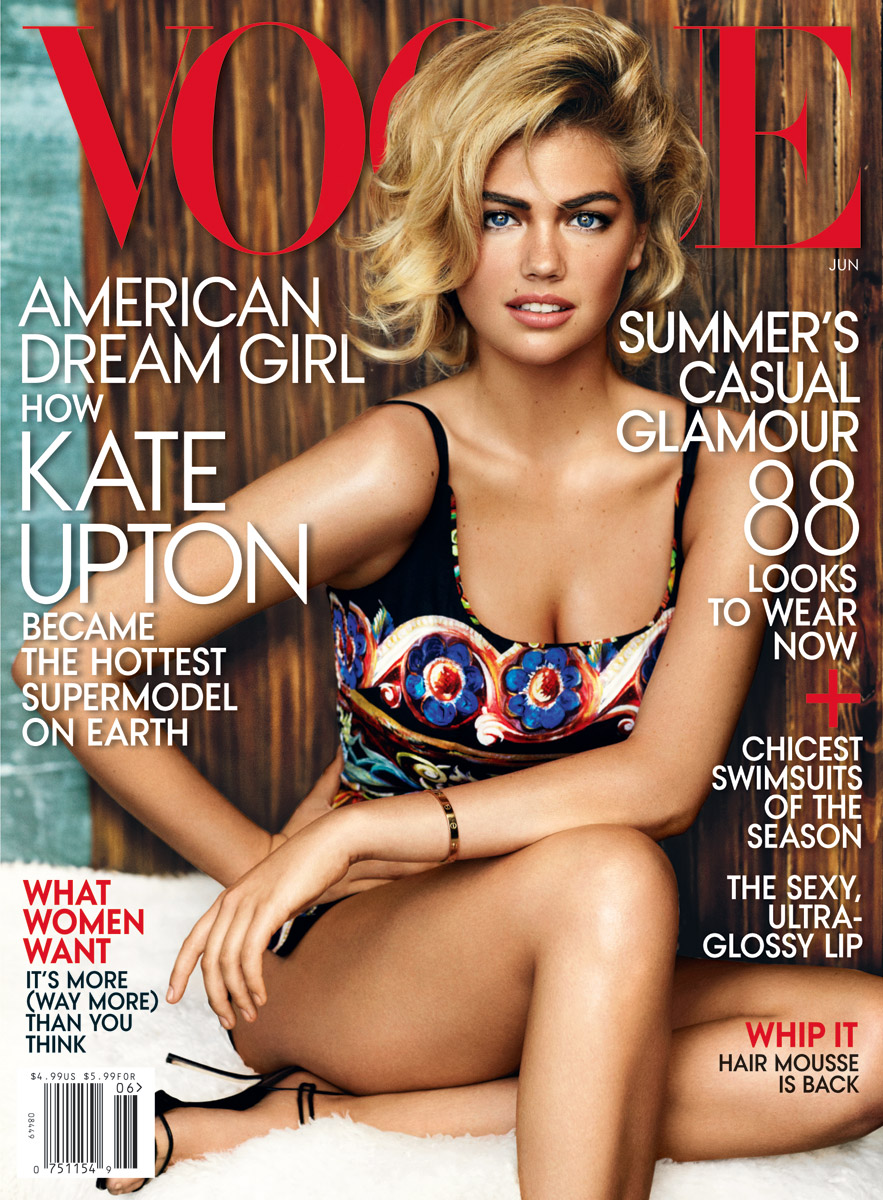
Kate Upton for Vogue US, June 2013
Mario Testino’s sunlit Uruguay cover story for American Vogue’s June 2013 issue—The Kate Upton Effect—in summer knits, swim, and casual glamour.
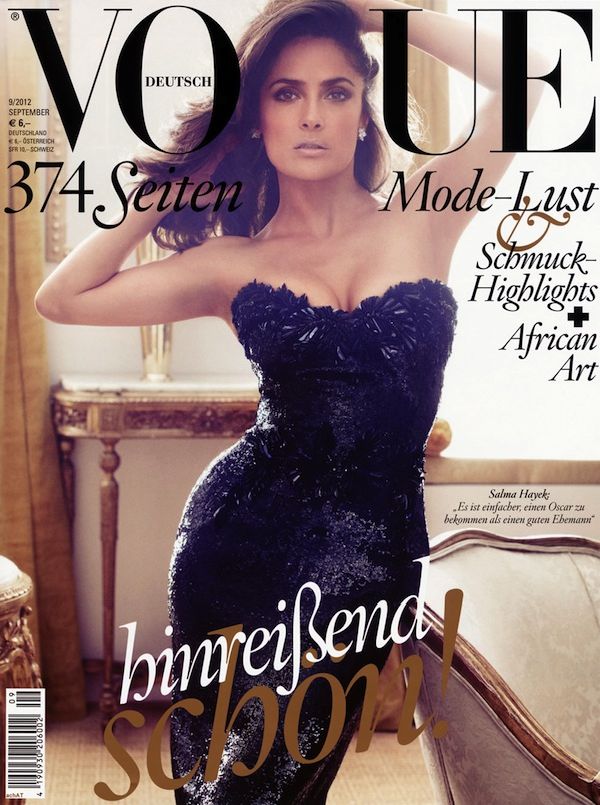
Salma Hayek by Alexi Lubomirski for Vogue Germany, September 2012
Period look at Salma Hayek’s September 2012 Vogue Germany cover story—photographed by Alexi Lubomirski in an after-hours fashion editorial.