
Salma Hayek by Alexi Lubomirski for Vogue Germany, September 2012
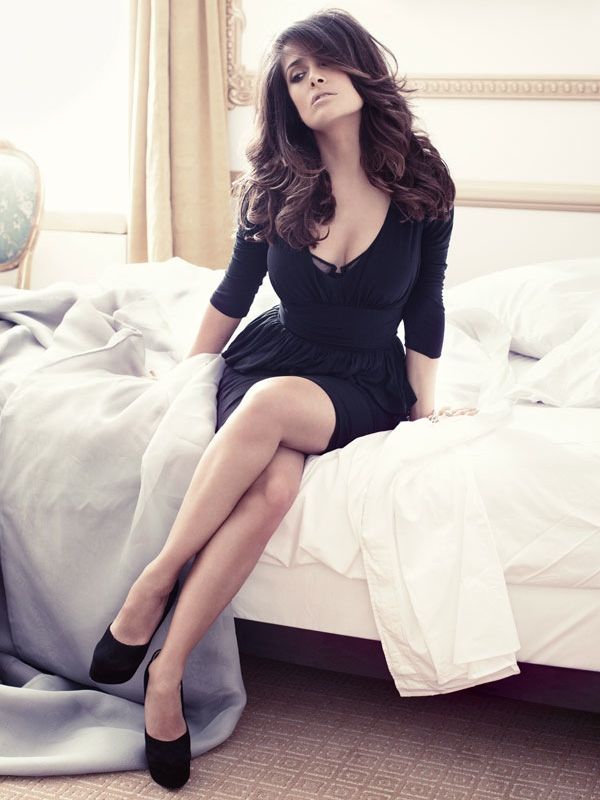
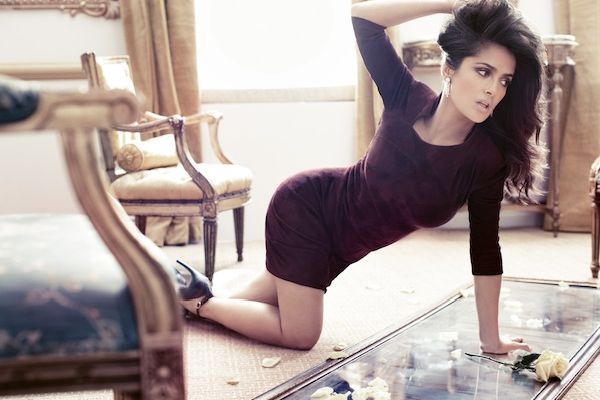
Period look at Salma Hayek’s September 2012 Vogue Germany cover story—photographed by Alexi Lubomirski in an after-hours fashion editorial.
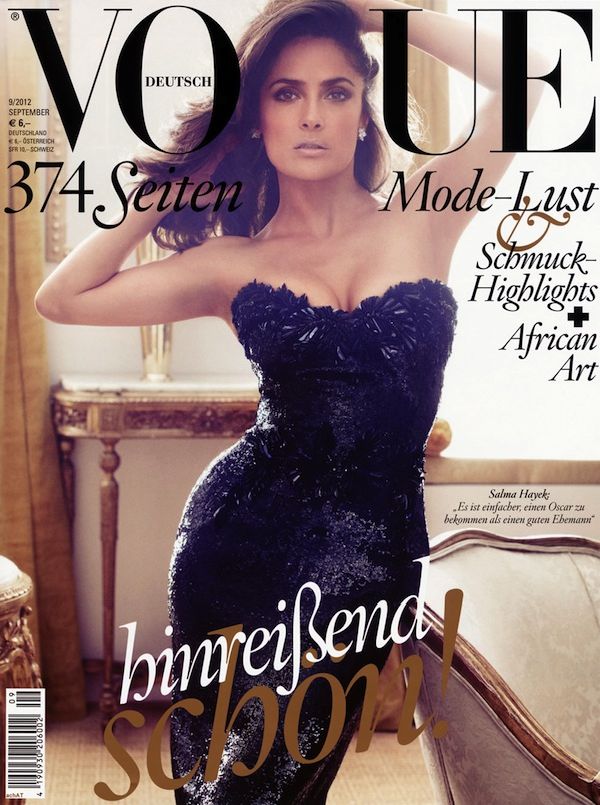
In September 2012, Vogue Germany put Mexican actress Salma Hayek on its cover and through a fashion story photographed by Alexi Lubomirski. The editorial—circulated in period fashion blogs under titles tied to that issue, and logged in industry directories as a guest-model spread often associated with the “After Hours” framing—belongs to a specific magazine moment: early-2010s European Vogue gloss, Lubomirski’s polished celebrity portraiture, and Hayek at a career point when film publicity and fashion covers still moved in the same circuit.
The feature belongs to that period context—not a timeless celebrity gallery emptied of credits. Photographer Alexi Lubomirski and Vogue Germany are the production anchors; Hayek is the subject whose screen presence the clothes and lighting are built to intensify.
Why this cover mattered in 2012
Hayek was already a global film figure—known for roles that ranged from mainstream comedies to prestige projects, and for a public identity that fashion magazines treated as both Hollywood and Latin American glamour. A German Vogue cover placed her inside Condé Nast’s European autumn machinery: September issues as statement objects, actresses as guest models, photographers as brand signatures.
Contemporary coverage around the shoot tied the interview to film work then in the air, including Oliver Stone’s Savages and comments on other productions. Fashion pages, meanwhile, dressed her in high-voltage evening and lingerie-adjacent designer looks—Tom Ford, Alexander McQueen, La Perla, and other labels named in period write-ups—so the pictures read as after-dark couture rather than daytime street style. Lubomirski’s job was to make that wardrobe feel inhabited, not merely displayed.
September issues in the Vogue system were—and still are—treated as seasonal declarations: more pages, bigger advertisers, covers meant to travel beyond newsstands into social conversation. Placing Hayek on the German edition’s face in that slot signaled confidence that her recognition could carry a fashion story for readers who might know her from cinema first. The Lubomirski portfolio then had to justify the choice with images strong enough to hold a flip through glossy stock, not only a single newsstand stare.
Alexi Lubomirski’s editorial hand
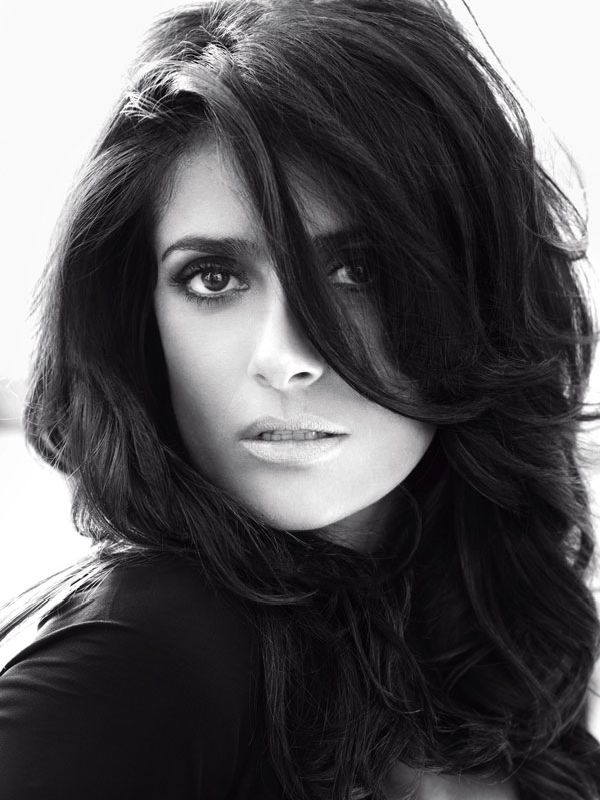
Alexi Lubomirski, by 2012, was already a go-to name for sleek celebrity and fashion portraiture—clean lighting, controlled sensuality, images that survive magazine reproduction and later web cropping. On this Vogue Germany story, his frames keep Hayek central: eyes, mouth, shoulders, and the architecture of hair and jewelry do as much work as the garments. Backgrounds stay disciplined so the reader’s attention does not leak.
That restraint is why the set still photographs well as a sequence. Each frame varies pose and wardrobe enough to feel like a story beat, yet the lighting grammar stays consistent. You can tell one photographer ran the day. Fashion editor credits from the period (including Nicola Knels on logged versions of the spread) underline that this was a full magazine production, not a red-carpet grab.
Lubomirski’s celebrity work in these years often balanced approachability with gloss: the subject looks powerful without looking distant, sensual without looking accidental. On Hayek that balance matters because her film roles already carry charisma; the stills need to feel like a deliberate second performance for print. Hair and makeup teams (unnamed in many web rips, essential on set) finish the transformation so fabric and face share one temperature. When web galleries omit those craft layers, the photographer’s name becomes the remaining credit that keeps the day from looking like a random upload.
Reading the sequence as period fashion media
Web galleries from 2012 often stripped context into a cascade of JPGs. Restoring context means naming the triangle again: Salma Hayek as subject, Alexi Lubomirski as photographer, Vogue Germany September 2012 as publisher and season. The sensual register of the pictures—close crops, luminous skin, evening fabrics—matches how that era’s glossy titles sold actress covers: desire as sophistication, not scandal.
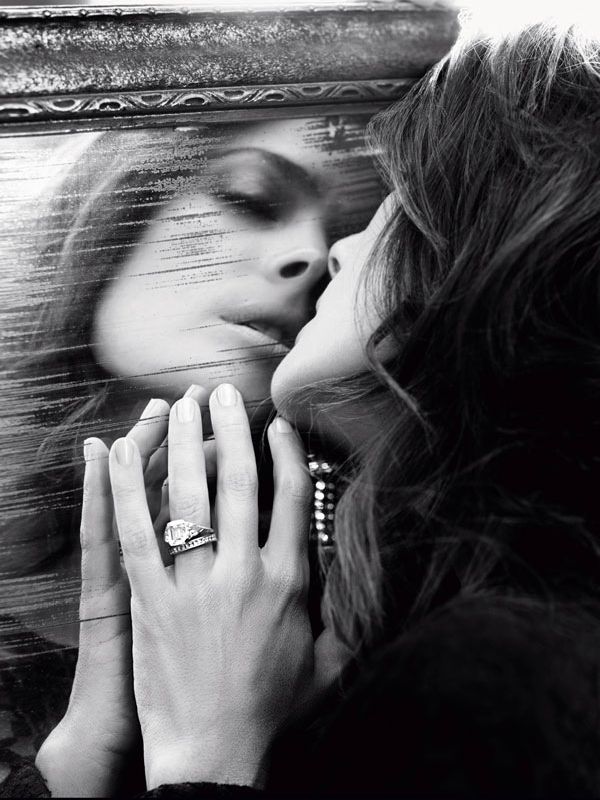
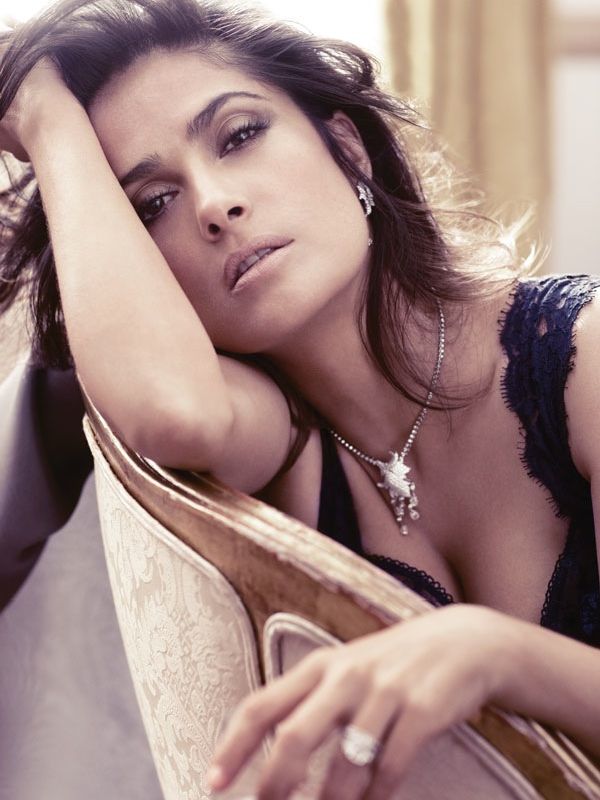
Look for recurring motifs across the frames: controlled eye contact, jewelry as punctuation, dark or saturated wardrobe against quieter sets, and a tempo that alternates between cover-ready frontality and more inward three-quarter turns. Those are editorial choices, not accidents of a photo dump.
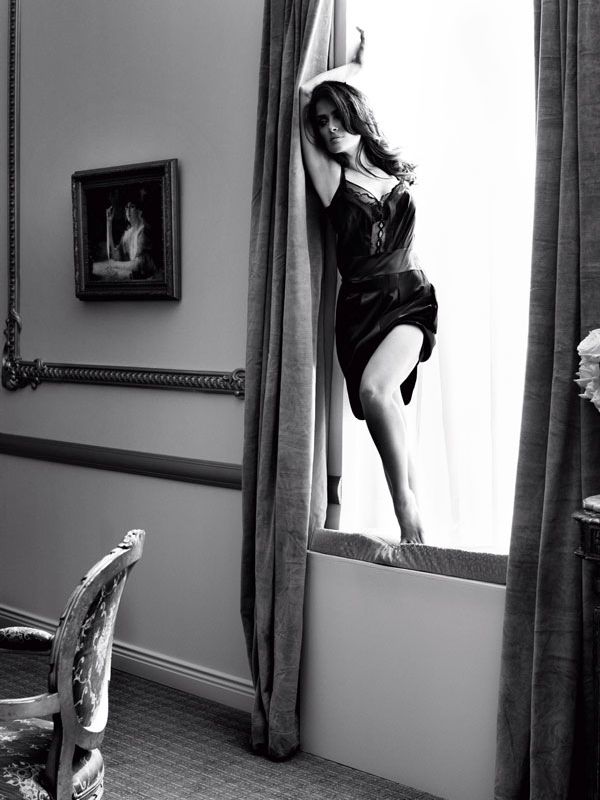
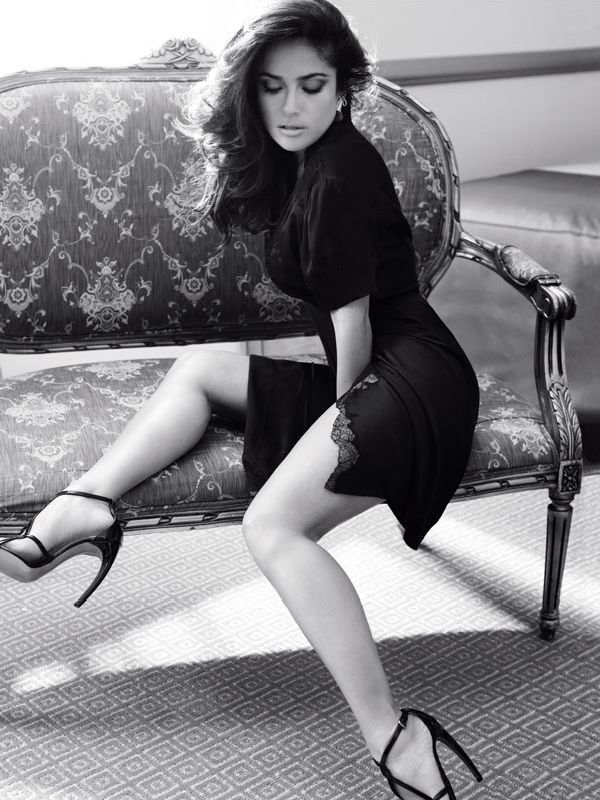
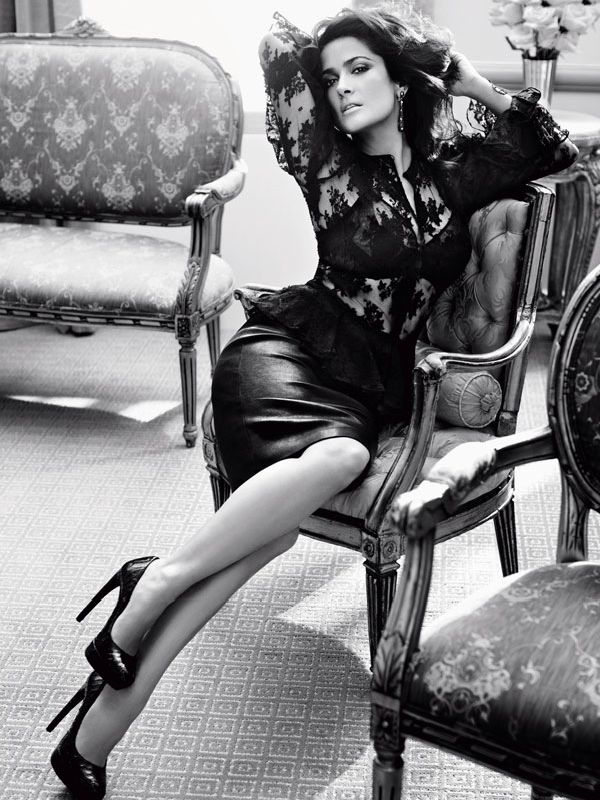
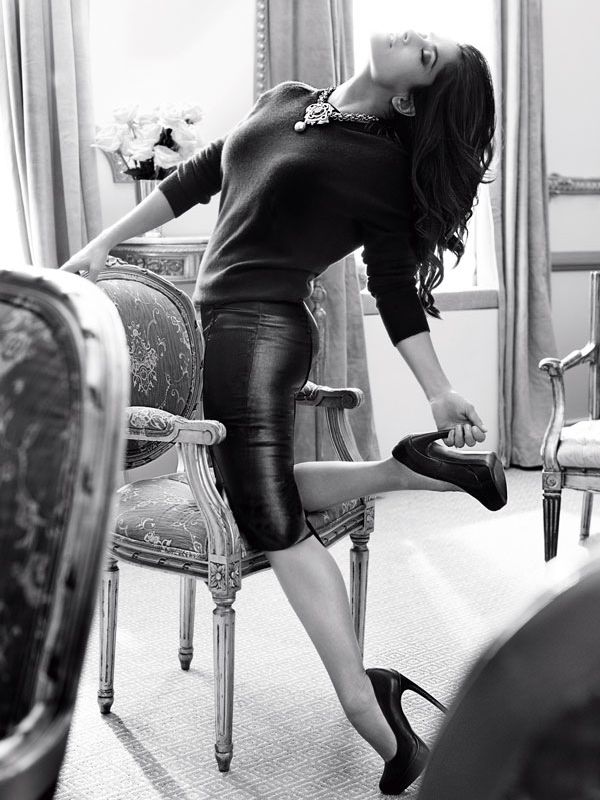
Wardrobe in an “after hours” register usually means evening silhouettes, shine, sheer panels, and lingerie-as-fashion vocabulary that European Vogues used freely in the early 2010s. The point was not shock for its own sake; it was adult glamour aimed at readers who expected September issues to feel expensive. Hayek wears that register with the ease of someone used to red carpets and character costumes alike. Lubomirski’s lighting keeps skin luminous so black and jewel tones do not swallow the face—an old print problem solved carefully here.
As you move through the gallery on this page, treat changes in crop and posture as chapter breaks. Wider frames show how clothing sits on the body; tighter frames sell expression and jewelry. That oscillation is classic magazine pacing: give the reader a full look, then a detail, then another look. Without the original layout grids, the HTML sequence has to carry that rhythm alone.
Hayek’s screen persona inside fashion’s frame
Magazine stories like this borrow an actress’s existing myth and retune it for paper. Hayek’s public image—warmth, intensity, bilingual Hollywood career, long negotiation with how beauty and ethnicity are marketed—gives Lubomirski something to direct. The camera does not invent her; it selects a temperature. In these pictures the temperature runs high: polished, adult, evening. That selection fits a September cover’s commercial job while still leaving room for the interview pages that German Vogue ran alongside the shoot.
Period interviews attached to the issue let Hayek talk process and future hopes in her own words—film sets, collaborators, projects she cared about. The photographs do a different job: they argue, without text, that she remains a fashion-cover force. Together, copy and images made a complete magazine package. Online, we mostly inherit the images. Crediting Lubomirski and Vogue Germany keeps the package from collapsing into anonymous glamour.
German press around the release treated the session as both cover news and interview news: Hayek in conversation, then Hayek in Lubomirski’s frame. That double offering was normal for actress covers—readers who skipped the fashion credits still got quotes; readers who skipped the Q&A still got the portfolio. Separating those halves on the open web is how context evaporates. Reattaching the photographer’s name and the September 2012 Vogue Germany dating is the minimum repair.
How to archive an editorial without draining it
When older fashion stories move onto blogs and aggregate sites, three things usually vanish: the photographer’s name, the magazine’s issue date, and the sense that clothes were chosen by an editorial team for a narrative. Putting those facts back does not reduce the pleasure of looking. It sharpens it. You see Lubomirski’s consistency. You see Vogue Germany’s September timing. You see Hayek working a cover language she already knew how to speak.
Keep the images in order as a set when you can. A single frame is a poster; a sequence is an editorial. This Vogue Germany story was built as the latter—Alexi Lubomirski shaping Salma Hayek’s presence across wardrobe changes until the issue had a cover and a portfolio that still reads, years later, as a dated but coherent piece of fashion publishing.
What remains valuable is precisely that dating. Trends in retouching, lingerie-fashion hybrids, and celebrity-cover strategy have shifted since 2012, which makes the set a useful historical sample rather than a template to copy blindly. Viewed as period media—Hayek in front of Lubomirski’s lens for Vogue Germany’s autumn machine—the pictures keep their charge. Viewed as orphaned JPGs, they lose the names that made the charge intentional. Leave the credits attached, and the editorial still knows what it was.

Comments
Continue reading
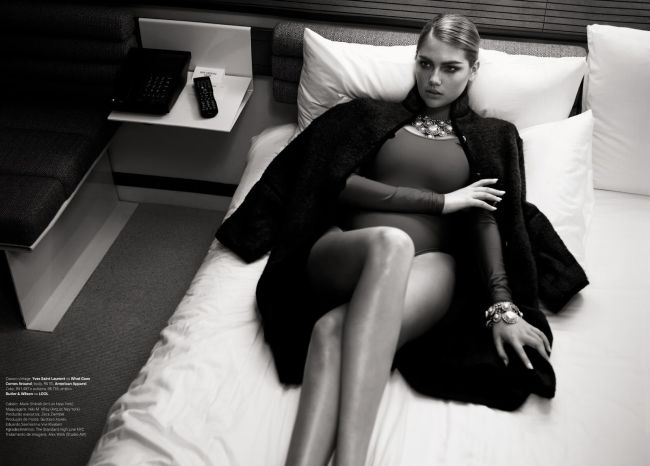
Kate Upton on Vogue Brasil July 2013: E o Novo Sexy
Henrique Gendre and Luis Fiod put Kate Upton on Vogue Brasil’s July 2013 cover in Miu Miu—a Brazilian newsstand thesis on “the new sexy.”
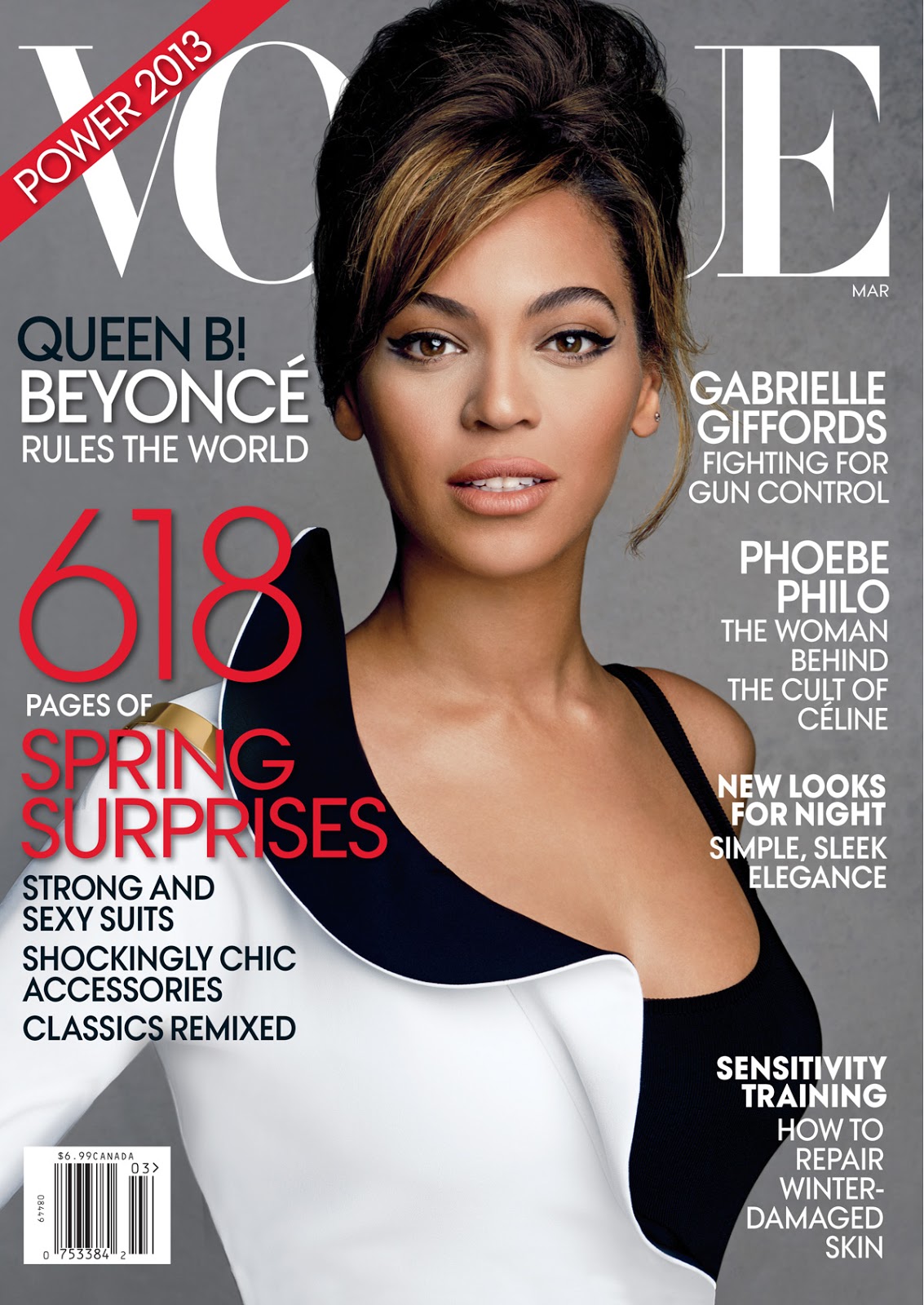
Beyoncé for Vogue US, March 2013 Power Issue
Beyoncé on the March 2013 Vogue US Power Issue—Patrick Demarchelier’s period editorial of fashion, control, and cover-star glamour.
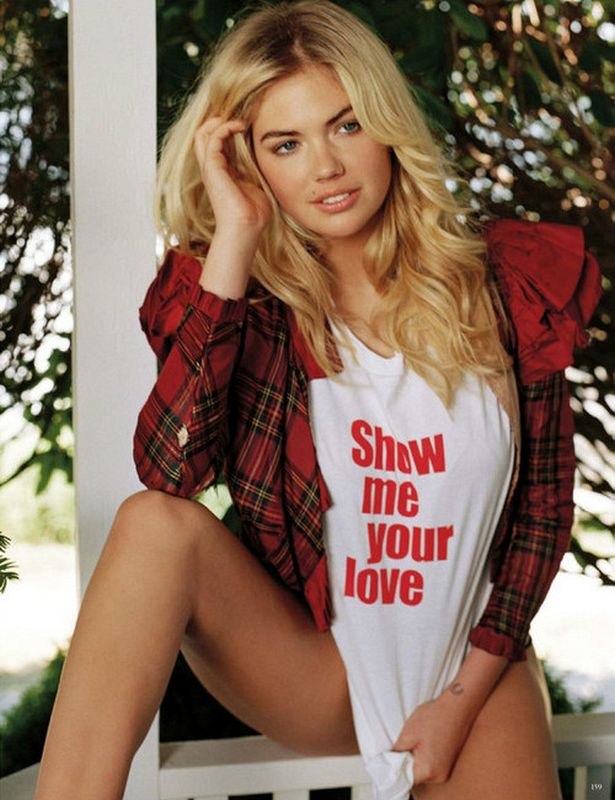
Kate Upton for Vogue Germany January 2013: Bruce Weber
Bruce Weber and Anne Christensen’s January 2013 Vogue Germany feature—outdoor European wardrobe romance, from Ackermann to Eres.