
Darcy the Cutest Hedgehog Ever: Tsukamoto’s Instagram Storybook
Tokyo photographer Shota Tsukamoto turned Darcy into an Instagram picture-book star—surreal props, clean sets, and a finite archive worth revisiting gently.
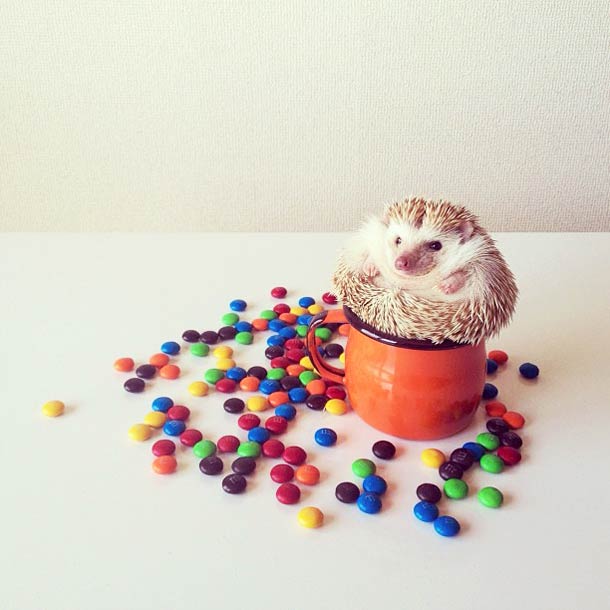
Before pet accounts became a full-time genre, a Tokyo hedgehog named Darcy turned a simple Instagram grid into something closer to a children’s picture book. Photographed by Shota Tsukamoto—who called himself a “hedgehographer”—Darcy posed with cups, plants, shoes, fruit, toys, and the occasional surreal prop against clean backgrounds that made her spines and soft face read like illustration. The account, known as @darcytheflyinghedgehog, gathered hundreds of thousands of followers in the early 2010s and became one of those rare animal feeds people sent to friends with no explanation required.
A small animal, a careful eye
Tsukamoto began sharing Darcy around 2010 after bringing the hedgehog into his life in Tokyo. The pictures were never only “here is my pet on the couch.” He designed scenes. Color blocking, negative space, and object pairings did as much work as cuteness. A hedgehog can look prickly and uncooperative in careless snapshots; Darcy looked composed, curious, and oddly glamorous because the photographer treated her like a collaborator in a miniature studio.
He has explained the ambition in interviews and features: imagine a page from a children’s book; aim for a surreal story; leave room for viewers to wonder whether the creature is quite real. That last wish sounds mystical until you look at the best frames. Scale tricks, perfect stillness, and prop theater can make a living animal feel like a character cut from paper and placed into a dream.
Darcy’s name, according to popular profiles of the account, nodded to D’arcy Wretzky of The Smashing Pumpkins—an unexpectedly rock-and-roll origin for such a gentle feed. The contrast fits the project’s charm. Nothing about the photos is loud. The personality arrives through posture and pairing: hedgehog beside a skull trinket, hedgehog with tropical fruit, hedgehog mid-“flight” in compositions that earned the flying nickname even when she was simply expertly timed and framed.
Why Darcy stood out in a cat-and-dog internet
Cats and dogs dominate pet media because they perform recognizably for cameras. Hedgehogs are nocturnal, shy, and covered in quills. Making one into a visual star requires patience and a different aesthetic. Tsukamoto’s answer was graphic clarity. White or simple backdrops. One or two props. Cropping that respected Darcy’s round silhouette. Posts arrived often enough—every couple of days in the account’s busy years—to build anticipation without turning into spam.
Captions were frequently minimal or absent. That choice pushed storytelling onto the viewer. Instead of being told what Darcy “thought,” followers invented dialogues and mini-plots. Features from design and culture sites loved this quality: the feed behaved like an open picture book. One widely mentioned favorite placed Darcy face-to-face with a skull object—an image Tsukamoto himself lingered on because he could never decide what the two were “discussing.” Humor and mild eeriness shared the frame without cruelty.
By the mid-2010s, follower counts commonly cited in roundups sat in the hundreds of thousands. Darcy appeared in Bored Panda galleries, Tokyo Weekender notes, Laughing Squid posts, AnOther Magazine’s Happy Monday series, and countless reblogs. The appeal crossed language barriers because the grammar was visual.
Looking at the photographs as design
If you treat the Darcy archive as a design lesson rather than only a cute scroll, a few habits stand out:
- One subject, one supporting object. Extra clutter would puncture the storybook illusion.
- Color as character. A single bright prop can set emotional temperature faster than a busy set.
- Respect for scale. Tiny paws and spines need breathing room; Tsukamoto usually gives it.
- Stillness as style. Motion-blur chaos is rare. Pose and patience win.
- Surrealism without gore. Odd pairings stay playful, closer to Magritte-for-kids than shock content.
Those choices explain why the images still feel current in feeds that otherwise date themselves with filters and stickers. The style is closer to product photography and picture-book layout than to early smartphone snapshots.
The end of the regular series
Hedgehogs are not long-lived companions by human standards. In early 2015, Tsukamoto posted that new pictures might stop because Darcy had grown too old for the sessions, thanking followers for their support. Later updates memorialized her life, including a small book of memories intended to comfort people on hard days. Coverage at the time treated the news with the odd seriousness reserved for internet animals who had become shared companions: grief mixed with gratitude that so many strangers had met her through photographs.
That ending is part of why the archive should be handled gently. These were not infinite content. They were a finite collaboration between a careful photographer and a small animal who aged out of the work, as living subjects do. Revisiting the images now is less about chasing a follower count and more about noticing how much affection and craft fit inside a square frame.
What remains useful for anyone making pet photos
You do not need a famous hedgehog to borrow the method:
- Build a tiny set instead of chasing the animal around a messy room.
- Choose props the pet can safely ignore or rest near—never force discomfort for a shot.
- Shoot more frames than you need; the “character” moment is often brief.
- Leave caption space for the viewer when the image is already speaking.
- Stop when the animal is done. Tsukamoto’s later honesty about age is a better legacy than endless extraction.
Those rules keep cuteness from turning into stress. Darcy’s fame worked because the pictures look collaborative. Quills catch light; eyes meet the lens; the prop feels chosen for her scale. The internet supplied the audience. The studio habits supplied the art.
A note on the spelling in the address
Older blog URLs sometimes preserved playful misspellings. The page path that carries these photos keeps “hedgehodge” as its historical slug, even though the animal is a hedgehog and most writing about Darcy uses the standard spelling. The important continuity is the subject: Tsukamoto’s Darcy, the Tokyo studio portraits, and the storybook Instagram era they belong to.
If one image from the set stays with you, try describing it without the word “cute.” You might land on balance, patience, humor, or quiet surrealism instead. That second vocabulary is what made Darcy more than a momentary share—and why, years later, a single well-made portrait can still stop a scroll cold.

Comments
Continue reading
Funny Animal Signs That Warn People (While Animals Ignore Them)
From a seagull on a no-birds disc to classic zoo and park ironies—why animal warning signs get funny, and what the rules are still for.

How to Find Local Amenities on Vacation: Mechanics, Haircuts & More
Locate trustworthy local services and everyday spots while traveling or settling in—using publications, reviews, map apps, neighbor tips, and low-pressure exploration.

Kristen Stewart for V Magazine, Spring Preview 2013
V81’s Wild at Heart cover story—Kristen Stewart shot by Inez & Vinoodh, styled by Joe McKenna, in pale minimal spring glamour.