
Cynical and Humorous Illustrations by Eduardo Salles
Mexico City illustrator Eduardo Salles’s Cinismo Ilustrado turns phones, likes, music tribes, and fairy tales into sharp minimal posters with a cynical punchline.
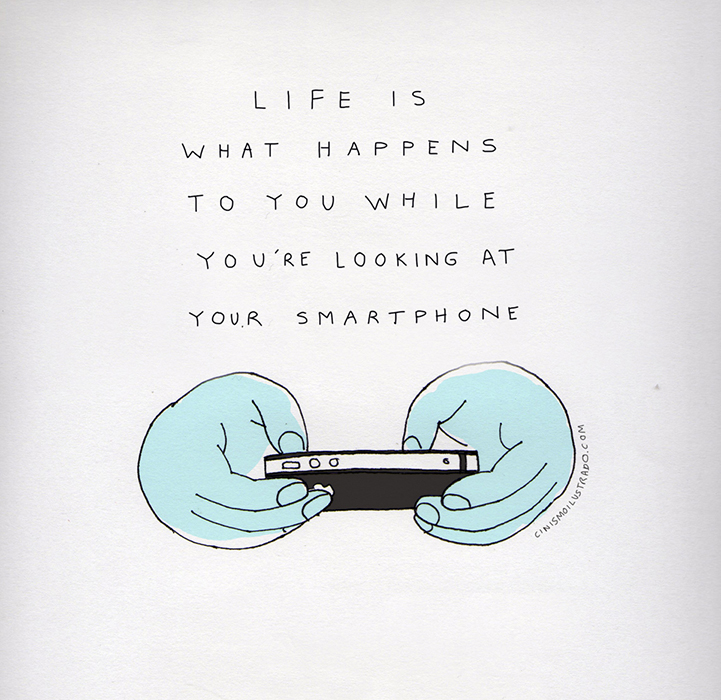
Eduardo Salles draws the way a sharp advertisement speaks: few elements, one claim, nowhere for the eye to hide. Born in Mexico City in 1987, he has worked as advertiser, designer, illustrator, writer, and Miami Ad School instructor, and he has joked that he is also a professional procrastinator. The joke is part of the brand. The panels are not lazy. Under Cinismo Ilustrado—Illustrated Cynicism—he publishes minimal posters and comics that treat contemporary life as a creative brief that needs a crueler headline.
By late 2013, design and culture sites were sharing the work widely. The house style was already locked in: flat color fields, spare icons, hand-drawn or blocky type, and captions that sound muttered rather than marketed. The humor is cynical, yet it assumes shared experience—phone trance, like-hunger, the gap between childhood costumes and adult job titles. You laugh because you recognize yourself in the frame.
Phones, likes, and mirrored play
“Life is what happens to you while you’re looking at your smartphone” revises John Lennon’s line with pale cyan hands cradling a landscape-oriented phone. The paraphrase is the entire argument. White space does the rest. No crowded café is required; the addiction already lives in your pocket. Pieces like this travel because they behave like stickers—readable at feed size, still sharp on a laptop screen.
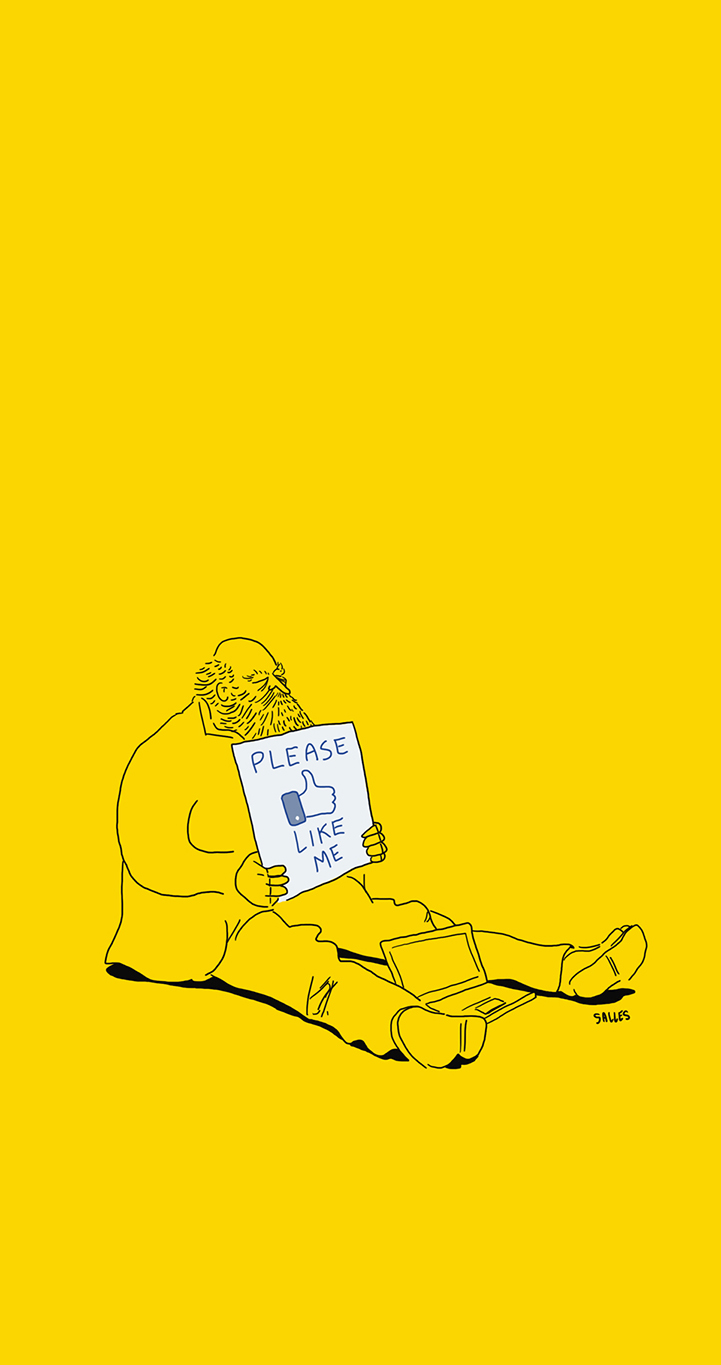
On a hard yellow field, a bearded man sits in a beggar’s pose, laptop open between his feet, cardboard sign asking “PLEASE” with a thumbs-up icon and “LIKE ME.” Social approval becomes sidewalk charity. The satire lands because the posture is familiar from timelines, not only from streets. A small “SALLES” near the shoe marks authored opinion even when the image circulates like anonymous meme sludge.
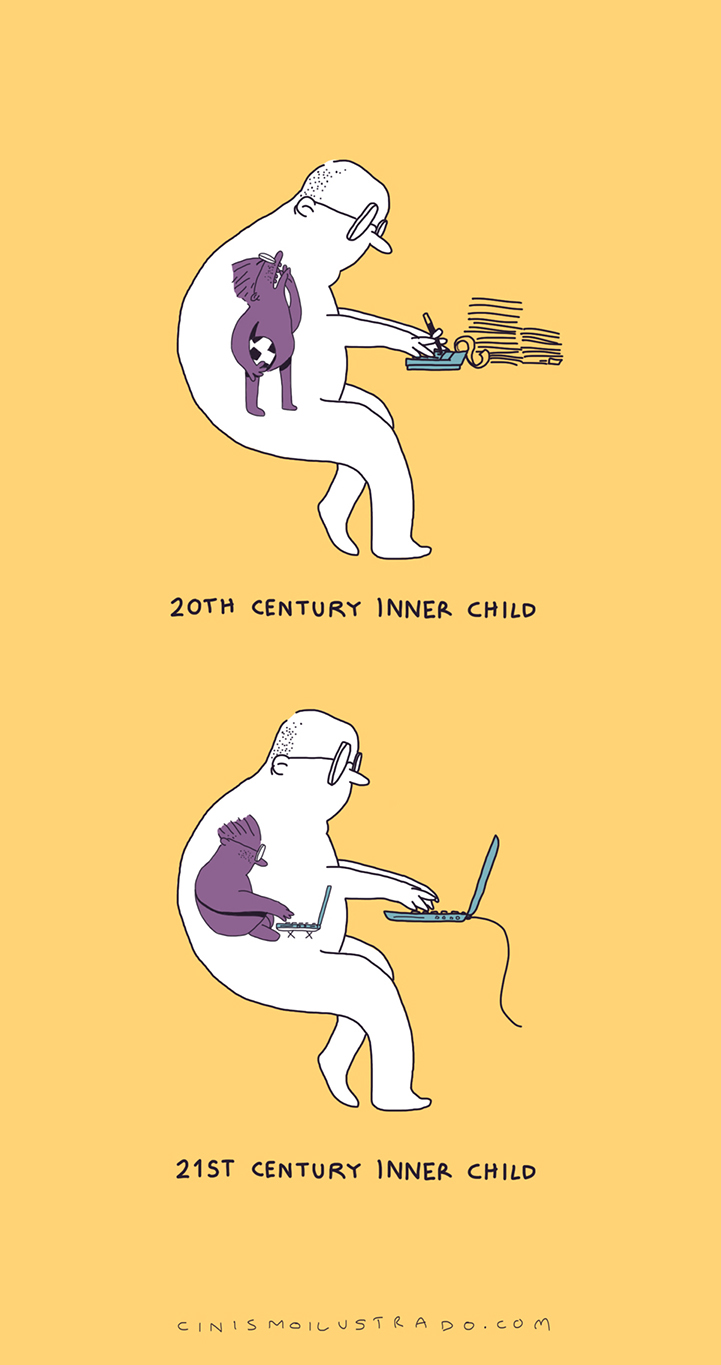
A two-panel strip compares inner children across centuries. In the twentieth, a balding white silhouette works an adding machine while a purple child inside him cheers with a soccer ball. In the twenty-first, the adult types on a laptop—and the inner child hunches over a miniature laptop of its own. Play did not vanish; it mirrored the desk. Yellow ground, white bodies, purple kid: three colors, full thesis about how leisure learned to sit still.
Charts, birds, and lunar unemployment
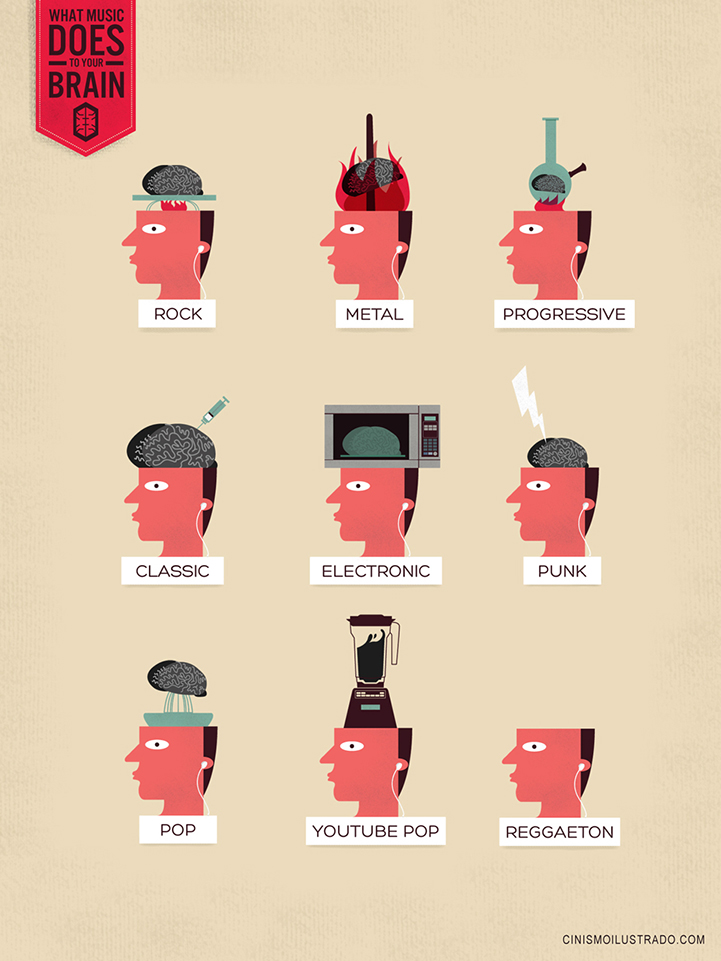
“What music does to your brain” lays out nine red profile heads with earbuds. Each genre cooks or crushes the organ differently—rock on a grill, metal on a spit, progressive in a bong, classic under a syringe, electronic in a microwave, punk under lightning, pop in a juicer, YouTube pop in a blender, reggaeton as a hollowed skullcap. Infographics usually promise neutrality. Salles borrows the grid to deliver tribal prejudice with a grin. Comment-section arguments are part of the piece; the chart invites them.
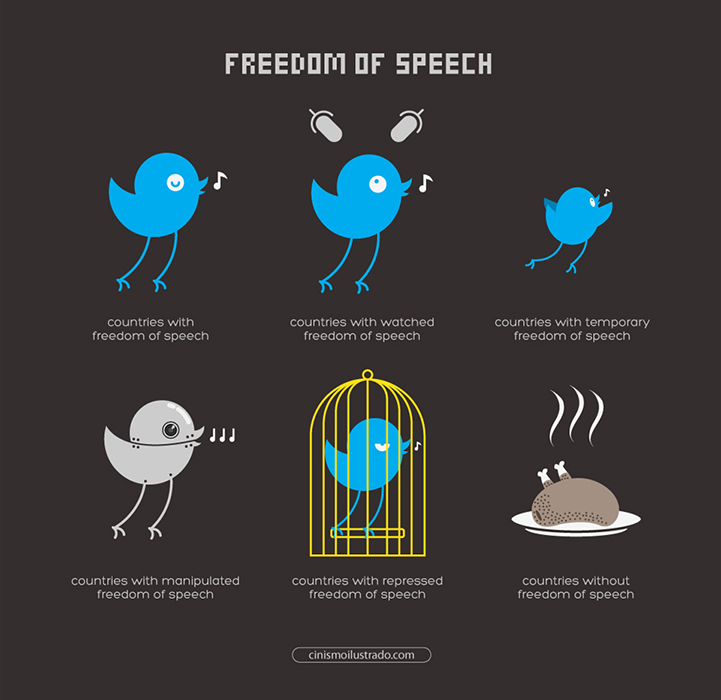
“Freedom of speech” stages six states of the blue bird icon on charcoal: singing freely, singing under hanging microphones, shrunken into temporary freedom, rebuilt as a riveted robot, locked in a yellow cage, and finally replaced by a roasted chicken on a plate. Platform mascot becomes dinner. Pixelated title type nods at digital culture while the captions stay blunt. Political illustration often shouts. This sequence itemizes until the last panel makes further arguing feel small.
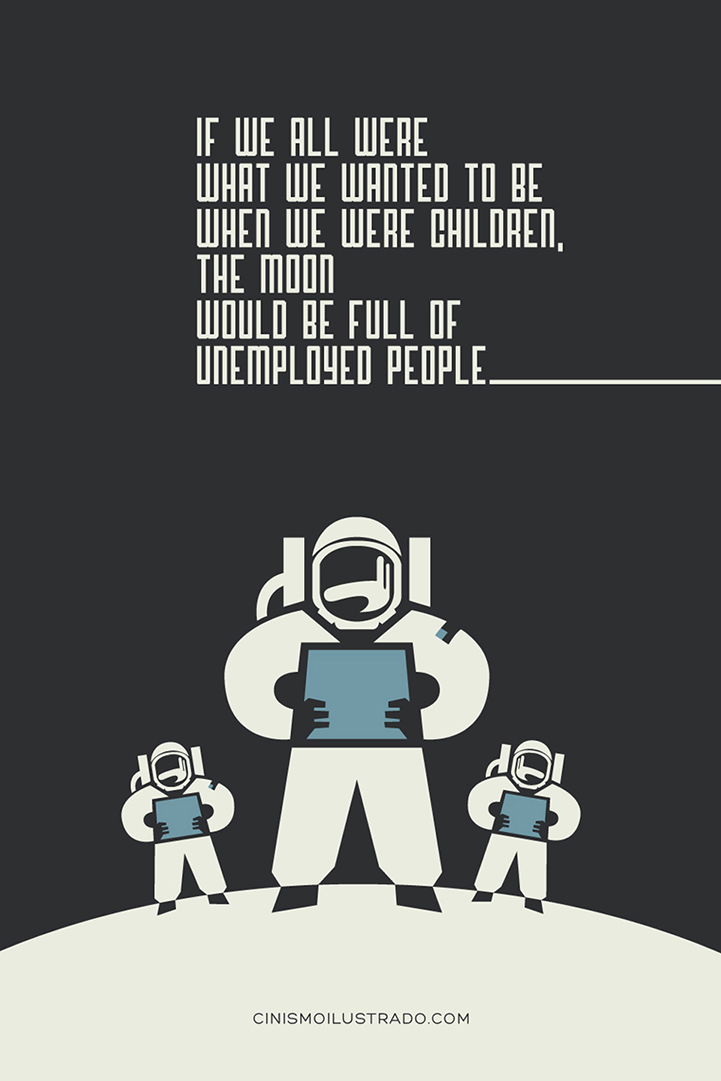
Three astronauts stand on a pale lunar curve holding light-blue tablets: “If we all were what we wanted to be when we were children, the moon would be full of unemployed people.” Childhood ambition meets labor-market arithmetic. The line is quotable; the image almost makes the quote unnecessary. Dark ground, white suits, one joke—outdoor-poster craft applied to disappointment.
Fairy tales, pop clocks, and stereotype hands
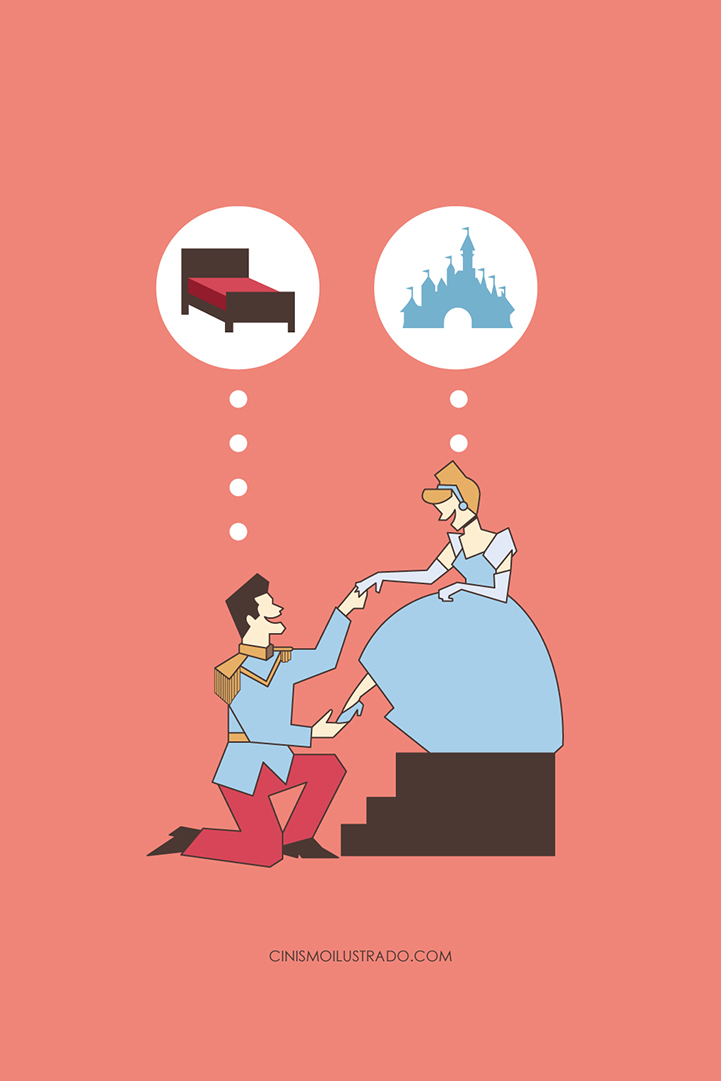
On coral pink, a smiling prince fits a glass slipper while Cinderella smiles back. His thought bubble shows a bed; hers shows a castle. Romance as mutual transaction, grins intact. Salles does not redraw the fairy tale as tragedy—he keeps the iconic pose and annotates the motives. That annotation habit runs through Cinismo Ilustrado: preserve the cultural icon, add the uncomfortable symbol, leave the viewer holding both.
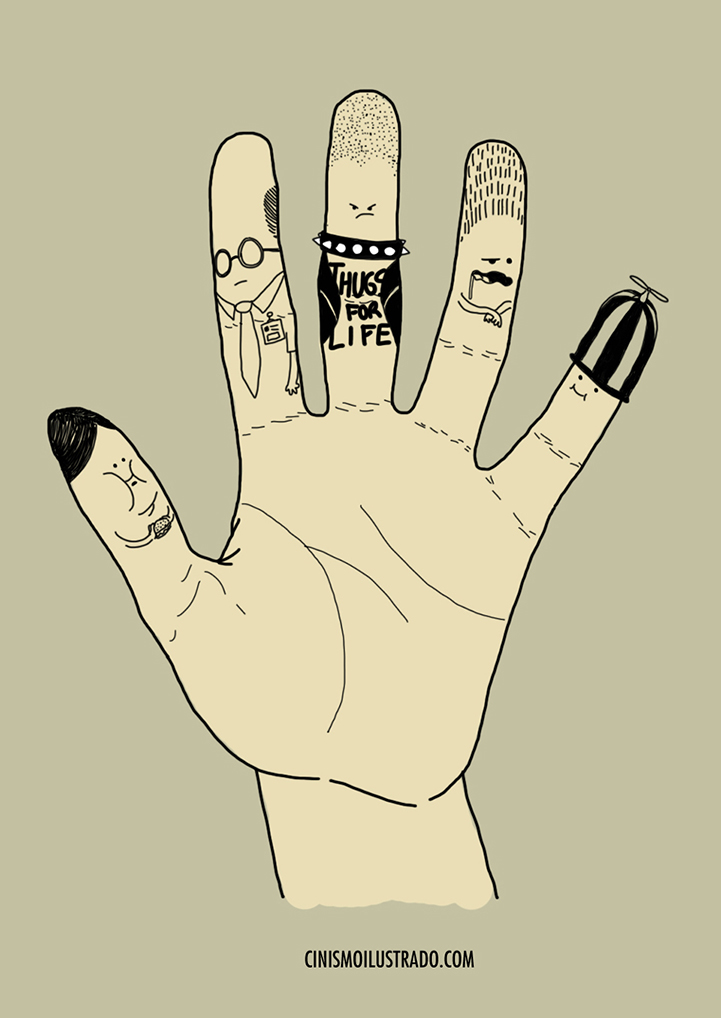
A raised hand on olive beige turns each digit into a social type: a cookie-eating thumb, a badged office index finger, a middle finger in a “THUGS FOR LIFE” vest, a mustached macho ring finger, a propeller-beanie pinky. Personality as anatomy lesson. The drawing is almost a children’s chart until you notice how quickly stereotypes snap into place—and how willingly we read them.
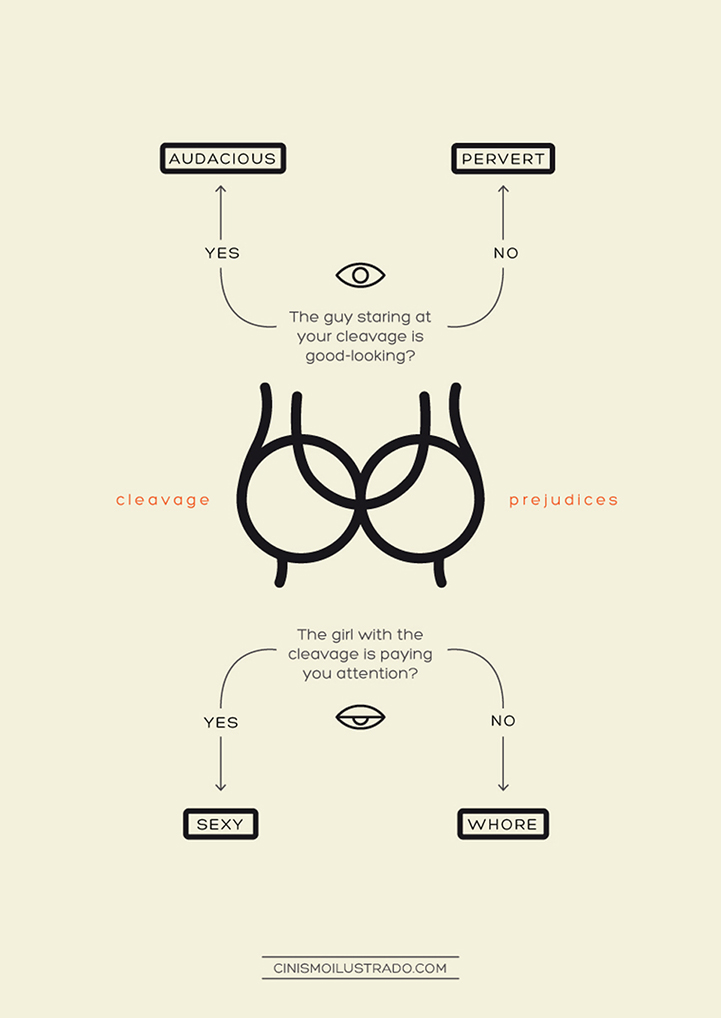
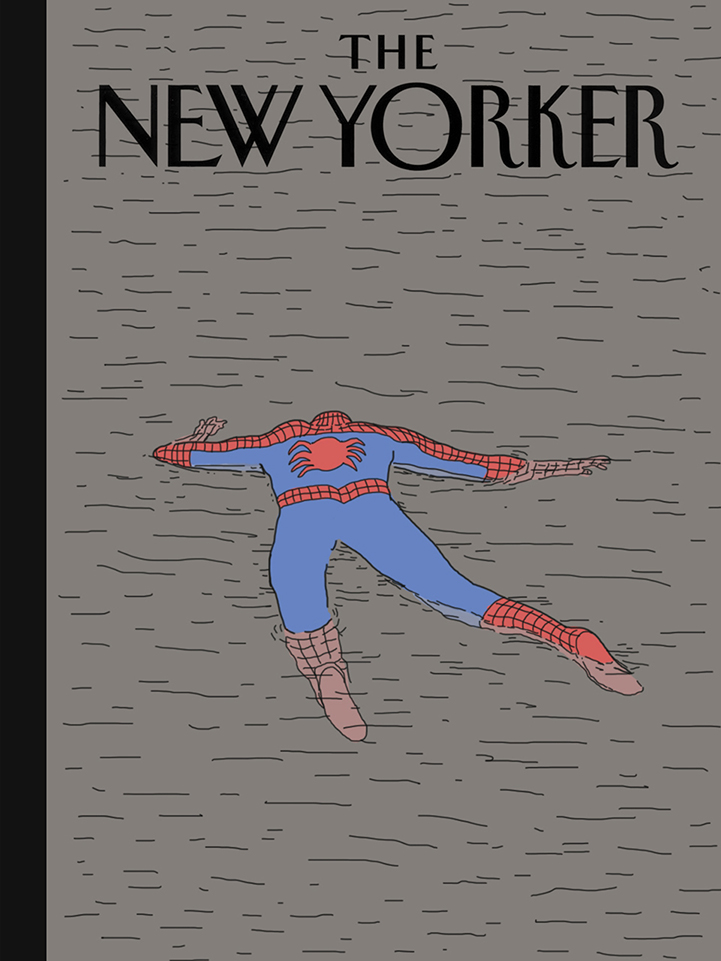
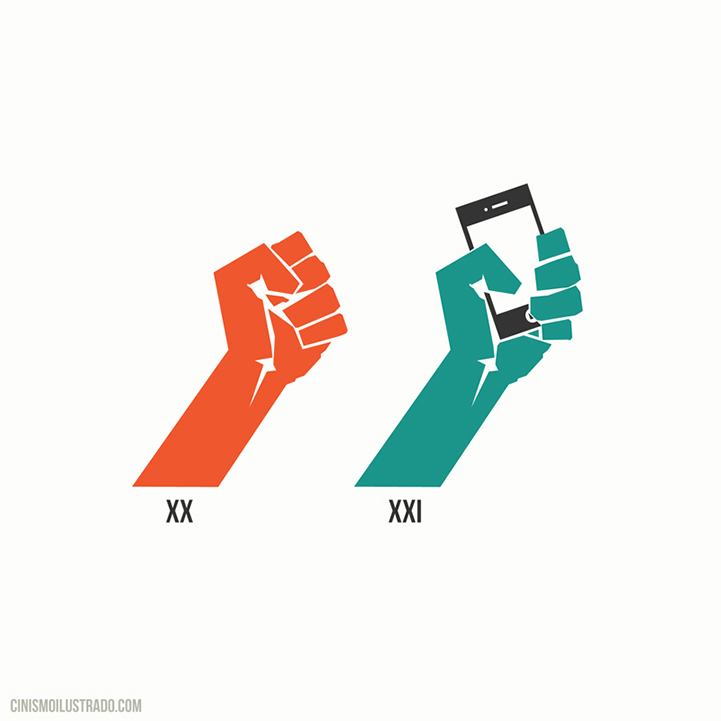
Other panels keep pressure on work, status, environment, faith, and online manners—the themes Design Indaba and My Modern Met flagged when introducing the project. Craft stays steady: limited palettes, centered layouts, cinismoilustrado.com as a quiet stamp. You can reject a joke’s politics and still admire how little drawing it needed to land.
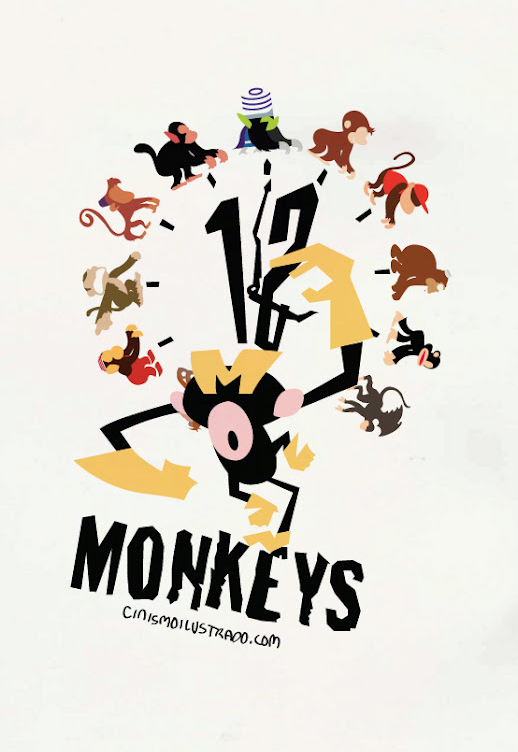
“12 Monkeys” turns a clock into a ring of pop-culture apes—Mojo Jojo, Curious George, Kongs, Abu, and company—while the title nods at the film and the literal count. Referential humor without a paragraph of explanation: if you know the characters, the joke is instant; if you do not, the graphic still reads as a weird timepiece. That double door is typical Salles.
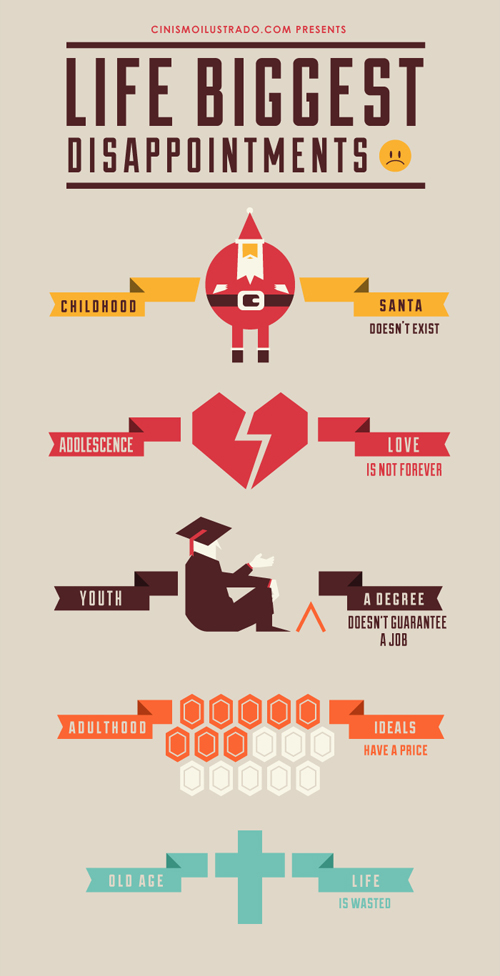
Salles’s résumé outside the comic—agency leadership, later visual-news work including Pictoline, awards spanning advertising, journalism, and literature—explains the polish without sanding the bite. Cinismo Ilustrado is not accidental virality; it is a creative director’s sketchbook aimed at nerves. The panels entertain on purpose and doubt on schedule.
Read the gallery the way an art director reads a campaign. Which piece is a slogan? Which is a fake research chart? Which is a billboard? The smartphone line is a headline. The music grid is a competitive study nobody commissioned. The astronauts are outdoor advertising for grown-up compromise. The hand of stereotypes is a casting call. Once you see that structure, the cynicism stops feeling like random internet snark and starts feeling like a practiced genre—illustrated doubt with production values.
Platforms change; the itch for validation does not. Salles hands you a clean image and a cleaner sentence, then steps aside. Whether you save the phone poster, argue the music chart, flinch at the slipper scene, or smile at the monkey clock, your reaction finishes the joke—and the URL in the corner has already taken credit.

Comments
Continue reading
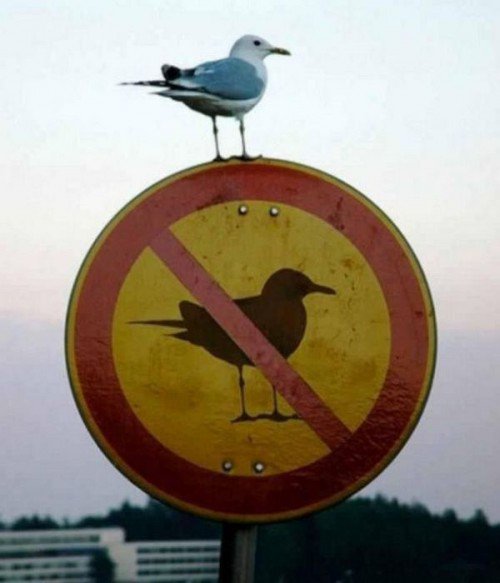
Funny Animal Signs That Warn People (While Animals Ignore Them)
From a seagull on a no-birds disc to classic zoo and park ironies—why animal warning signs get funny, and what the rules are still for.
How to Find Local Amenities on Vacation: Mechanics, Haircuts & More
Locate trustworthy local services and everyday spots while traveling or settling in—using publications, reviews, map apps, neighbor tips, and low-pressure exploration.

Kristen Stewart for V Magazine, Spring Preview 2013
V81’s Wild at Heart cover story—Kristen Stewart shot by Inez & Vinoodh, styled by Joe McKenna, in pale minimal spring glamour.