
Creative Photos of Pets and Their Owners: Zachary Rose’s Pet Headz
Toronto photographer Zachary Rose’s Pet Headz series puts pet faces on owners by holding a DSLR playback screen—clever, low-tech mashups that went viral on Instagram.
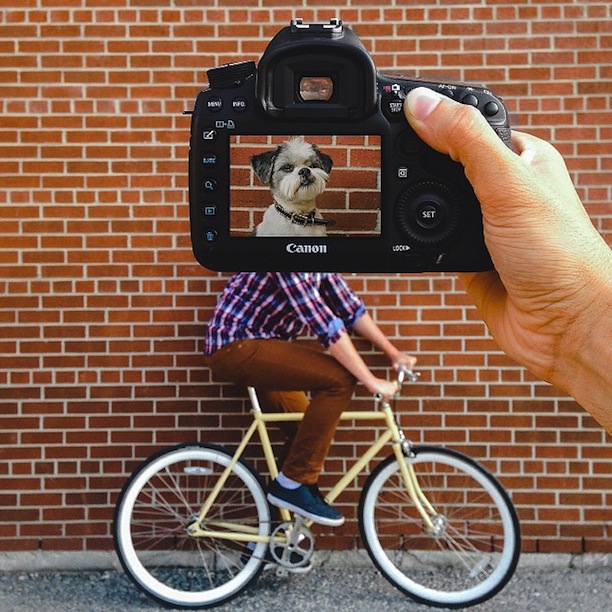
People joke that pets and their owners start to look alike. Toronto photographer Zachary Rose took the joke literally—then made it stranger and kinder at the same time. In his series “Pet Headz” (often written Petheadz), he photographs a pet’s head on a DSLR, holds that camera in front of the owner’s face so the LCD becomes a live mask, and captures the mashup with a second camera, usually a phone. The result is a human body topped by an animal face, with brick, wallpaper, or clothing carefully aligned so the seam almost disappears. What began as a creative exercise with roommates and their cats became a habit of meeting friends, family, and strangers across Toronto—and later on the road—who were willing to look ridiculous for half a minute.
Around 2013 the pictures traveled widely on Instagram and design blogs. Rose, who also worked as a wedding photographer and filmmaker under Driftwood Photography, kept the process almost aggressively low-tech. No elaborate retouching was required. The toolkit was patience, a normal lens (he has mentioned a 50mm), matching backgrounds, and owners who trusted him enough to disappear behind a camera body. The humor lands because the animals stay themselves—scruffy, solemn, treat-focused—while the humans supply posture, clothes, and social context. You laugh at the hybrid, then notice how much affection is required to make the hybrid possible.
Building the mashup in camera
The sequence is easy to describe and harder to nail. First comes the pet portrait: a tight headshot with attention to expression—a cocked ear, a closed-eye treat moment, the particular stare dogs invent for lenses. Then Rose switches to playback, positions the DSLR so the screen covers the owner’s head, and lines up necks, collars, mortar lines, and hoodies. A friend or Rose himself shoots the wide frame. The final still is a photograph of a photograph. That honesty is part of the charm; the method is visible in every successful image.
One classic frame parks a cream bicycle against a red brick wall. A hand grips a Canon body; the LCD shows a small white dog with gray ears and a studded collar; below the camera, a rider in a purple plaid shirt and brown trousers sits as if the dog were simply the next logical head for a city cyclist. Mortar lines continue from the screen into the real wall. Your brain argues with itself for a second, then surrenders to the joke.
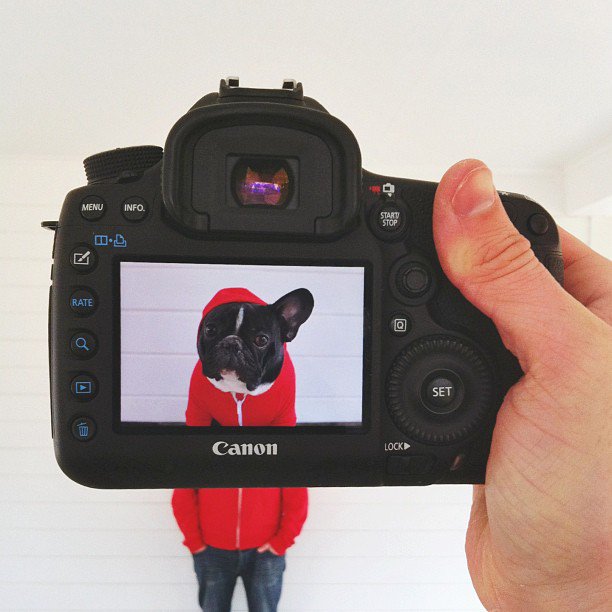
Another portrait swaps a black-and-white French bulldog onto a person in a matching bright red zip hoodie. White wall, blue jeans, hands in pockets—the casual stance makes the dog face feel like a personality transplant rather than a Halloween costume. Matching clothes are one of Rose’s quiet signatures. They sell the old “family resemblance” myth while admitting the whole scene is theater.
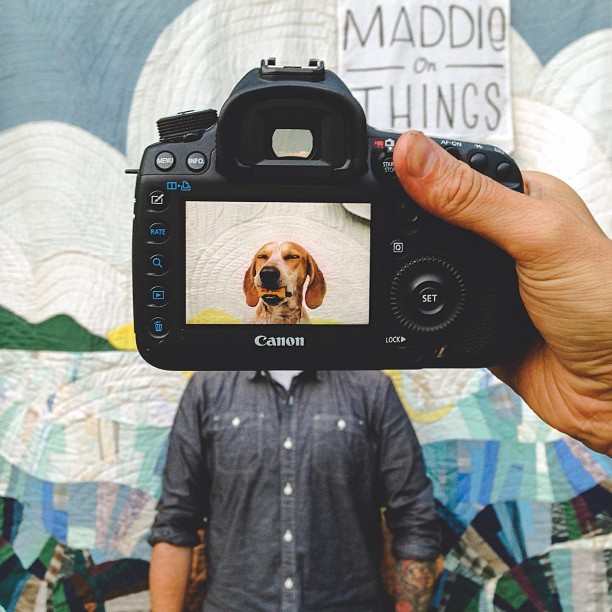
A third image keeps the camera-as-mask idea against a softer domestic backdrop: a quilted landscape of hills, water, and clouds; a handwritten sign reading “MADDIE On THINGS”; a Canon screen showing a coonhound with eyes closed around a bone-shaped treat. A denim sleeve and tattoo edge into frame. Whether you read the still as pure Pet Headz or as a neighboring pet-portrait gag from the same creative moment, the craft lesson is identical. Put the animal’s face where the human’s belongs, let the props carry the story, and leave the camera hardware visible so the audience can enjoy the trick and the tenderness together.
Why the series traveled so far
Pet Headz thrives in a social feed because each image is a complete joke with no caption required. You see the hand, the menu buttons, the LCD, and the body—and you understand method and punchline at once. That transparency is rare among photo gags that usually hide their seams in editing software. Rose shows the seam on purpose. The seam is the joke.
The series also flatters a bond people already claim with their animals. It does not mock owners so much as confirm their private theory: this creature is already part of my silhouette. A mother posing with a German shepherd, roommates with cats, cyclists with terriers—Toronto becomes a parade of hybrid citizens. Rose has described meeting subjects, getting a feel for both human and pet, photographing the animal, then holding the playback carefully in front of the person. Later he carried the project beyond the city, asking strangers in new places whether they wanted to try. The gear list stayed humble. The limiting factor was never equipment; it was cooperation.
There is a cultural timing element, too. The early Instagram years rewarded clever in-camera ideas as much as filters. Pet Headz arrived when audiences were hungry for photos that felt handmade, local, and shareable without looking like advertising. A wedding photographer moonlighting as a street comedian fit that appetite perfectly.
If you try a careful version
Start with cooperation, not force. Photograph the pet first in good light. Keep the background simple and continuous from screen to world. Ask the human to wear something that echoes the animal’s collar color or fur tones. Hold the playback screen steady; recruit a friend to shoot the wide frame so you are not juggling two devices alone. Expect many near-misses. The best frames often happen when the pet looks slightly judgmental and the human looks completely willing.
Respect is non-negotiable. Do not stress animals for a viral shot. Keep sessions short, use treats wisely, and stop when ears pin, tails tuck, or bodies lean away. The original series feels joyful because the pets look comfortable—and because the humans are clearly in on the gag. If either side stops having fun, the picture is not worth it.
What remains after the feed moves on
Phone apps can fake head swaps in a tap now. Rose’s pictures still charm because they are physical: a heavy camera, a glowing LCD, a brick wall that has to match, a dog that might walk away mid-pose. They archive a simple pleasure—standing next to the animal you love and admitting, with a straight face and a crooked smile, that you already share a silhouette.
So the next time your dog mirrors your Sunday mood, or your cat claims the good chair as if it pays rent, remember Rose’s workaround. You do not need magic software. You need a screen, a steady hand, a matching wall, and the courage to let the neighborhood see exactly who runs the household.

Comments
Continue reading
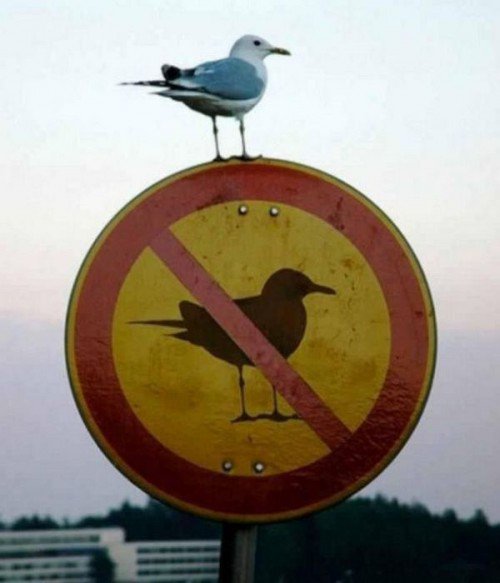
Funny Animal Signs That Warn People (While Animals Ignore Them)
From a seagull on a no-birds disc to classic zoo and park ironies—why animal warning signs get funny, and what the rules are still for.
How to Find Local Amenities on Vacation: Mechanics, Haircuts & More
Locate trustworthy local services and everyday spots while traveling or settling in—using publications, reviews, map apps, neighbor tips, and low-pressure exploration.

Kristen Stewart for V Magazine, Spring Preview 2013
V81’s Wild at Heart cover story—Kristen Stewart shot by Inez & Vinoodh, styled by Joe McKenna, in pale minimal spring glamour.