
Creative Dining and Breakfast Nooks for Everyday Gatherings
Built-in banquettes, sunny corners, and mixed seating ideas—from white sunroom booths to mid-century tulip tables and cabinetry alcoves—for comfortable breakfast and dining nooks.
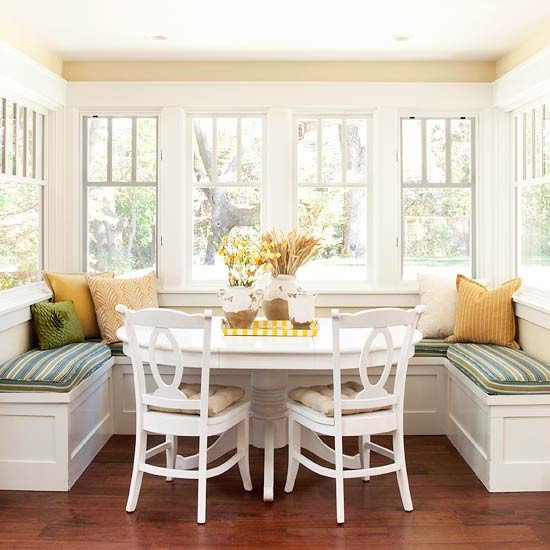
A breakfast nook succeeds when the smallest meal of the day gets a dedicated stage: a corner that invites lingering without stealing the whole kitchen. Built-in banquettes, booths, and mixed seating packs are the usual tools. Done well, they seat more people than a freestanding table of the same footprint, keep circulation clear, and turn a window into daily scenery. The rooms collected here show how that formula flexes—from crisp white sunrooms to colorful cottages, mid-century mixes, and cabinetry alcoves that feel like rooms inside rooms.
Look for three decisions in every example. First, how the bench line meets the wall and window. Second, whether the table base frees knees (pedestals and single legs usually win). Third, which accent family—yellow, aqua, terracotta, soft blue—ties pillows, shades, and a centerpiece so the small footprint does not look busy.
Sunlit whites and garden views
White furniture against green outdoor views remains a reliable formula because daylight does half the decorating. A U-shaped white banquette with blue-green striped cushions wraps an oval pedestal table; matching side chairs with cutout backs keep the open edge flexible when guests arrive. Yellow pillows and a striped tray of ceramic vessels pull warmth into an otherwise crisp shell, while dark hardwood floors ground the brightness so the nook does not float.
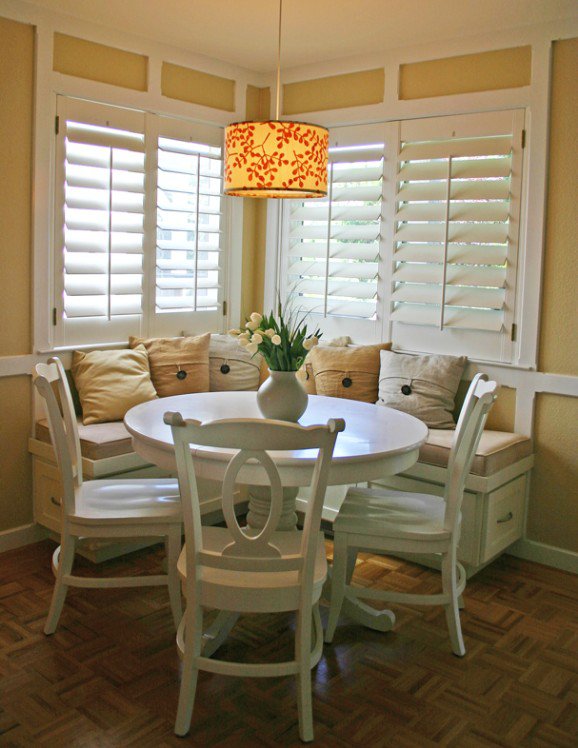
Another sunny corner pairs an L-shaped white bench—drawers underneath for placemats and craft overflow—with a round pedestal table and oval-back chairs. Mustard walls, white wainscoting, plantation shutters, and a berry-patterned drum pendant create cottage cheer without cluttering surfaces. Storage in the banquette base is the quiet hero: when the table stays clear, the nook feels intentional rather than temporary.
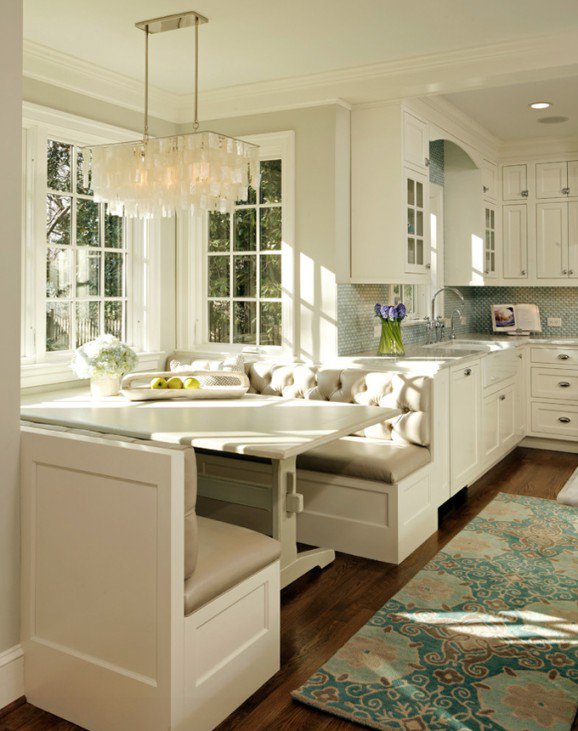
A third kitchen booth goes plush. Diamond-tufted taupe upholstery softens a rectangular pedestal table; large corner windows pour in light; an aqua mosaic and farmhouse sink nearby stitch the booth into the working kitchen. A tiered capiz chandelier softens glare and gives evening meals a gentler center. The lesson is integration: the nook should share materials with adjacent cabinetry so it reads as architecture, not a restaurant booth dropped into the plan.
Statement seating and mixed eras
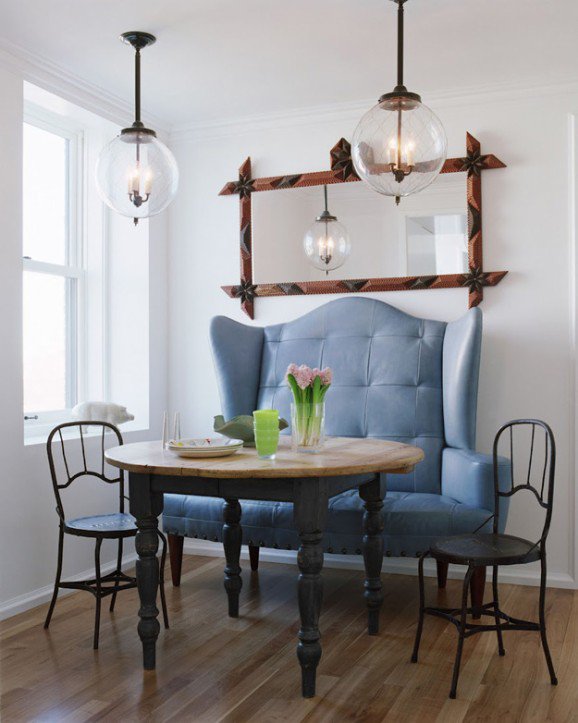
Not every nook needs matching chairs. A dusty-blue tufted wingback banquette can act like a sofa for breakfast, paired with a round rustic wood table and slim metal side chairs. Globe pendants and a carved folk-art mirror frame turn the meal zone into a conversation piece. Mixing formal upholstery with industrial metal and farmhouse wood works when the palette stays tight—white walls, warm wood, one cool seating color.
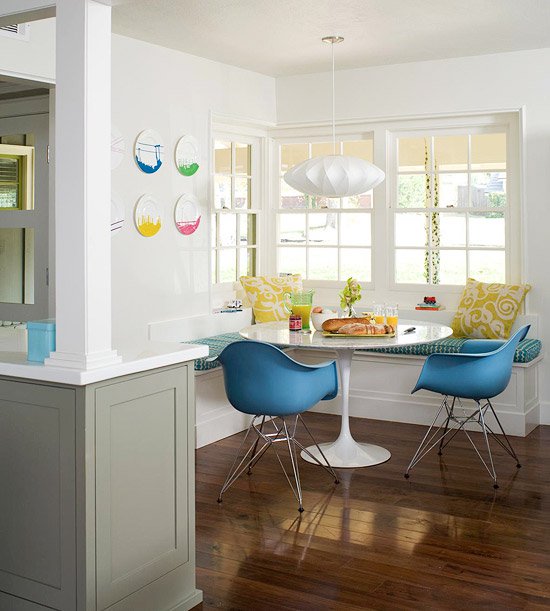
Mid-century icons translate easily to morning use. A white tulip table, Nelson bubble lamp, teal patterned bench cushion, and bright blue Eiffel-base chairs sit opposite a plate wall of tiny skyline graphics. Yellow damask pillows and a simple pastry board keep the scene casual. Iconic chairs earn their keep here because they slide in and out of a tight aisle better than bulky armchairs.
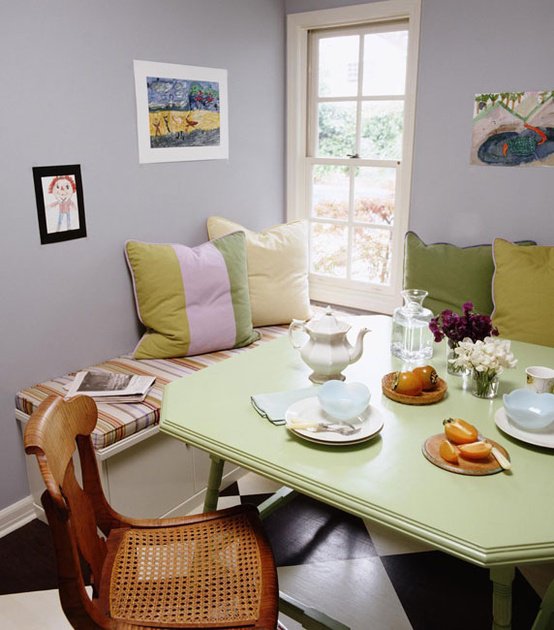
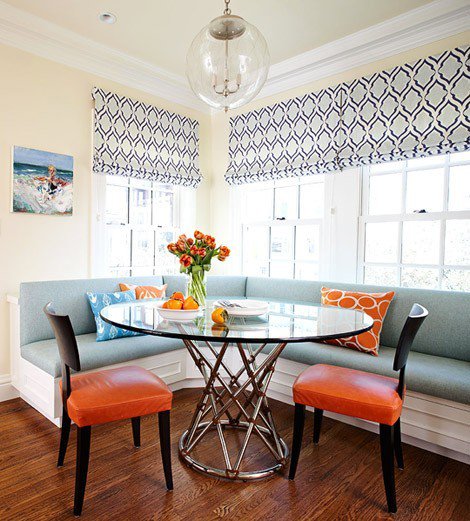
Color-forward corners prove the same L-shape can feel playful. Lavender walls, a mint octagonal table, a bold checkered floor, and olive-green pillows host children’s art and a casual fruit board—evidence that a nook can be family-messy and still designed. Elsewhere, aqua banquette cushions meet orange leather chairs, geometric Roman shades, and a sculptural metal-base glass table under a clear globe pendant. High contrast works in small rooms when patterns are limited to one zone (shades) and solids carry the seats.
Soft blues, coastal calm, and framed views
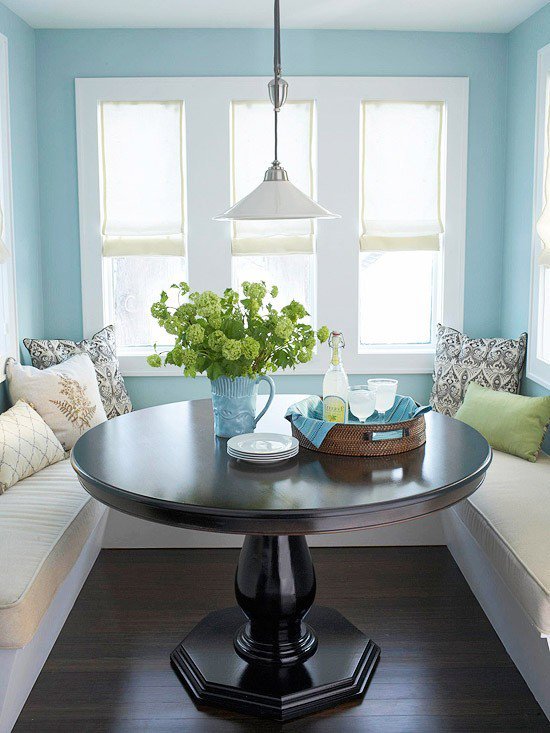
Sky-blue walls and a dark wood pedestal table inside a white U-banquette feel coastal without seashell décor. Cream Roman shades, a cone pendant, hydrangeas in a blue pitcher, and mixed botanical pillows keep the palette quiet enough for daily newspaper time. Dark floors echo the table so the light walls do not wash out.
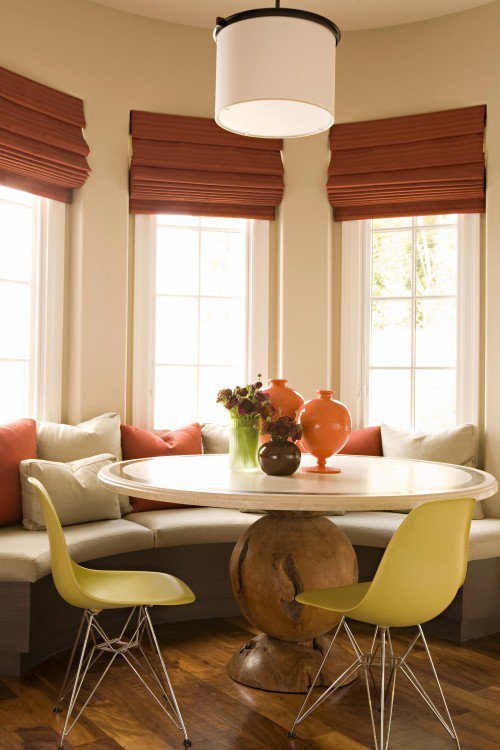
A curved bay with terracotta Roman shades and chartreuse molded chairs warms the same idea: beige banquette, round table with a sphere pedestal, orange pillows echoing the shades, a white drum pendant centering the curve. Matching shade height across three windows is a small discipline that makes the architecture look finished.
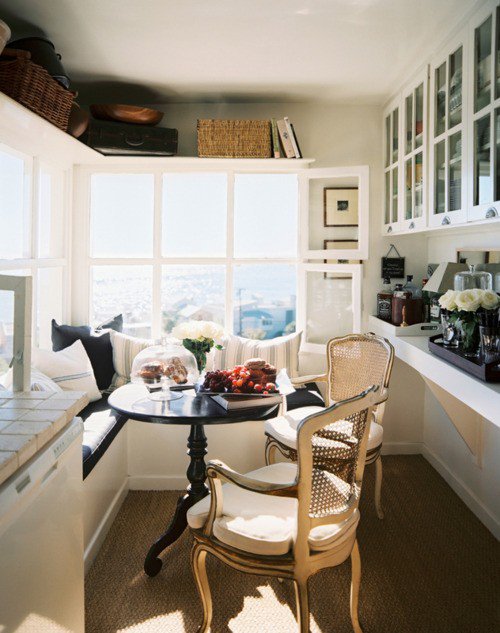
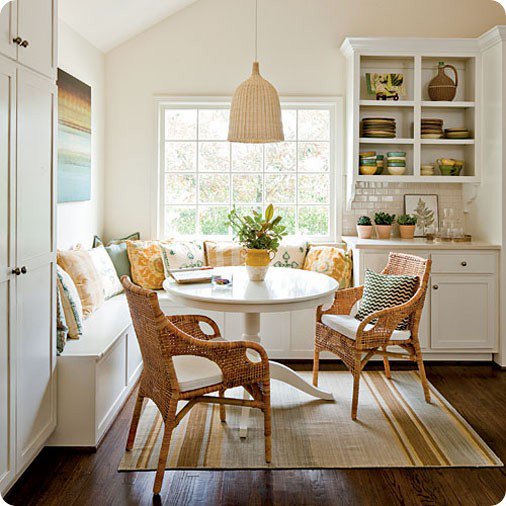
When the view is the star, keep furniture quiet and storage clever. A charcoal-cushioned window bench plus cane-back armchairs around a small black pedestal table leave room for a cake dome and fruit; a high shelf of baskets and a suitcase uses vertical space that would otherwise be empty air. Coastal cottage styling—white L-banquette, wicker chairs, woven bell pendant, striped rug, open plate shelving—blends dining with kitchen storage so the nook never feels stranded from the cook zone.
Alcoves, galleries, and room-within-a-room builds
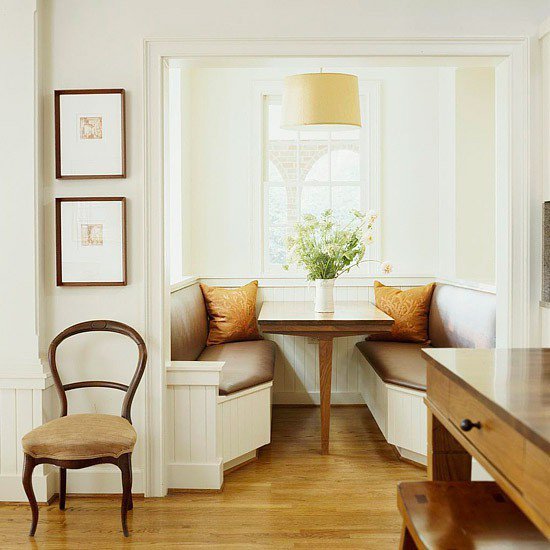
Recessed openings make a nook feel intentional rather than leftover. Twin brown-cushioned benches flank a square wood pedestal table inside white beadboard; mustard pillows mark the corners; a cream drum pendant centers the alcove like a small stage. The framed opening tells guests where to sit without a rug or screen.
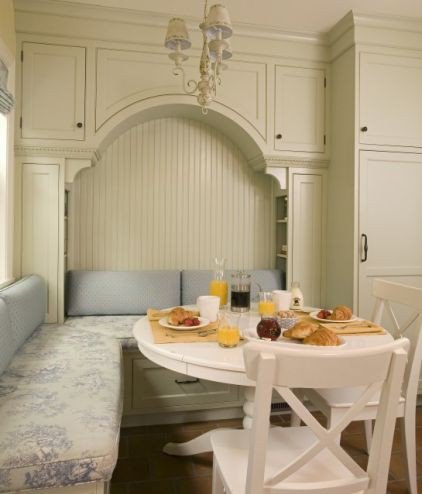
Custom cabinetry can go further. An arched cream alcove with floral and blue cushions, X-back chairs, and a petite chandelier creates a private breakfast room inside the kitchen, complete with drawers and upper cupboards. Soft blue textiles against cream millwork keep the traditional detailing from feeling heavy.
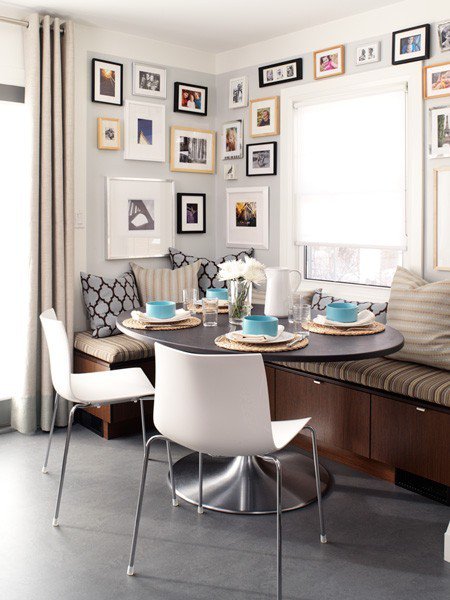
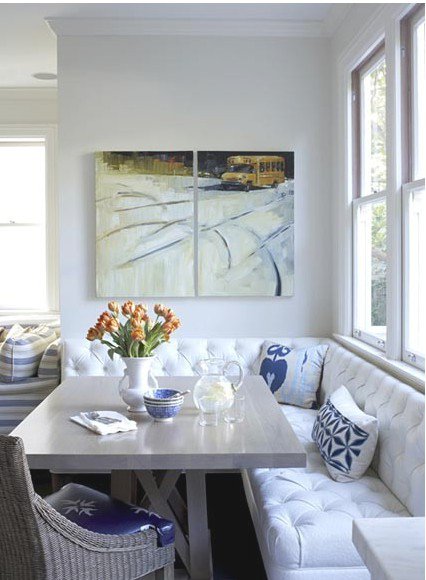
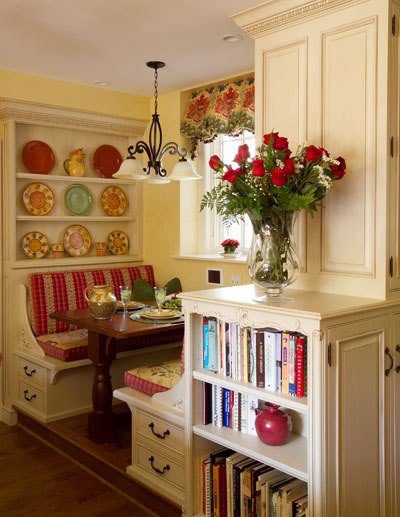
Personal walls matter in tight footprints. A dark wood L-banquette under a dense gallery of mixed frames turns a grey corner into a family archive; white molded chairs and blue bowls keep the table light so photos remain the focus. A white tufted L-bench with a light wood trestle table and a bold school-bus diptych shows how large art can replace a cluster of small accessories that would crowd a bench. Traditional country builds add plate racks, under-bench drawers, and a bookcase end—yellow walls, red-striped backs, floral seats, iron chandelier—so dining doubles as library and storage without needing a separate room.
Planning checklist for your own corner
- Measure circulation — leave a clear path past the open side of the table; pedestal and single-leg bases free knee space in tight U and L shapes.
- Decide storage early — drawers under the bench beat stacking bins beside chairs, and plate racks reclaim wall height.
- Mix one freestanding seat — chairs on the aisle side make it easier to slide in without asking everyone on the bench to stand.
- Layer light — a pendant for evenings, shades that filter glare, and a window or bay that supplies daylight for mornings.
- Edit color — one accent family across pillows, shades, and a centerpiece keeps a small room coherent.
- Test cushion depth — banquettes need enough depth to sit back comfortably; too shallow feels like a waiting-room bench.
Whether you prefer a white sunroom booth or a cabinetry alcove with a floral cushion, the job is the same: make a small footprint feel like the most used seat in the house. Start with the banquette line and the window, choose a table that respects knees and traffic, then let textiles and one accent color negotiate the mood.

Comments
Continue reading
Kitchen Design Ideas: Layout, Storage, Light, and Finishes That Work
Practical kitchen design ideas—work zones, cabinetry, lighting, and durable finishes—so inspiration translates into rooms that cook and gather well.
18 Kitchen Design Ideas: Gloss Cabinets, Smart Layouts, and Practical Finishes
Eighteen kitchen design directions—from high-gloss wood-look cabinetry and stainless suites to islands, pantries, lighting, and backsplash strategies—anchored by the surviving gallery photo.
15 Modern Kitchen Island Designs: Layouts, Materials, and Built-Ins
Fifteen kitchen island ideas—from dual black-and-white stations and fluted wood to cooktop islands, produce bins, and furniture-style pieces—with planning notes on clearance and function.