
Copyright Policy: Visual Credits, Removals, and Reuse of Sortrature Content
How Sortrature treats third-party visuals and original writing—credit, removal requests via contact, permission to reuse text, and what readers may not copy.
Sortrature publishes editorial features, image collections, and related pages for readers. This Copyright Policy explains how we treat visual material and written content on sortrature.com, what rights we claim, how creators and rights holders can request removal, and how others may (and may not) reuse material from this site.
This page is a site policy statement. It is not legal advice for your situation. If you need counsel on a specific dispute, consult a qualified attorney in your jurisdiction.
1. Purpose of this policy
Our library often includes photographs, illustrations, design documentation, and other visuals created by people outside Sortrature. We are grateful to the photographers, designers, artists, studios, and publishers who make work that can be shared, discussed, and credited in editorial contexts.
At the same time, we respect copyright and related rights. If you own or control rights in material that appears on this site and you do not want it here, we want a clear, fast path to correct that. If you want to reuse Sortrature’s own writing or presentation, we want clear rules so permission and credit are not ambiguous.
In short: visuals on Sortrature are generally treated as belonging to their creators or rights holders; Sortrature’s original text and site presentation are protected as our work, subject to the limits below.
2. Visual material
Unless a caption, credit line, or accompanying note states otherwise, the photographs and other visual works displayed on Sortrature are not claimed as Sortrature’s original authorship. We thank creators who share personal and professional work that can be featured, referenced, or discussed in articles.
Display on this site does not transfer ownership to Sortrature. It does not grant you, the reader, a license to download, republish, sell, or commercially exploit those images. Rights remain with the photographer, artist, designer, agency, brand, or other rights holder, as applicable.
Where we know a reliable source or credit, we aim to include it. Older pages may have incomplete credits because of how content was recovered or migrated. Incomplete credit is not a claim of ownership. If you can help us correct attribution, contact us with the page URL, a preferred credit line, and a link to your portfolio or rights statement when available.
3. Removal and takedown requests
If you are the creator, rights holder, or authorized agent for visual (or other) material on this site, and you do not wish that material to remain here, contact us. We will review good-faith requests and, when appropriate, remove or replace the material promptly.
To speed review, include as much of the following as you can:
- Your full name and a working email address
- The exact URL(s) where the material appears
- A description of the work (and, if helpful, a thumbnail or filename)
- A statement of your relationship to the work (owner, exclusive licensee, agent)
- The action you want (removal, replacement, corrected credit, link change)
- Any supporting links (portfolio page, licensing page, prior publication)
Send requests through our contact page. We may ask follow-up questions if ownership is unclear or if the same asset appears on multiple pages. We do not ignore good-faith rights requests; we also need enough detail to act accurately.
If you believe material was posted in error, or if a credit is wrong but you are comfortable with continued display under corrected attribution, say so. Many issues are credit fixes rather than full removals.
4. Written content and site presentation
Except for third-party visuals and any quoted or clearly attributed third-party text, the written content published on Sortrature—article prose, titles and excerpts we author, policy pages, and similar editorial text—is original work of Sortrature (or of contributors writing for Sortrature). All rights in that material are reserved, except where we expressly grant permission or where applicable law allows limited use without permission.
You may not copy, scrape, republish, or commercially reuse Sortrature’s written content as if it were your own. You may not mirror entire articles on another site. Short quotation for commentary, criticism, news reporting, teaching, or scholarship may be allowed under applicable fair use / fair dealing rules; even then, provide clear attribution and a link to the source page when practical.
Site design, layout, navigation, logos, and distinctive presentation elements are likewise protected. Do not clone the site’s look-and-feel or present Sortrature pages as your product.
5. Permission to reuse Sortrature content
If you want to reuse more than a short, attributed quotation of Sortrature text—for example, a substantial excerpt, a translation, a reprint in a book or paid newsletter, or republication on a commercial site—ask first. Use the contact page, describe the work you want to use, the context, the audience, and whether the reuse is commercial.
We may grant, deny, or condition permission (credit wording, link requirements, territorial limits, or fee). Silence is not permission. A social share of our public URL is not the same as copying the article body into your CMS.
For third-party images that appear beside our text, Sortrature generally cannot license those visuals to you. Contact the rights holder directly for image licenses. Our display of an image is not a sublicense.
6. Linking, embedding, and social sharing
You may link to public Sortrature pages. Prefer the canonical article URL. Do not frame our pages inside another site in a way that misleads readers about the source, and do not use automated systems that overload our servers.
Sharing a title, short description, and link on social platforms is ordinarily fine. Copying the full article into a post or newsletter is not. If a platform’s preview card pulls a thumbnail from our page, that does not expand your rights in the underlying photograph beyond what the platform and rights holder allow.
7. User submissions and correspondence
If you send us tips, corrections, images, or story ideas, do not assume we will publish them. By submitting material you created, you represent that you have the rights to send it and that we may review it for editorial purposes. If we wish to publish something you sent, we will confirm credit and scope with you unless a separate written agreement already covers the submission.
Do not send us material you do not have rights to share. If your message includes confidential or personal data about others, tell us clearly so we can handle it carefully.
8. Trademarks and third-party names
Brand names, product names, and logos mentioned in articles usually belong to their owners. Editorial mention for identification or commentary does not imply endorsement, sponsorship, or affiliation unless we say so. Do not use Sortrature’s name or marks in a way that suggests we endorse your product or service without written permission.
9. Accuracy, archives, and recovered pages
Some older pages on this site were recovered from prior publications and may contain incomplete credits, broken outbound links, or historical captions. We update and clarify when we can. Historical context in an article does not freeze the copyright status of an image: rights holders may still request removal or corrected credit.
We may edit, retitle, or restructure pages for clarity and readability while preserving the page’s public URL where possible. Edits to our prose do not change the ownership rules above.
10. How we handle disputes
We prefer direct contact and prompt correction over escalation. When a request is clear and supported, removal or credit correction is the usual outcome. If claims conflict (for example, two parties asserting exclusive rights), we may temporarily remove material while we seek clarification.
Repeated automated scraping, mass republication of our text, or impersonation of Sortrature may lead to technical blocks and further action as allowed by law.
11. Changes to this policy
We may revise this Copyright Policy from time to time. The date associated with the current published version of this page reflects when the policy text was last substantively refreshed. Continued use of the site after a revision means you should review the updated terms for how we describe rights and requests.
12. Contact
For copyright questions, credit corrections, permission requests, or removal of visual material, use the contact form. Include the page URL and enough detail for us to locate the work. We are thankful to creators whose work appears in our features, and we are prepared to remove material you do not wish to have here.
Thank you for reading this policy carefully and for helping us keep credits, permissions, and removals clear.

Comments
Continue reading
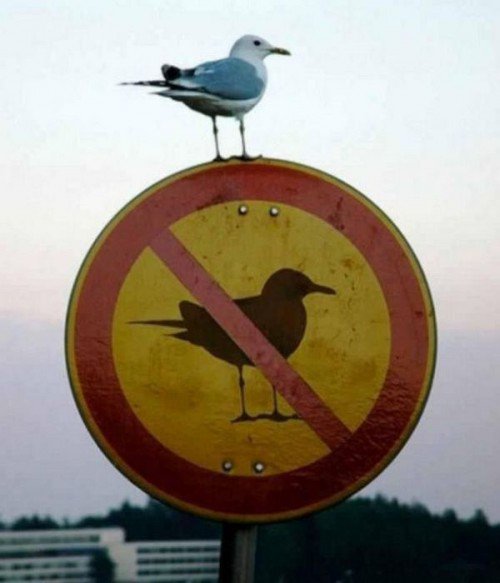
Funny Animal Signs That Warn People (While Animals Ignore Them)
From a seagull on a no-birds disc to classic zoo and park ironies—why animal warning signs get funny, and what the rules are still for.
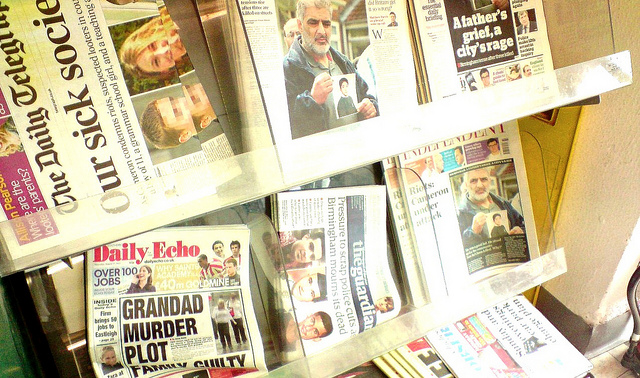
How to Find Local Amenities on Vacation: Mechanics, Haircuts & More
Locate trustworthy local services and everyday spots while traveling or settling in—using publications, reviews, map apps, neighbor tips, and low-pressure exploration.
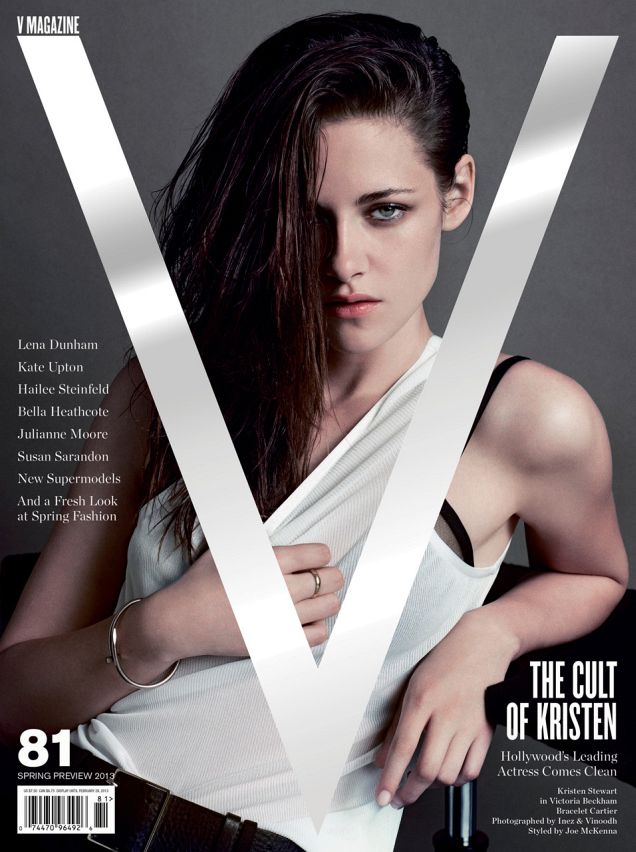
Kristen Stewart for V Magazine, Spring Preview 2013
V81’s Wild at Heart cover story—Kristen Stewart shot by Inez & Vinoodh, styled by Joe McKenna, in pale minimal spring glamour.