
Sandwich-Bag Drawings by David LaFerriere
Since 2008, graphic designer David LaFerriere has drawn on his kids’ sandwich bags—marker comics on plastic, bread as the backlight.
School mornings are timed like factory shifts: toast, fillings, zip, backpack, door. Graphic designer and parent David LaFerriere slipped an extra station into that line. Starting in May 2008, he drew on his children’s sandwich bags with permanent markers, using the bread behind the plastic as a glowing, edible lightbox. The drawings were never meant to survive the day. That was their honesty. They were meant to arrive.
Online, the project looked like a novelty—cute dad, Sharpies, Flickr album. Up close, it reads as disciplined illustration practice under brutal constraints: a zip-top rectangle, a limited marker set, kitchen glare, and a hard stop when the bus will not wait. Constraint is often romanticized after the fact. Here it was simply Tuesday.
Earlier posts waved readers toward a photo set elsewhere. The bags do not need a tour guide. They need attention to how cartoon ink and crust texture collaborate—how a joke sits on polyethylene while lettuce peeks out like a stagehand refusing to leave the shot.
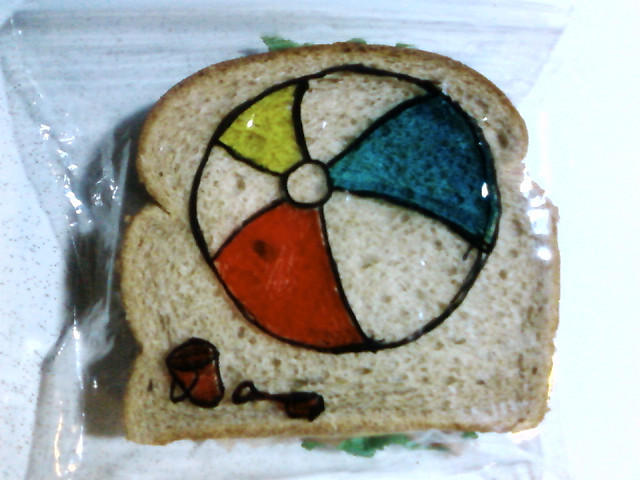
Vacation mood opens the gallery. A segmented beach ball—yellow, deep blue, reddish orange, one panel left pale so bread shows through—anchors the bag. In the lower corner, a brown sand bucket and a black shovel keep scale playful. Multigrain crust and a fringe of greens remind you this is lunch, not merch. Specular hits on the crinkled plastic are part of the photograph’s truth: overhead kitchen light, not a softbox.
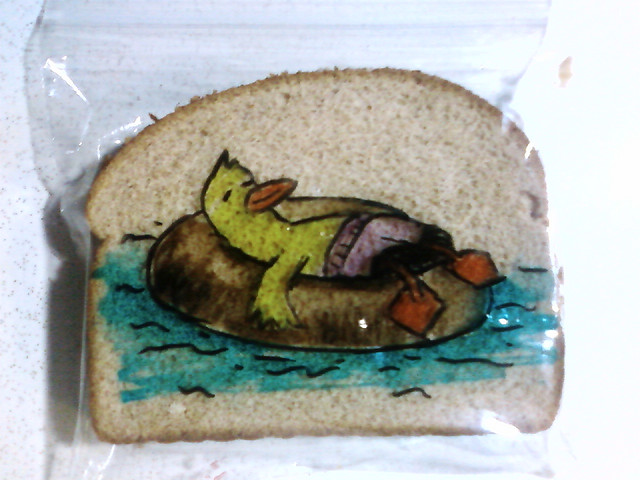
Leisure continues with a yellow duck in light-purple trunks, eyes closed, orange beak and flippers dangling from a brown donut float. Horizontal turquoise scribbles invent water without needing a horizon line. The duck’s calm is the joke. Somewhere a child is about to open a bag that looks more relaxed than the morning that packed it.
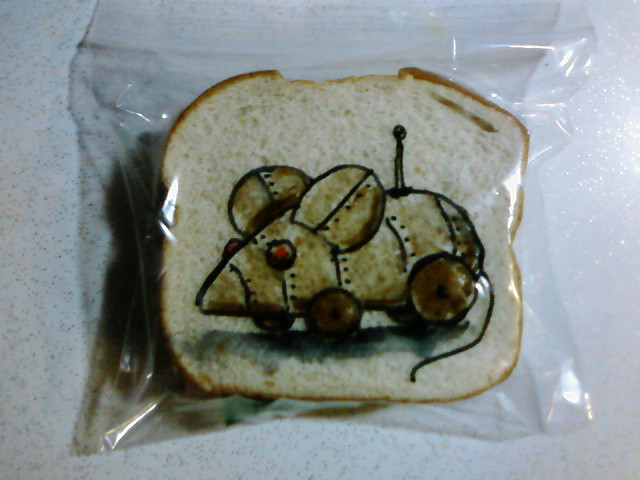
Then inventorship arrives. A mechanical mouse—rivet dots, segmented ears, wheels instead of paws, antenna with a bulb, thin curved tail—rolls across pale bread with only a touch of orange in the eye. Steampunk without the costume party: just line weight, shadow under the chassis, and the suggestion that toys might assemble themselves overnight. LaFerriere’s range matters. Beach idleness and robot rodents prove the format can hold more than one personality.
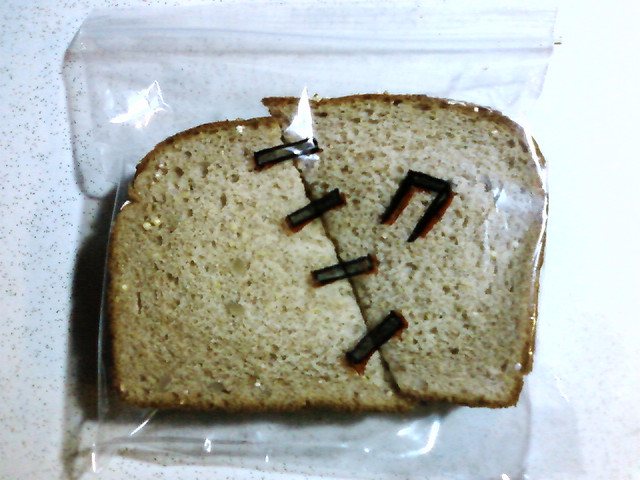
Interaction with the food is the cleverest register. A jagged vertical break in whole-grain bread is “fixed” with thick black staples drawn across the tear, plus a spare U-shaped mark like unused hardware. The marker follows the wound. Graphic designers solve problems with signs; here the sign is a staple, and the problem is a cracked slice that somehow still looks loved.
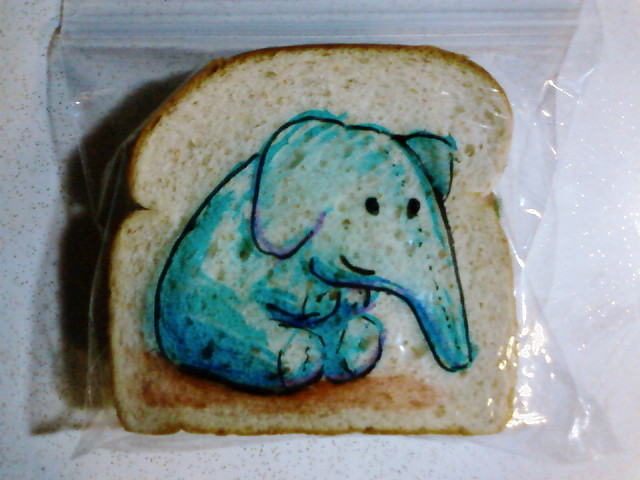
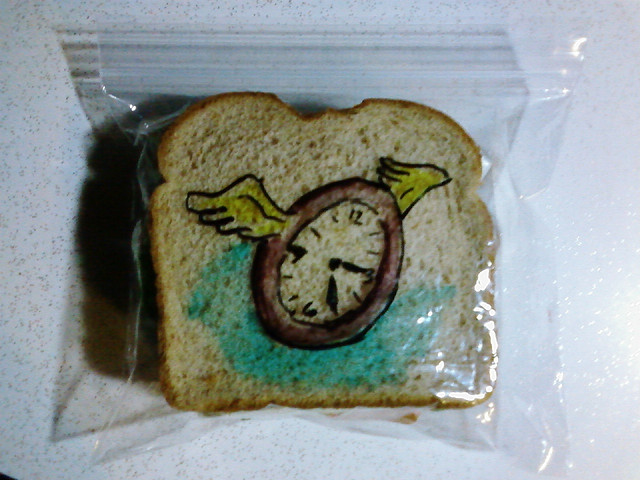
Character design returns in turquoise and purple: an elephant crouched, trunk curving down, marker fills streaky on purpose. Slick digital fill would flatten the charm; visible strokes keep the bag handmade. Beside it, a winged clock literalizes “time flies”—brown rim, tick marks, yellow feathered wings, teal wash behind, hands stuck past three. Idioms become pictures children can decode without a vocabulary quiz. The bag teaches visual literacy between bites.
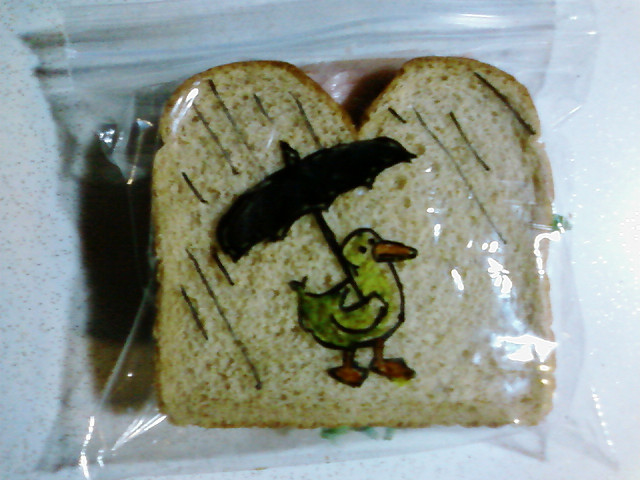
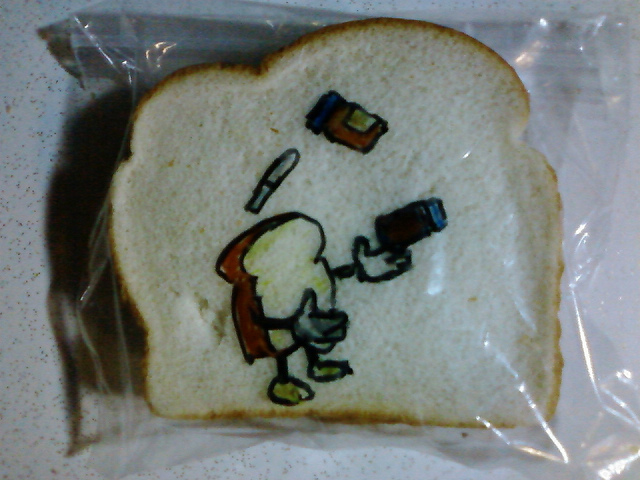
Weather is solved with slanted black rain lines and a duck under a solid umbrella—dry zone beneath the canopy, wet everywhere else. Negative space becomes a shelter you can point to. Then meta-humor: a cartoon bread slice with stick limbs juggles jars and a knife—orange marmalade glow, purple jam, silver spreader mid-arc. The lunch draws itself packing lunch. Parents who have ever assembled peanut butter under time pressure recognize the circus.
Flight paths and cafeteria folklore
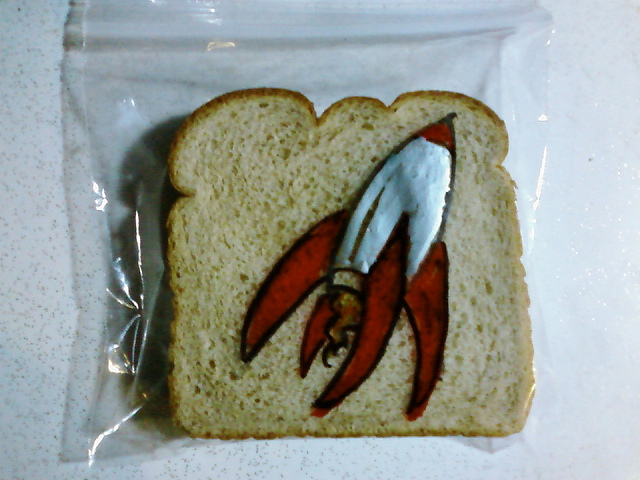
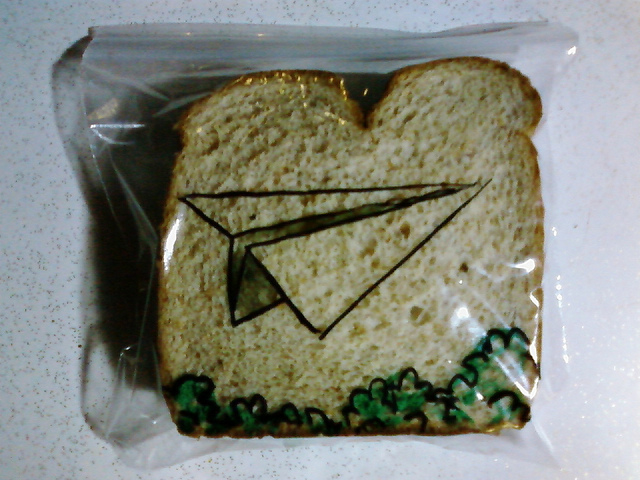
Diagonals save square bread from boredom. A retro rocket—white body, red-orange nose and fins, yellow-orange exhaust scribble—aims for the upper corner like a desk-day escape plan. A paper airplane over a green bush line along the bag’s bottom edge is quieter, closer to recess scale. Both use ascent as composition. LaFerriere understands that a sandwich is a stubborn rectangle; flight breaks the grid without needing a larger canvas.
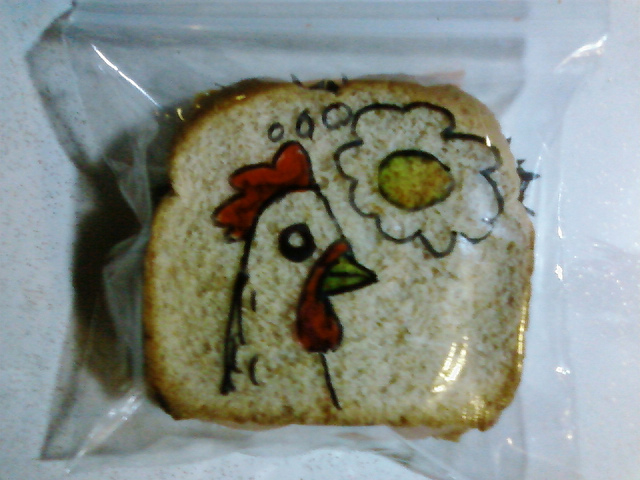
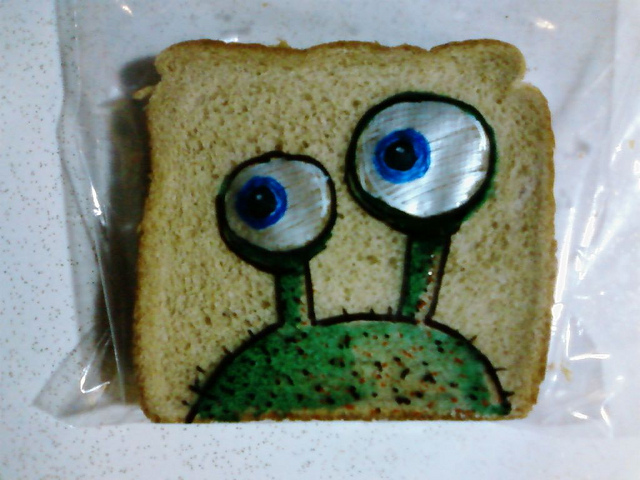
Philosophy fits in a thought bubble. A chicken profile—red comb and wattle, green beak, black eye—dreams a sunny-side-up egg. The old riddle arrives without a lecture. Nearby, a green stalk-eyed monster with blue irises and orange speckles occupies the lower crust like a friendly cafeteria cryptid. Kids do not require lore dumps. They require something that looks back when the lunchbox latches open.
Gifts, launch trails, and sneakers
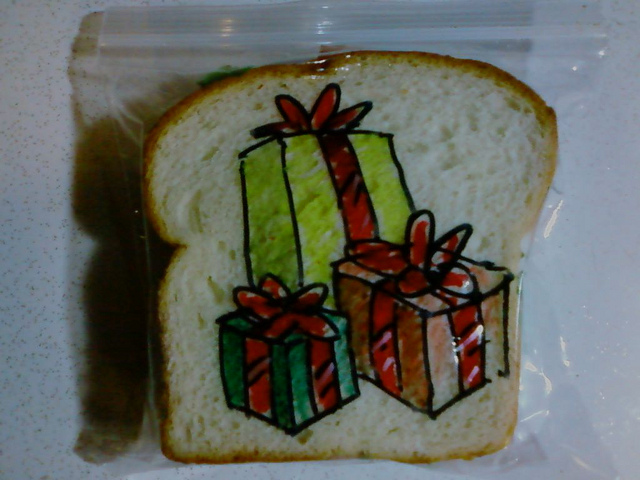
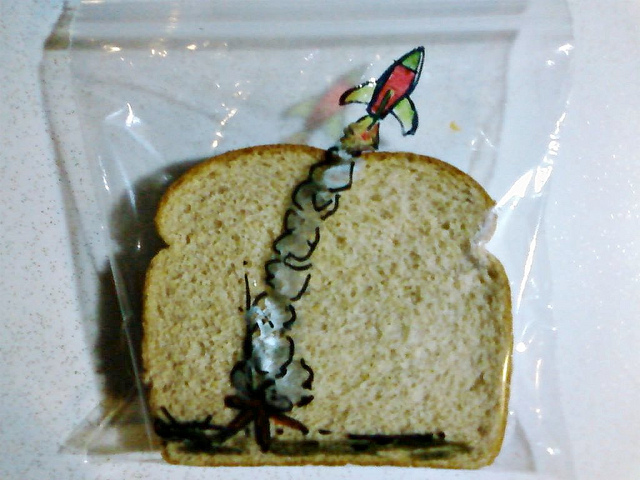
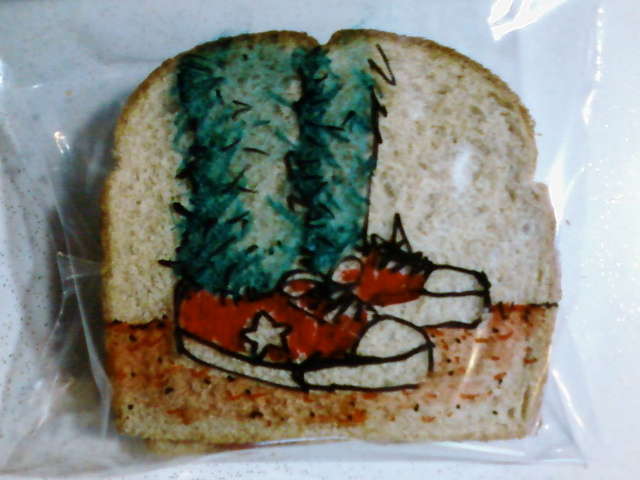
Three wrapped boxes—lime tower, dark-green cube, orange square—all tied with red ribbons turn the slice into a miniature holiday shelf. Celebration can be as small as marker bows. Another rocket climbs a stacked cloud of exhaust from a scribbled pad, color-blocked in red, yellow, and green so the plume becomes the real subject. Fuzzy teal legs in red star sneakers plant on speckled ground, cropped at the knees: the body continues in imagination. Comic timing loves a partial reveal.
Across fifteen bags, a curriculum appears. Outline first, fill second. Let bread tone act as midground. Accept plastic glare. Prefer bold shapes that survive a phone photo and a child’s glance. Alternate registers—pun, character, repair gag, weather, flight—so the series does not calcify into one cute trick. Consistency of vessel (always the clear bag) makes variation louder. You always know where to look.
Ephemeral art often asks for pilgrimage: ice sculptures, sand mandalas, chalk washed by rain. Sandwich-bag drawing asks for a kitchen counter and five stolen minutes. That accessibility is not a lesser ambition. It is a different ethics of making—art that expects to be opened, maybe crumpled, certainly used. The photograph is the afterlife, not the goal that preceded love.
Designers already understand briefs and deadlines. LaFerriere aimed both at a smaller audience with higher stakes: will this make someone smile before math class? The answer, repeated across beach balls and robots and stapled bread, was often yes—and the yes was enough to keep the markers by the breadbox.
There is also a quiet lesson for anyone who wants to make more and waits for perfect conditions. Perfect conditions rarely include a school calendar. These bags argue that a finished small thing beats an imagined large one. A duck in the rain is enough. A chicken dreaming an egg is enough. A pair of red sneakers cropped at the knee is enough. Series thinking helps: today does not have to summarize the whole project; it only has to continue it.
Looking at the set now, you can still feel the hurry underneath the ink—the unfinished coffee, the missing sock, the negotiation over applesauce. The drawings do not erase that hurry. They ride it. Quick, clear, sealed, and gone by afternoon—that is not a failure of permanence. It is the form David LaFerriere chose, and the reason these bags still look like they might be warm from a hand that just let go.

Comments
Continue reading
Still-Life Photography by Margareth Perfoncio
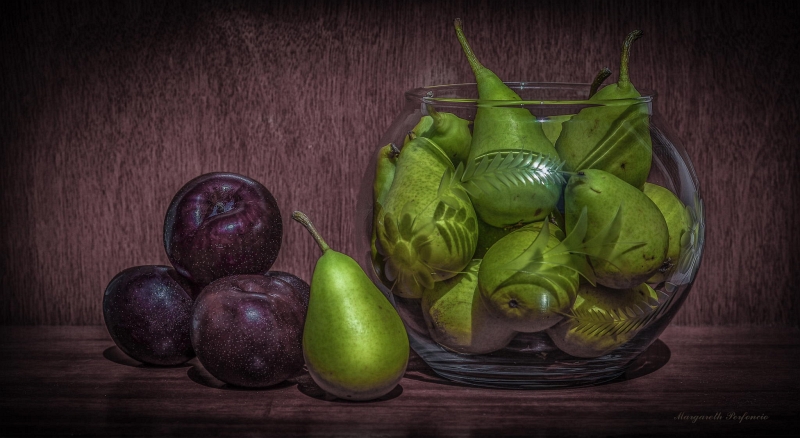
São Paulo photographer Margareth Perfoncio’s still lifes of food and flowers—Old Master light, dark wood, and tables that feel inevitable.
Meaningful Love Quotes for Inspiration (and Ink)
Meaningful love quotes that still feel true — short lines for tattoos, gifts, and everyday reminders, with placement and wording tips.
Christina Hess’s Animals From History: Costumed Pets as Playful Portraits
Illustrator Christina Hess reimagines historical icons as ornate animal portraits—Elvis Petme and friends—mixing puns, costume detail, and soft history lessons.