
Pencil Portrait Sketches by Krzysztof Lukasiewicz
Krzysztof Lukasiewicz’s graphite celebrity portraits—Houston, Freeman, Clooney, and more—built from careful values, paper grain, and catchlight.
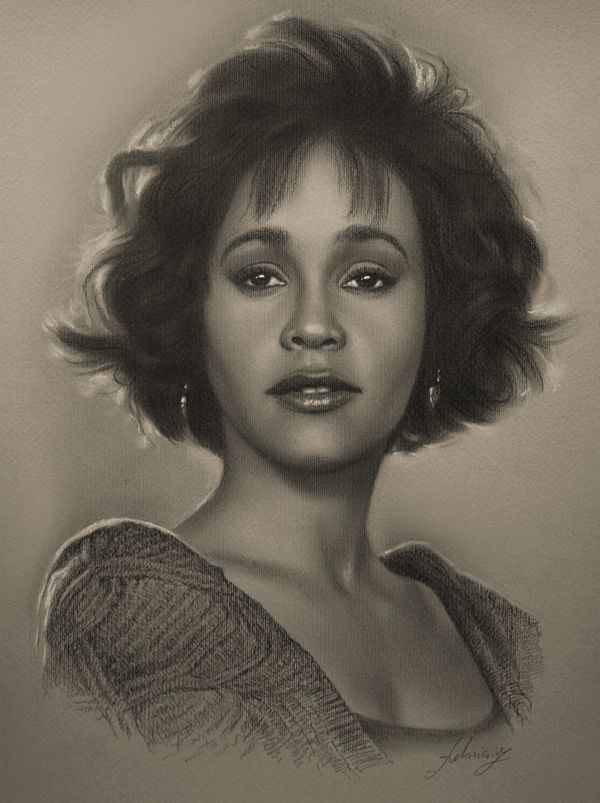
Before digital filters made every phone shot look “cinematic,” pencil already knew how to stage a face. Pressure, blending, and reserved white are older tools than Photoshop layers, and they still decide whether a portrait feels alive or merely accurate. The sketches collected here are credited to Krzysztof Lukasiewicz—graphite (and sometimes chalk heightening) studies of public faces, built on textured paper until likeness and atmosphere share the same sheet.
Celebrity drawing is easy to dismiss as fan craft. That dismissal usually comes from people who have not watched how hard it is to keep an eyelid soft while an eyelash stays sharp, or how quickly a famous mouth becomes a cartoon if the center line sits a millimeter wrong. These pages reward slow looking. Fame is the door; craft is the room.
Earlier blog notes sent readers toward a DeviantArt profile and an outside roundup. Outbound hops are optional. The graphite is not. Stay with the values: where midtone paper does half the work, where a white tick in an iris sells moisture, where fabric is allowed to be looser than skin so hierarchy remains human.
Whitney Houston arrives as a head-and-shoulders icon: voluminous short hair, composed gaze, scoop neckline hatched denser than the skin so cloth and flesh disagree in the right way. Soft light from the front-left lifts forehead, nose, and cheek; jaw shadow anchors the head. The background is only a gentle halo of tone. Nothing competes with the eyes. Era sits in the haircut and the calm—late-eighties presence held without costume clutter.
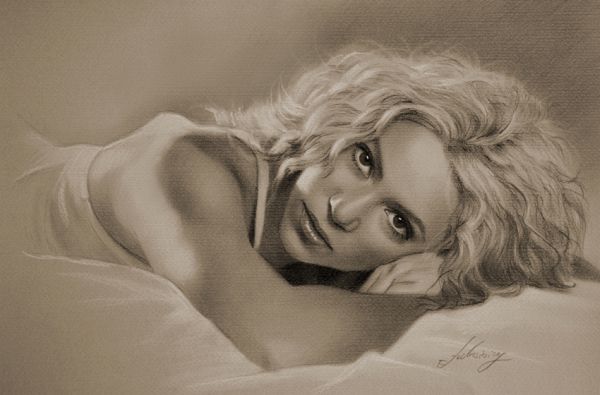
Horizontal intimacy changes the tempo. A blonde subject lies prone, cheek on hand, camisole strap a thin bright geometry against softer bedding. Wavy hair catches directional light; skin blending is almost photographic, yet paper grain still whispers through the midtones. Close cropping makes the viewer a conspirator rather than an audience in a balcony. Pencil can do spectacle; here it chooses nearness.
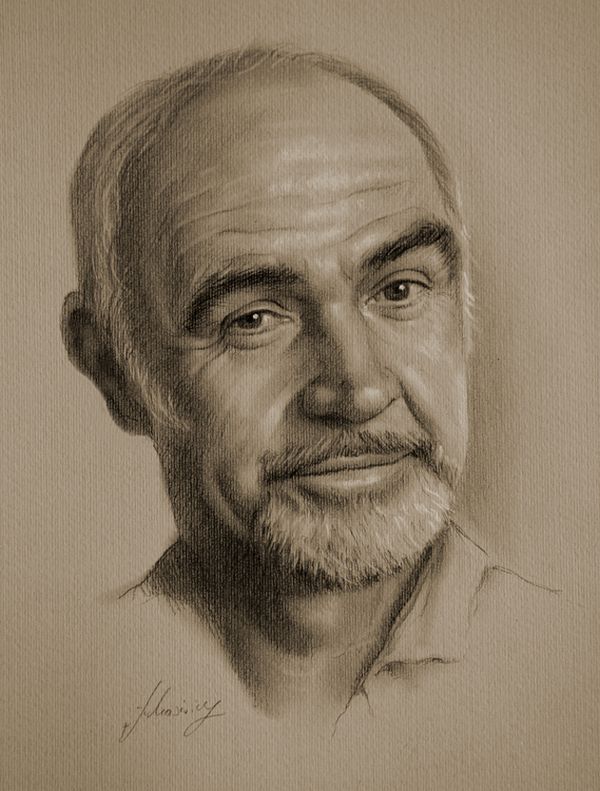
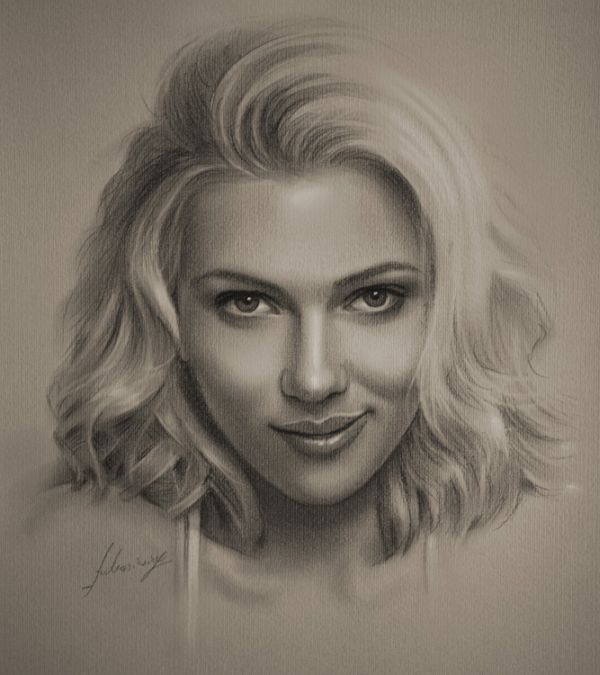
Age and half-smile sit in productive tension next. Sean Connery’s later face—balding crown, bushy brows, trimmed gray beard, crow’s feet kept honest—uses toned paper so white heightening can carve forehead and cheekbone. Character lines are not defects to erase; they are the map of a public life. Beside that gravity, a Johansson-like close-up offers a knowing smirk, shoulder-length waves, and warm monochrome. Specular ticks in the eyes do disproportionate work. Without them, realism goes matte and dead; with them, graphite pretends to be wet light.
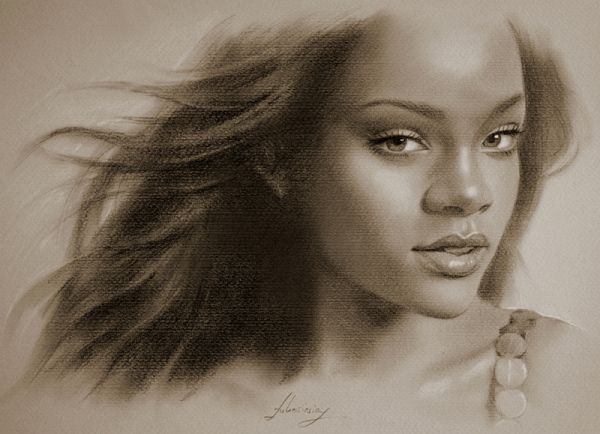
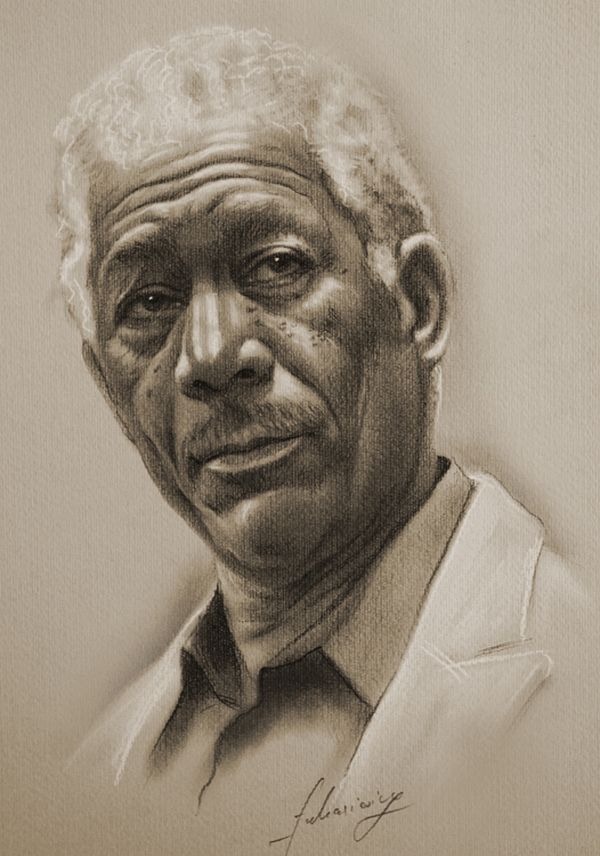
Rihanna’s portrait leans into motion: dark hair swept as if wind had a say, lips slightly parted, beaded strap catching rounds of light at the shoulder. Hair in motion fails when artists scribble; it succeeds when strands keep direction and reserved highlights. Morgan Freeman answers with stillness—deep-set eyes, mustache, freckles and age marks left on the skin, white curls lifted with chalky bright strokes, jacket broader and looser than the face. Hierarchy is an ethical choice as much as a design one. The voice of the portrait lives in the head; clothing supports, then steps back.
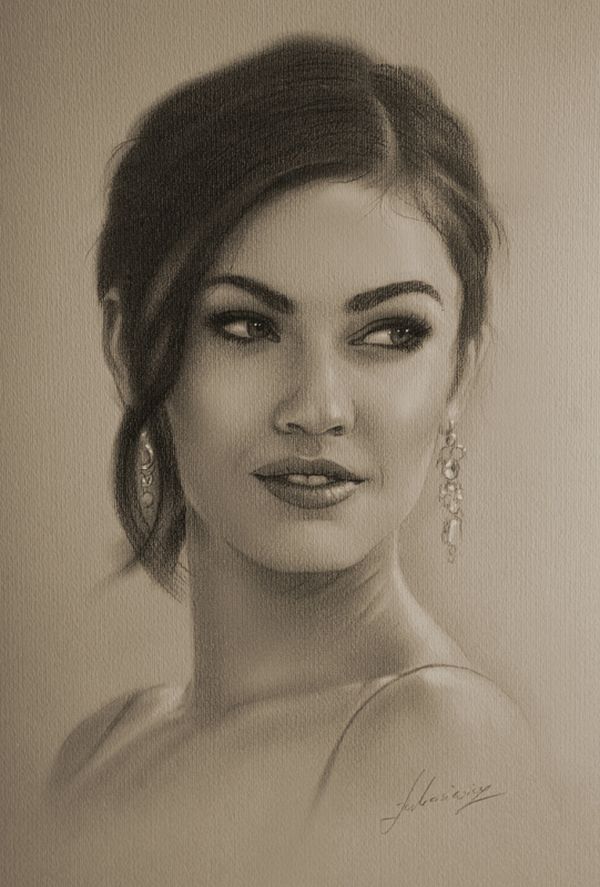
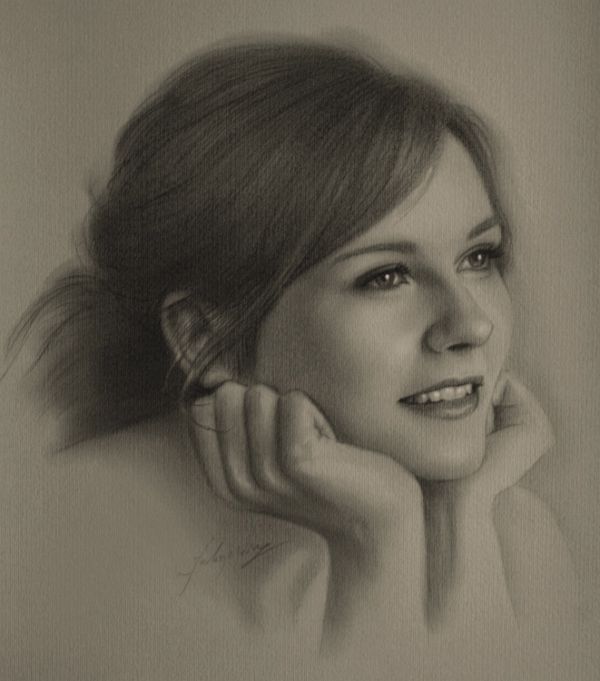
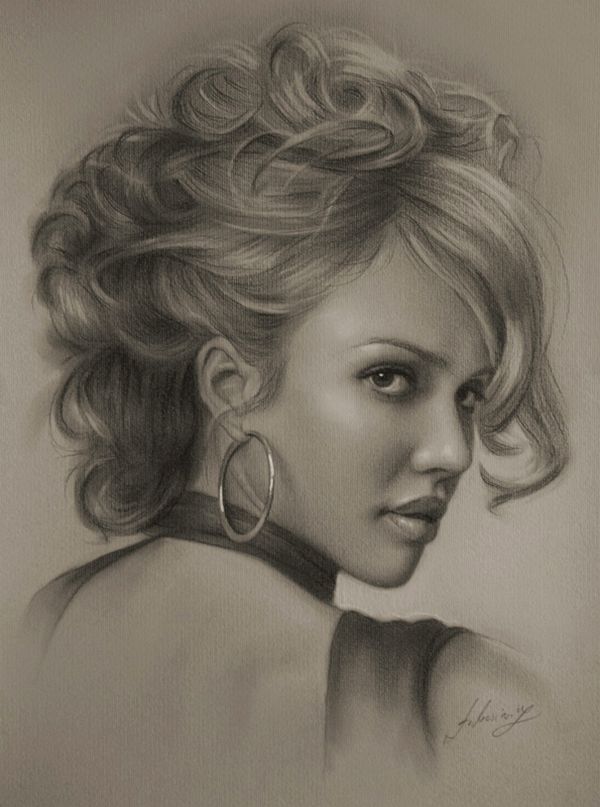
Glamour sequences often live or die on accessories. An elegant updo, one loose wave, and dangling crystal earrings demand sharp highlights so jewelry sparkles without turning into white blobs. A chin-on-hands pose with side-swept bangs and a soft off-frame gaze turns contemplation into composition; hands must be drawn as carefully as faces or the whole mood collapses into amateurish paws. Looking back over a shoulder—hoop earrings, dense curls, dark halter line—uses twist and glance the way fashion photography does. In all three, paper tooth remains visible. That grain is a signature of process: you are never fully fooled into thinking this is a desaturated photo, and that honesty is part of the pleasure.
Texture problems worth solving
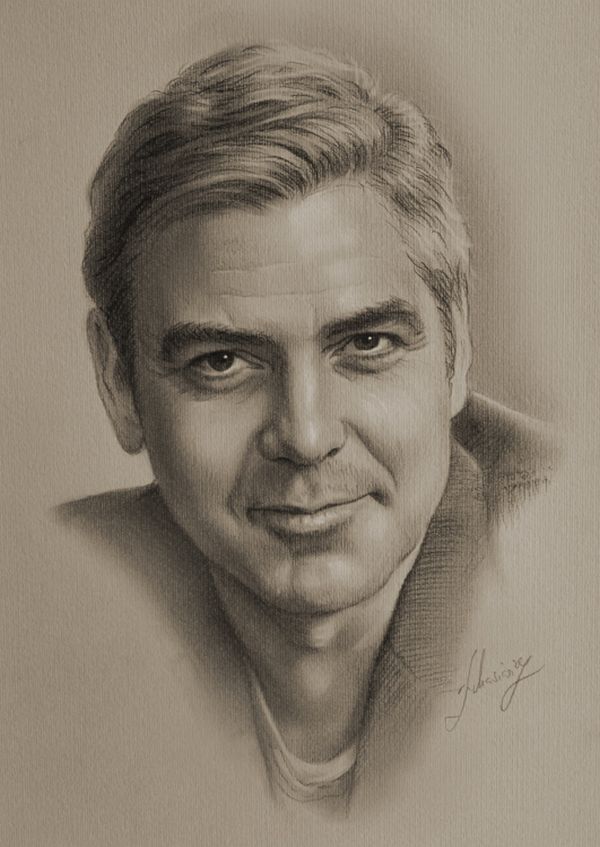
George Clooney’s salt-and-pepper hair and five-o’clock shadow are controlled noise—short marks that read as stubble without dirtying the planes of the cheek. Crow’s feet stay because they belong. A slight smile keeps charm from becoming grin. Jacket and crew neck are sketched with less finish so the viewer does not count buttons instead of reading the eyes.
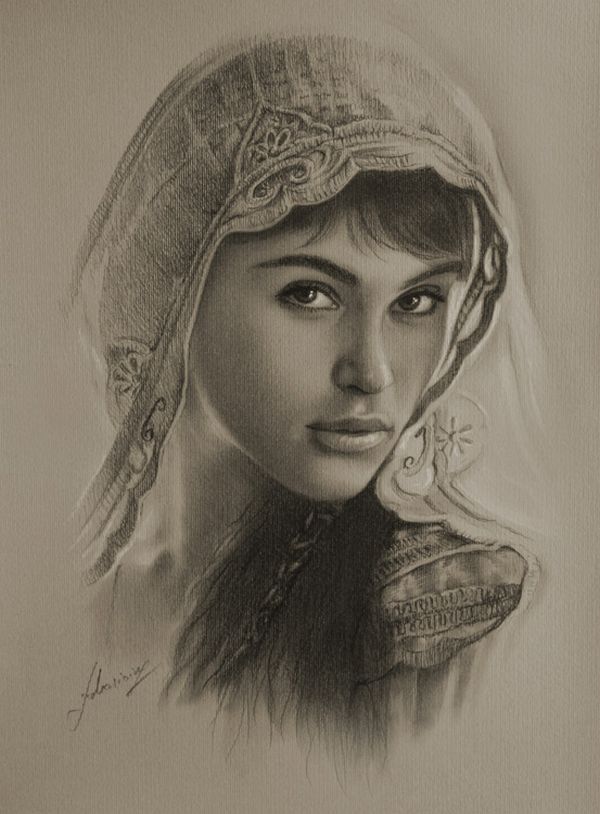
The embroidered headscarf portrait flips the difficulty. Pattern wants repetition; skin wants seamless blend. Circular motifs, scrollwork, and woven edge marks must stay subordinate to the gaze or the face becomes a mannequin wearing craft homework. Smooth facial transitions against busy textile is a classic atelier problem solved here with contrast management: darkest darks and brightest brights still live near the eyes and lips.
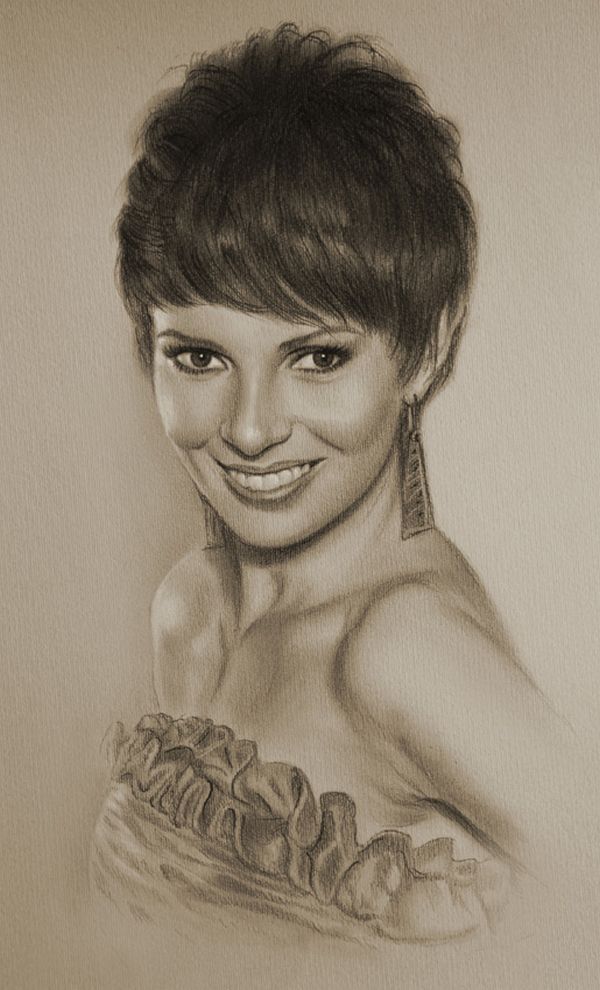
A bright open smile with short textured hair, rectangular drop earrings, and a ruffled strapless neckline shows another trap—fabric folds that go muddy. Deep shadow in the ruffles and bright edges on the folds keep them tactile. Teeth are suggested, not diagrammed. Too much dental detail turns portraits into dentistry.
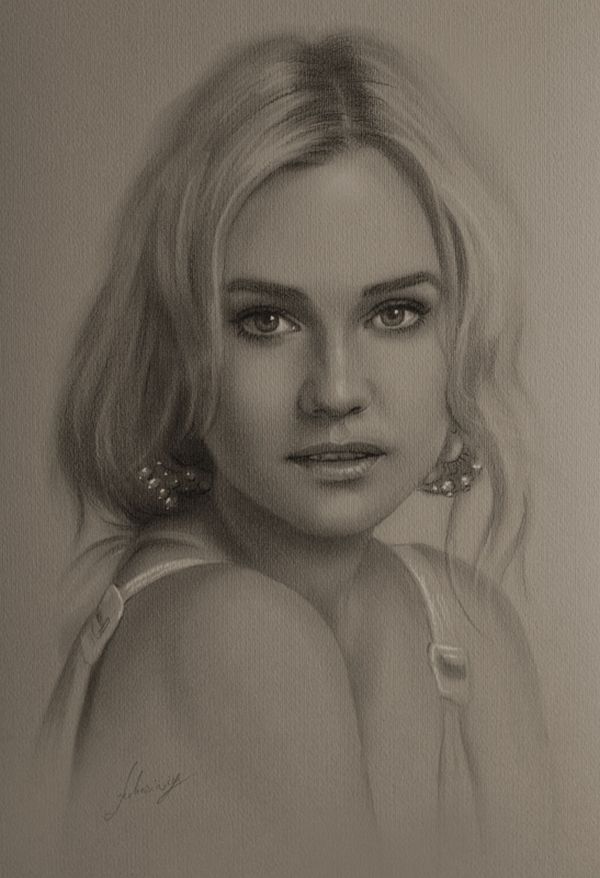
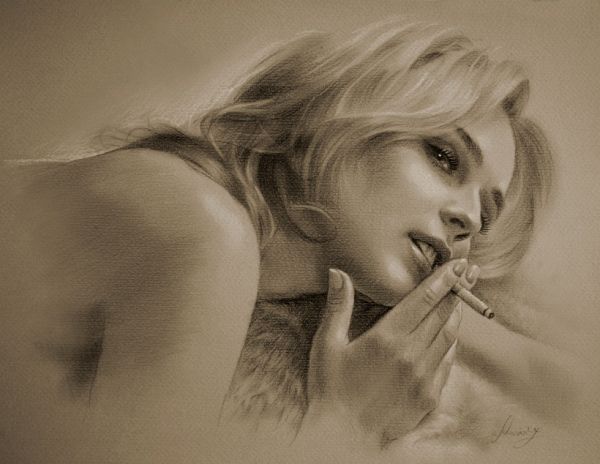
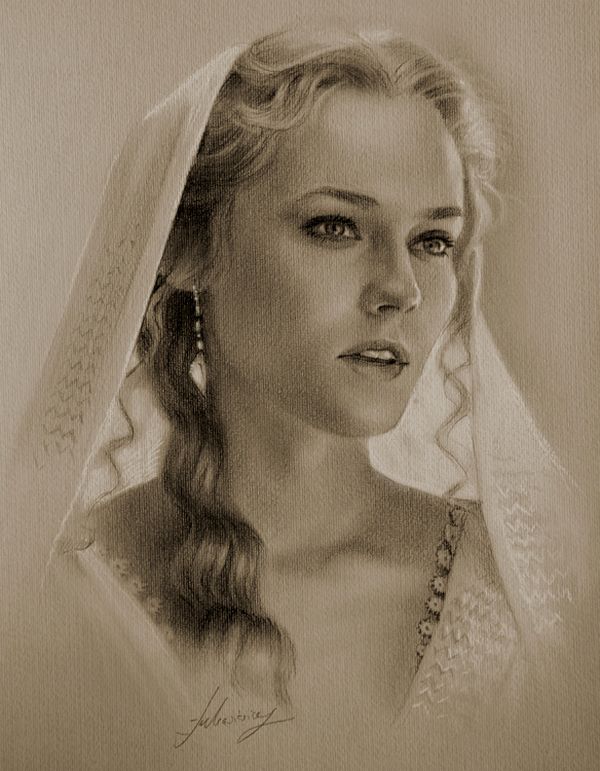
Soft blonde waves and clustered pearl earrings return to quiet glamour—parted lips, luminous catchlights, thin straps. A reclining figure with a cigarette near the mouth pushes the gallery toward classic stills: shoulder highlight, jaw shadow, hair strands catching light like filament. Props are dangerous in portraiture; the cigarette works because it is thin, dark, and compositional, not because smoking is being sold. A veiled costume portrait—sheer patterned fabric, teardrop pearl, decorative neckline—tests transparency. If the veil values creep too dark, the head wears a helmet; if too light, pattern vanishes. Zigzag edge marks and soft folds keep the fabric readable as cloth over hair.
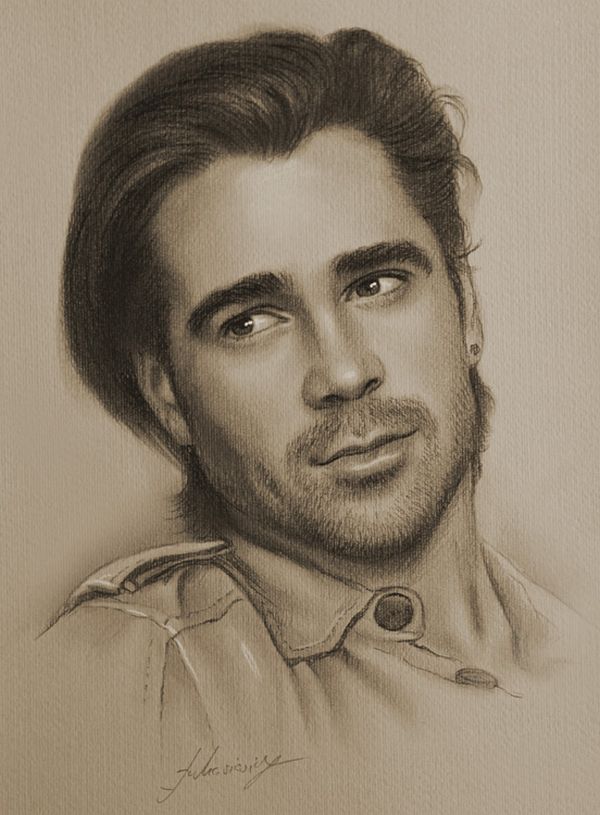
Colin Farrell’s head-and-shoulders study brings thick brows, swept hair, jaw stubble, and a collared shirt with button and epaulet hint. White heightening again defines nose bridge and cheek. Military or utility clothing can overpower a face; here it stays schematic enough to support without recruiting the viewer into uniform trivia.
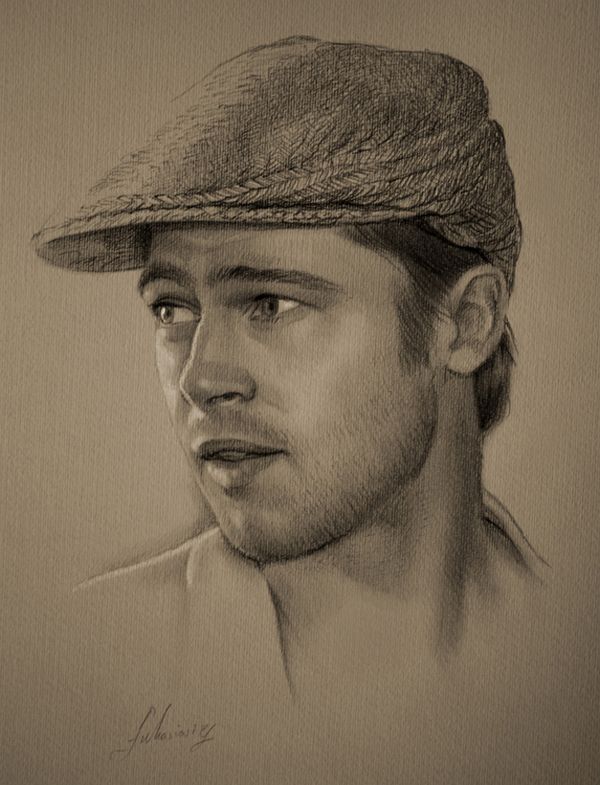
Cap shadow and closing light
Brad Pitt under a flat cap closes the run. Cross-hatching sells wool or tweed; a patterned band above the brim adds small geometry; stubble is fine short noise; the open collar stays pale. Cap brims cast shadows that destroy likeness when angled wrong. Getting that soft shade to sit correctly under the brow is undramatic mastery—the kind you only notice when it fails.
Stepping back from individual celebrities, the gallery teaches a short curriculum. Use toned paper so white can mean light. Blend skin; keep stroke in hair and cloth. Put the sharpest sparkles in the eyes. Leave backgrounds quiet. Let signatures occupy corners without bruising cheeks. Alternate moods—iconic frontality, reclining nearness, aged character, wind-moved hair, veiled costume, capped contemplation—so a scroll does not flatten into one glamorous blur.
Pencil will not stop competing with cameras. It does not need to win. What it offers, in Krzysztof Lukasiewicz’s credited hands, is a slower rebuild of faces we thought we already owned. After the last portrait, try a small experiment: pick one mouth corner or one highlight on a lower lip and ask whether a phone snapshot of the same person would have chosen that exact edge. Often the drawing’s choice feels more deliberate—and therefore more intimate—than the photograph’s accident. That deliberate edge is why these sketches still earn the word amazing without needing a sales pitch around them.

Comments
Continue reading
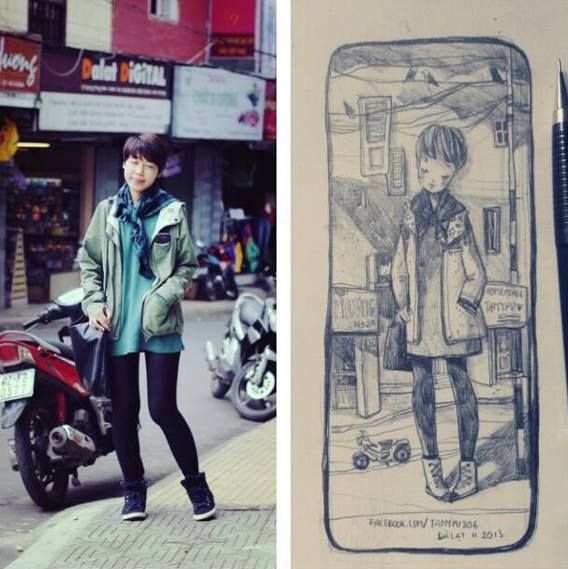
Self Sketches by Tamypu
Thai My Phuong (Tamypu) and her quick self-portrait sketches—journal logic, mixed media, and how to look at a face drawn again and again.

Still-Life Photography by Margareth Perfoncio
São Paulo photographer Margareth Perfoncio’s still lifes of food and flowers—Old Master light, dark wood, and tables that feel inevitable.
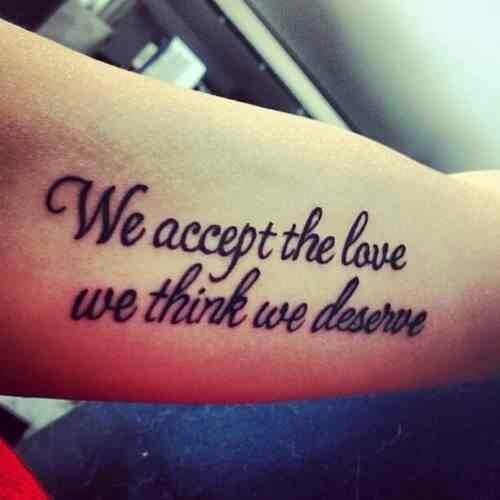
Meaningful Love Quotes for Inspiration (and Ink)
Meaningful love quotes that still feel true — short lines for tattoos, gifts, and everyday reminders, with placement and wording tips.