
Cool Office Design and Organization Ideas for Home Workspaces
Practical home-office upgrades: ottoman footrests, thrifted magnetic boards, curtain-hidden storage, hinged hidden desks, and under-desk space that stays usable.
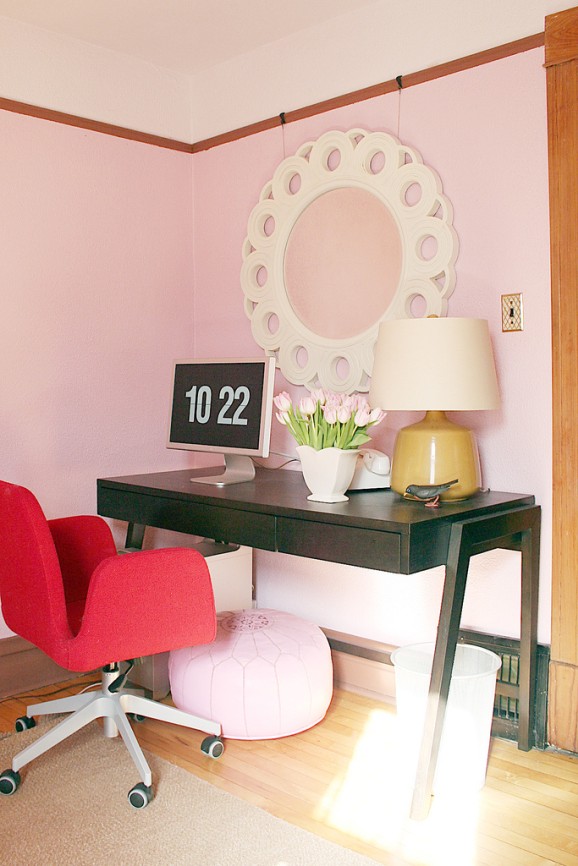
A workspace does not need a renovation crew to feel better. Small swaps—softer under-desk comfort, a coffee ritual that looks intentional, storage that hides clutter without hiding tools—change how a room behaves day after day. The ideas below come from home offices and compact desks: thrift finds, wall tricks, dual-purpose guest rooms, and furniture that moonlights as storage. Steal what fits your square footage and ignore the rest.
Good office design is less about matching a catalog photo and more about reducing friction. Can you sit without fidgeting? Can you find a pen without opening four drawers? Can the room look calm when work ends? Those questions matter more than buying a new desk the same week you bought the old one.
Comfort you can see
Plastic footrests do their job and look like medical equipment. An ottoman or small upholstered stool under the desk gives the same elevation with fabric, color, and a friendlier silhouette. Choose a height that keeps knees roughly level with hips when you sit back. If the ottoman has a lid, you also gain a secret bin for cables, chargers, or notebooks you do not want on display.
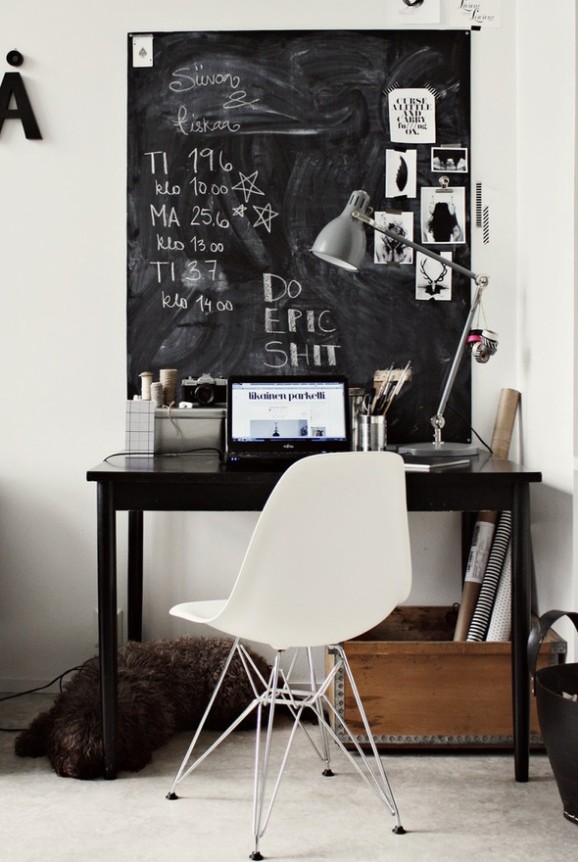
Chair comfort is personal, but the principle is consistent: support the lower back, keep shoulders relaxed, and avoid perching on the front edge for hours. A small lumbar pillow or folded throw can rescue a chair that is almost right. If your feet dangle, the ottoman idea suddenly stops being decorative and becomes ergonomics you can afford.
Comfort is also about the first five minutes of the day. A tray, a favorite mug, and a place for the kettle or drip cone turn “morning coffee” into a cue that work is starting—without converting the desk into a café counter. Keep liquids on a coaster away from keyboards; the ritual should wake you up, not short out a laptop.

Rooms that share jobs
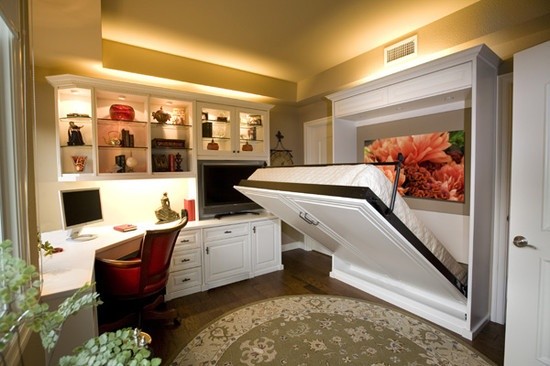
Guest rooms often double as offices. A slim desk against a wall, a daybed that still reads as hospitality, and storage that closes when visitors arrive keep both roles honest. Use a table lamp with a warm bulb so the room does not feel like a call center after dark. If the desk faces the bed, add a low screen, open shelf, or tall plant as a soft divider so sleep and spreadsheets do not visually collide.
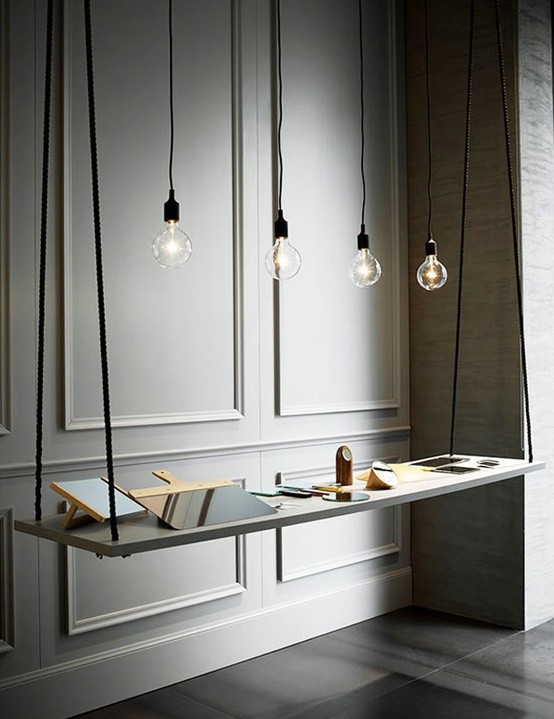
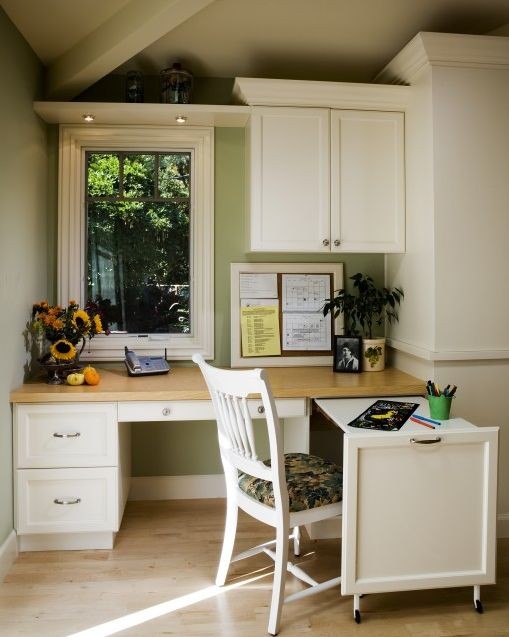
When space is truly tight, a leaf that folds down or a desk that hides inside cabinetry may be wiser than a permanent table in the middle of the room. The goal is a work surface you will actually use, not a monument to productivity that blocks the closet.
Magnetic boards and thrift hacks
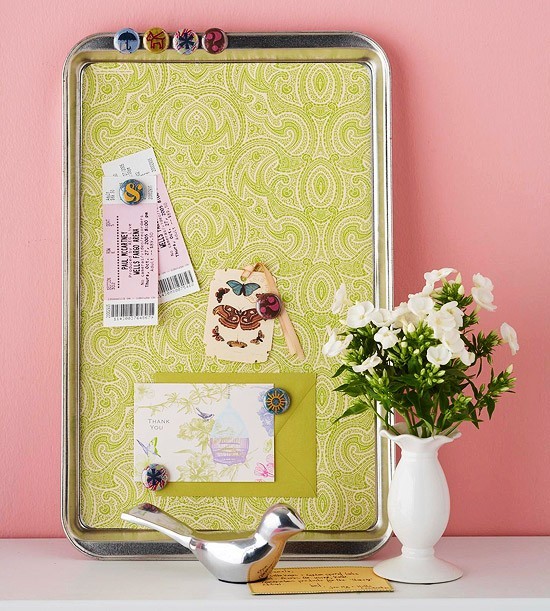
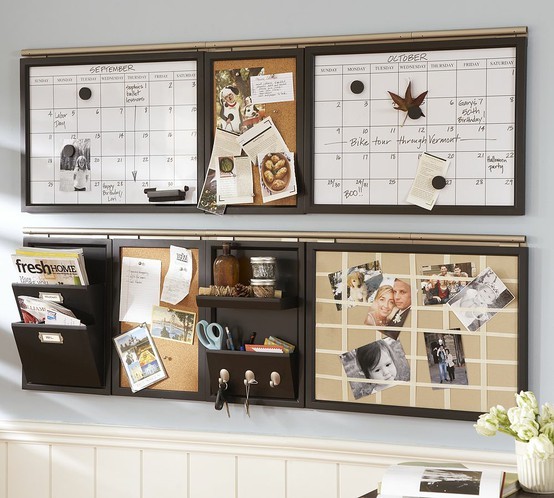
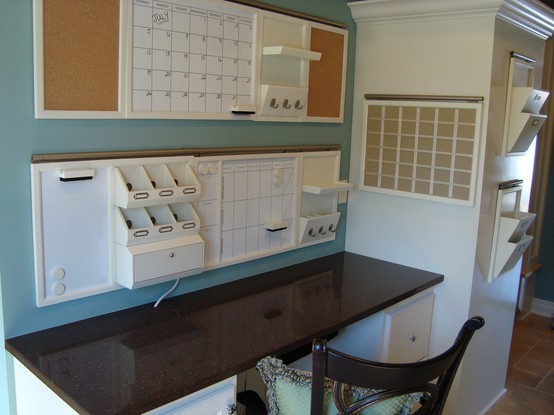
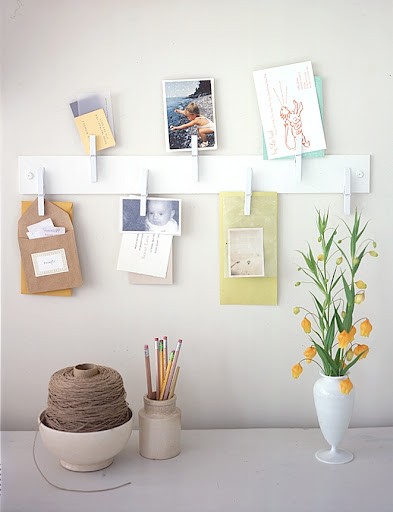
A thrifted cookie sheet becomes a magnetic board with almost no craft skill: clean it, paint or leave the metal finish, mount it with strong adhesive strips or small screws, and stick notes with magnets. The charm is the everyday object doing office work. Frame it if you want the edge to look finished; leave it raw if you like workshop honesty. Group magnets by color if visual calm helps you think.
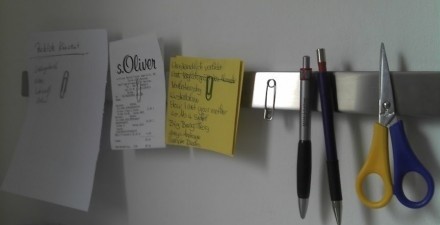
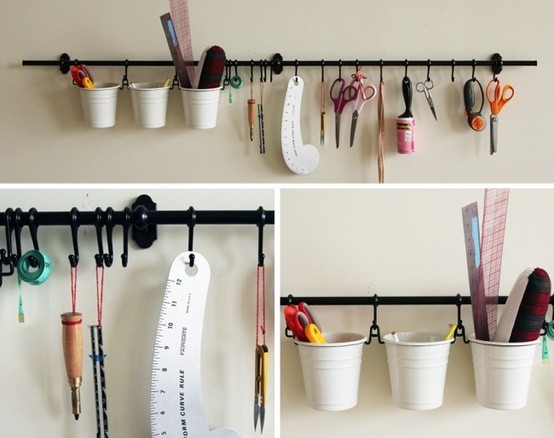
A magnetic knife strip mounted horizontally holds scissors, binder clips, and metal rulers the same way it holds blades in a kitchen. Keep pointed tools oriented safely and do not overload the strip past its rating. The win is clear desk surface with supplies still in reach—especially useful on shallow desks where a cup of tools tips over every time you stand.
Hide the hanging clutter
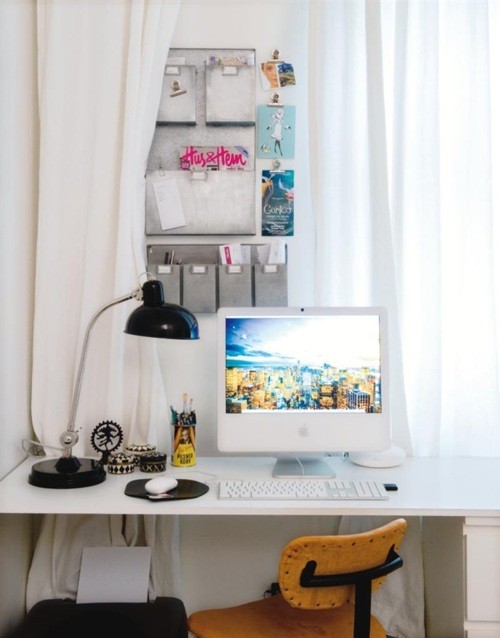
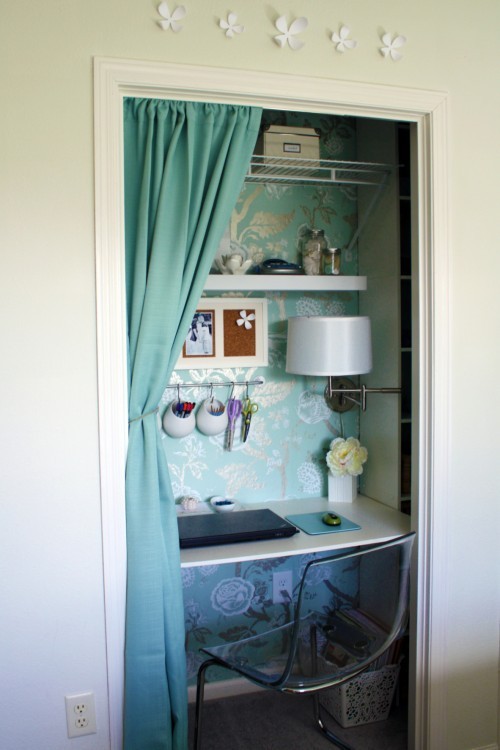
Pegboards, hooks, and hanging files are useful until they become a wall of visual noise. A simple curtain hung on a narrow rod close to the wall can conceal hanging items while leaving them accessible. Choose a fabric that matches the room so the curtain reads as a soft panel, not a shower stall. Pull it aside when you work; close it when you want the corner to look calm for dinner guests or a video call background.
Shelves, color, and desktop order
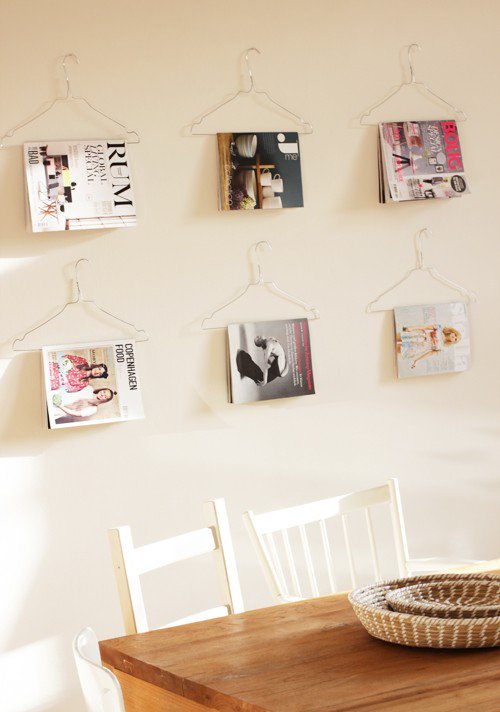
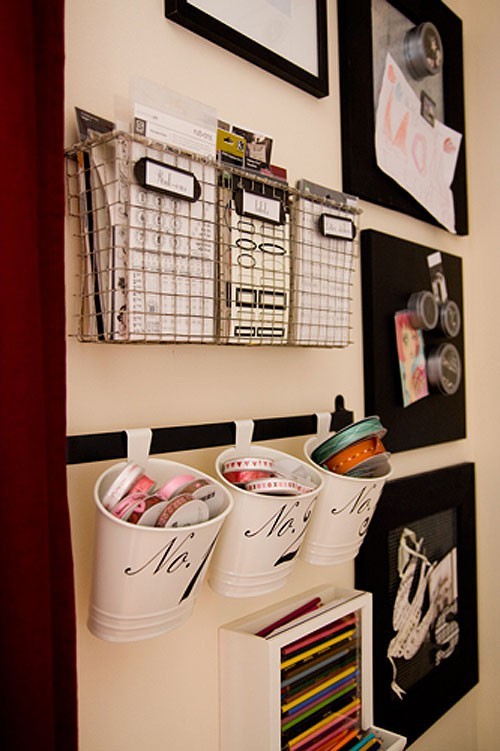
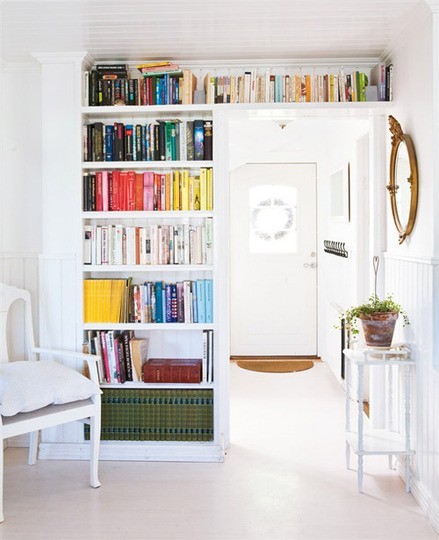
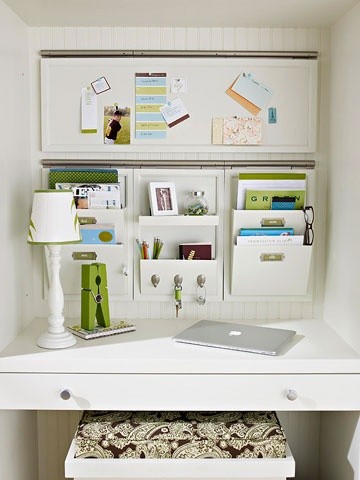
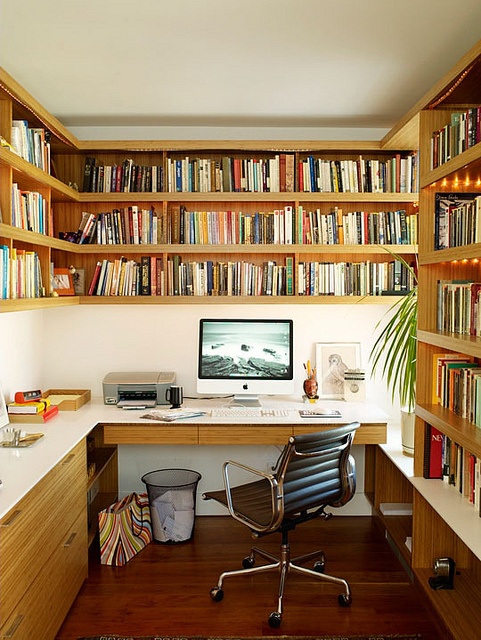
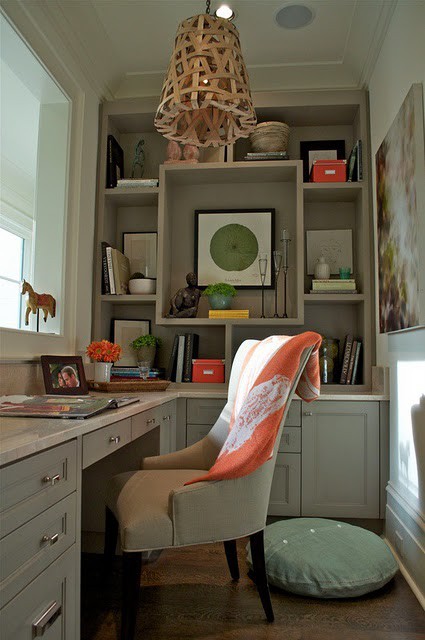
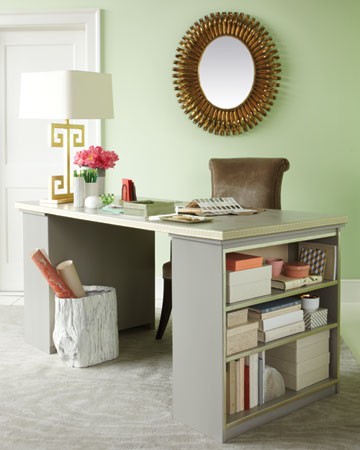
Open shelves work when you edit what sits on them. Group books by size or color if that helps you find calm; use closed boxes for the ugly necessities—cables, spare ink, tax envelopes. A few plants or a single sculptural object beat a row of mismatched chargers. Desktops improve when only daily tools remain: lamp, notebook, one cup for pens. Everything else should earn a drawer or a cabinet door.
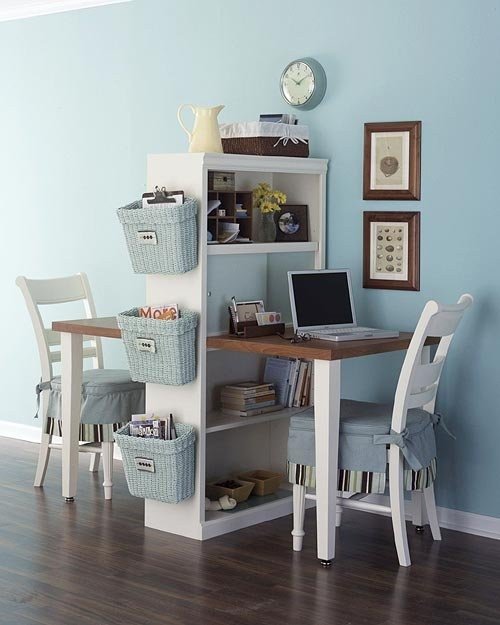
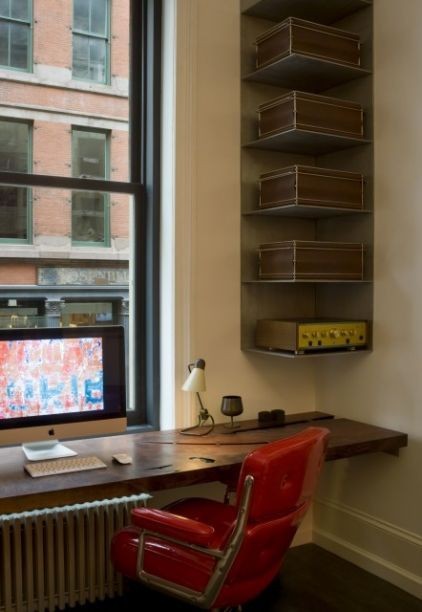
Vertical storage helps small rooms. Tall bookcases beside a narrow desk give filing space without widening the footprint. Baskets on lower shelves hide paper stacks; upper shelves can hold reference books you actually open. Leave breathing room—shelves packed to the brim look busier than a few intentional gaps.
Hidden desks and under-desk space
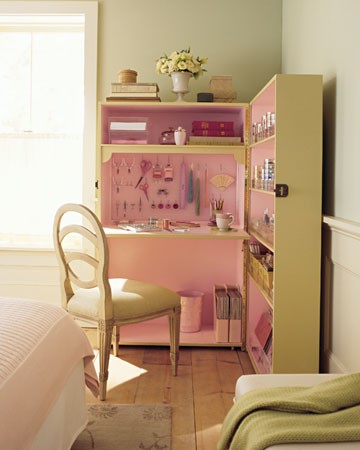
Two hinged bookcases that close into a cabinet can hide an entire desk—surface, pinboard, and shallow shelves—when you need the room to look like a living area again. Measure swing clearance before you build or buy; the doors need space to open fully without hitting a sofa. Inside, use a shallow ledge for a laptop and mount a bright task light so you are not working in a cave. Cable grommets or a rear gap keep cords from forcing the doors open.
The zone under the desk is easy to ignore and easy to ruin. A low rolling drawer, a fabric bin for shoes you kick off, or a cable tray screwed to the underside keeps the floor from becoming a tangle. Leave room for your legs and that ottoman. Storage that forces you into a pretzel is not organization—it is a second problem wearing a helpful label.
Windows, light, and a short punch list
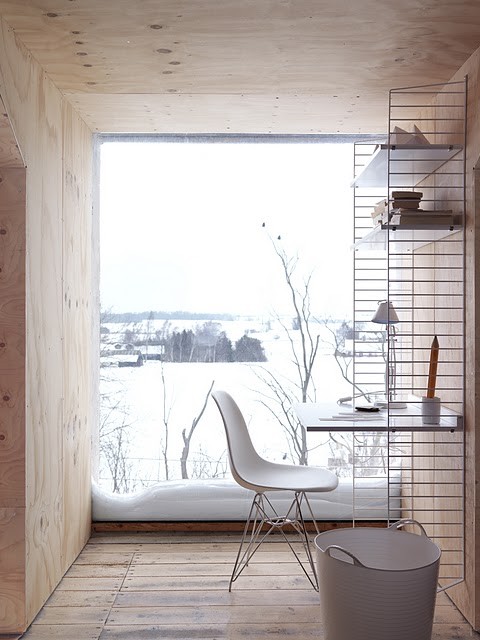
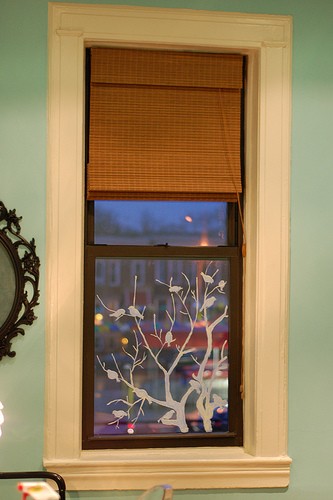
Windows are part of the workspace, not just light sources. A simple treatment—cafe curtain, linen panel, or a row of small plants on the sill—softens glare and gives your eyes a place to rest between screen tasks. Avoid blocking daylight entirely if you can; dim, cave-like offices flatten mood and make colors on printed proofs harder to judge. If afternoon sun hits the monitor, a translucent shade often beats heavy blackout drapes for daytime work.
If you change only three things this month: give your feet something softer than plastic, add one closed storage solution for visual noise, and clear the desk to daily tools plus a drink that cannot spill into the keyboard. The walls can stay the same color. The room will still feel designed—because the parts you touch every hour finally work with you.

Comments
Continue reading
5 DIY Kitchen Organization Ideas That Actually Stick
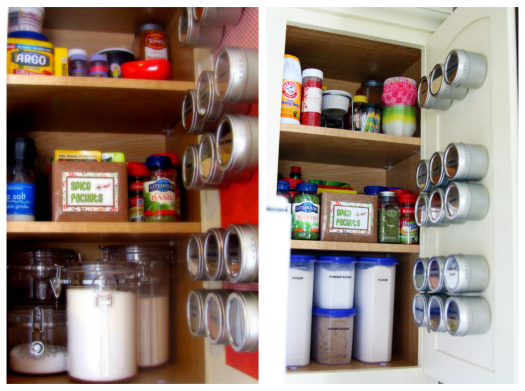
Five low-cost DIY projects—magnetic spices, under-cabinet jars, measuring charts, under-sink rods, and wire can racks—to reclaim kitchen space.

Garden Decoration Beyond Beds: Lace, Mosaiculture, and Upcycled Yard Art
From dressed topiary and floral cyclists to license-plate dragonflies and lace between trees—garden decorations that give a yard a voice.
Kitchen Design Ideas: Layout, Storage, Light, and Finishes That Work
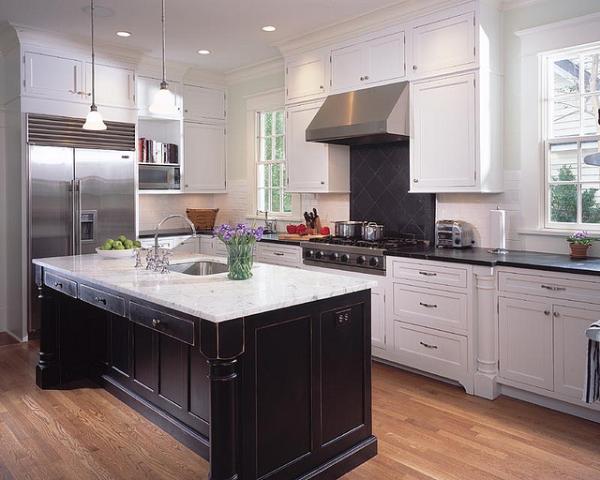
Practical kitchen design ideas—work zones, cabinetry, lighting, and durable finishes—so inspiration translates into rooms that cook and gather well.