
Coconut Worms: Palm Weevil Larvae as Food and Pest
What coconut worms really are—red palm weevil larvae eaten across Southeast Asia—how they are cooked, why they taste rich, and why the same insect threatens coconut groves.
Coconut worms are not worms. They are the pale, fat larvae of palm weevils—most often the red palm weevil, Rhynchophorus ferrugineus—harvested from the soft heartwood of coconut and related palms. Across parts of Southeast Asia they are a known delicacy: rich, slightly creamy when raw, crisp and bacon-adjacent when cooked. They are also, in the same landscapes, a serious agricultural pest. That double identity is the whole story.
People searching for coconut worms usually want one of three things: what the food actually is, how it is eaten, or why farmers fear the insect that produces it. All three questions belong together. You cannot understand the dish without the beetle, and you cannot romanticize the beetle without the trees it hollows out.
What “coconut worm” really means
Adult red palm weevils are large snouted beetles. Females seek damaged or stressed palms, pierce soft tissue, and lay eggs—often hundreds over a lifetime—in scars, frond bases, and crown wounds. The eggs hatch into larvae that feed internally on living palm tissue. In coconut trees they are especially associated with the soft growing heart, sometimes called coconut cabbage or củ hũ dừa in Vietnamese kitchens. Larvae that have fed on that sweet, spongy core are widely described as richer than larvae raised on other palm material.
Related palm weevils appear under other common names. In some regions “sago worm” or “sago grub” refers to larvae of related Rhynchophorus species associated with sago and other palms rather than coconut alone. Culinary writing often blurs these names. For a general reader, the useful distinction is biological and local: which beetle, which palm, which market. Nutritionally and culturally, the larvae sit in the same family of fatty, protein-dense grubs eaten across tropical Asia and, in related forms, parts of Africa and South America.
The life cycle is short by livestock standards—on the order of a few months from egg to adult under warm conditions—but long enough for a small infestation to empty the crown of a tree. Fronds yellow and collapse from the growing tip. Small holes and a sour, fermented smell often appear before the trunk is clearly ruined. By the time the damage is obvious, the interior may already be a gallery of larvae.
A delicacy with a royal rumor and a street-food present
In Vietnam’s Mekong Delta, especially coconut country such as Bến Tre, the larvae are known as đuông dừa. Local food culture treats them as both curiosity and celebration food. Folk stories link the delicacy to imperial taste—offerings said to have pleased Emperor Minh Mạng, with a carved worm among the motifs of Huế’s dynastic urns—but the living tradition is more ordinary and more interesting: family feasts, nhậu tables, market stalls, and the particular pride of a rare seasonal catch from a fallen tree.
Preparation styles vary by courage and occasion. The most talked-about version is live larvae dipped in sweet-sour fish sauce, swallowed or chewed whole so the cleanest flavor is not lost to overcooking. Grilling on bamboo skewers until the outside turns golden is a common compromise: crisp skin, rich interior, less psychological friction. Porridge with coconut milk folds the larvae into a Mekong comfort bowl. Pan-frying, deep-frying, salads, and rice-wine infusions also appear in home and restaurant cooking. Elsewhere in the region, Indonesian and Malaysian markets may deep-fry or stew similar grubs; Thailand has developed more industrial rearing for local demand and curious travelers.
Taste descriptions cluster in a helpful way for the uninitiated. Raw, the texture is soft and creamy; cooked, the exterior crackles and the flavor is often compared to rich egg yolk, soft cheese, or porky crunch depending on method. These are not bland “survival foods.” They are dense. People who like them tend to eat them slowly. People who do not like the idea usually never get past the idea.
Nutrition and why entomologists pay attention
Palm weevil larvae are repeatedly cited in entomophagy research because they combine high fat and protein with relatively efficient growth. In regions where traditional livestock are expensive or land is limited, farmed larvae look like a compact animal protein. Scientists and development projects have explored palm-weevil farming for food security, value-added powders and snacks, and even extreme-environment rations. That research interest does not erase local food culture; it rides on top of it. Communities were eating these larvae long before laboratories measured their amino acids.
Farming methods can be simple: enclosed containers, coconut husk mixed with bran or other plant feeds, harvest in roughly a month under warm conditions. Spent substrate can be recycled as fertilizer. In theory, closed rearing reduces the need to fell living palms for harvest. In practice, escapes, weak regulation, and profit motives can undo the environmental advantage. A food that is efficient in a bucket becomes disastrous if adult beetles leave the farm for a commercial grove.
Pest first, snack second
Red palm weevil is among the world’s most damaging palm pests. It attacks many palm species—coconut, date, oil palm, ornamental Canary Island date palms, and others—and has expanded far beyond its original tropical Asian range through the movement of infested planting material. Infestations are hard to spot early because larvae feed inside the tree. By the time fronds collapse, salvage is often impossible. For farmers whose income is a coconut canopy, a “fascinating snack” is also a hollow trunk and a lost season.
This is why some localities treat commercial rearing as a threat rather than a cottage industry. In Vietnam’s Bến Tre province, authorities have prohibited breeding, distributing, and trading đuông dừa, with fines attached, because demand encouraged people to raise larvae in ways that risked releasing adults into coconut landscapes. Restrictions that apply in one province but not neighbors create leakage: operations move, expand, and the ecological risk follows cash. Chemical controls, trapping, sanitation of wounded palms, and destruction of heavily infested trees are the agricultural tools. None of them are as photogenic as a skewer of grilled grubs.
The ethical tension is real. Harvesting larvae from a tree that is already doomed can turn loss into a meal. Deliberately infecting or casually farming without containment can multiply loss across a whole district. Culinary curiosity that ignores that difference is incomplete reporting.
How to think about coconut worms if you encounter them
If you meet coconut worms as a traveler, treat them as a local food with rules, not as a novelty stunt. Ask how they were sourced. Prefer vendors and restaurants that can explain provenance. Understand that live service is traditional in some places and not a dare for the camera. If you have shellfish or insect allergies, or a sensitive stomach, skip the experiment; rich larvae are not a gentle first insect for everyone.
If you meet them as reading material—search results, documentaries, “extreme food” lists—separate three layers. First, biology: larva of a palm weevil, not an earthworm. Second, cuisine: regional techniques and flavors with history. Third, agriculture: a pest capable of emptying the palms that give the dish its name. Articles that only show the skewer miss the grove. Articles that only show dead trees miss why people still cook the larvae with care and appetite.
Names will keep overlapping. Coconut worm, coconut grub, sago worm, red palm weevil larva, đuông dừa—different labels for related insects and overlapping markets. Precision helps when the question is farming policy or quarantine. For the dinner table, the practical questions stay simpler: Is this traditional here? Was it raised or foraged responsibly? Does eating it tonight make the next grove safer or less safe?
Coconut worms sit at an unusual crossroads of appetite and damage. They are fatty, famous, and locally meaningful. They are also the soft-bodied stage of an insect that can silence a coconut crown from the inside. Any honest account has to hold both facts at once—because the flavor and the fear come from the same animal, in the same tree.

Comments
Continue reading
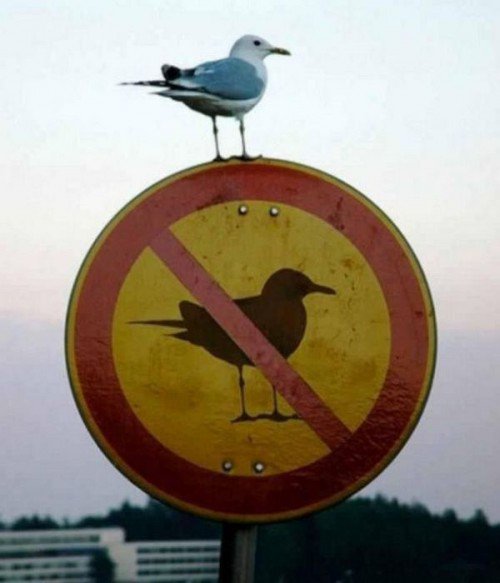
Funny Animal Signs That Warn People (While Animals Ignore Them)
From a seagull on a no-birds disc to classic zoo and park ironies—why animal warning signs get funny, and what the rules are still for.

How to Find Local Amenities on Vacation: Mechanics, Haircuts & More
Locate trustworthy local services and everyday spots while traveling or settling in—using publications, reviews, map apps, neighbor tips, and low-pressure exploration.

Kristen Stewart for V Magazine, Spring Preview 2013
V81’s Wild at Heart cover story—Kristen Stewart shot by Inez & Vinoodh, styled by Joe McKenna, in pale minimal spring glamour.