
Charming Bracelets and Bangles: Cuffs, Stacks, and Filigree
How bracelets, bangles, and open silver cuffs differ—plus proportion, stacking, care, and styling lessons from a filigree statement cuff.
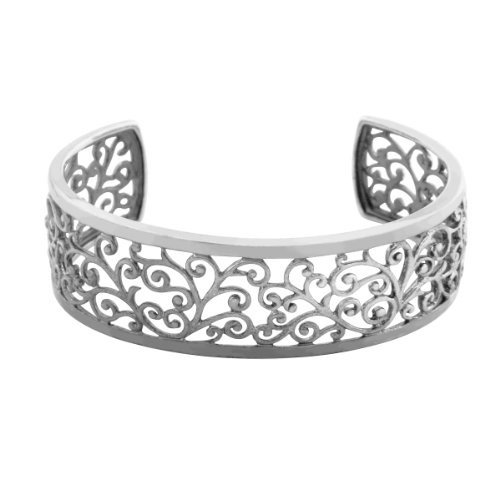
Bracelets and bangles sit where jewelry meets gesture. Every time you lift a cup, type, or wave, metal moves with you. That constant motion is why wrist pieces photograph so well and why they feel more lived-in than earrings that only appear for evenings. This gallery centers on a single surviving studio portrait—an open silver cuff with dense filigree scrollwork—and uses it as a doorway into how bracelets and bangles differ, how ornament works at cuff scale, and how to wear statement wrists without turning an outfit into costume.
The early-2010s lifestyle blogs that loved these images treated jewelry as mood board first and product second. That habit is still useful. Look at structure before brand. Ask what the metal is doing: framing the arm, glittering at the edge of a sleeve, or covering a wide band of skin with openwork that lets light through.
Bracelet, bangle, cuff: three different jobs
A flexible bracelet—chain, links, hinged segments—conforms. It follows the wrist’s curve and often carries clasps, charms, or stones that need security. A bangle is typically a rigid ring you slide over the hand; it can be solid or hollow, plain or patterned, and it tends to stack. A cuff is open-ended: you flex it onto the arm. The piece in this photograph is a cuff with twin polished rails holding a central field of filigree swirls and granulation-like beads. It does not clasp shut. It grips by spring and shape.
Those mechanical differences change styling. Chains layer easily with watches. Bangles click and announce themselves—lovely for evening, sometimes distracting in a quiet office. Cuffs read architectural. They claim vertical real estate on the forearm and ask the sleeve to cooperate. Push a knit cuff up and the filigree becomes a focal plane; bury it under a tailored jacket and you lose the point of the openwork.
Reading filigree on a white seamless
Product photography against white is honest about craft and merciless about clutter. Here, the bright silver finish throws highlights along the upper and lower rails while the inner scrollwork creates a lace of shadow. S-curves and vine spirals connect at small spherical tips, a texture that photographs as sparkle even without gemstones. That matters: not every “statement” bracelet needs crystals. Metal geometry can be the ornament.
Filigree historically meant fine wirework; in contemporary fashion jewelry the word often covers any open scroll pattern that looks airy. Either way, the visual promise is the same—weight without bulk. A solid plate cuff can feel armored. An openwork cuff can feel decorative and lighter on the eye, even when the metal mass is substantial. When you shop or sketch designs, hold pieces up to a window. If you can see daylight through the pattern, the bracelet will behave differently against print dresses and solid knits than a closed band would.
Proportion: width, gap, and wrist shape
Wide cuffs flatter long forearms and can overwhelm very small wrists unless the openwork is delicate. Measure the visible band height against your own hand: if the cuff is wider than the distance from wrist bone to the start of the hand, try it on before committing. Open ends should sit comfortably without pinching tendons when you flex. A beautiful studio shot cannot tell you about hinge-less pressure points; your own movement can.
Stacking rules differ by form. Two wide cuffs usually fight. One cuff plus a thin chain on the same wrist can work if the chain stays distal (closer to the hand) and the cuff stays proximal (closer to the elbow). Mixing a smooth gold bangle with a silver filigree cuff can look intentional when both share a similar polish level—high shine with high shine, brushed with brushed. Mixing a hammered matte bangle with mirror filigree often reads as accidental unless the rest of the jewelry is equally mixed on purpose.
When a statement cuff earns its keep
Statement wristwear works best when the outfit has one loud zone. A black turtleneck, a white shirt, a solid dress—these give filigree somewhere to land. Busy plaids, sequined sleeves, and stacked charm bracelets already fill the visual field; adding a wide cuff can tip the look into noise. Conversely, minimal clothing can make a cuff feel like jewelry and architecture at once, especially if earrings stay small.
Occasion matters. Filigree silver photographs as romantic and slightly vintage, which suits dinners, galleries, weddings as a guest, and creative workplaces. For heavy physical work or gym days, leave it home: openwork catches, and spring cuffs can deform if forced. Treat the piece as a finishing layer, not as armor for chores.
Care that protects the pattern
Open scrollwork traps lotion, soap film, and city grit. Wipe with a soft dry cloth after wear. If you polish, use a cloth designed for silver and move gently along the rails first, then dab—do not scrub aggressively into the filigree, which can bend fine elements. Store the cuff alone or in a fabric pouch so neighboring chains do not snag the swirls. Humidity and sulfur in the air will dull polish; a sealed box slows that more than leaving jewelry on a bathroom tray.
If the cuff is plated rather than solid silver, avoid abrasive pastes that strip the surface. If it is sterling, expect a living finish: high-wear zones brighten; recessed scrolls may keep a soft darkening that actually helps the pattern read. Many wearers prefer that gentle contrast to a perpetual mirror shine.
Styling formulas you can reuse
- One cuff, quiet ears: let the wrist carry ornament; choose studs or nothing.
- Cuff plus ring echo: repeat a similar scroll or metal tone on one finger, not five.
- Sleeve choreography: three-quarter sleeves showcase cuffs; long sleeves need a deliberate push-up.
- Evening contrast: black fabric against bright silver maximizes the filigree’s silhouette.
- Day softness: cream, sand, or pale blue knits warm cool metal without competing pattern.
None of these formulas require a new wardrobe. They require editing. Remove one competing accessory and the cuff suddenly looks chosen rather than accumulated.
What this single image still teaches
Gallery posts from this era often lost most of their frames to broken uploads and empty paragraphs. What remains here is enough: a three-quarter view of an open silver cuff, rails framing scrollwork, granulation tips catching light. From that one object you can still learn how bracelets differ from bangles, why cuffs need sleeve strategy, and how open metal can feel richer than a solid band. If you are building a jewelry drawer, start with one well-made wrist piece that photographs clearly and wears comfortably. Then resist the urge to stack until the first piece has earned a role in your actual week—not only in a mood board.
Try the cuff on before a mirror with the outfit you wear most often, not the outfit you wish you wore. If the filigree still looks charming when you reach for keys and coffee, it belongs. If it only works in the studio’s white void, keep looking.

Comments
Continue reading
Be Jeweled: How to Style Statement Jewelry with Intention
A jewelry styling gallery covering focal pieces, mixed metals, necklines, stacks, day-to-evening sparkle, and care tips.

Funny Animal Signs That Warn People (While Animals Ignore Them)
From a seagull on a no-birds disc to classic zoo and park ironies—why animal warning signs get funny, and what the rules are still for.
How to Find Local Amenities on Vacation: Mechanics, Haircuts & More
Locate trustworthy local services and everyday spots while traveling or settling in—using publications, reviews, map apps, neighbor tips, and low-pressure exploration.