
Elia Locardi’s HDR Travel Photography: Light, Place, and Life on the Road
A look at Elia Locardi’s HDR travel photography—balanced exposure blending, immersive location work, and the location-independent path he and his wife took after 2012.
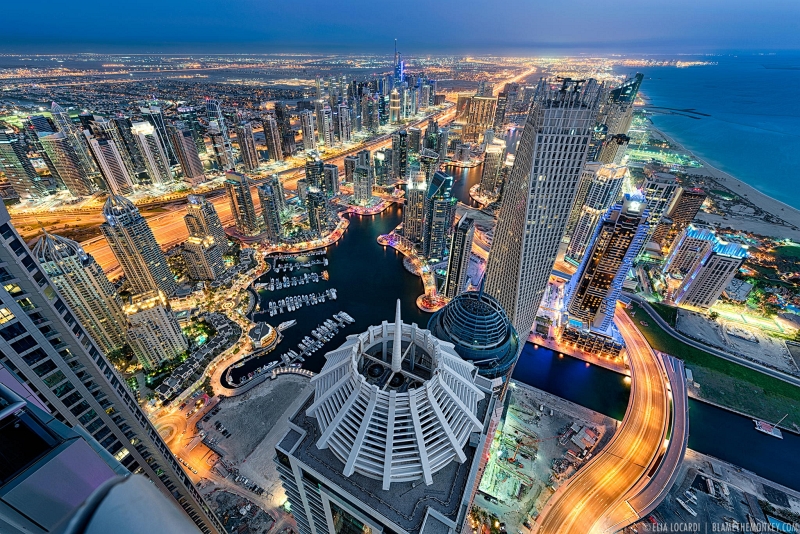
Elia Locardi’s travel photographs often feel lit from more than one hour of the day. Skies hold detail where a single exposure would bleach out; shadows keep texture where a tourist snapshot would go black. That balance is the public face of his HDR approach—not a cartoon glow, but a controlled marriage of multiple exposures into one believable scene.
By the mid-2010s, Locardi was already known as an American-born photographer who had been traveling hard since 2009. Profiles from that period commonly described roughly forty countries visited, hundreds of flights, and mileage measured in the millions. In 2012 he and his wife chose a sharper version of the same life: they sold most of what they owned and worked as location-independent travel photographers, carrying the studio with them from city to city. Locardi has called that decision one of the best of his life. The pictures from those years show both the reward and the discipline required.
Travel as the subject, not the backdrop
Locardi’s strongest frames treat place as something to inhabit before it is something to capture. That sounds soft until you look at how the pictures are built. Landmarks are rarely dumped in the center with a blank sky. Instead, foreground stone, water, or architecture leads the eye; weather becomes structure; human scale appears as a quiet measure rather than a selfie prop.
Dubai’s towers, for example, can photograph as pure spectacle—glass, height, night lights. In images like Towering Dreams, the city reads as atmosphere and geometry at once: stacked forms, layered luminance, and a sky that still has tone. HDR here is a tool for holding both the bright façade and the deeper street or void without asking the viewer to choose one. The photograph invites exploration across the frame rather than a single punch of neon.
That approach scales to quieter landscapes as well. Coastlines, temples, mountain towns, and night markets all benefit when the brightest lights and the darkest corners remain legible. Travel photography fails most often not from lack of destinations, but from single exposures that force a brutal compromise. Locardi’s published work argues, visually, for waiting through that compromise with brackets and careful finishing.
What his HDR usually prioritizes
High dynamic range technique, at its best, solves a physical problem. Cameras still struggle when a scene contains both brilliant highlights and deep shade. Bracketing exposures and blending them—whether in dedicated HDR software or careful manual composites—can recover a range closer to what the eye negotiated on site.
Locardi’s work from this era tends to avoid the worst HDR clichés of the time: radioactive clouds, crunchy halos, plastic skin on stone. Saturation is present, sometimes boldly, but local contrast is usually managed so edges do not vibrate. The goal reads as cinematic clarity: you can explore the frame, not just react to a filter. Color grading supports mood without inventing weather that was never there.
Technical habits that support that look include stable tripod work, consistent framing across brackets, attention to moving clouds or water, and a finishing pass that unifies color temperature. Travel complicates all of it—security rules on rooftops, wind, short legal access windows, humidity on lenses, and the fatigue of constant transit. The lifestyle and the technique are linked; you cannot separate the miles from the files. A clean bracket set is easier to talk about at home than to produce after three flights and a late check-in.
Moving subjects remain a challenge in multi-exposure work. Crowds, flags, and waving trees can ghost across blends. Locardi’s stronger frames often choose moments or vantage points where motion is manageable, or they accept selective masking in post. HDR is not a substitute for timing; it is an amplifier of good timing.
Location independence as working method
When Locardi and his wife committed to life without a fixed home base in 2012, photography stopped being a trip you pack for and became the calendar itself. Workshops, client work, personal projects, and logistics overlapped in the same suitcase. That model was widely discussed among travel photographers in those years: sell down, digitize what you can, and keep only what flies.
The advantage is immersion. Weeks in a region beat a weekend raid. You learn which overlook fails at noon, which alley opens after rain, which blue hour is worth the taxi, which security guard will move you along. The cost is relentless planning—visas, gear risk, connectivity, health insurance, and the mental load of never fully unpacking. Location independence sounds glamorous in a caption; in practice it is a operations problem solved daily.
For viewers, the payoff is a body of work that feels accumulated rather than collected. Cities recur in different light. Techniques mature. Familiar subjects get second and third chances. That continuity is harder to fake than a single viral sunset.
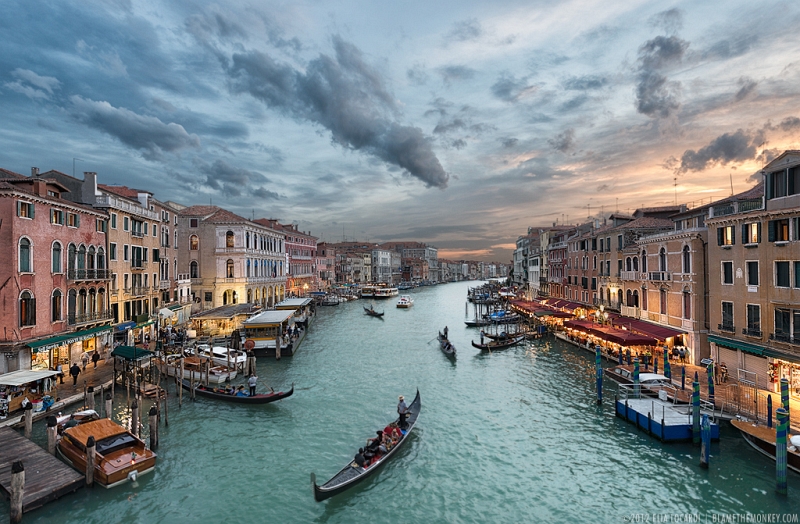
Reading the photographs
Look for how light wraps surfaces. In strong Locardi frames, stone and metal keep micro-contrast; skies graduate instead of posterizing; night scenes hold both signage sparkle and architectural mass. Composition often uses leading lines—roads, shorelines, colonnades—to pull you into depth that HDR can sustain because shadow detail survives.
Also notice restraint around famous subjects. A widely photographed site still needs a personal weather moment or vantage. When the light is ordinary, no amount of tone mapping invents presence. When the light is rare, HDR helps you keep it without clipping the reason you waited. Compare tourist postcards of the same landmark with Locardi’s versions: the difference is usually spatial storytelling, not merely “more detail.”
Ask where your eye enters, where it rests, and whether the sky participates as a character or merely tops the scene. In the better frames, the sky is doing work—tone, weather, time of day—rather than sitting as a default blue plate.
Lessons for photographers who admire the work
You do not need Locardi’s itinerary to borrow his priorities. Scout before you shoot. Bracket when the contrast demands it, then finish with a light hand. Protect highlight shape in clouds and specular hits on water. Correct color so mixed lighting does not turn into a rainbow accident. Most of all, give a place enough time that your composition comes from understanding, not from the first parking-lot angle.
If you are new to HDR, start with static architecture at dusk rather than windy forests at noon. Learn to align brackets, to mask movement, and to pull back global contrast when the image starts to crunch. Study Locardi’s published files as examples of controlled range, not as permission to push every slider.
Pack for the merge as well as the capture: sturdy tripod, remote release, spare batteries that hate cold, lens cloths that will get used, and a workflow that backs up cards before the next airport. Travel photography careers are built as much on logistics as on vision.
Stand in front of one of his city or landscape frames and ask where the brightest clean highlight lives, and where the darkest still-readable shadow sits. That span—held without shouting—is the craft you are looking at.

Comments
Continue reading
Adrian Sommeling’s HDR Photo-Stories
Dutch photographer Adrian Sommeling compresses whole narratives into single HDR frames—one child, one empty road, and storm light that behaves like plot.
HDR Travel Photography by Jim Nix
Austin-based photographer Jim Nix pairs travel observation with Photomatix HDR—colorful cityscapes and landscapes published on a steady Nomadic Pursuits rhythm.
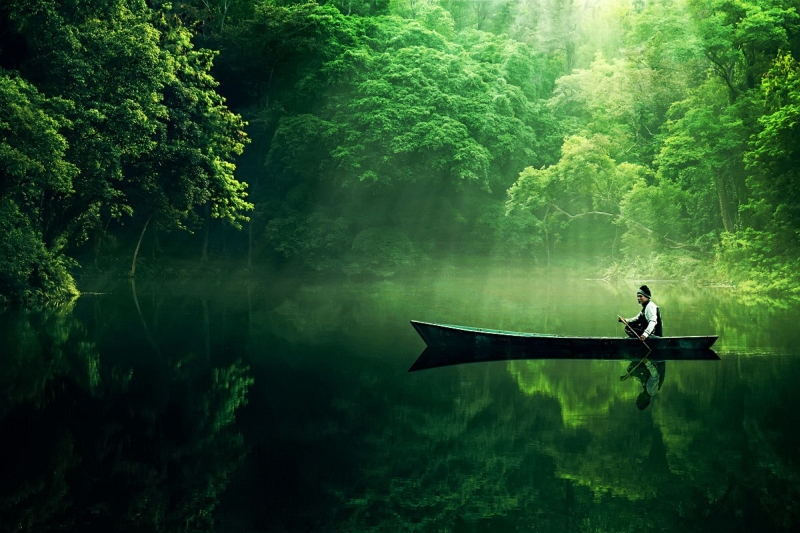
Dramatic Photo Art by Sukron Ma’mun (Ipoenk Graphic)
Cirebon, Indonesia photographer Sukron Ma’mun uses theatrical natural light to frame village life, play, and place in lyrical photo art.