
3D Street Art Illusions: Pavement That Tricks the Eye
Anamorphic sidewalk art turns flat paint into canyons, creatures, and voids—if you stand in the exact right spot.
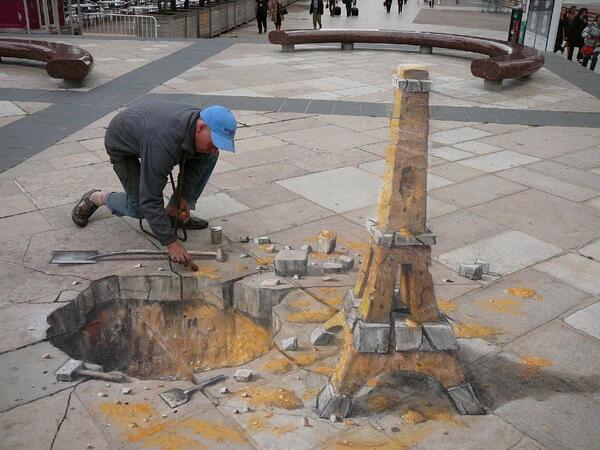
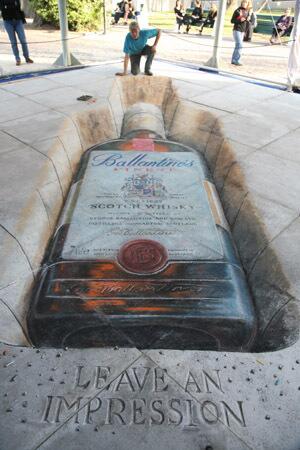
Stand in the right spot and a flat painting on asphalt becomes a canyon, a shark tank, or a hole that seems ready to swallow your shoes. Move a few steps sideways and the miracle collapses into stretched paint. That fragile bargain—depth that exists only from one carefully chosen viewpoint—is the core of 3D street art, also called anamorphic pavement art or 3D sidewalk illusion.
The form took off in the early 1980s, when artists began treating public paving as a stage for optical tricks rather than only for murals on walls. The surface stays two-dimensional. The brain supplies the third dimension when perspective, foreshortening, and shadow are engineered for a single camera position or a marked “best view” circle on the ground. Tourists pose. Kids lean over imaginary voids. Phones fill with proof that, for a moment, the street lied beautifully.
How the illusion is built
Anamorphic street work is less magic than disciplined drafting. Artists often sketch a grid, then distort shapes so that, from the target angle, rectangles read as cubes, ellipses as circles, and painted “walls” align with real curb lines. Soft shadows sell volume; hard edges sell architecture. Color does the rest: cool tones push space back, warm tones pull objects forward, and a convincing highlight can make painted water look wet.
Scale matters. A small chalk doodle can amuse; a piece that swallows half a plaza can rearrange how people walk. Many works are interactive by design—gaps left for a person to “stand on a ledge,” “jump a crevasse,” or “hold a rope” that is only pigment. Others are pure spectacle: you are not meant to enter the scene so much as stare into it until your balance wobbles.
Materials vary with weather and budget. Temporary chalk festivals favor soft pastels and charcoal. Longer commissions may use acrylics, spray systems, or sealed coatings meant to survive foot traffic for weeks. Either way, the artwork is public and perishable. Rain, cleaning crews, and scuffed sneakers are part of the medium’s biography.
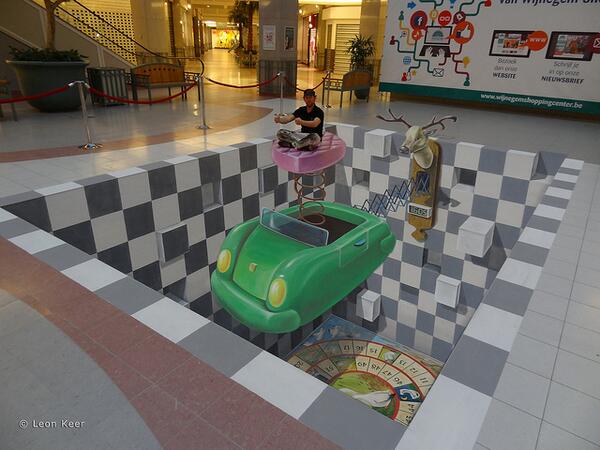
What these scenes like to stage
Look across a strong collection of 3D pavement pieces and certain themes repeat—not because artists lack imagination, but because certain subjects flatter the technique.
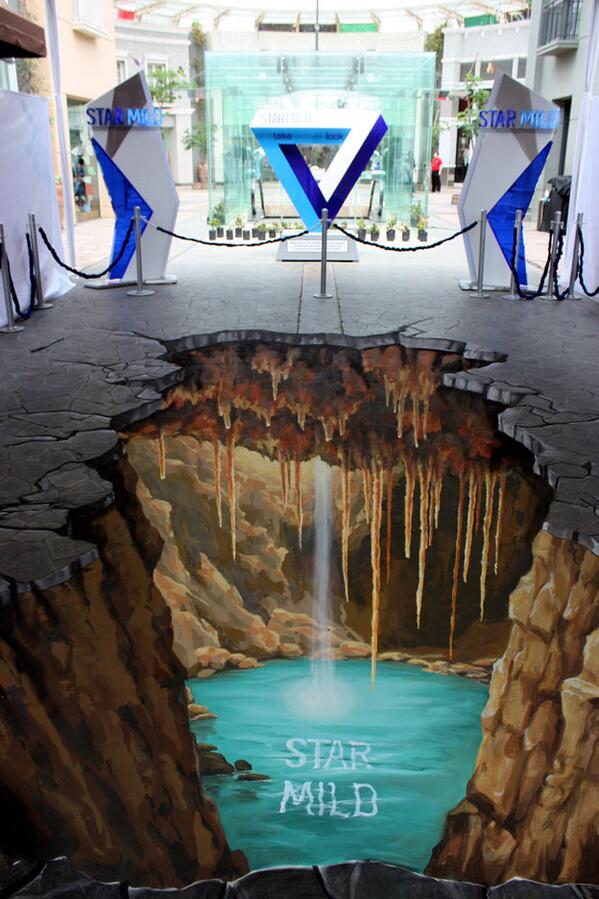
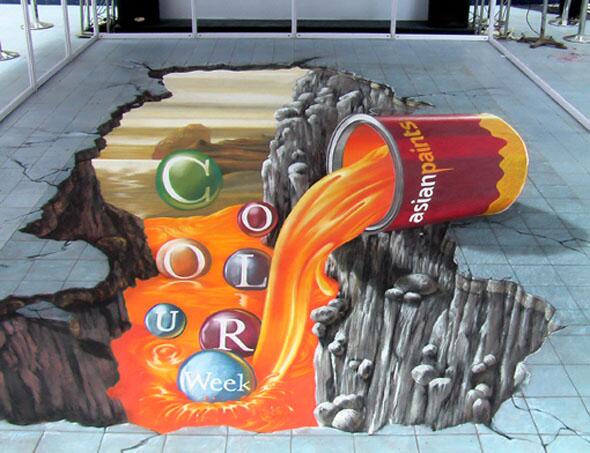
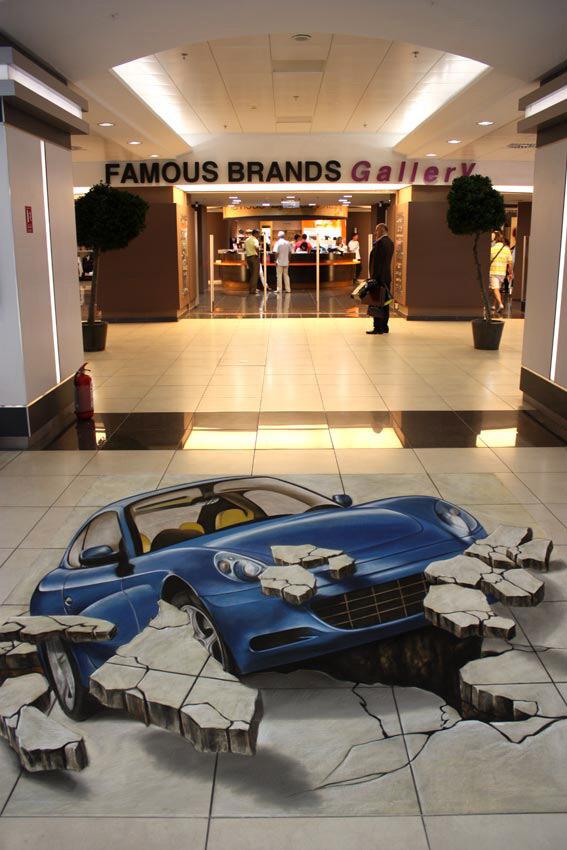
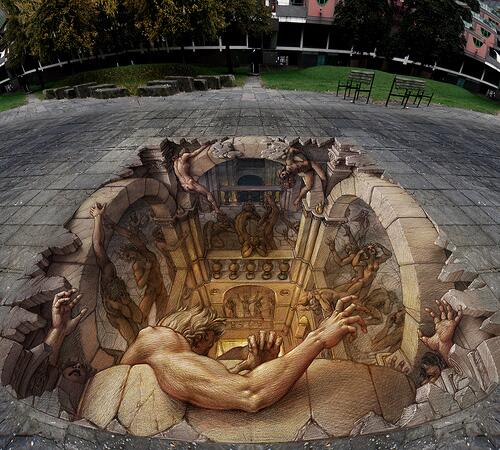
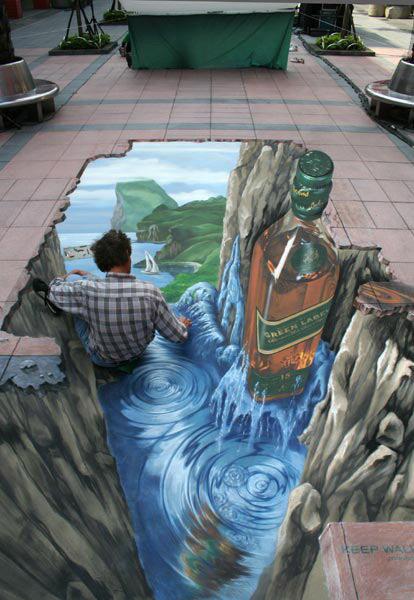
- Impossible voids. Cracks, sinkholes, underwater trenches, and open tombs exploit fear of falling. The flat ground becomes a trapdoor you cannot actually enter.
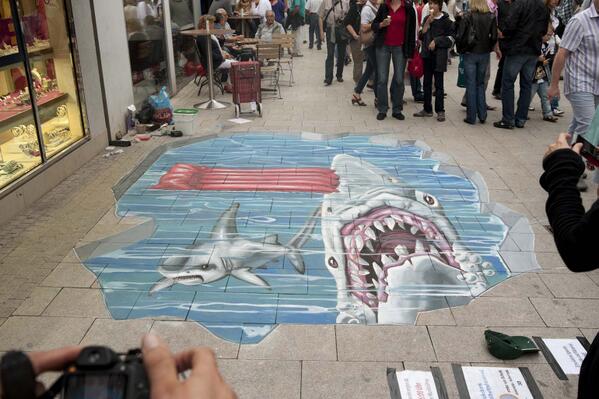
- Creatures rising from below. Sharks, serpents, dinosaurs, and mythic beasts “break” the surface so a pedestrian seems to teeter above jaws or coils.
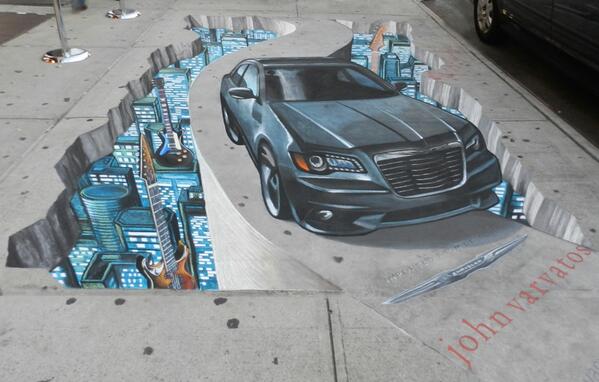
- Architecture that should not fit. Staircases into basements, bridges over canals, and miniature cities tucked underfoot turn a plaza into a nested world.
- Play and performance. Swings over painted cliffs, tightropes between towers, and game boards scaled for human pieces invite posing as much as looking.
- Surreal objects. Giant fruit, floating islands, and everyday items enlarged until they dominate the street keep the tone light even when the perspective is precise.
The best pieces balance humor and craft. A joke that is only a joke fades after one selfie. A joke that is also a rigorous drawing still rewards a slow walk around the edges, where the distortion becomes visible and the skill shows.
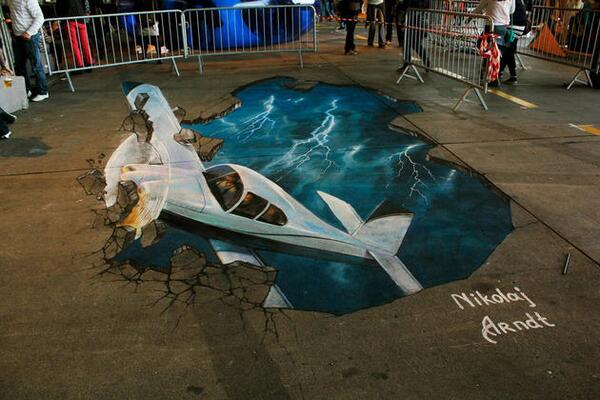
Reading a work the way a photographer would
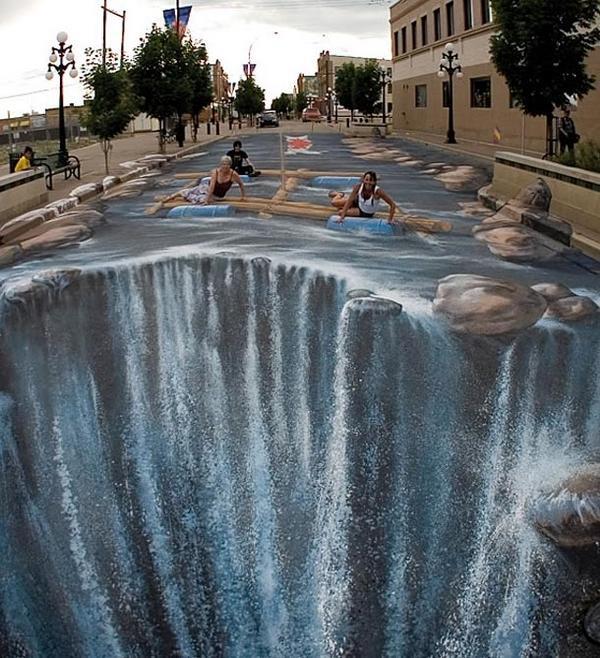
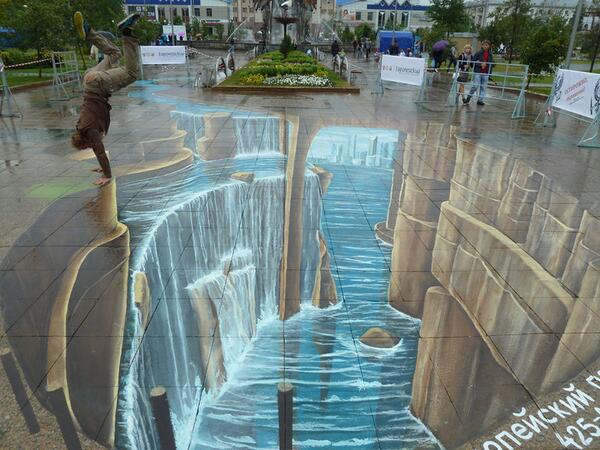
Because these paintings are built for a viewpoint, photography is not a side hobby—it is how most people meet the art. Stand on the marked spot if there is one. Crouch or rise until painted verticals line up with real architecture. Fill the frame enough that the pavement edge does not spoil the fiction, but leave a little context so viewers understand they are looking at a street, not a digital render.
Then break the spell on purpose. Step left and right. Watch cubes flatten into diamonds. That second look is educational: it reveals how much of “depth” is prediction by the visual system. Artists who master anamorphosis are really mastering what your brain expects to see when light and edges behave a certain way.
Public space, temporary theater
3D street art thrives where people already gather—festivals, downtown squares, shopping promenades, waterfronts. The audience is accidental: office workers on lunch, families weekend-strolling, travelers hunting something shareable. That democratizes the encounter. You do not need a museum ticket to feel your eyes argue with your feet.
It also raises practical etiquette. Do not scuff wet paint. Do not block the viewing mark for an endless photo session while a queue forms. If children are climbing into a painted “pit,” remember the pit is still solid ground with trip hazards at the edges. Respect temporary barriers; they often protect both the piece and the public.
Cities commission these works for tourism and activation, but the craft belongs to painters who can think in warped grids under sun and wind. Some specialize in hyper-real trompe-l’œil. Others lean cartoonish or fantastical. The shared skill is the same: make a passerby hesitate.
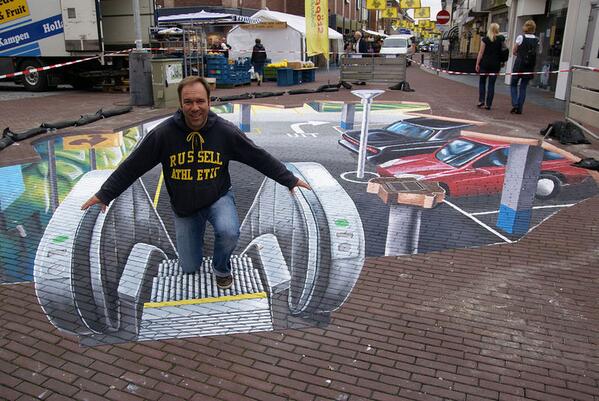
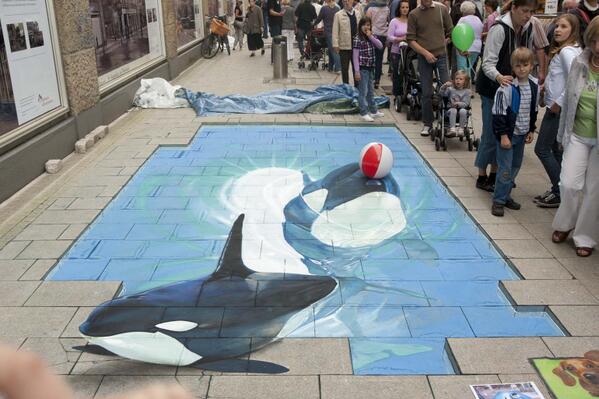
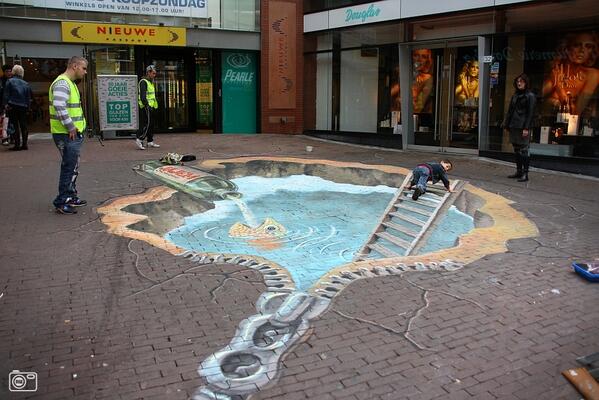
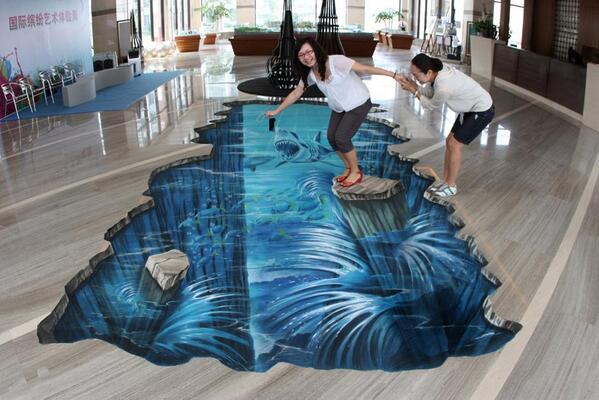
A gallery of pavement wonders
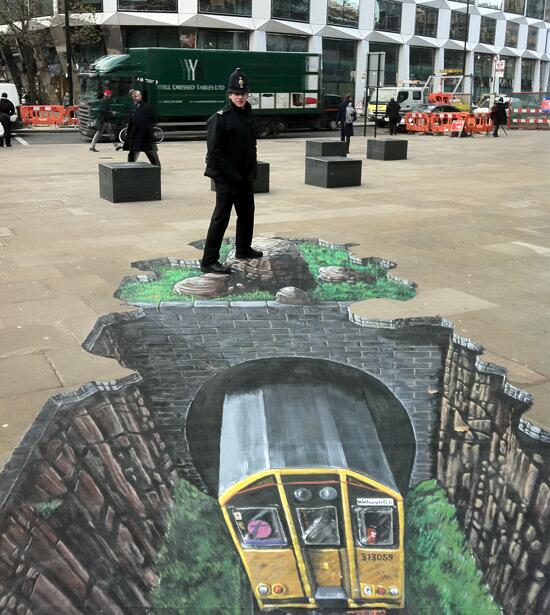
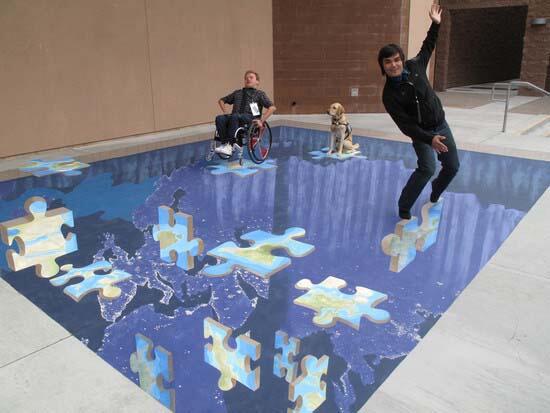
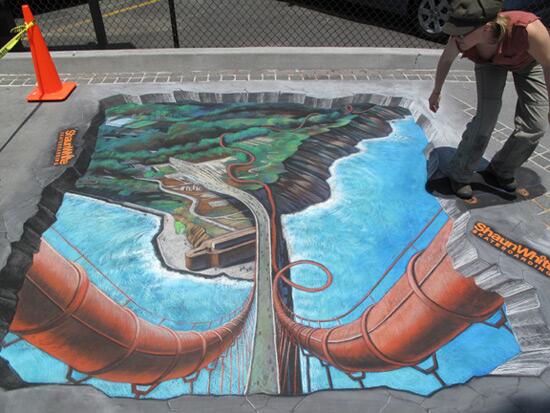
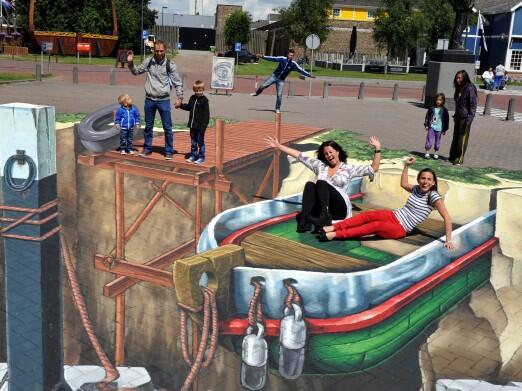
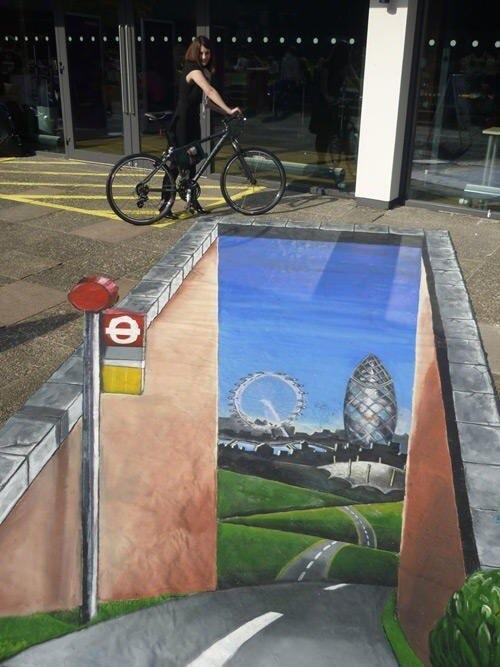
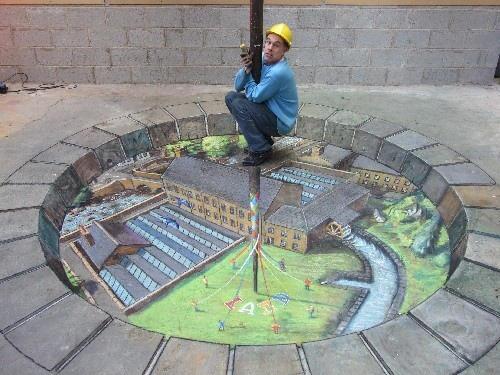
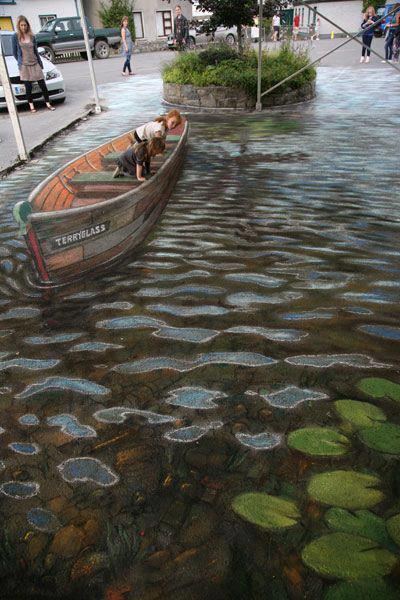
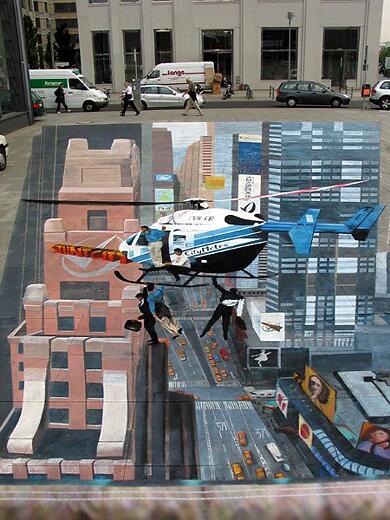
The images gathered here show the range the medium can hold: deep fictive spaces cut into ordinary plazas, creatures erupting underfoot, theatrical stages built for one perfect selfie, and quieter architectural tricks that reward a longer stare. Viewed in sequence, they remind you that “street art” is not only tags and murals. Sometimes it is a temporary cinema laid flat on stone, waiting for you to find the seat.
Notice how often people appear in the frames. Bodies calibrate scale. A person crouched at a painted ledge sells the drop. A hand reaching toward a painted object sells the volume. Without a human measure, even a brilliant anamorphosis can read as abstract pattern until your eye locks the perspective.
If you meet one in the wild
Find the viewpoint first, then the pose. Take one honest photograph from the mark, then a second from an off-angle so you remember the craft, not only the trick. Leave room for the next stranger who wants the same gasp. And if the paint is fresh, admire with your eyes—your shoes can wait for a dry mural elsewhere.

Comments
Continue reading
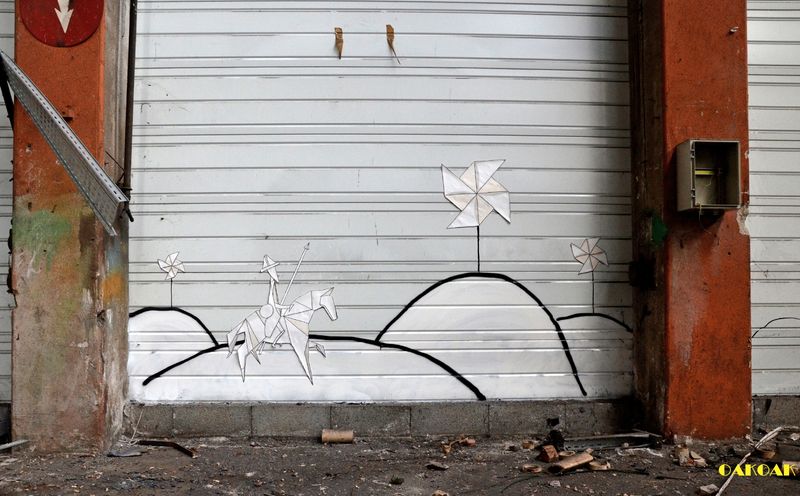
Oakoak’s Playful Urban Street Interventions
French street artist Oakoak turns cracks, hydrants, and overlooked fixtures into small site-specific jokes—minimal marks, pop-culture wit, and ephemeral city play.
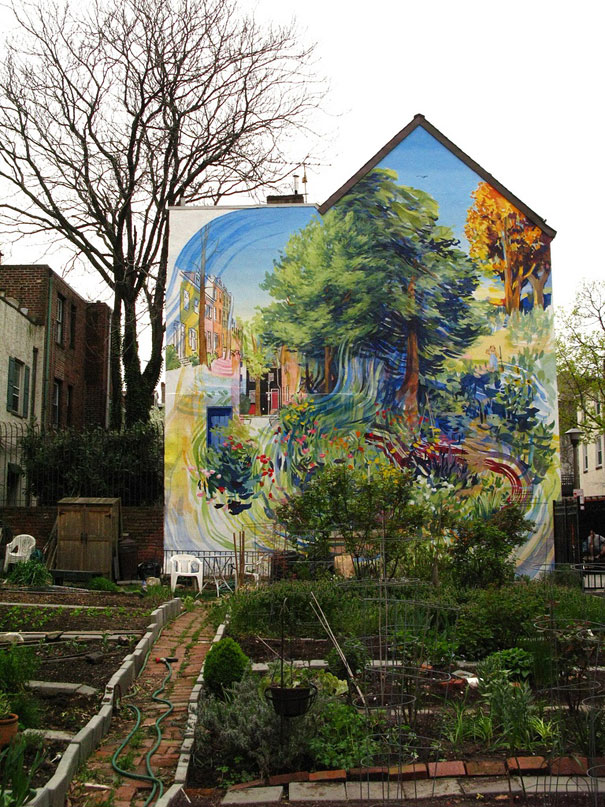
15 More Incredible Street Art Photos Worldwide
Part two: giant murals from Philadelphia, Lyon, Warsaw, Lisbon, Vienna, New York, Dublin, Berlin, and beyond—plus a few still-unlabeled walls.
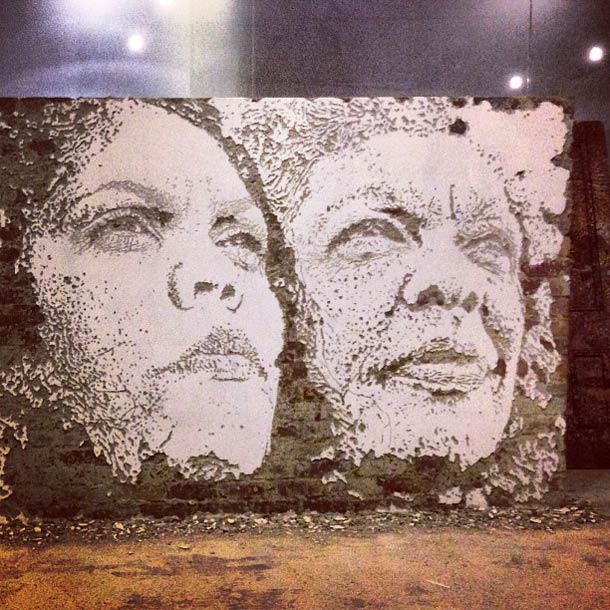
Scratching the Surface: Street Art Carvings by Vhils
Portuguese artist Alexandre Farto, aka Vhils, digs portraits from city walls—subtractive street art that treats plaster, brick, and posters as a living palette.