
Oakoak’s Playful Urban Street Interventions
French street artist Oakoak turns cracks, hydrants, and overlooked fixtures into small site-specific jokes—minimal marks, pop-culture wit, and ephemeral city play.
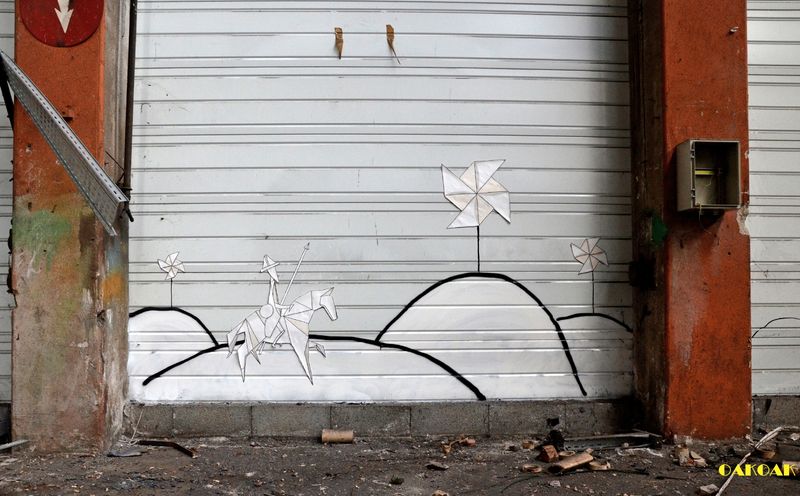
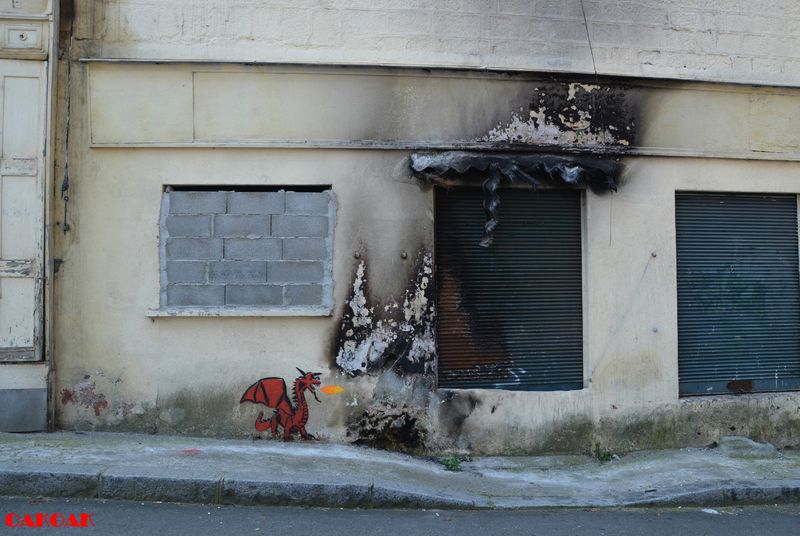
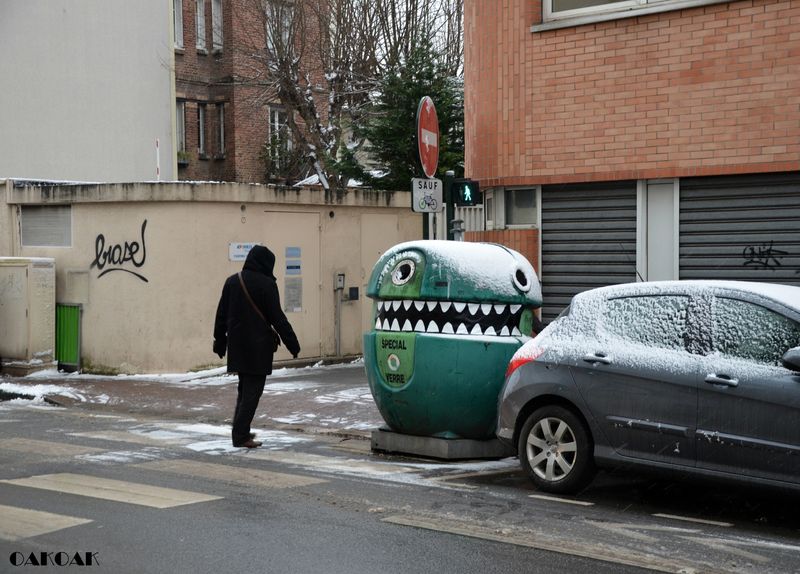
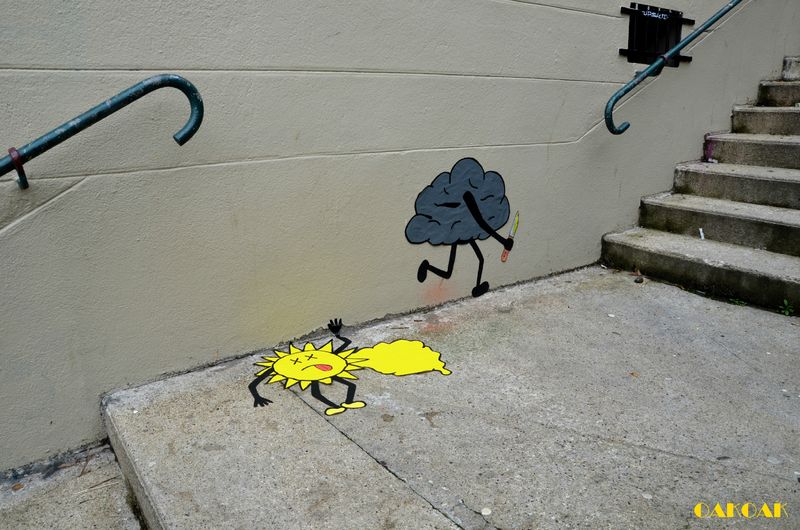
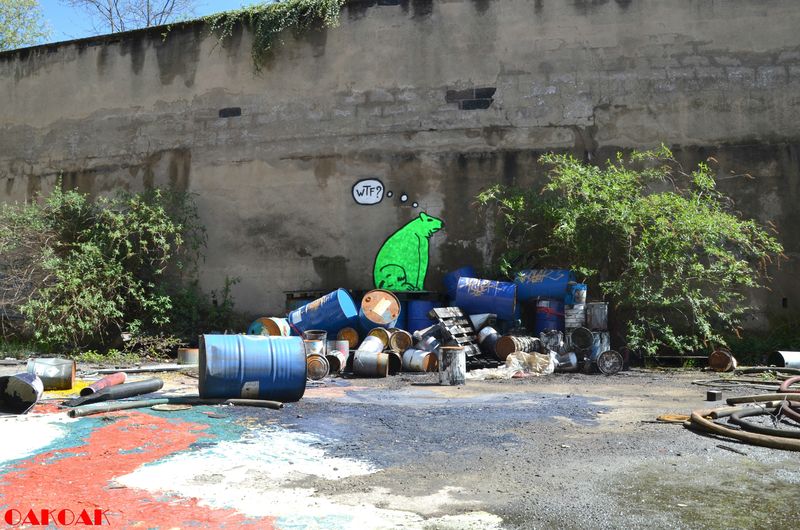
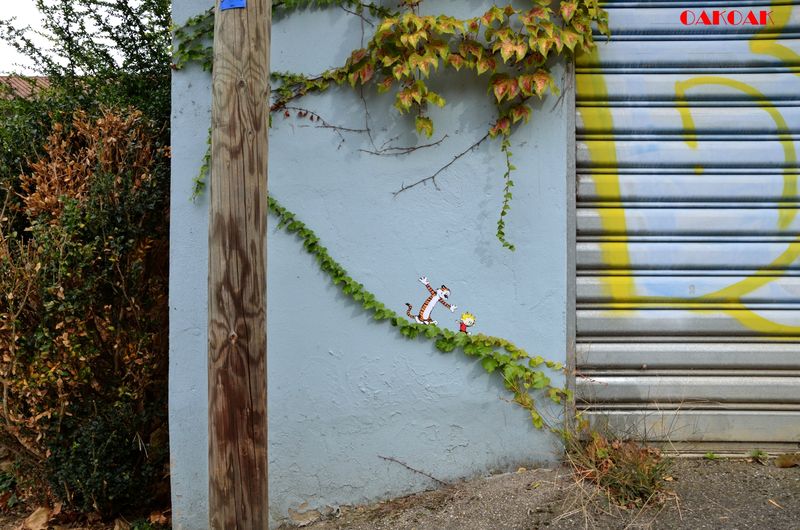
Oakoak is a French street artist who treats the city as a partner rather than a blank billboard. Working from Saint-Étienne and farther afield since the mid-2000s, he looks for what most pedestrians ignore: cracks, hydrants, bent railings, manhole covers, faded signs, and odd shadows. Then he adds the smallest possible change—eyes, a figure, a pop-culture silhouette, a paper cutout—until the street object suddenly tells a joke. The humor is gentle and site-specific. Remove the wall or pipe and the gag collapses. That dependence on place is the point of the practice.
Unlike muralists who cover large façades with color fields and portraits, Oakoak prefers interventions that reward attention. A piece may be easy to miss until you stop walking. When you do stop, the city feels briefly rearranged: a defect becomes a plot, a fixture becomes a character, and ordinary infrastructure looks temporarily alive. The gallery below gathers a run of those moments—urban play staged with restraint, timing, and a clear affection for the overlooked parts of the street.
Looking before painting
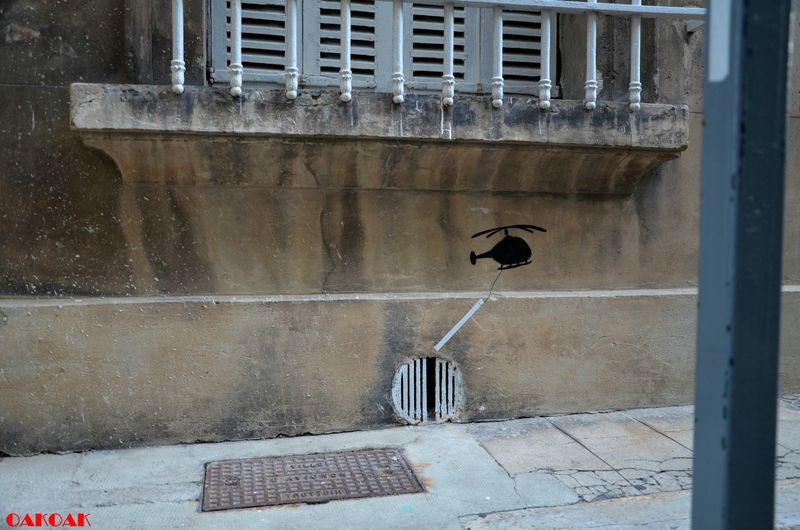
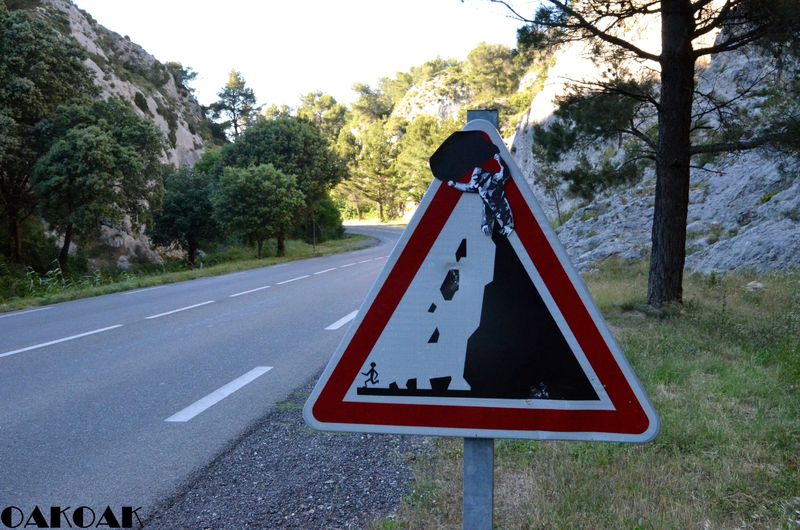
Oakoak’s method starts with walking. He has described circling a city with open eyes, waiting for an urban detail to suggest its own punch line. Sometimes the idea arrives in a second. Sometimes a promising hydrant or crack sits in memory for weeks until the right character appears. In one interview he recalled passing a site daily for months, knowing something could happen there, until a Snoopy intervention finally clicked. That patience is as much the craft as the stencil or glue. The site is already “almost” something; the artist finishes the sentence the street started.
Materials follow the location. Paper and glue suit temporary, delicate placements on surfaces that welcome collage. Stencils and spray suit harder walls and quicker installs. Either way, the mark stays economical. Oakoak does not compete with architecture by volume. He competes by wit. A few lines can humanize a fire hydrant. A silhouette can turn a wall fracture into the aftermath of a martial-arts kick. A cartoon figure can climb, hide, or emerge from a sewer grate as if the city had always been a comic strip waiting for ink. The less he adds, the more the existing object has to carry—and the sharper the surprise when it does.
Pop culture as urban vocabulary
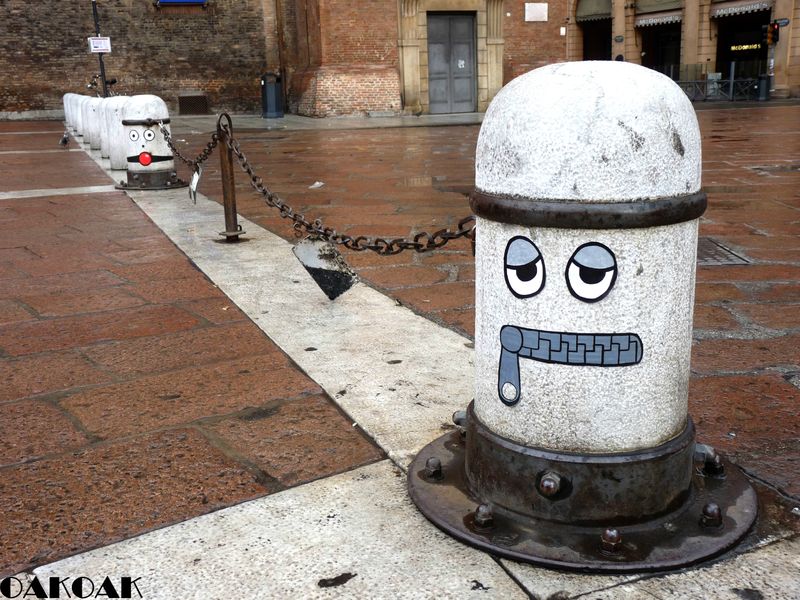
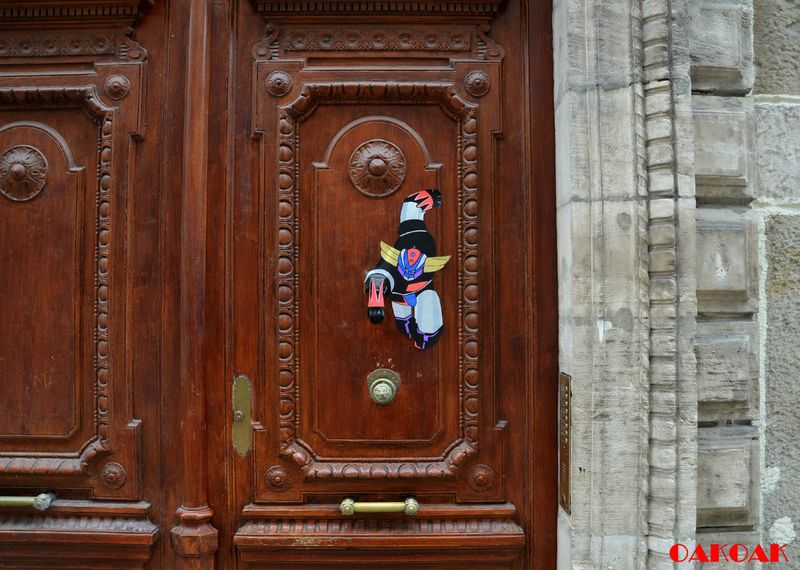
Geek culture, cartoons, video games, and comic heroes show up often in his repertoire—not as merch stickers slapped anywhere, but as shared visual shorthand. Pedestrians recognize a Ninja Turtle silhouette, a Super Mario gesture, or a familiar cartoon profile without needing a wall text. That recognition lets the joke land at walking speed, which matters when viewers are on errands. The references are affectionate rather than sarcastic. Oakoak uses them to re-enchant pipes, cracks, and crossings, not to sneer at the city or at popular culture.
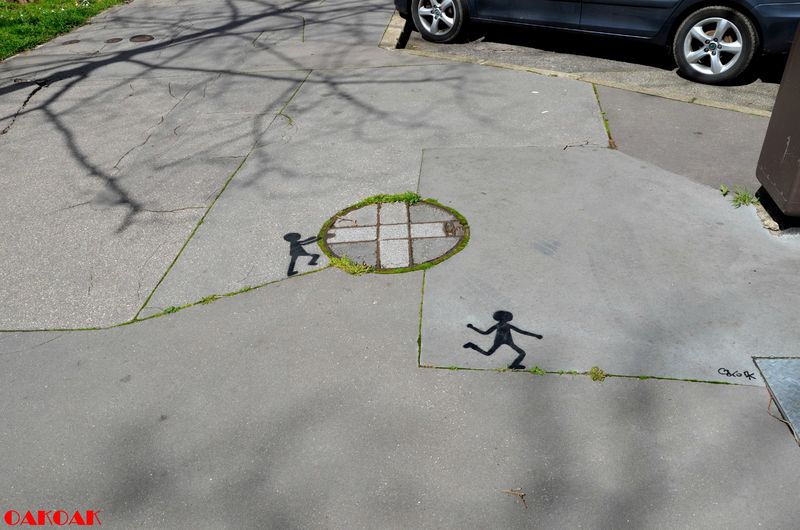
French critics have framed the work as amusement with a poetic edge: everyday objects that people cross and ignore get dressed in another life. Pedestrian signals become acrobats. Hydrants grin. Familiar characters borrow the city’s hardware as stage sets. The politics, such as they are, stay light. Oakoak has been quoted as claiming no activism beyond making people smile. That claim fits the pictures. The pieces do not lecture about blight or policy. They simply refuse to treat neglect as invisible. A crack that once meant only “maintenance pending” becomes the punch line of a tiny drama, and for a moment the street feels more readable.
Ephemeral by design
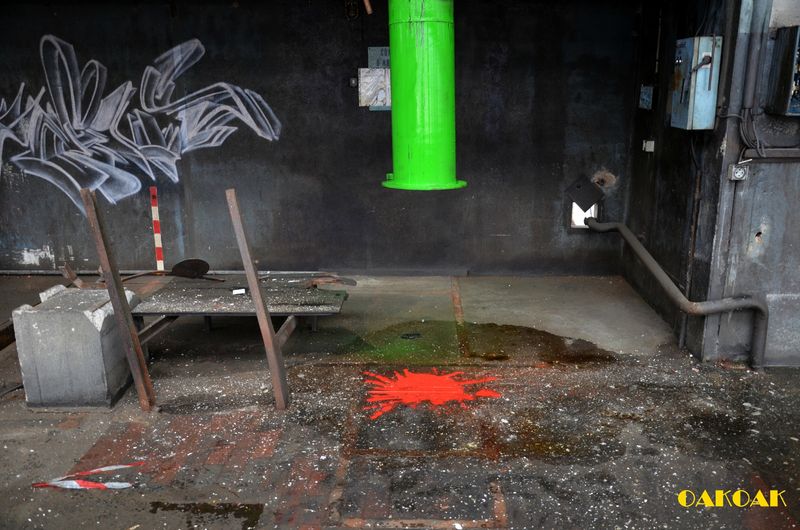
Street work vanishes. Weather, maintenance crews, collectors, and time erase paper and paint. Oakoak has said he likes that principle. Impermanence forces new walking routes and new ideas. It also matches the scale of the practice: if a piece is small and clever, a photograph can carry it farther than the physical object ever will. Documentation becomes part of the artwork’s afterlife without turning every corner into a permanent museum plaque. The tension between the fleeting install and the durable image is built into how audiences meet the work online and in books.
That ephemerality changes how you look at the set here. Treat each frame as a record of a temporary alliance between artist and infrastructure. The wall crack may already be patched. The hydrant may already be repainted. What remains is the logic of the joke—and the invitation to scan your own sidewalk for unfinished punch lines. Books from publishers such as Edition Populaire and Omaké Books have gathered some of these moments for readers who never walked those particular streets, but the logic still belongs outdoors: divert an urban element, keep the addition minimal, leave a smile where someone expected only concrete.
How to read the interventions
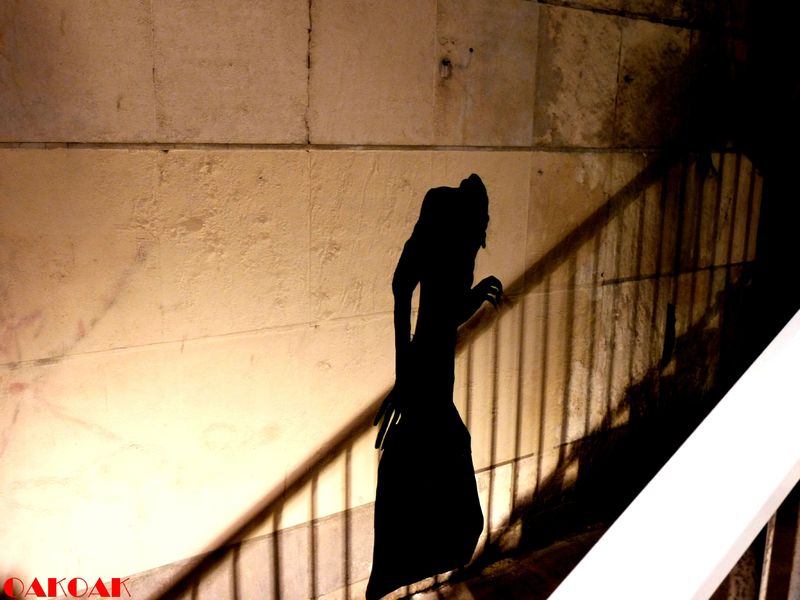
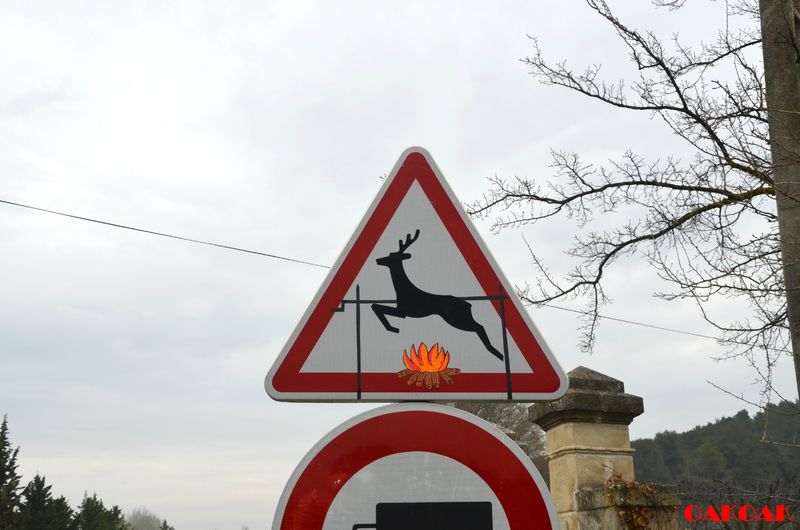
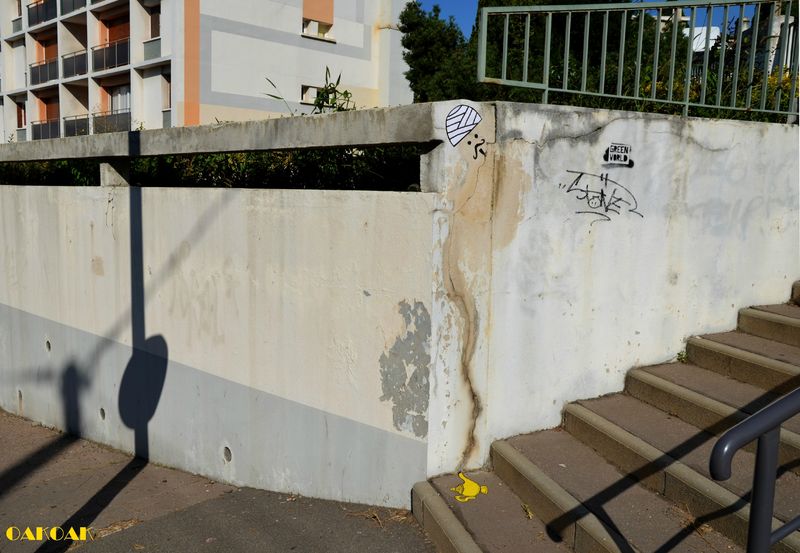
When you move through these images, ask three questions. First: what urban element is doing the heavy lifting—crack, pipe, grate, marking, shadow? Second: what did the artist add, and how little was enough? Third: would the gag survive if you moved it to a clean white wall? If the answer is no, you are looking at true site work rather than a transferable sticker design. That third test separates intervention from decoration. Decoration can travel. Intervention needs its host.
- Find the “defect” or fixture before you find the character.
- Notice whether paint, paper, or stencil carries the mark.
- Watch for pop-culture shorthand that speeds recognition.
- Imagine the piece at pedestrian speed—half a glance, then a double take.
- Accept that some of the best works hide until you slow down.
Oakoak belongs in a conversation with other artists who favor small urban gestures—figures who treat leftover space as a stage rather than a deficit. His version is especially playful. The city becomes a comic collaborator. Flaws become plot devices. Passersby become the audience for a joke that costs almost nothing to install and everything, in attention, to invent. Festival outings and international walks have carried the practice beyond Saint-Étienne, yet the contract stays local and visual wherever he works: notice what the street already offers, add only what the joke requires, and leave before the moment hardens into a monument.
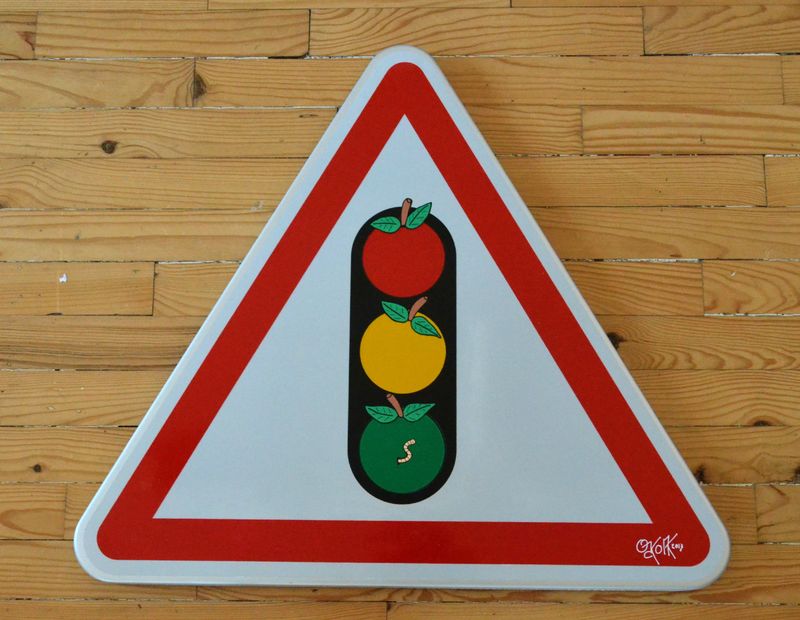
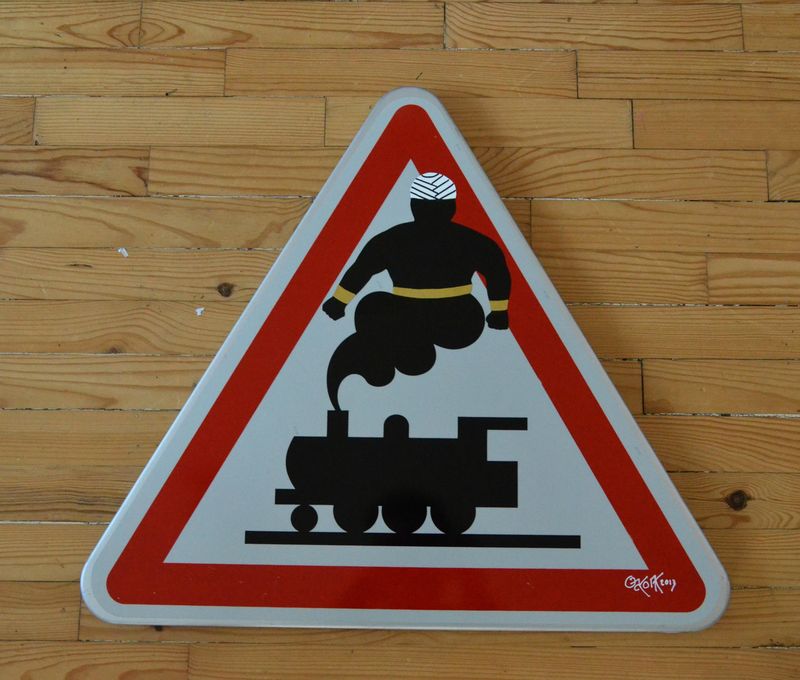
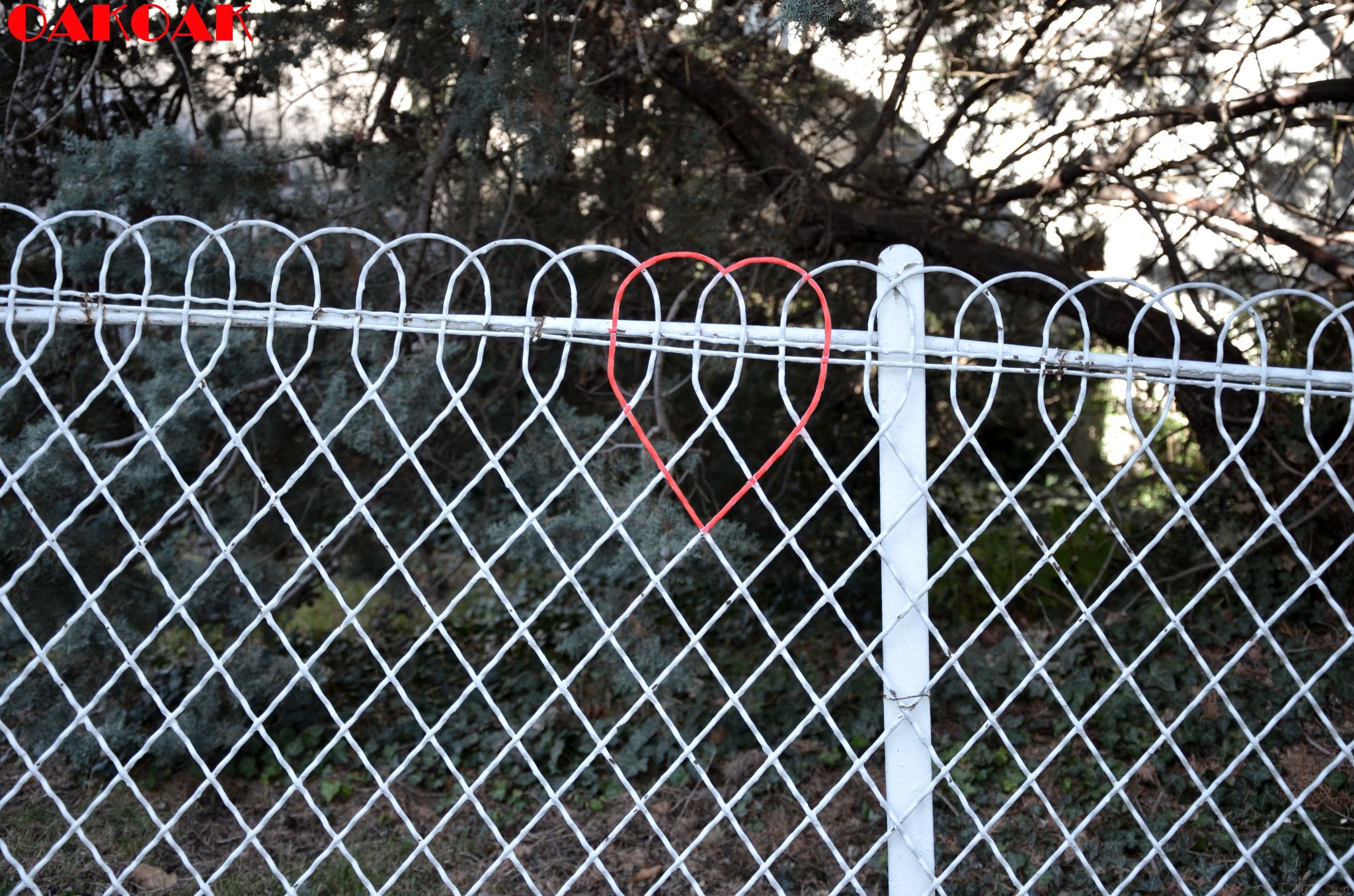
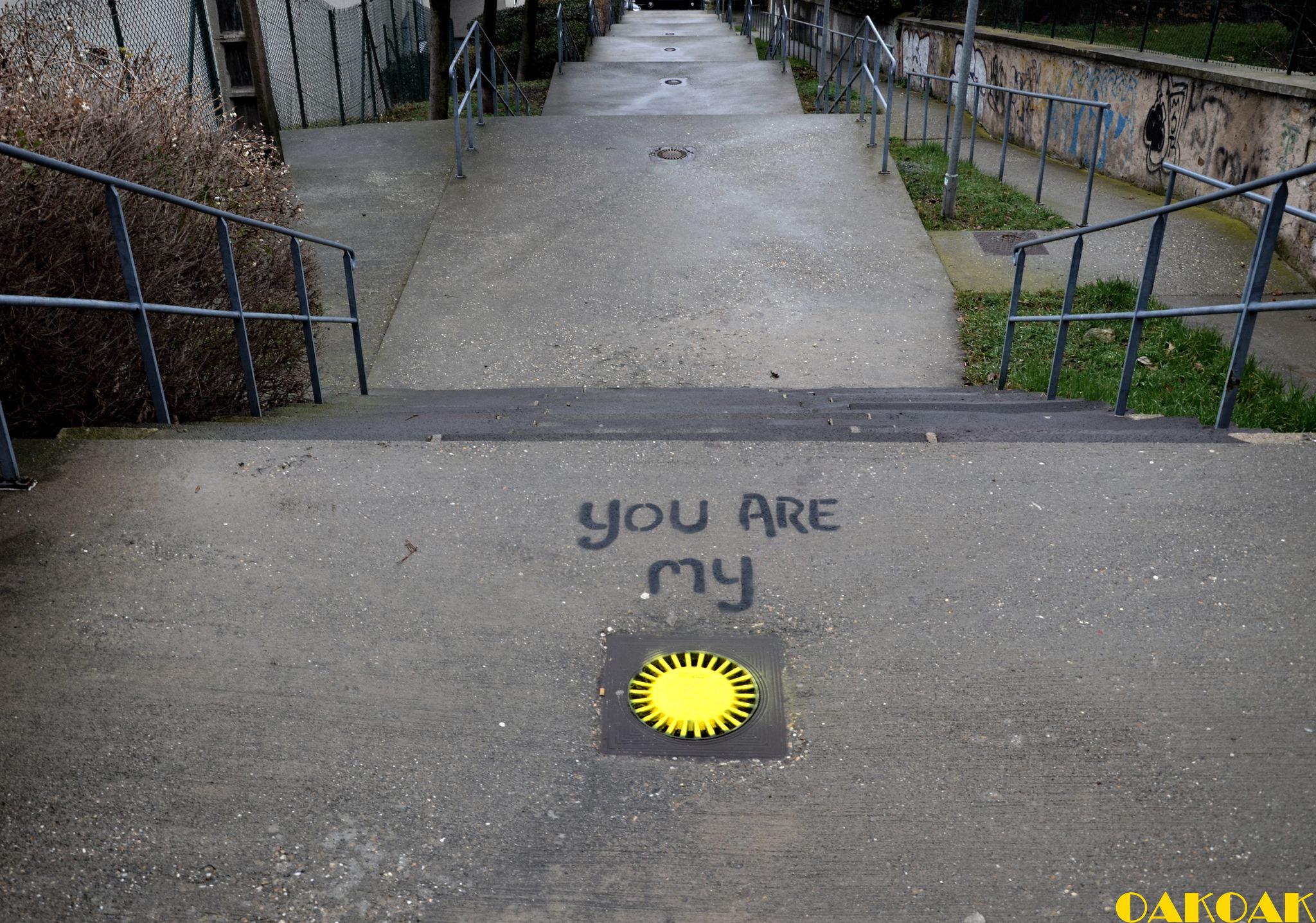
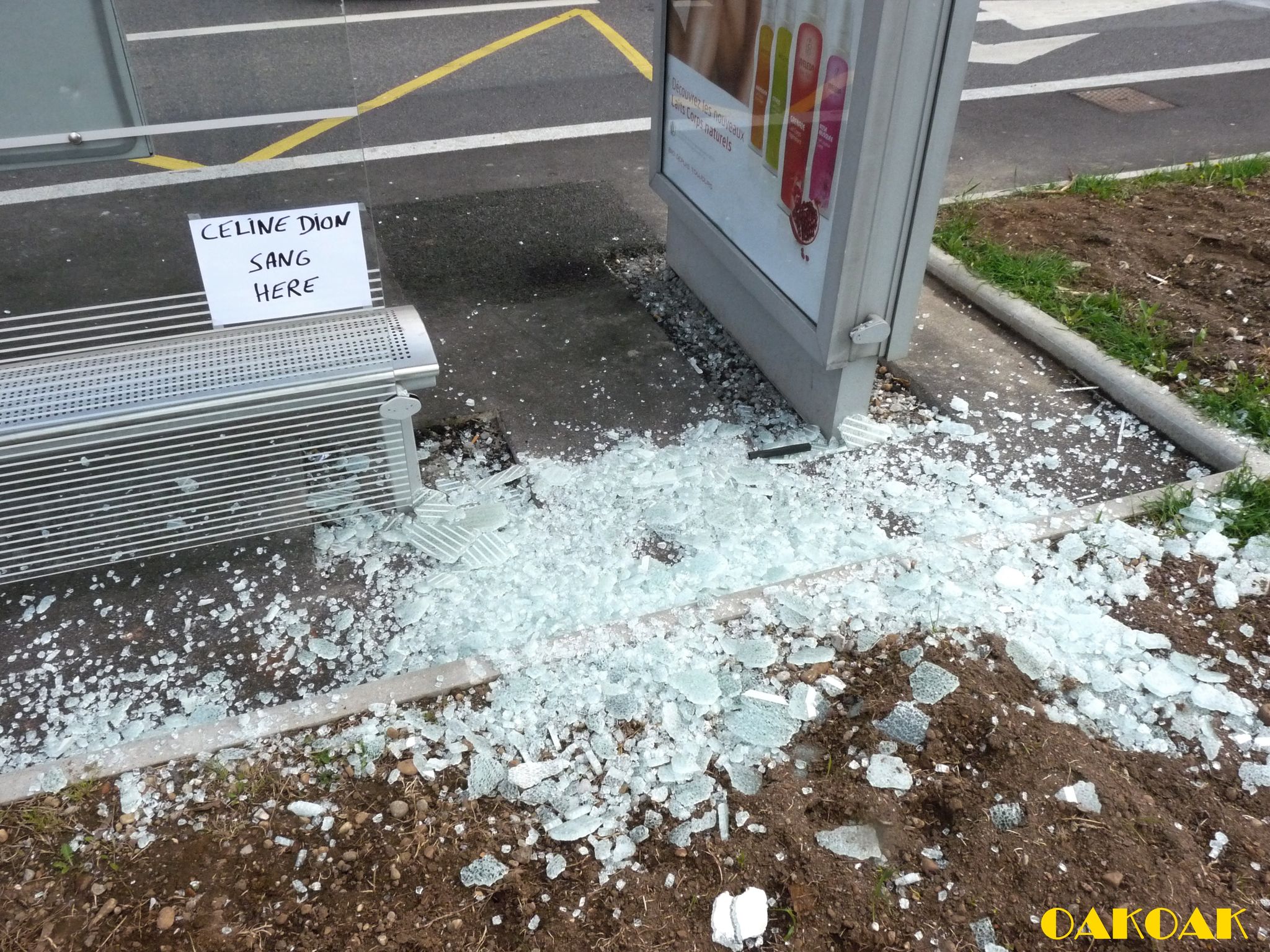
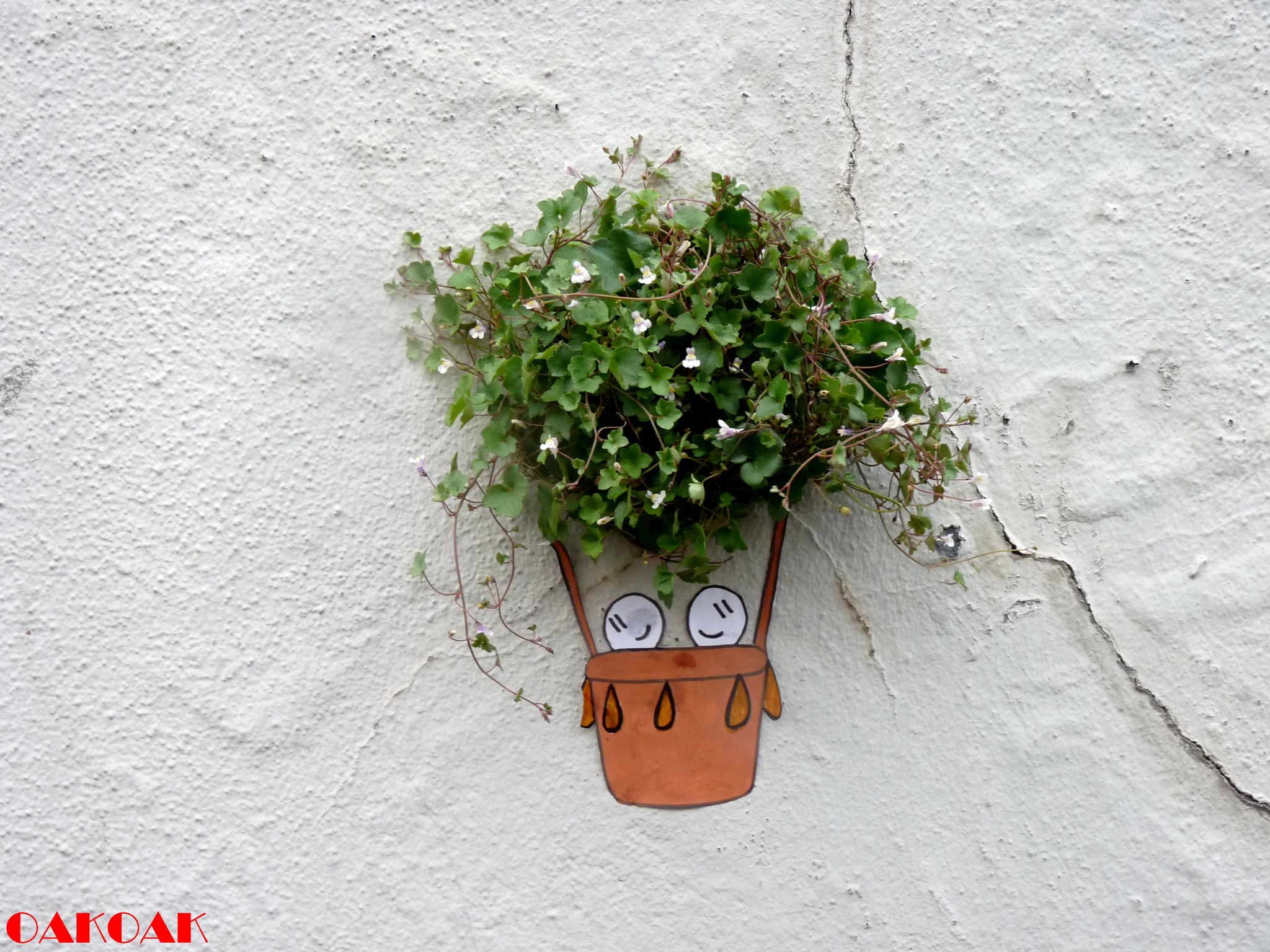
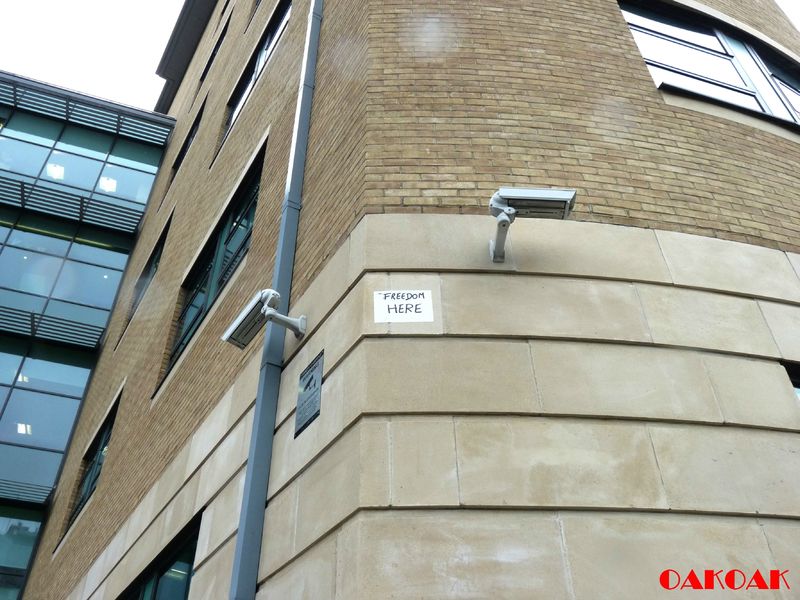
If you walk out after looking at these frames and notice a pipe that wants a face, or a crack that looks like a story waiting for one more line, the work has already done its job. The street was never empty of meaning—only of someone willing to finish the joke.

Comments
Continue reading
15 More Incredible Street Art Photos Worldwide
Part two: giant murals from Philadelphia, Lyon, Warsaw, Lisbon, Vienna, New York, Dublin, Berlin, and beyond—plus a few still-unlabeled walls.
Scratching the Surface: Street Art Carvings by Vhils
Portuguese artist Alexandre Farto, aka Vhils, digs portraits from city walls—subtractive street art that treats plaster, brick, and posters as a living palette.
15 Incredible Street Art Photos from Around the World
Part one of a mural roundup—giant street art photographed in Norway, Spain, Poland, the US, Russia, the UK, and Denmark.