
Scratching the Surface: Street Art Carvings by Vhils
Portuguese artist Alexandre Farto, aka Vhils, digs portraits from city walls—subtractive street art that treats plaster, brick, and posters as a living palette.
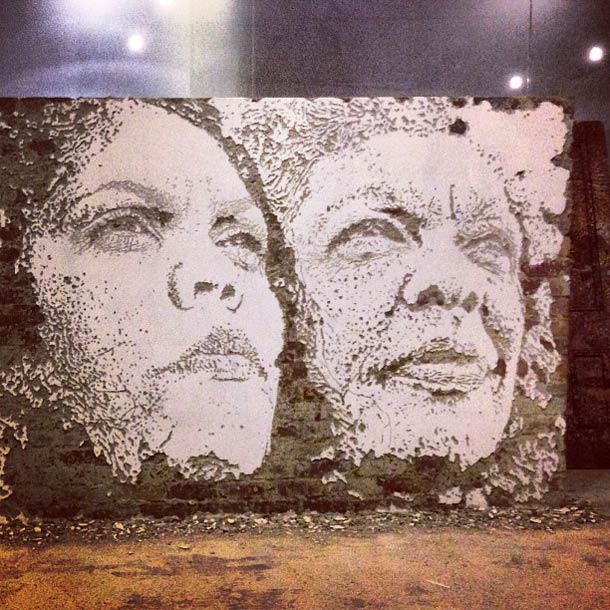
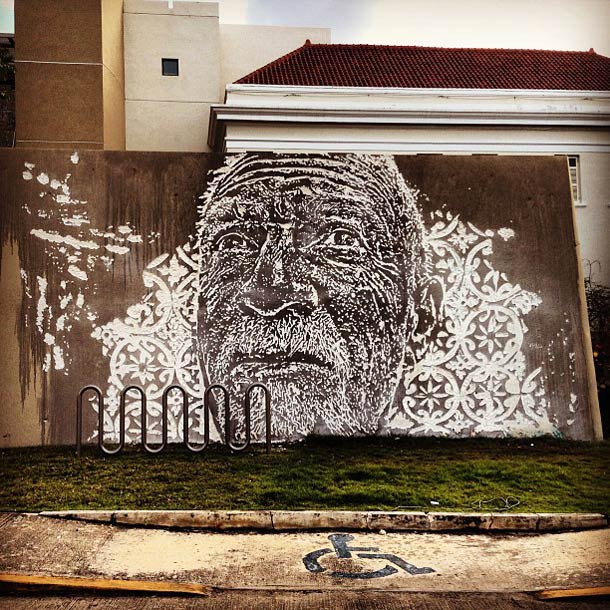
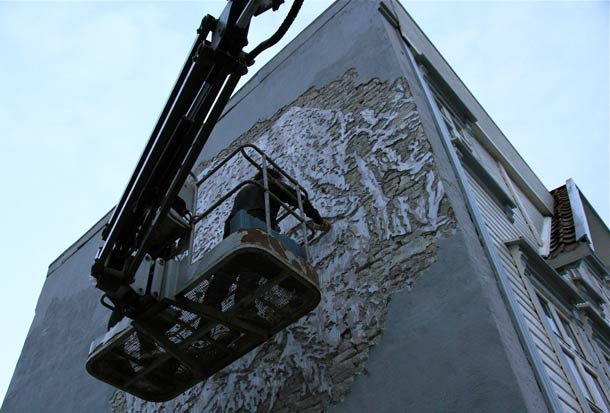
Alexandre Farto, known as Vhils, builds portraits by taking material away. Instead of covering a wall with fresh color, he digs, drills, chisels, and sometimes blasts into layers that cities have already stacked: plaster over brick, poster over poster, paint over older paint. The faces that emerge feel excavated rather than applied—urban archaeology performed at mural scale.
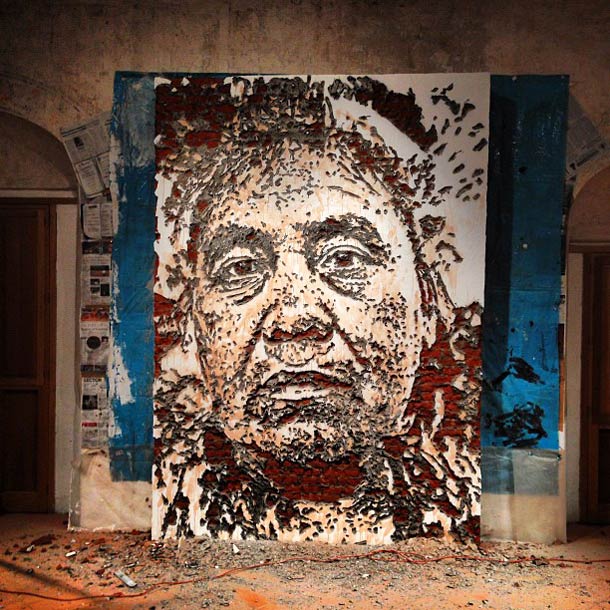
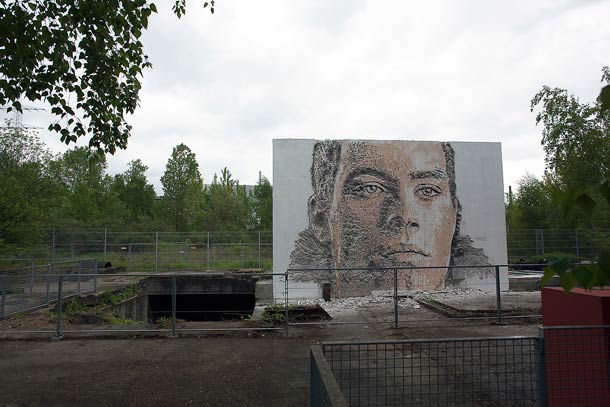
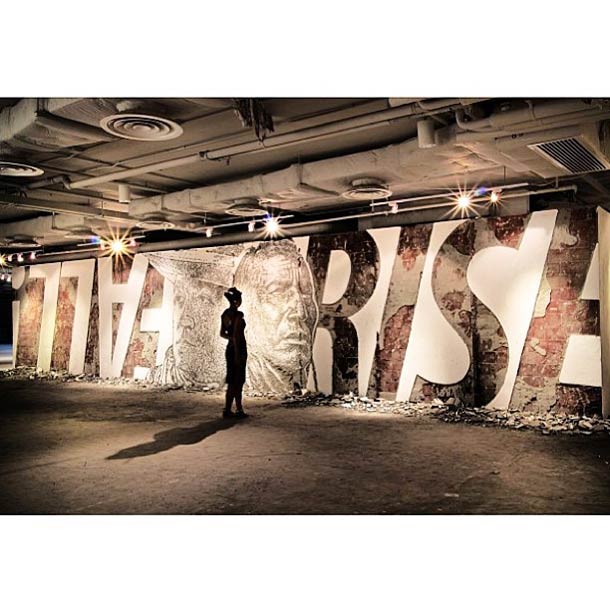
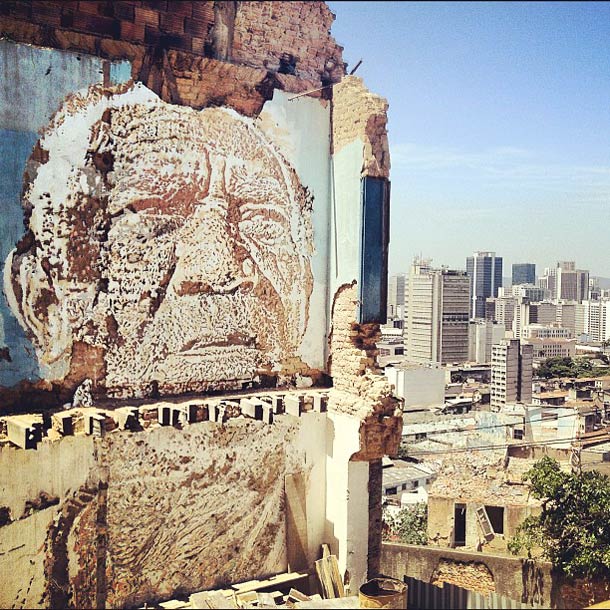
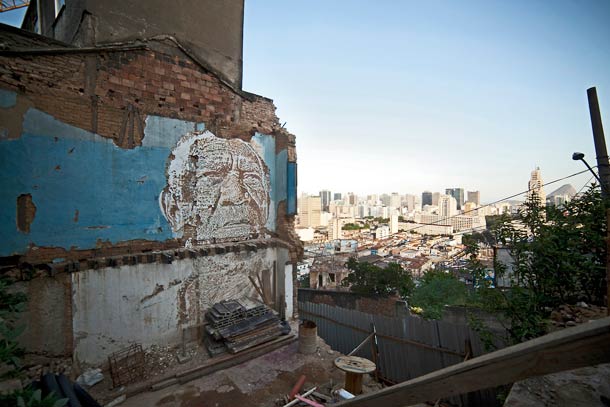
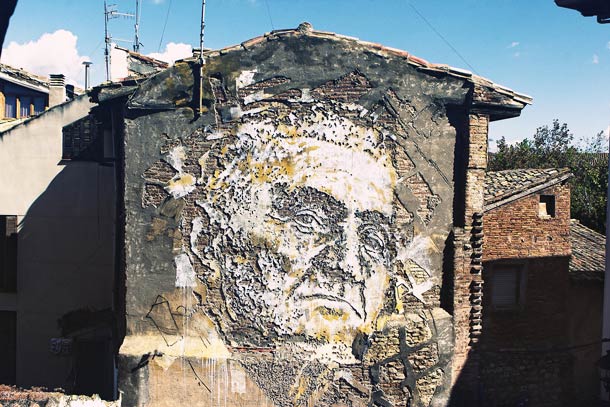
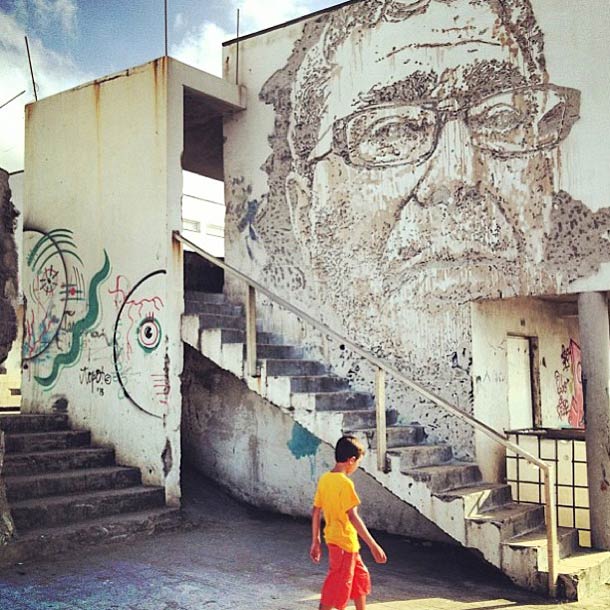
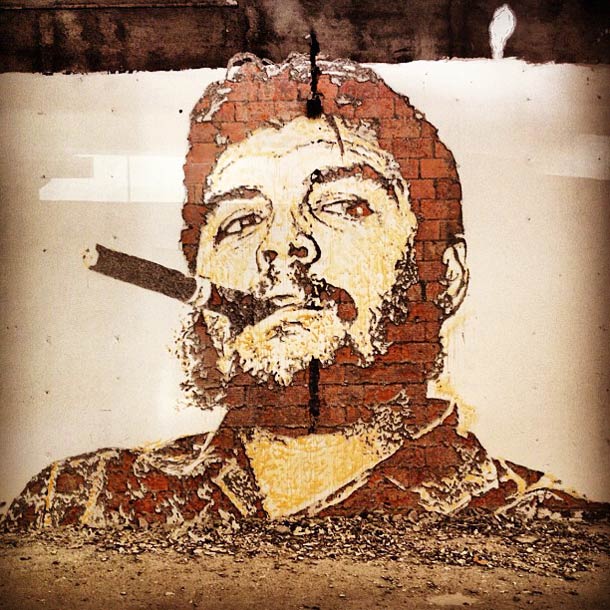
The works gathered here show that subtractive practice in full: paired faces carved from white-coated brick, profiles cut deep enough to leave debris on the floor, and compositions that treat the wall’s geology as the palette. Keep the credit with the images. Vhils is not a generic “street art style.” The method, the name, and the ethics of revealing rather than covering are his.
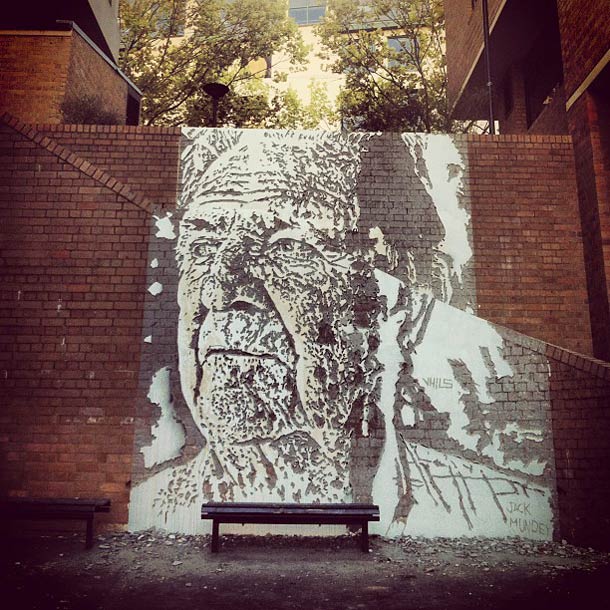
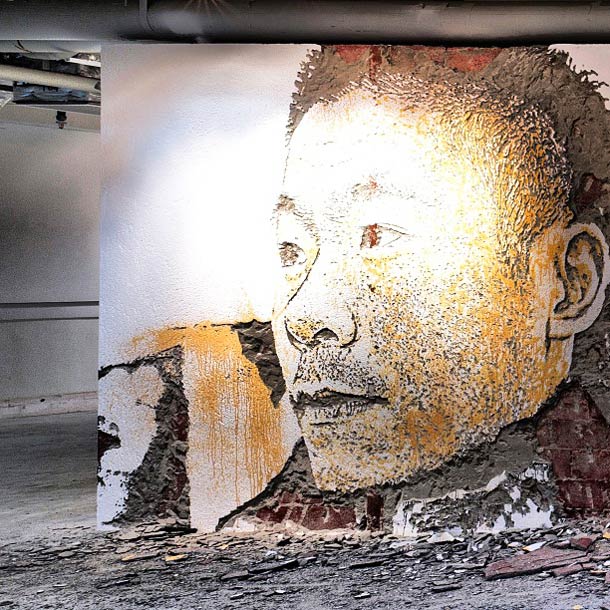
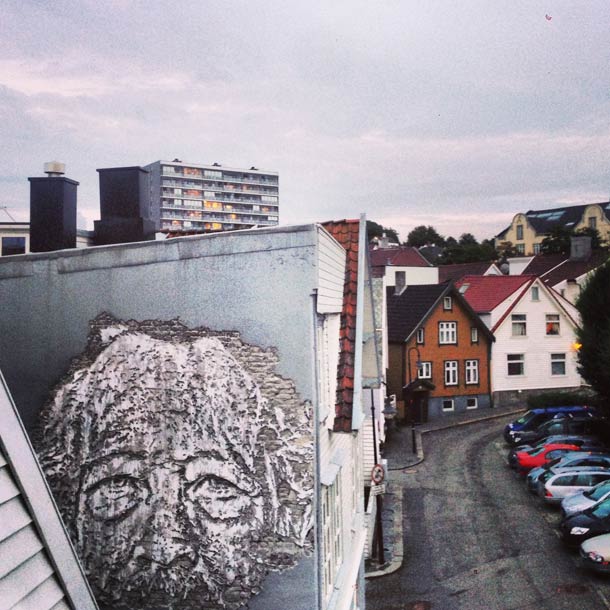
From graffiti writer to carver of walls
Born in Portugal in 1987 and raised in the industrial Lisbon suburb of Seixal, Farto began writing graffiti as a teenager in the early 2000s. Like many writers, he started by adding layers—tags, pieces, coats of paint that sit on top of whatever the city already holds. By his mid-teens he was questioning that accumulation. Cities, he noticed, already bury themselves in finishes, ads, and renovations. Adding another coat felt less interesting than reading what was trapped underneath.
The turn toward subtraction became his signature. He marks a drawing, then removes surface until contrast appears: white plaster against darker substrate, poster fragments against concrete, brick pattern against carved shadow. Hammers, chisels, power tools, and, in some projects, controlled explosives enter the toolkit. The result can look violent in process and tender in finish—portraits of ordinary people rendered with the city’s own scar tissue.
That dual character is central. Vhils often frames the work as homage to everyday urban lives: people who move from A to B and keep a place running without celebrity. Carving their faces into public fabric makes them monumental without turning them into billboards. The wall remains a wall; the person becomes visible through damage that is also care. In that sense the practice is political without needing a slogan painted across the forehead. Visibility itself is the argument.
Scratching the surface as method and metaphor
The phrase “scratching the surface” fits Vhils almost too neatly, which is why it is worth slowing down. Literally, he scratches, cuts, and removes. Metaphorically, he refuses the smooth skin of advertising and renovation. A finished facade sells the idea that a city is new. A carved facade admits that the city is sediment—decades of decisions, failures, and coats of paint compressed into inches.
In interviews he has described the process as painting with the layers already present. The “palette” is not tubes of pigment but whatever the wall contains: brick reds, plaster whites, rust, poster inks, concrete gray. Fixed elements (a drawn portrait plan, a stencil-like structure) meet variable ones (the unpredictable interior of the wall). No two carvings can be identical because no two walls share the same history. That contingency is not a bug; it is the aesthetic.
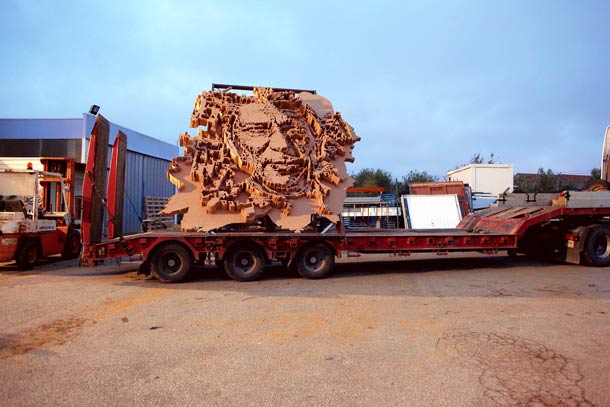
Billboards and abandoned surfaces were early laboratories. Farto has spoken about intervening in ads in a way that creates portraits—breaking the dream life of consumer imagery to insert a human face. Doors, wood, metal, cork, and styrofoam later joined walls as carving grounds. Studio practice and large collaborative murals grew together; logistics for jackhammers and explosives require teams even when the authorship remains singular. Complexity increased over years: finer detail, larger scales, more demanding materials, without abandoning the first insight that removal can be more eloquent than addition.
Paris and the international wall
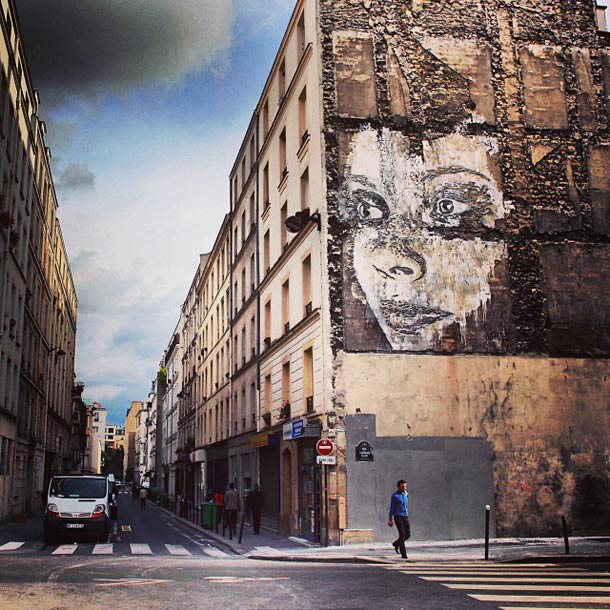
By the early 2010s, when these images circulated widely, Vhils’s work was already traveling. Paris appears in the conversation around this set as one of the cities whose walls received his carved faces—alongside a growing map that would eventually include Shanghai, Los Angeles, Mexico City, and many others. The point is not tourism. It is that the method scales across architectures: brick warehouses, plastered residential blocks, institutional surfaces, and later ceramic and metal experiments.
In each city the same question returns: what does the local wall contain, and whose face should be pulled from it? Parisian surfaces carry their own denseness—layers of poster culture, renovation, and stone. A subtractive mural there does not look like a Lisbon wall or a Shanghai wall, even when the portrait grammar is recognizably Vhils. Site specificity is built into the technique. Dust color, brick module, and plaster hardness become regional accents.
Viewers encountering the work online should resist treating the photographs as interchangeable texture. Look for depth of cut, for places where brick pattern becomes cheekbone, for debris that proves the act was physical. The photographs document labor as much as image. When two faces share one wall, notice how age is dug rather than drawn: deeper excavations for wrinkles, more of the white coat left for smoother planes. Pairing becomes a study in time as much as in likeness.
Destruction, control, and public space
Street art often celebrates the gesture of covering. Vhils’s controlled destruction asks a harder question of public space: what are we allowed to open, and for whom? Carving a wall is irreversible in a way that wheatpaste is not. That seriousness raises the stakes of subject choice. A face dug into architecture will outlast a trend cycle if the building stands; it will also vanish if the building is demolished. Permanence and fragility travel together.
Explosive chapters of the practice make the paradox vivid. Charges remove material in a timed performance; slow-motion documentation turns the blast into choreography. Even then, the goal is not chaos for its own sake. The blast reveals a planned image that hand tools alone might take longer to free. Technology expands the vocabulary; the grammar remains subtractive portraiture tied to place.
For cities negotiating murals, tourism, and heritage, Vhils’s work complicates easy categories. It is neither pure graffiti nor pure gallery sculpture. It needs permission or negotiation at large scale, yet it still carries the attitude of someone who learned walls by writing on them illegally first. That biography is not trivia; it explains why the carvings feel intimate with urban roughness rather than imposed on it from a studio far away.
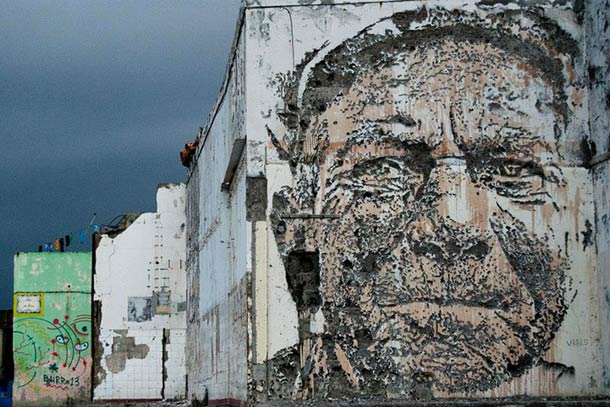
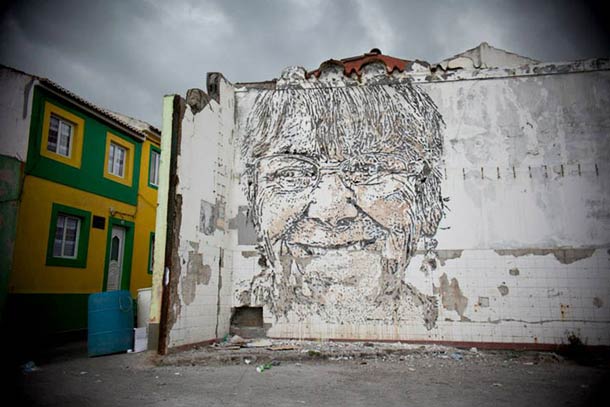
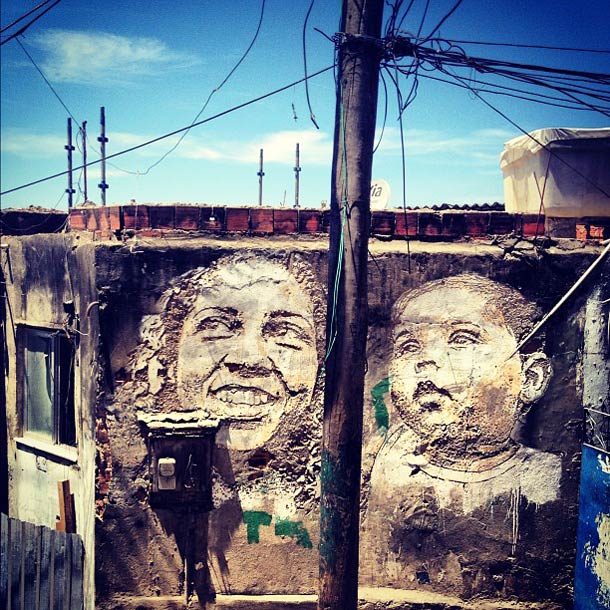
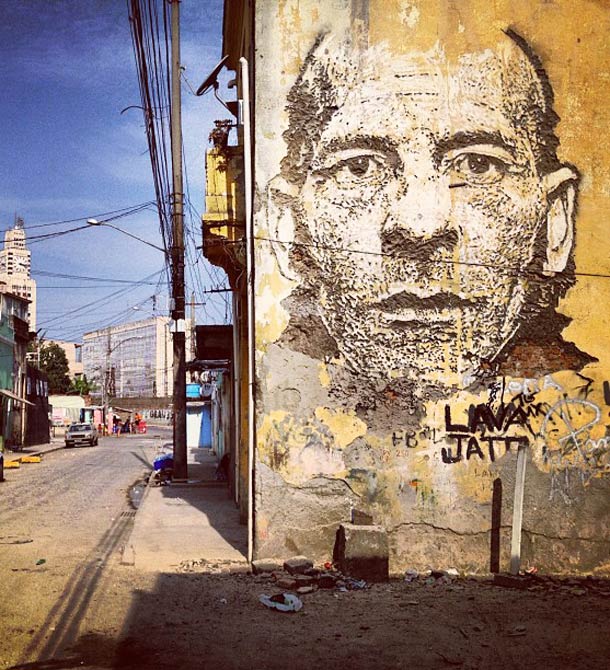
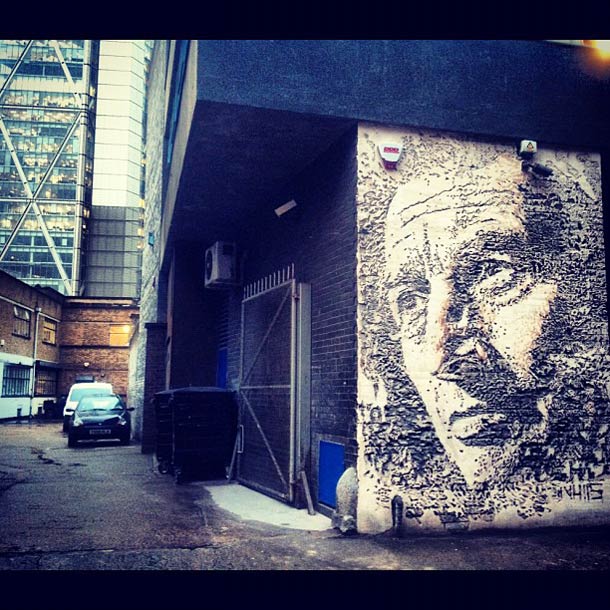
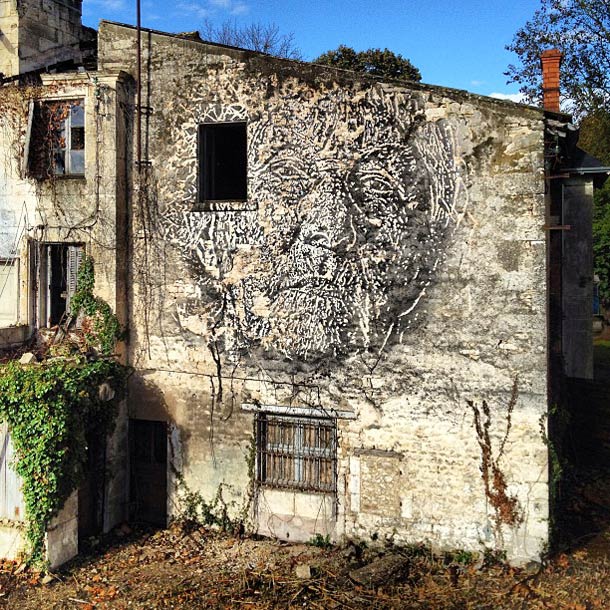
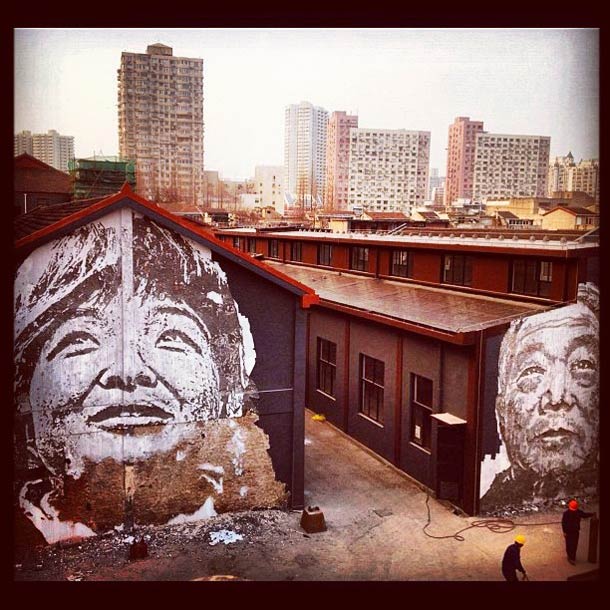
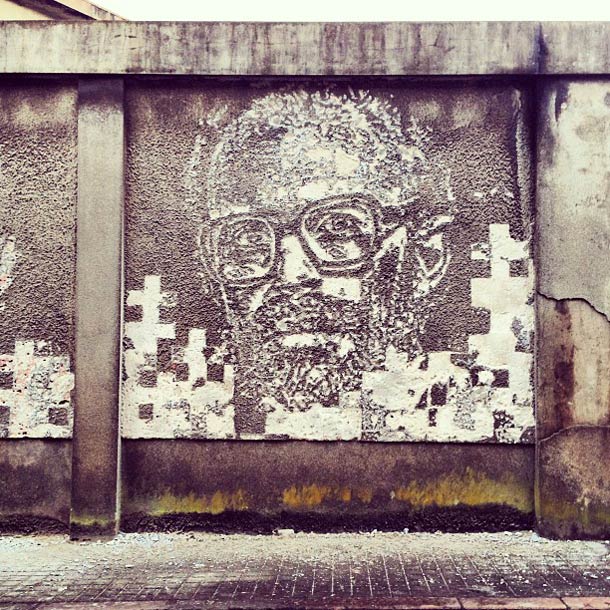
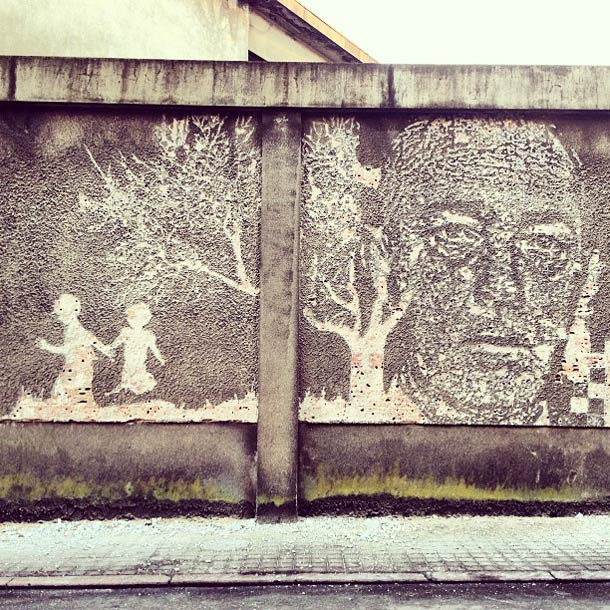
Start with contrast on any frame: lightest remaining plaster versus darkest cut. Follow eyelids and mouth edges. Ask who the portrait might honor even when the name is unknown. Vhils’s practice has continued into installations, print, tile, and other media, but the core claim stays stable—cities hide stories in their finishes, and a careful kind of destruction can make those stories readable. Credit Alexandre Farto, aka Vhils, when these images travel. The walls were already there; the faces needed someone willing to scratch.

Comments
Continue reading
Oakoak’s Playful Urban Street Interventions
French street artist Oakoak turns cracks, hydrants, and overlooked fixtures into small site-specific jokes—minimal marks, pop-culture wit, and ephemeral city play.
15 More Incredible Street Art Photos Worldwide
Part two: giant murals from Philadelphia, Lyon, Warsaw, Lisbon, Vienna, New York, Dublin, Berlin, and beyond—plus a few still-unlabeled walls.
15 Incredible Street Art Photos from Around the World
Part one of a mural roundup—giant street art photographed in Norway, Spain, Poland, the US, Russia, the UK, and Denmark.