
Behind a Little House by Manuel Cosentino
Cosentino’s participatory photo project watches weather rewrite one small house—then invites viewers to draw the sky themselves.
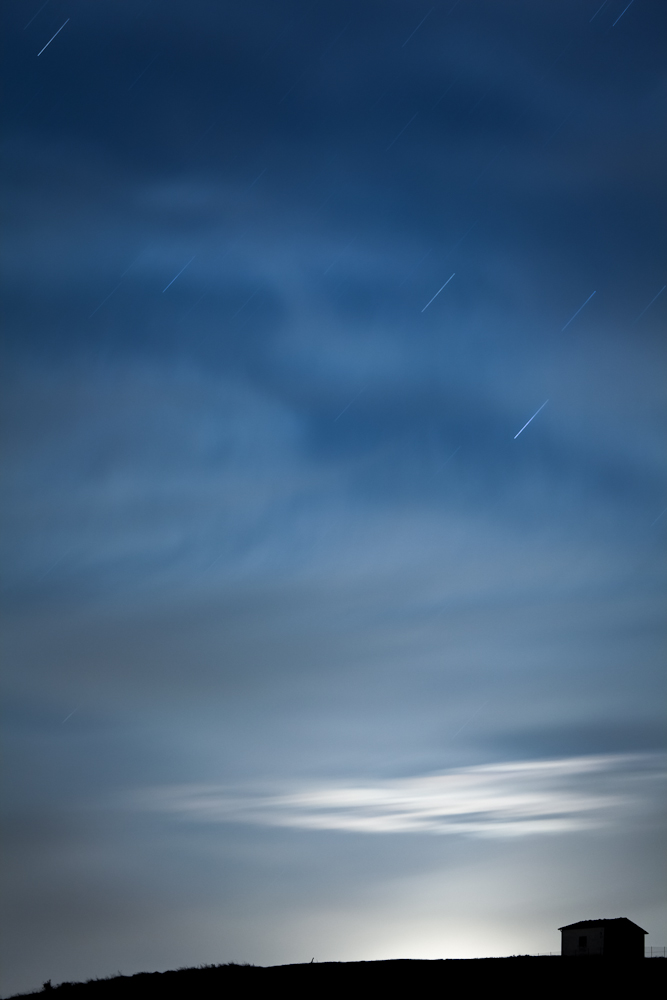
Italian photographer Manuel Cosentino built Behind a Little House around a deliberately ordinary subject: a small, nondescript house on an unremarkable hill. Photographed from the same vantage over roughly two years (about 2008–2009), the series watches weather, light, and sky rewrite the land behind that fixed point until the “background” becomes the real drama.
The project is not only a set of prints. It is an installation that leads viewers from wall photographs into a participatory artist book—an intimate format Cosentino chose instead of chasing viral, click-based circulation. The work asks how we look at place, home, and a shared sky, and then hands part of the storytelling to whoever is willing to draw.
A fixed house, a changing world
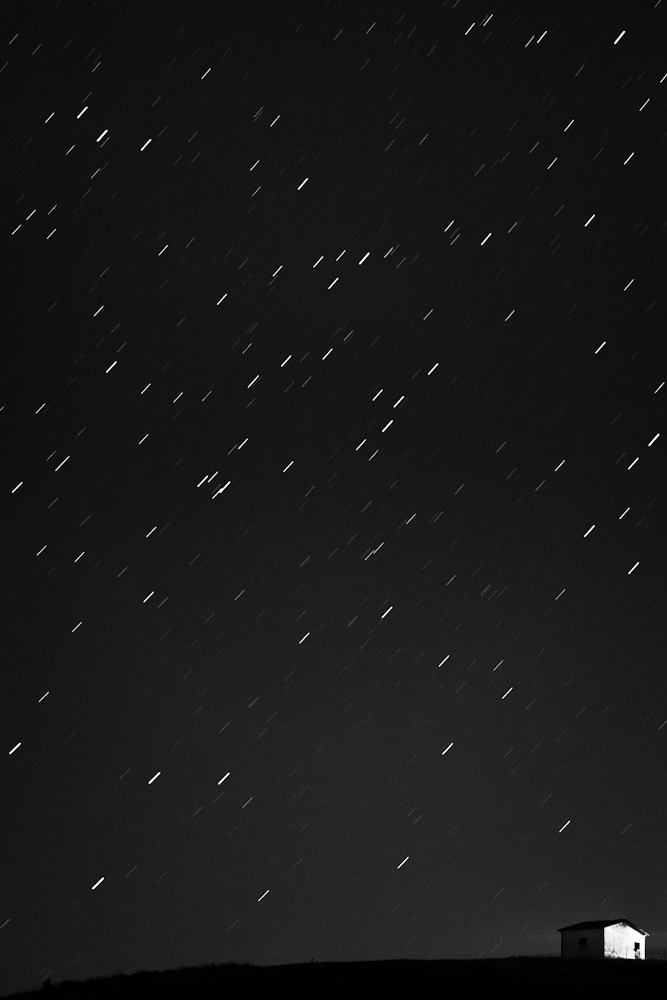
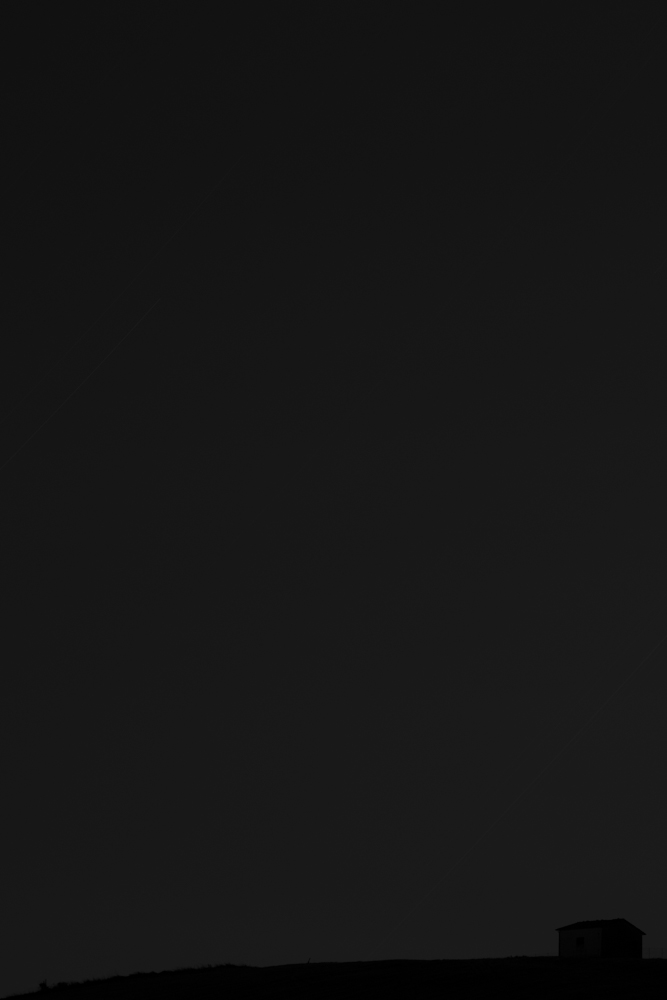
Returning to one camera position sounds simple. In practice it is a discipline: same angle, same little building, different days. Clouds pile up or empty out. Light hardens or softens. Color seasons shift. Storm light can turn the ridge theatrical; clear noon can make it almost dull. The house stays stubbornly plain, which is the point. Cosentino’s frames refuse the postcard peak and the famous landmark. They treat landscape as something that happens around ordinary shelter.
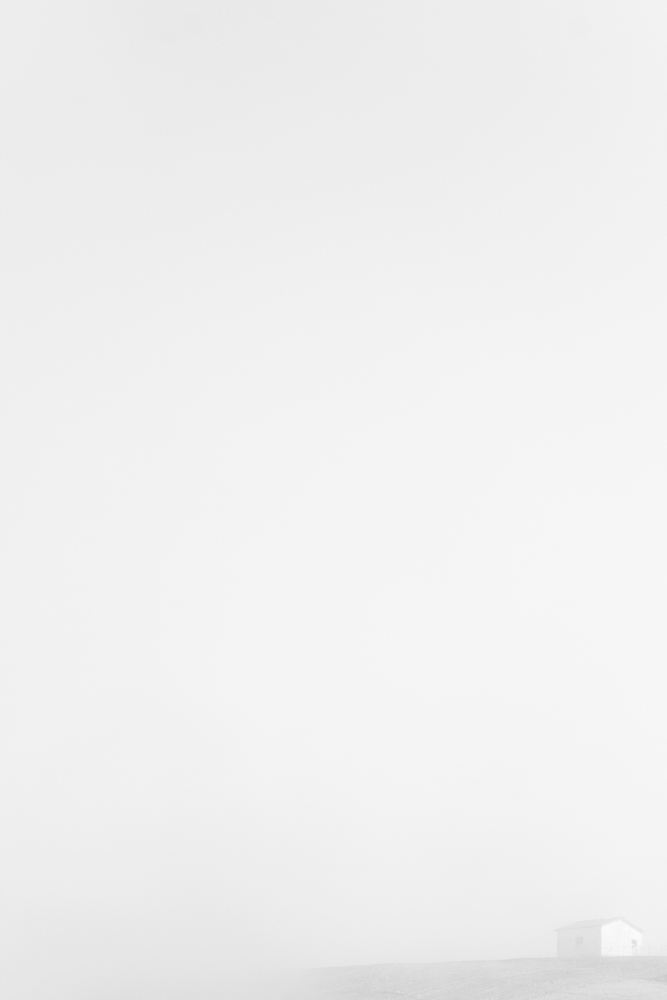
That choice also slows the viewer down. Without a celebrity mountain or iconic skyline, you have to notice gradients, haze, and the way a pale sky can feel emptier than any dramatic cloud stack. The little house becomes a measuring stick. Once you accept its sameness, every change behind it reads louder—temperature of light, density of air, the mood of a day that would otherwise pass unmarked.
He has linked the series to older traditions of landscape as a builder of national identity—rhetoric that flourished in the eighteenth and nineteenth centuries—then quietly steps away from nationalist storytelling. Home and sky become cross-boundary symbols. The photographs suggest belonging and responsibility under one shared atmosphere rather than pride attached to a flag’s scenery. In that sense the work is political without waving slogans: it argues for a common environment by showing how easily weather unifies what borders try to split.
Sequences in exhibitions often move from charged openings toward openness. Cosentino has described an early image as a kind of Big Bang that sets motion going, and a final blank or pale sky as carte blanche—room for what comes next. That structure matters once the book appears, because the “next” is no longer only his. The prints prepare a grammar; the blank invites other hands to finish the sentence.
From spectator to co-author
Wall-mounted photographs come first. Viewers begin as outside observers, scanning weather and form the way they would any photography show. The path through the room then arrives at the artist book, where each page bears a photograph of the little house against a pale or open sky. Visitors are invited to draw or write on that last image—adding weather, memory, fear, humor, architecture, creatures, or invented horizons. The person who arrived as audience becomes an impromptu co-author.
Cosentino has said he wants alternative ways to present and consume photography so dialogue between artwork and viewer stays active. The book sacrifices mass web dissemination for a physical handshake: you stand there, you mark a page, you leave a trace among other traces. Mixed use of color and black-and-white, text cues, and the order of prints offer hints; once public marks accumulate, interpretation belongs to a crowd. Some contributions stay shy; others flood the sky. Both kinds keep the object alive.
The narrative stays intentionally mutable. Chance and change are not bugs in the concept—they are the concept. What the landscape “means” shifts with each hand that adds a line. Responsibility sits inside that playfulness: your mark joins a wider context you cannot fully control, just as actions in a shared world do. The book becomes a miniature public square disguised as an artist’s object.
Because participation is physical, it also resists the quick scroll. You cannot “like” the sky into existence. You have to pick up a tool, decide, and accept that someone tomorrow will see your line beside theirs. That friction is part of the ethics Cosentino builds into the piece.
Intimacy in an age of sharing
Ironically, images from the project circulated widely online even as Cosentino framed the work as intimate and resistant to Web 2.0-scale interaction. He has noted that media attention expanded the audience beyond expectation while still insisting that the photographs and the book should be experienced in person. Screens flatten scale and skip the walk from wall to page. A room with prints restores weight, silence, and the slight nervousness of marking something that others will read.
The artist book is not treated as ordinary merchandise. Across exhibitions it has been kept for later display or donated to institutions rather than sold as a casual takeaway. That choice protects participant trust and keeps the object’s life tied to public encounter instead of private collection alone. It also refuses the usual photograph-as-product loop: here the “edition” is a living ledger of strangers.
By the early 2010s the work had traveled through galleries and festivals—among them appearances noted in New York, London, Paris, and Seattle circuits—always with the same invitation: look, then intervene. Wherever it landed, the little house remained a hinge between Cosentino’s two-year patience and the five-minute courage of a visitor with a pen.
What the project asks
On one level, Behind a Little House is a study of time and weather against a fixed architectural mute. On another, it is a civic metaphor: we inherit a world already half-written, then we mark it—carefully or carelessly—before someone else turns the page. Drawing on the pale sky behind the house is playful; it is also a small model of responsibility for shared surroundings. Beauty and fragility sit in the same frame.
Place, Cosentino notes, is both actual and imagined, and it sits near the center of identity. By letting strangers overwrite the blank beyond the hill, the project tests whether belonging can be practiced as contribution rather than ownership. The little house never becomes a celebrity subject. It stays ordinary on purpose, so projection has somewhere to land without competing with spectacle.
Seen that way, the series is less about documenting a building than about staging a threshold: spectator, then participant; private memory, then public page; fixed photograph, then open future. How would you fill the sky behind a house that refuses to explain itself?

Comments
Continue reading

Dramatic Photo Art by Sukron Ma’mun (Ipoenk Graphic)
Cirebon, Indonesia photographer Sukron Ma’mun uses theatrical natural light to frame village life, play, and place in lyrical photo art.

Bird’s-Eye Views: Florian Beaudenon’s Instant Life
Paris photographer Florian Beaudenon’s Instant Life series captures people in their rooms from above—intimate, collaborative overhead portraits of everyday joy.
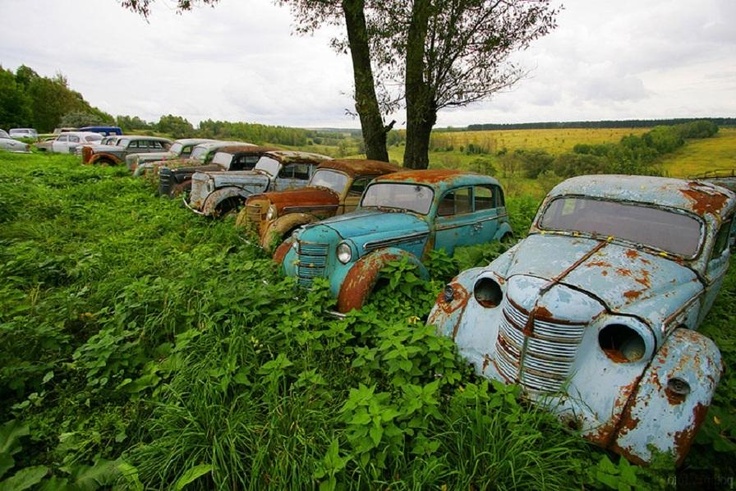
Abandoned Cars Reclaimed by Nature: Rust, Growth, and Quiet Ruin
When neglected vehicles are left outdoors long enough, rust, moss, and trees rewrite them into strange still lifes—sad, photogenic, and slowly returning to the ground.