
15 More Incredible Street Art Photos Worldwide
Part two: giant murals from Philadelphia, Lyon, Warsaw, Lisbon, Vienna, New York, Dublin, Berlin, and beyond—plus a few still-unlabeled walls.
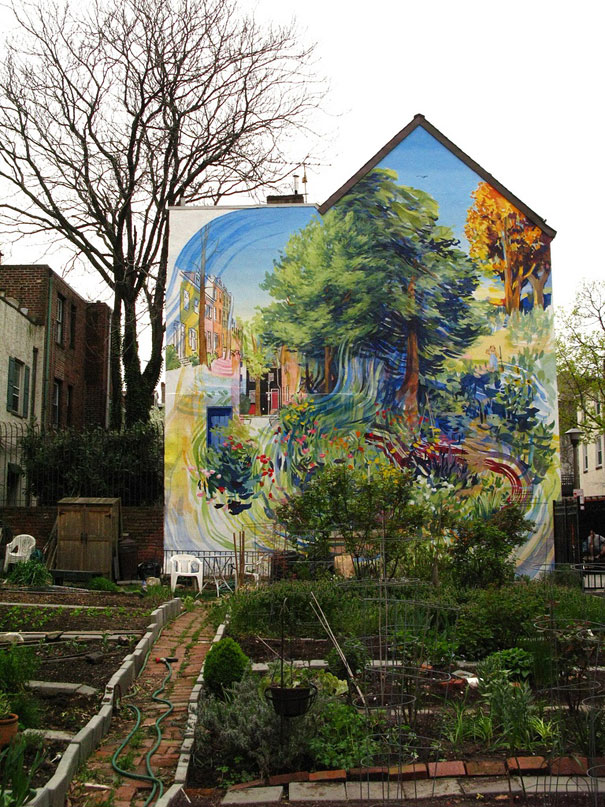
Part two keeps the same brief—giant murals, photographed as public events on private and civic walls—but shifts the map. Philadelphia, Lyon, Warsaw, Lisbon, Vienna, New York, Santoña, Dublin, Mexico, Agde, Brest, Berlin, and a pair of uncredited locations fill out another fifteen frames. Only two local images survived in the archived post; the itinerary of places still holds, and the point remains scale you feel in your neck when you look up.
Where part one leaned on Spain and Poland as mural corridors, this set spreads farther across Atlantic and European cities known for festivals, legal walls, and neighborhood commissions. Unknown locations are left unknown on purpose: street art often outlives its caption, and mystery is part of how images circulate.
1. Philadelphia, USA
Philadelphia’s mural program is one of the most sustained civic art efforts in the United States. Walls here are often collaborative—community input, portrait subjects drawn from local life, color that has to survive summers and winters of Northeast weather. The opening photograph in this set shows how a single façade can carry a whole narrative vertically, turning a blank end wall into a landmark people give directions by.
2. Lyon, France
Lyon is famous for painted walls that trick the eye—trompe-l’oeil streets and mural traditions that blur architecture and illustration. Even when a piece is clearly “street art” rather than classical illusion, the city’s taste for surface storytelling shows. Photographs in Lyon benefit from including real windows and shutters beside painted ones so the eye has to work.
3. Warsaw, Poland
Warsaw’s mural map mixes memorial gravity with playful pop scale. Large works appear on housing blocks and festival sites, readable from tram stops and wide postwar avenues. A strong Warsaw photo often includes that openness—sky, concrete, and a painted figure large enough to match the city’s rebuilt horizons.
4. Lisbon, Portugal
Lisbon’s hills, tiles, and sun-bleached plaster make murals look at home even when the style is contemporary. Artists work with steep sightlines: a wall seen from below a staircase reads differently than one faced head-on on flat ground. Photographers who catch laundry lines, trams, or miradouro viewpoints add the city’s everyday rhythm to the paint.
5. Vienna, Austria
Vienna’s street art sits against a backdrop of imperial polish, which makes bold murals feel like deliberate interruptions. Legal walls and canal-side stretches host work that ranges from graphic lettering to full figurative scenes. Soft Central European light helps detail hold without the harsh bleach of southern noon.
6. New York, USA
New York needs little introduction as a street-art capital—layers of history from subway writing to sanctioned mural projects in every borough. Giant pieces compete with signage, scaffolding, and constant visual noise; the ones that photograph cleanly usually claim an entire wall plane and keep the palette decisive. Include a bit of sidewalk traffic when you can; empty New York walls look like sets, not streets.
7. Santoña, Spain
Santoña, on the Cantabrian coast, shows again that mural culture thrives outside megacities. Harbor light, fishing-town textures, and end walls of modest buildings give artists surfaces with character before the first spray hits. A mural here can redefine a whole approach road for visitors who expected only coastline.
8. Philadelphia, USA (second wall)
A second Philadelphia entry underlines how deep the city’s mural inventory runs. Different neighborhoods host different moods—memorial, whimsical, abstract, portrait. Returning to the same city in a list is not repetition for its own sake; it is accuracy about where outdoor painting has become civic infrastructure.
9. Dublin, Ireland
Dublin’s murals thread through neighborhoods where brick and painted plaster already carry color. Large works often speak directly—faces, text, solidarity themes—while still leaving room for pure graphic joy. Irish weather keeps photographers honest: overcast skies flatten glare and can make saturated murals glow without postcard sunshine.
10. Location unknown
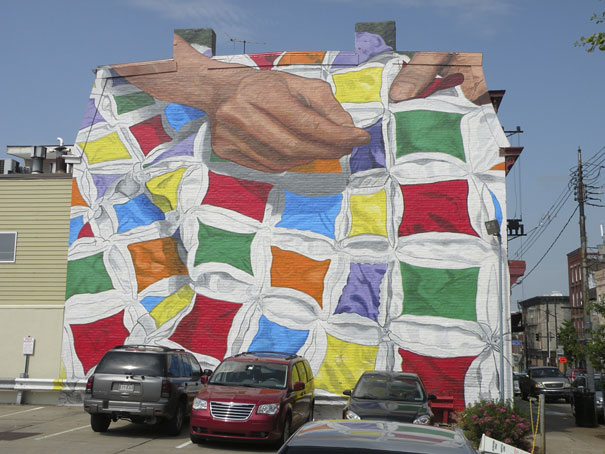
Uncredited locations are common in older street-art roundups. Paint travels through blogs faster than captions. What remains is the image’s internal evidence: climate, architecture, lettering style, the car models at the curb. Enjoy the mural without forcing a fake pin on the map. If you recognize the wall, the recognition is part of the pleasure.
11. Mexico
Mexico’s mural lineage runs from historic public painting into contemporary street practice with unbroken confidence about walls as civic speech. Modern pieces can be political, playful, folkloric, or fiercely abstract—but they rarely feel timid about scale. Photographs that include street vendors, buses, or colonial façades nearby situate the new paint inside a long visual culture.
12. Agde, France
Agde, in southern France, adds a Mediterranean register—strong sun, coastal towns, walls that take color eagerly. Murals here can feel almost theatrical against pale stone and bright sky. Midday shooting needs care with exposure; early or late light keeps detail in both paint and plaster.
13. Location unknown
A second unknown site is a reminder to collect street art as experience, not only as geotags. Some of the best walls are temporary, painted over within a season. An unlabeled photo can still teach composition: how the artist used pipes, windows, and cracks as part of the drawing rather than obstacles to hide.
14. Brest, France
Brest’s Atlantic climate and port-city fabric give murals a different neighbor set—cranes, wind, granite moods. Large works brighten surfaces that weather hard. Photos that include a slice of harbor or street grade help explain why the wall needed that much chromatic energy.
15. Berlin, Germany
Berlin closes the set as a city where street art and mural culture are inseparable from recent history and ongoing reinvention. From surviving fragments of older walls to vast commissioned sides in redeveloped districts, Berlin teaches that public paint is always in dialogue with politics, tourism, and local pushback. Photograph respectfully; some sites are fragile, crowded, or contested. The best frames still feel like a city thinking out loud in color.
Part two, in the street
Together with the first collection, these thirty stops sketch a simple truth: mural photography is travel writing without paragraphs of logistics. Cities reveal themselves through what they allow on a blank wall—and through what residents protect once the paint is up.
Walk more than you shoot. Credit artists when names are visible. Support legal mural programs when you can. And when a location stays unknown, let the image work as art first. The wall already did the hard part by existing at human scale in weather that never asked permission to fade it.

Comments
Continue reading
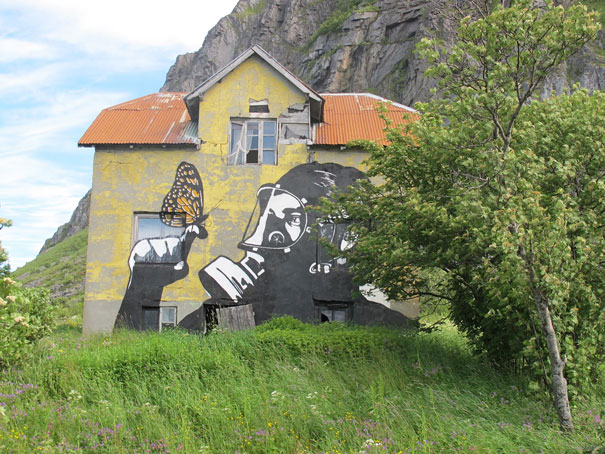
15 Incredible Street Art Photos from Around the World
Part one of a mural roundup—giant street art photographed in Norway, Spain, Poland, the US, Russia, the UK, and Denmark.
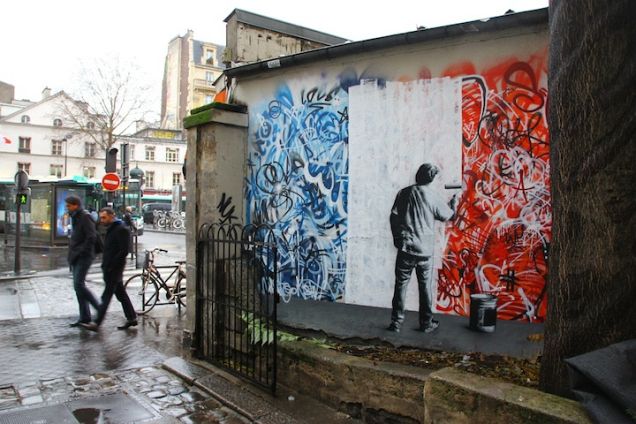
10 Incredible Street Art Murals Worldwide (Part 3)
Ten giant street-art mural stops—Adelaide, Fukushima, Paris, Rennes, Neerpede, Ordes, Buenos Aires, New York, Glasgow, and one unnamed wall—plus how to look at illusion-scale work.
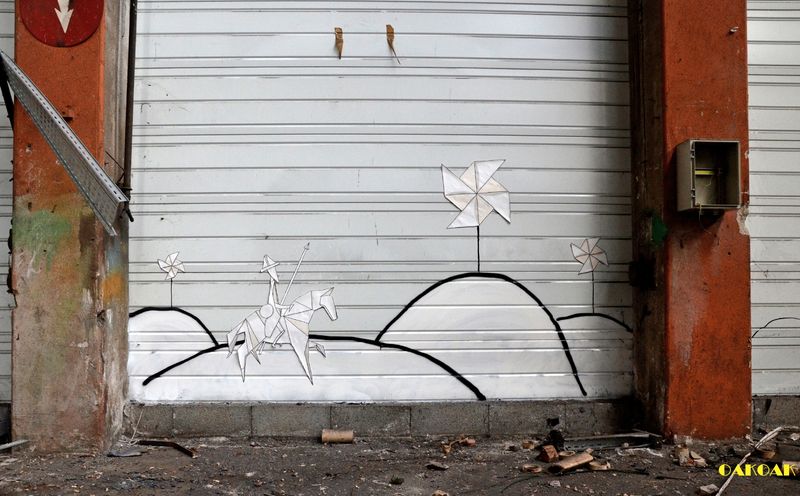
Oakoak’s Playful Urban Street Interventions
French street artist Oakoak turns cracks, hydrants, and overlooked fixtures into small site-specific jokes—minimal marks, pop-culture wit, and ephemeral city play.