
Stephen Criscolo’s Surreal Photography: Dream Logic from Milton, Georgia
Self-taught photographer Stephen Criscolo turns ordinary scenes into sealed dream-images—how to look at his surreal work and why craft serves mood.
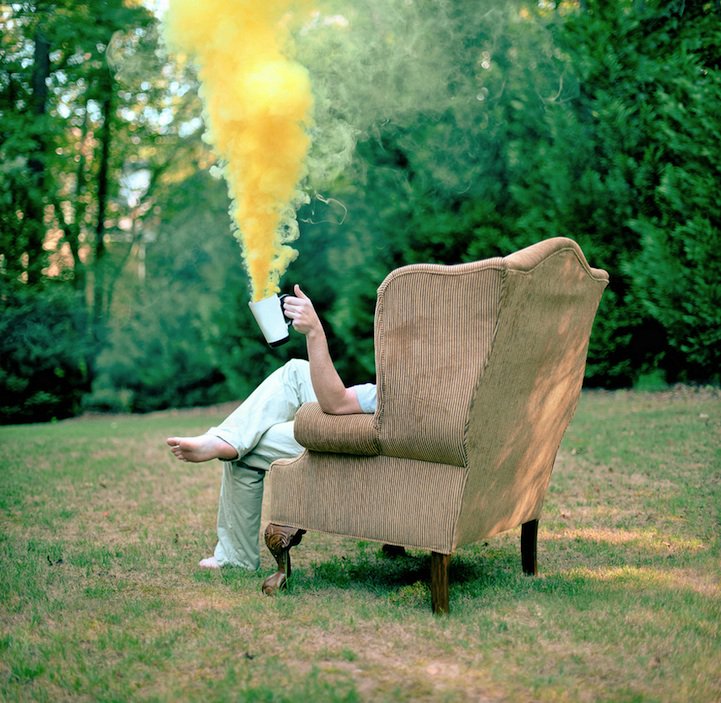
Stephen Criscolo works from Milton, Georgia, with a camera he treats less like a recording device and more like a studio for invention. His photographs lean surreal: ordinary objects and landscapes rearranged until they feel like scenes remembered from a half-finished dream. Faces, rooms, weather, and small props stop behaving by daylight rules. That is the point. Criscolo’s images ask you to stay with an impossible moment long enough for it to become emotionally plausible.
He taught himself the craft—from operating a digital SLR to shaping composites in editing software—so the work carries the curiosity of someone who learned by making, failing, and making again. Technical competence is visible, but it is not the subject. Mood is. Looking through a set of his pictures feels closer to flipping through a personal myth than scrolling a travel feed.
Surrealism after the shutter
Classic surrealism in painting and film chased the irrational with collage, unexpected scale, and symbolic objects. Contemporary photographers inherit those strategies and add tools painters never had: layered exposures, careful masks, color grading, and the quiet persuasion of photographic realism. When a scene looks “photographed,” the brain grants it a kind of documentary credit—even when the content is impossible. That tension is Criscolo’s playground.
A successful surreal photograph rarely relies on shock alone. Shock fades in a second. What lasts is coherence inside the dream: consistent light direction, believable shadows, a color world that feels inhabited. Viewers may not believe the event happened, but they believe the image’s internal weather. Self-taught photographers who live in editing software often discover this the hard way. Early experiments can look pasted. Later ones feel sealed.
Criscolo’s approach sits in that tradition of sealing. The camera gathers raw material—textures, gestures, architecture, sky—and the edit becomes the second half of authorship. Neither half is decorative busywork. Both are decisions about what the final frame should make you feel.
Milton roots, imaginative range
Being based in Milton, Georgia, does not confine the work to regional documentary. Local light, suburban edges, and familiar interiors can become stages for uncanny narrative precisely because they look ordinary at first glance. Surrealism often thrives on that bait-and-switch: the setting seems neighborly until one detail refuses to behave.
Place also matters practically. Photographers who shoot near home can return to a location when the sky cooperates, test props without shipping crates, and build a visual vocabulary from repeated walks. Self-directed artists especially benefit from that loop. Criscolo’s independence—learning gear and software without a formal pipeline—fits a practice built on iteration rather than assignment briefs.
That independence shows in subject choice. Showcase work like this tends to favor personal symbols over client-friendly clarity. You may not get a caption that explains every metaphor. You get an invitation to invent your own reading, which is closer to how dreams operate anyway.
How to look at surreal photo work
Start with the literal layer. What objects are present? Where is the horizon? Is the figure grounded or floating? Then notice what breaks: scale jumps, duplicated forms, gravity that has taken the day off, a room that opens into weather. The break is the thesis. Everything else is support.
Next, track emotion rather than puzzle-solving. Are you amused, unsettled, tender, lonely? Surreal photographs that only ask “how did they do that?” win a technical nod and lose the afternoon. Stronger ones leave a residue—like a song you cannot fully translate but still hum. Criscolo’s best frames aim for that residue.
Consider craft without letting craft become the only story. Soft gradients, hard cutouts, film-like grain, and color casts are tools. Ask whether the tool serves the mood. A heavy vignette can deepen focus or merely decorate. Clean compositing can make magic feel inevitable or sterilize it. Judgment lives in that difference.
Finally, give the image time. Online galleries train people to swipe past anything that does not announce itself in one second. Surreal work often rewards a slower second look, when the first novelty settles and smaller relationships appear between edge and center, figure and void.
Self-teaching as an aesthetic
There is a romance to the phrase “self-taught,” and also a reality: missing shortcuts, reinventing methods, and building taste without a classroom critique circle. For photographers like Stephen Criscolo, that path can produce a signature that feels less borrowed. When you invent your own order of operations, your mistakes become part of your dialect.
Learning a DSLR and editing suite together encourages a hybrid mind. You begin to shoot for the composite—leaving clean edges, capturing skies you may transplant later, photographing textures as raw inventory. The camera outing becomes a gathering trip. The desk becomes the assembly hall. Neither is “cheating.” Both are photography in the expanded sense that digital practice made ordinary.
Viewers sometimes still police authenticity: was it “in camera” or “Photoshop”? For surreal work, that question often misses the art. The relevant questions are clearer. Does the image hold together? Does it surprise without collapsing into gimmick? Does it feel authored? Criscolo’s showcase answers those by prioritizing imagination over purity tests.
Where surreal photography sits today
Feeds are crowded with effects. Filters can fake a mood in one tap. That abundance makes durable surrealism harder and more valuable. What distinguishes a considered piece from disposable weirdness is usually intention: a recurring set of motifs, a controlled palette, a sense that the artist is chasing a feeling across many frames rather than chasing algorithm novelty.
Stephen Criscolo belongs to the stream of photographers who treat the medium as artistic creation first—documentation second, if at all. In that stream you will find dream portraits, impossible landscapes, and quiet uncanny still lifes. The family resemblance is philosophical: reality is raw clay.
If you want more of his work beyond this page, his Flickr stream has long been a place to follow the evolving set. Online galleries change, accounts migrate, and platforms age, but the core habit remains useful: look at sequences, not only singles. Surreal photographers often think in series even when a site displays one hero image at a time.
What this showcase leaves you with
A single featured frame can still open a door. Stand with it. Notice how the composition guides your eye, where the strangeness concentrates, and what ordinary detail keeps the dream tethered to Earth. Then imagine the neighboring pictures that might live in the same world—different props, same gravity rules, same emotional weather.
That is how a showcase earns its keep even when the archive on a page is slim: it points to a practice. Stephen Criscolo’s practice is self-directed, Georgia-rooted, and oriented toward images that refuse to behave like simple records. In a culture that photographs everything, refusal can be a form of care. It says the camera can still invent, not only prove.
Carry that permission into your own looking—and, if you make pictures, into your next experiment. Start with something familiar. Change one law of the scene. Light it so the lie feels true. The surreal does not require a manifesto. It requires attention, patience, and the nerve to keep a strange idea until it looks inevitable.

Comments
Continue reading
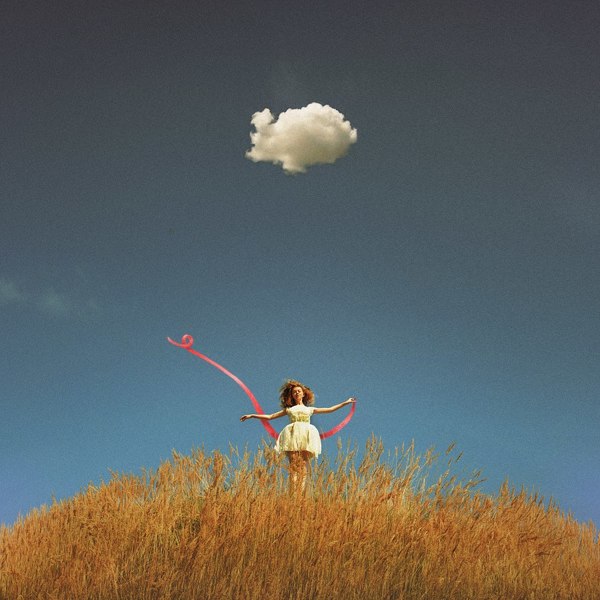
Surreal Photography by Nikita Sergyshkin
Belarusian photographer Nikita Sergyshkin stages dream-logic portraits—fashion-adjacent light, controlled estrangement, and surreal mood without collage monsters.
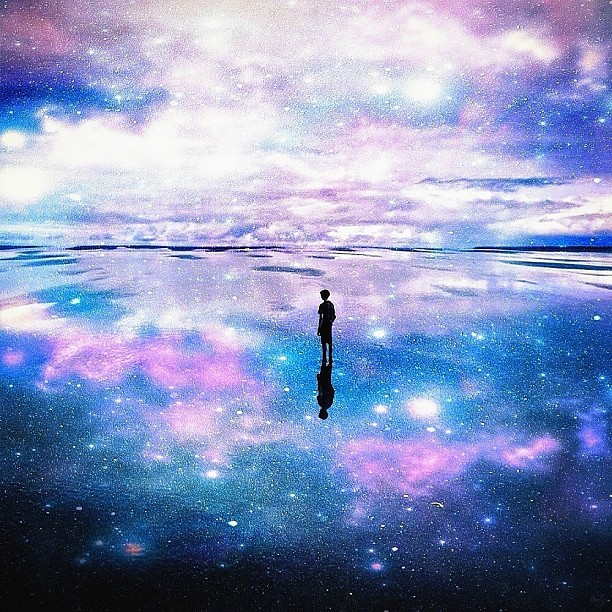
Surreal Worlds by Nois7: Robert Jahns’s Dream Composites
Hamburg artist Robert Jahns—known as Nois7—builds travel photographs into seamless surreal scenes. A look at the mood, craft, and Instagram-era gallery that made his work famous.
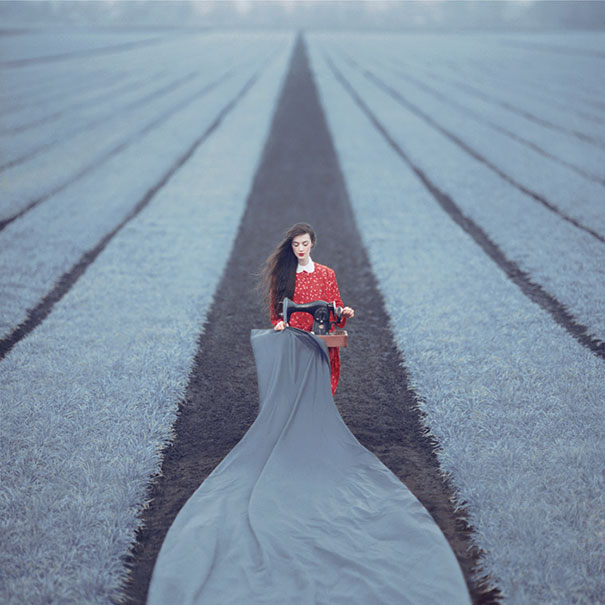
Oleg Oprisco’s Surreal Film Photography on Kiev 6C and Kiev 88 Cameras
Kyiv photographer Oleg Oprisco builds dreamlike conceptual scenes on older Kiev medium-format film cameras—soft color, quiet staging, and surreal mood without the rush of digital spray-and-pray.