
4 Practical Ideas for Decorating a Nursery
Combine function with style, repurpose a dresser as a changer, overbuild storage, and make room for playful kid clutter—without losing a calm night-care room.
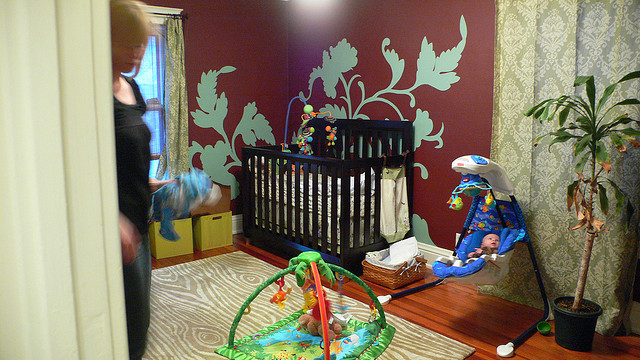
As soon as you learn you are expecting, the mental list expands without mercy: names, supplies, housing, money, and—somewhere near the top for many parents—the nursery. The room will hold night feedings, diaper changes, and the first months of a person’s life. It should feel like you, and it should work at 3 a.m. Themes and Pinterest boards multiply faster than decisions. These four ideas keep style and function in the same conversation so you can start somewhere solid: combine furniture that works hard, repurpose to save space and cash, build storage before you drown in gear, and leave room for playful “kid clutter” without abandoning the design.
A nursery does not need to look like a catalog set. It needs a sleep zone you trust, a changing workflow that does not wreck your back, storage that absorbs gifts and growth spurts, and enough personality that the room still feels like part of your home. Pretty without usefulness becomes frustration by week three. Useful without warmth becomes a storage closet with a crib. Aim for both.
1. Combine function and style
Image via Flickr by Kelly Sue
Nurseries photograph beautifully when they are empty. Real life fills them with bottles, laundry, and the chair you will live in. Choose pieces that match your home’s broader style so the room does not feel like a temporary theme park, then insist those pieces earn their footprint. If the rest of the house is calm and muted, a nursery that screams primary-color cartoon can feel like a different apartment. Continuity of wood tones, metal finishes, and textile weight helps the space settle into the home.
A crib with built-in storage—drawers underneath or shelving at the ends—reduces the need for extra dressers in a small room. If your crib is open underneath, a crib skirt plus shallow totes can hide diapers and wipes without displaying your inventory to every visitor. Measure circulation paths: you need space to kneel, to open drawers, and to turn with a baby in your arms. Corner clearance matters more than matching mobile sets.
Lighting and textiles finish the functional story. A dimmable lamp near the glider beats a single overhead glare for night care. Blackout options help day sleepers. Washable fabrics matter more than perfect Instagram linen—spit-up and leaky diapers are not theoretical. Soft rugs can warm a hard floor, but keep them secure so you do not trip while carrying a child. Style is the calm palette and the shapes you love; function is surviving Tuesday at 2:17 a.m. without hunting for wipes in the dark.
Think in zones rather than “décor first.” Sleep, change, feed/soothe, and store. When each zone has a clear job, furniture placement becomes easier and the room reads as intentional instead of crowded. If a pretty object blocks the path between crib and door, it is not décor—it is an obstacle.
2. Repurpose items to save space and money
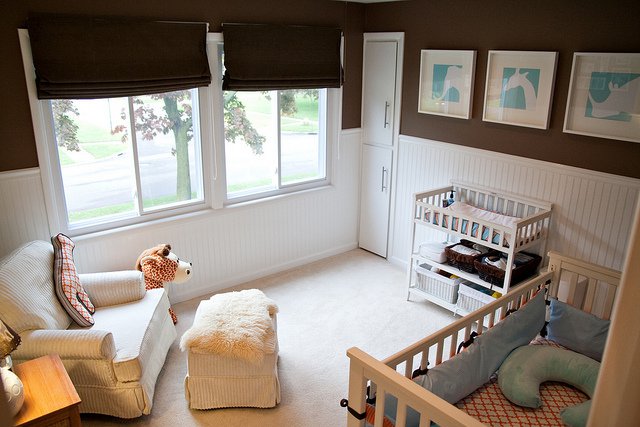 Image via Flickr by Tabitha Blue / Fresh Mommy
You do not need a dedicated changing table and a separate dresser unless your budget and square footage are generous. A sturdy dresser at a comfortable height, topped with a secure changing pad, does double duty. When diaper years end, you still own a dresser—not a specialized relic to sell at a loss. That single decision often frees money for better sleep gear or simply reduces visual clutter in a small room.
Safety first: the pad should have contoured sides or straps as designed, and the dresser must be stable and anchored if tip-over risk exists. Keep a tray of daily supplies within arm’s reach so you never leave the baby to hunt across the room. That workflow is more valuable than matching furniture sets. Wipeable surfaces beat delicate finishes near the change zone.
Repurposing also applies to seating and shelves. A chair you already love can become the night-feed throne with a washable cover and a side table for water. Book ledges meant for living rooms work as nursery displays. An old dresser can be painted to match the room; an unused bookshelf can hold baskets instead of knickknacks. Buying less single-purpose furniture keeps the room adaptable as the child grows into toddler chaos.
Before you buy anything labeled “nursery-only,” ask what the piece becomes in two years. If the answer is “garage sale,” look for a multipurpose alternative. Savings compound when you avoid the full suite of specialty items that manufacturers love to sell as a set.
3. Start a love affair with storage
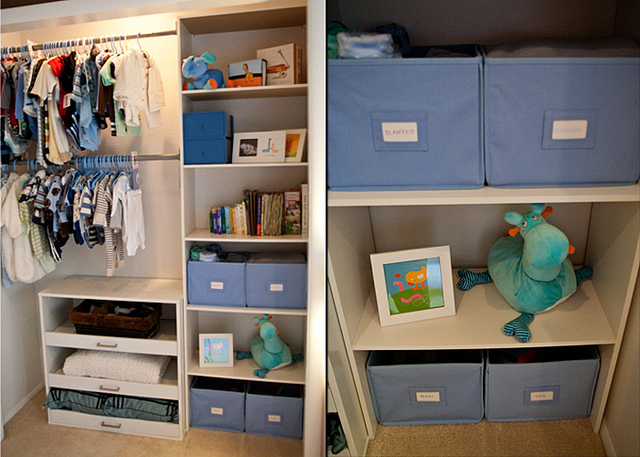 Image via Flickr by Tabitha Blue / Fresh Mommy
Baby gear expands like foam. Books, swaddles, spare sheets, toys gifted by well-meaning relatives—storage is the difference between a designed room and a landslide. Parents almost always underestimate volume. Plan for more baskets than you think you need, then add a few more. Overflow lives somewhere; better that “somewhere” is intentional.
Vertical space is underused. Narrow wall shelves—the kind you see in waiting rooms—can hold board books face-out without eating floor area. Closet organizers turn a shallow wardrobe into zones: sleepers, sizes, extras. Open bins for daily grab items; lidded bins for overflow; labels if more than one adult shares the night shift. A clear system beats a beautiful mess that only one person understands.
Texture variety in baskets and bins adds personality without cluttering surfaces. Mix woven, fabric, and simple plastic where practical. Keep the changing zone’s top clear except for today’s tools. Storage fails when everything is “put away” in a way that requires unpacking a suitcase to find socks. Accessibility is part of design.
Rotate seasonally. Clothes that no longer fit should leave the room, not migrate into mystery piles. Gift overflow can live in a closet elsewhere until needed. The nursery should hold what you use weekly, not every possible future size. That discipline protects the look you worked for.
4. Embrace playful “kid clutter”—on purpose
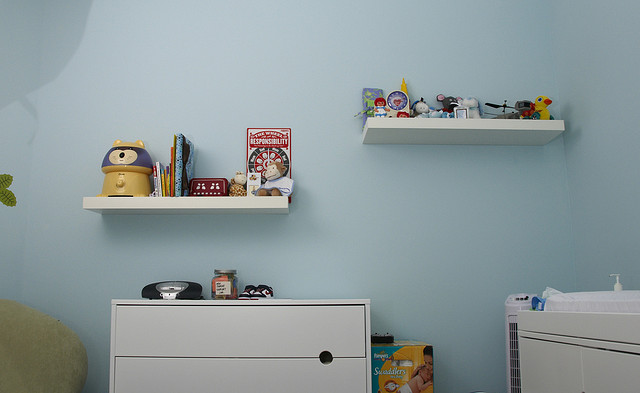 Image via Flickr by easement
Even a carefully styled nursery will collect toys, pillows, and bright objects that ignore your mood board. Fighting that reality creates stress. A better approach is controlled kid clutter: colors and textures that admit play is the point, with toys used as accents rather than shameful mess. A few soft animals on a shelf can read as intentional; twenty scattered on the floor reads as overwhelm.
Rotate a small set of toys onto open shelves as décor that can come down for play. DIY touches—if you enjoy them—add personality without buying another themed bundle. A handmade mobile, a simple wall hanging, or painted frames can carry more warmth than a matching package of plastic décor. The goal is a room that looks lived-in by a child, not abandoned to chaos.
Wall space is more than paint color. Framed prints, mounted cubes for books, and a carefully placed plant (kept out of reach and chosen with safety in mind) expand a small room without shrinking the floor. Thinking of walls as usable area is often the difference between a cramped nursery and a flexible one. Avoid heavy objects above the crib; keep hanging items secure.
Boundaries still matter. Soft clutter on shelves is different from cords, loose small parts, or unstable stacks. Embrace playfulness inside safety rules, not instead of them. “Kid clutter” is a design attitude—permission for color and play—not an excuse to ignore hazards.
A practical order of operations
If the options still feel endless, sequence the work. First lock sleep and changing: crib placement, dresser-changer, lighting for nights. Next solve storage: closet, bins, wall shelves. Only then spend energy on art, textiles, and the playful accents that make the room feel finished. Décor last prevents you from buying cute objects that compete with drawers you still need.
Match big furniture to your home’s style so the room feels continuous. Repurpose before you buy specialty pieces. Overbuild storage. Let a little kid clutter signal that a child lives here—because one will. Decisions get easier when you remember the room’s real job: a calm base for caregiving. Pretty is welcome. Useful at midnight is required.
You will revise the nursery as the baby grows. That is normal. Build a room that can flex—dresser that stays, shelves that adapt, palette that survives a toddler phase—and you will not feel like you failed when the first perfect photo no longer matches the floor. Start with these four ideas, then edit ruthlessly toward what your nights actually demand.

Comments
Continue reading

Garden Decoration Beyond Beds: Lace, Mosaiculture, and Upcycled Yard Art
From dressed topiary and floral cyclists to license-plate dragonflies and lace between trees—garden decorations that give a yard a voice.
Kitchen Design Ideas: Layout, Storage, Light, and Finishes That Work
Practical kitchen design ideas—work zones, cabinetry, lighting, and durable finishes—so inspiration translates into rooms that cook and gather well.
25 Cool Room Partition Ideas That Actually Divide Space
From frosted sliders and pallet screens to book towers and branch walls—twenty-five ways to carve rooms without building solid walls.