
30 Newborn Photography Ideas: Props, Light, and Safe Poses
From bold knit sets and window-light cradles to twin mirrors and day-in-the-life documentary—thirty newborn photo ideas with safety notes and two surviving gallery frames.
Newborn sessions ask for patience more than gear. Babies sleep on their own clocks, stretch mid-pose, and remind you that “quick” is not a useful word. The photographs that last are usually planned in themes and lighting first, then adapted when the tiny subject rewrites the shot list. Use the thirty ideas below as a menu—not a rigid checklist—and always prioritize safety over the perfect Pinterest still.
Only two gallery frames survived migration from the original post; they still show useful directions: bold textile color with handmade props, and playful career-theme styling. The rest of the list rebuilds classic studio and lifestyle approaches photographers and parents still book.
1. Bold monochrome set with handmade knit
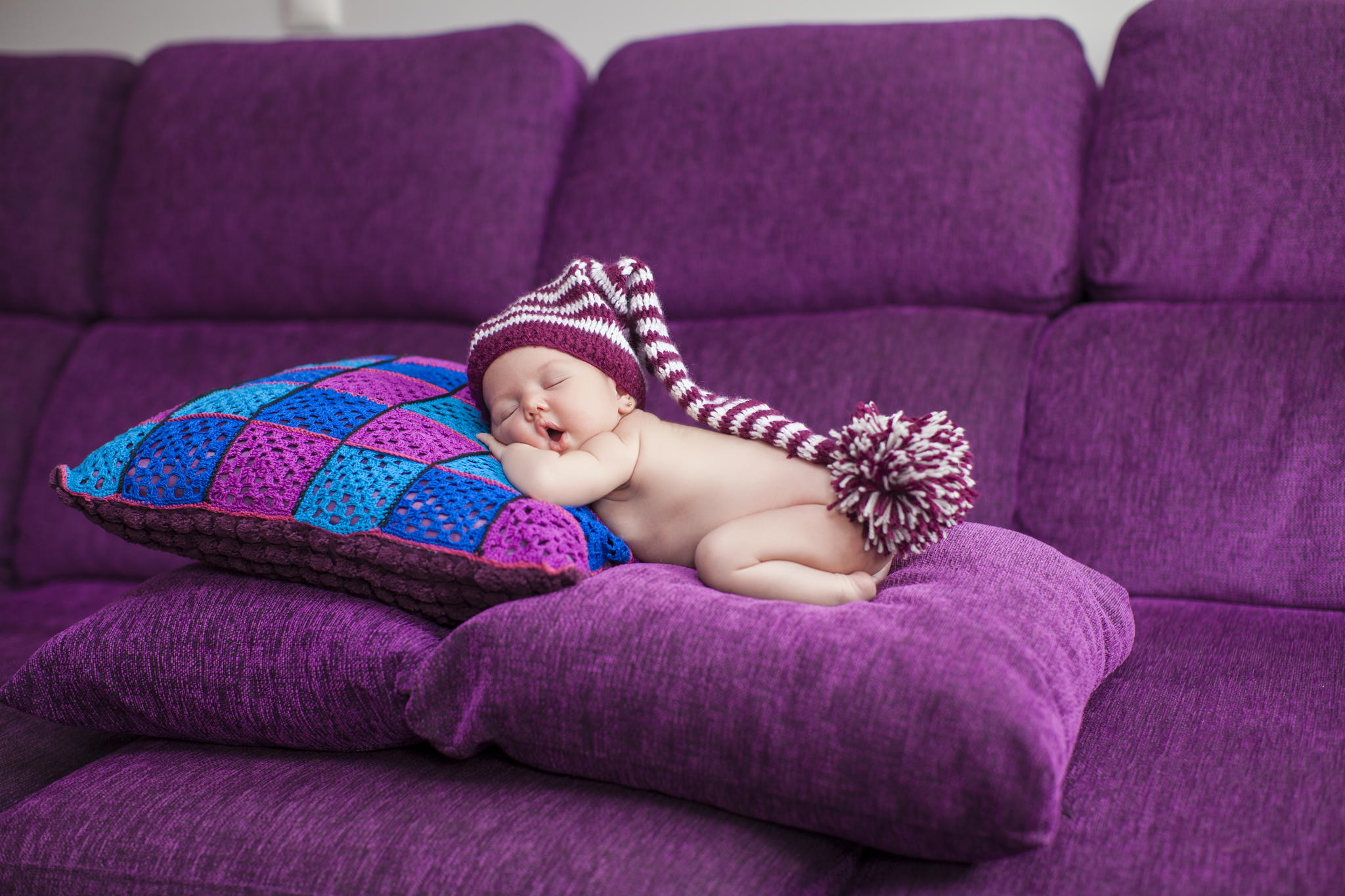
Tetyana Moshchenko’s purple sofa frame proves one strong color can carry a whole set. Layer woven upholstery, a crocheted pillow, and a long striped knit hat so texture does the decorating. Soft even light keeps skin gentle against saturated fabric. Tummy-down rests only when the baby is settled and spotted by an adult at all times.
2. Oversize prop humor: glasses and a camera lens
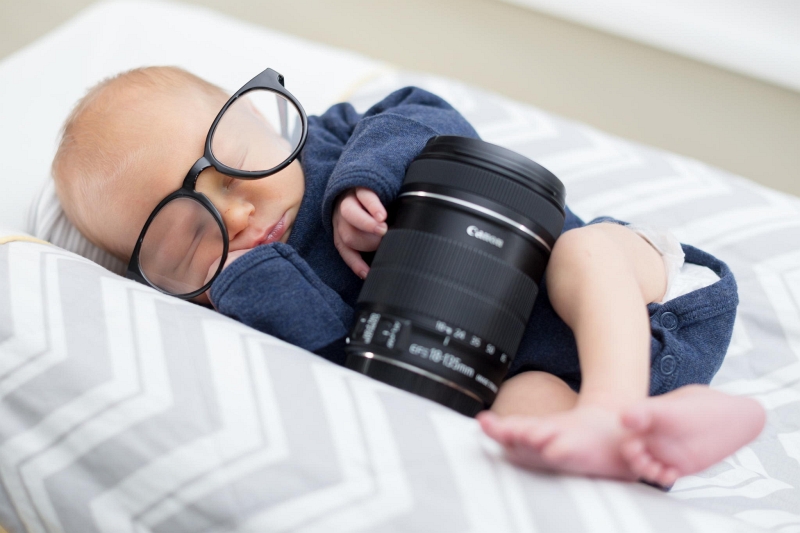
Brad Telker’s “future photographer” still works because the props are huge and the baby is calm. Black-rim glasses and a Canon lens on chevron fabric turn a simple side curl into a story. Keep heavy glass supported and never resting weight on the infant. Whimsy is welcome; unsafe balance is not.
3. Parent-hand cradle close-up
Fill the frame with adult palms holding the head and back. Skin-to-skin warmth reads as love without needing a decorated nursery. Shoot slightly above, focus on eyelashes, and let fingernails and wedding bands stay in the story. This idea travels well to hospital rooms and living rooms alike.
4. Sibling introduction on the bed
Seat an older child safely, then place the newborn in their lap with a parent’s hands just out of frame or lightly supporting. Capture the older sibling’s face as much as the baby’s. Soft window light and a quiet room beat a busy backdrop. Expect one keepable frame for every dozen almosts.
5. Classic wrap “burrito”
A stretch wrap in cream or soft gray simplifies the silhouette and keeps arms secure for sleepy poses. Pair with a simple beanbag and a clean backdrop. The beauty is negative space: face, fabric folds, and calm. Practice wrapping with a doll before the session if you are new to it.
6. Composite froggy pose (safety-first)
The popular chin-in-hands look is almost always a composite: baby supported in each take, then blended. Never leave a newborn propped unattended for “the shot.” Tell clients the truth about the method—it builds trust and keeps everyone safer than chasing a single dangerous capture.
7. Nest in a shallow basket
Line a wide, stable basket with blankets so the baby cannot slip through gaps. Shoot from above for a circular composition. Natural fiber textures photograph richly in both color and black and white. Spotters stay close; baskets are props, not unsupervised cribs.
8. Wooden bowl or trough
A smooth wooden bowl on a textured rug creates organic curves around a curled newborn. Keep the bowl on the floor or a low, braced surface. Warm tungsten-balanced light flatters wood grain. This look feels timeless when styling stays minimal—one wrap, one bowl, one quiet face.
9. Tiny floral crown or headband
A soft floral crown adds season without burying the baby under props. Keep blooms lightweight and allergy-aware. Pair with a simple wrap so the flowers remain the accent. Macro frames of petals against newborn hair can become heirloom details on their own.
10. Lifestyle bed session at home
Skip the studio set. Photograph parents in bed with the baby between them, messy sheets encouraged. Morning window light and real tiredness often look more honest than perfect posing. Direct gently—“forehead to forehead”—then wait for laughter or tears to arrive unforced.
11. Window-light only portraits
Turn off flash. Place a bassinet or parent near a large window with sheer curtains as a diffuser. Side light sculpts cheeks; bounce a white foam board opposite to open shadows. The lesson: newborn skin loves large, soft sources more than clever modifiers.
12. Black-and-white detail set
Plan a monochrome run: lips, clenched fists, ear curves, the spiral of hair at the crown. Convert with care so midtones stay creamy. Without color, gesture and texture become the subject. Parents often hang these details in a grid beside one color hero portrait.
13. Feet and toes close-up
Fill the frame with wrinkled soles and tiny toes against a parent’s palm or a knitted blanket. Slightly longer focal lengths keep proportions flattering. These frames sell because they measure time—feet change fast, and the photograph freezes the impossible smallness.
14. Finger grip
Offer a parent’s finger and wait for the reflex curl. Focus on the grip, crop tight, and leave just enough face or eye to identify the baby. It is a universal newborn language: hold on. Soft catchlights in open eyes make the moment feel awake even in a sleepy session.
15. In dad’s boots or shoes
Place the wrapped baby carefully inside oversized boots on a clean floor, with full support underneath. The scale joke writes itself. Keep sessions short; remove the baby the moment comfort fades. Pair with a matching shot of the parent’s bare feet for a quiet before-and-after of roles.
16. Pet introduction—controlled
Only with calm animals and constant hands-on control. A dog’s nose near a sleeping newborn can be sweet when both are supervised inch by inch. Prefer separate frames you can later diptych if the pet is unpredictable. Never force proximity for social media.
17. Seasonal story props
Autumn leaves, a tiny knit pumpkin, a spring wreath, or a light holiday wrap—choose one seasonal cue, not a department-store explosion. Cohesion beats clutter. Photographers credited in older galleries often excelled here by letting one handmade object carry the calendar.
18. Bookish corner
Stack soft-covered books into a low nest or place the baby beside an open storybook with a parent reading just out of frame. Shallow depth of field turns titles into texture. Ideal for families who want “future reader” without heavy costumes.
19. Mini jersey or team colors
A custom micro jersey or hat in team colors works when it fits loosely and stays soft. Keep branding secondary to the face. Shoot both a smiling parent reaction and a quiet sleep frame so the album is not only novelty.
20. Vintage suitcase nest
An open vintage suitcase lined with blankets creates travel nostalgia. Stabilize the case so it cannot tip; shoot three-quarter angles that show leather wear. One suitcase, one wrap, one soft toy maximum—negative space keeps the prop from swallowing the baby.
21. Fabric hammock or pod (supported)
Fabric pods look floating; structurally they must be braced and spotted. Many final images are composites or tightly supervised holds. Communicate method to clients. The dreamy curve of cloth around a curled newborn remains popular when safety protocols are non-negotiable.
22. Mirror or reflection play
A clean acrylic surface or mirror below a carefully held baby can double the curve of a cheek—only with absolute control and no glass edges near skin. Often safer as a parent-holding mirror selfie style with the newborn on the chest. Soft reflections feel painterly in black and white.
23. Garden or porch, shade only
Take the session outdoors under open shade: porch, tree canopy, or north-facing wall. Avoid hard noon sun on newborn eyelids. Greenery bokeh plus a simple wrap reads fresh. Keep sessions shorter outdoors; temperature and insects rewrite plans fast.
24. Minimal white seamless
No props. White paper or a pale sheet, one soft key light, baby in a diaper cover or bare. The file becomes about form and skin. This is the album’s “breathing room” between colorful setups—and often the frame grandparents love most.
25. Gentle color accent gels
For creative portfolios, a subtle gel on a background light can wash pastel pink or blue behind a sleeping newborn while the key stays neutral on skin. Keep saturation low so the baby does not look theatrical. One accent color is enough.
26. Milk bath for older newborns
Wait until the baby has stronger head control and a pediatrician-okayed comfort level—often beyond the first two weeks. Warm water, opaque milk aesthetic, parent hands always in contact. Have towels and a second adult ready. Beautiful when calm; skip entirely if the baby protests.
27. Maternity-to-newborn continuity
If you photographed the pregnancy, echo one element: the same scarf, the same window, the same field. Continuity turns two sessions into a chapter. Clients feel the care; albums gain narrative glue that random props cannot buy.
28. Twins as mirrored curves
Pose twins as commas facing each other or stacked with full support and helpers. Shoot each baby alone first, then together. Matching wraps help; identical expressions are optional luck. Twin sessions need extra warmers, extra hands, and doubled patience.
29. Day-in-the-life documentary
Forget perfect poses. Follow a feeding, a diaper change, a nap in the real crib. Documentary newborn work ages well because it shows how the house actually felt. Use available light and a quiet shutter mentality—even if your camera is mirrorless and silent.
30. Extreme macros: lashes, lips, flaky skin
Move in for eyelashes, peeling newborn skin, the swirl of a cowlick. These frames are oddly tender and scientifically specific—this age never returns. A macro or short telephoto with careful focus stacking (when the baby sleeps deeply) can yield print-worthy abstracts.
Planning the session
Feed first when possible, heat the room, clear the shot list to three must-haves and a handful of maybes. Hire or work with photographers who talk about spotting, composites, and breaks as proudly as they talk about styling. The original gallery once credited many makers—among them Anna Eftimie, Wanda Hollis, Beth Wade, Cristi Mitu, Dariusz Lakomy, Evgeniya Semenova, John Dunnigan, Kate See, Laura Bellamy, Laurence Penne, Lisa Holloway, Masha Glebova, Natasha By, Shawn Marshall, Susan Wilcox, Teresa M, Andrea Strunk, and Brandon Jackson—alongside the two surviving frames above. Styles differ; safety standards should not.
Choose two or three ideas that match your family’s temperament, not the loudest trend. A purple knit set, a window-lit parent cradle, and one black-and-white detail trio will outlast a dozen rushed novelty props. The goal is not thirty perfect poses in one morning. It is a small set of honest photographs you will still want on the wall when those feet are suddenly two sizes larger.

Comments
Continue reading
Newborn Photography by Tracy Raver
Nebraska photographer Tracy Raver’s newborn portraits favor warm studios, early-week sleep, and quiet observation over forced poses.

Dramatic Photo Art by Sukron Ma’mun (Ipoenk Graphic)
Cirebon, Indonesia photographer Sukron Ma’mun uses theatrical natural light to frame village life, play, and place in lyrical photo art.

Bird’s-Eye Views: Florian Beaudenon’s Instant Life
Paris photographer Florian Beaudenon’s Instant Life series captures people in their rooms from above—intimate, collaborative overhead portraits of everyday joy.