
Weird Furniture Designs by Straight Line Designs
Surreal cabinets, benches, and tables from Judson Beaumont’s Straight Line Designs—peeled veneers, accordion tables, and cartoon physics built as real wood furniture.
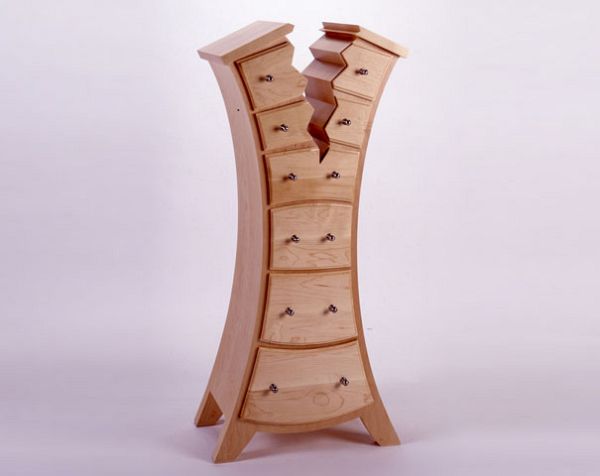
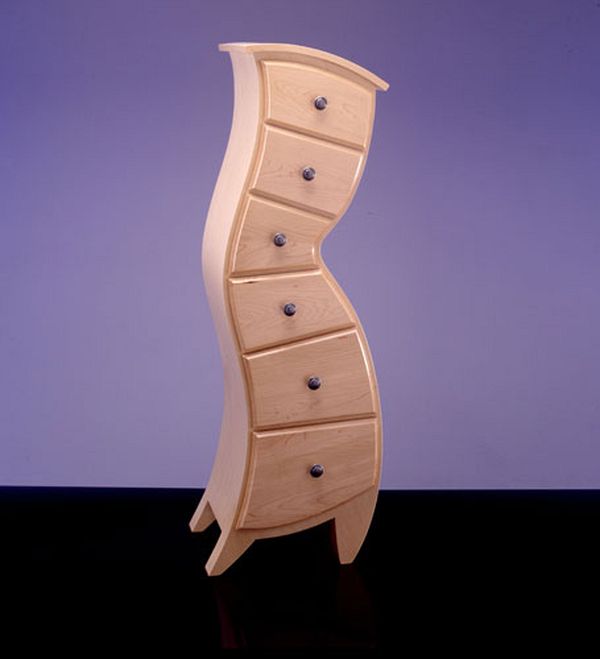
Most furniture tries to disappear into usefulness: a flat top, four steady legs, a cabinet that closes square and ships in a rectangle. The pieces linked to Straight Line Designs do the opposite. Working from Vancouver, British Columbia, designer Judson Beaumont and his workshop built cabinets, tables, and benches that appear to melt, peel, crack, crash, or take a cartoon breath—while remaining carefully crafted wood furniture. The humor is obvious at a glance. The joinery behind it is not. These are not mass-market novelties stamped for a season. They are custom and small-batch constructions that treat hardwood as if it could behave like rubber, paper, tin, or a character that wandered out of an animated short.
The studio name is part of the joke. Straight Line Designs became known for almost anything except straight lines: warped silhouettes, anthropomorphic postures, and surfaces that look mid-accident yet stand solid on the floor. Alongside private commissions, the shop made work for public and children’s exhibitions across North America, with a small team of craftspeople executing forms that look spontaneous and are anything but. Capacity stayed limited on purpose. Looking at the photographs below is less a shopping guide than a tour of furniture that refuses to behave—and of the discipline required to make refusal look effortless under gallery light.
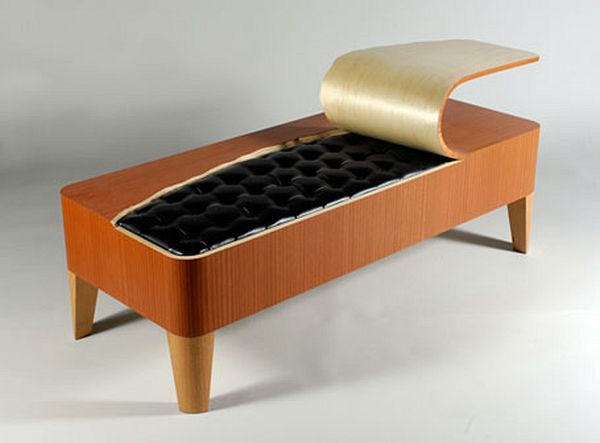
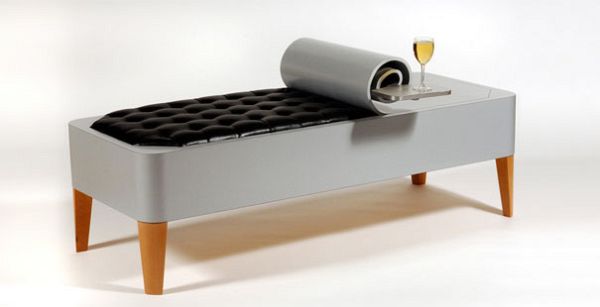
The canned bench is a material double take. A rectangular wooden body appears to peel open like a sardine lid, curling a pale veneer sheet backward to reveal glossy black tufted padding underneath. Rigid wood pretends to flex like metal and soften like upholstery at once. Tapered legs keep the object readable as a bench rather than pure sculpture. You could sit—though you might hesitate before trusting the peeled edge with a full mug of coffee. The joke lands because the craftsmanship is clean enough that the peel reads as intention, not warehouse damage.
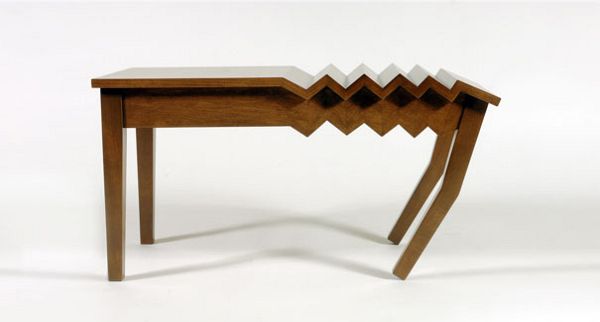
One half of this table behaves normally: flat top, upright leg. The other half collapses into a sharp accordion of peaks and valleys, with legs kicked at angles that suggest compression or collapse. Grain continues across the distortion, which sells the glitch as physical rather than pasted on in software. It is a demonstration of how much “table-ness” the eye will accept before the object becomes a drawing of an earthquake frozen in wood. Function is acknowledged, then bent until recognition and disbelief share the same silhouette.
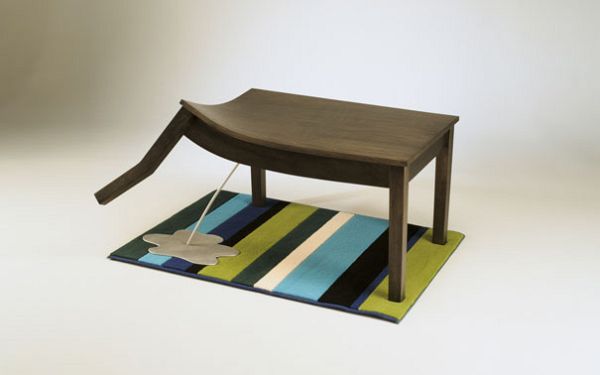
Anthropomorphism goes fully comic in the coffee table that lifts a corner and a leg like a dog, completed by a thin rod and puddle-shaped base on the rug. Tasteful living-room restraint is not the goal; slapstick is. That willingness to risk ridiculousness sits at the center of Straight Line Designs’ reputation—wit first, then the harder problem of making the wit stand without tipping. Humor this broad only works when proportions, finish, and balance are exact. A sloppy version would look broken. A precise version looks theatrical on purpose.
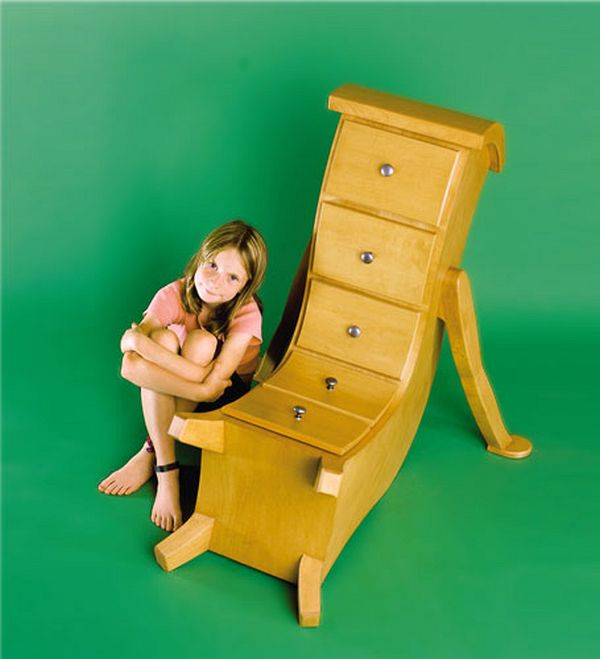
Cartoon physics, real carpentry
Beaumont often cited animated worlds—buildings with emotions, objects that move like characters—as lasting influences on his sketchbooks. Translating that energy into hardwood means compound curves, custom jigs, templates, and finishes that sell the illusion under bright studio light. A cabinet that looks melted still needs doors that open. A dresser that leans like a person still needs drawers that track. The workshop’s constraint was capacity rather than imagination: few pieces, high craft, little interest in flooding the market with copies. Clients who commissioned the work were buying both storage and a narrative object that would dominate any room it entered.
That stance places the studio in useful tension with ordinary product design. Factory furniture chases shipping efficiency and stackable rectangles. These pieces chase a double take. They belong with surreal and postmodern object traditions where typology is recognized and then playfully undermined. You see a bench, a table, an armoire—then watch the typology misbehave. After five minutes with a peeled bench, a plain storage cube looks newly stubborn in its blandness. After a zigzag table, a factory-flat desk feels like a decision instead of a default handed down by a catalog.
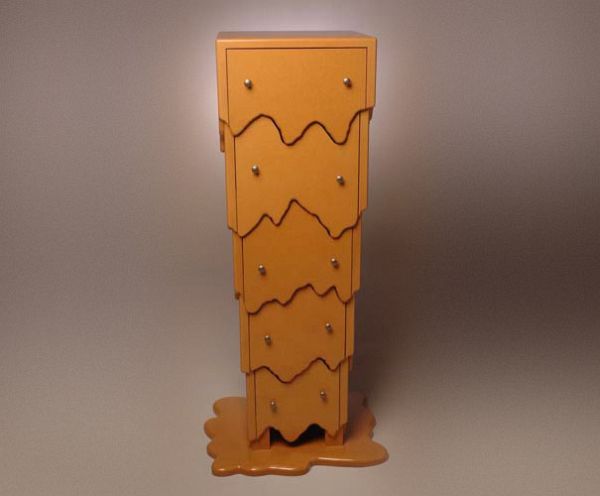
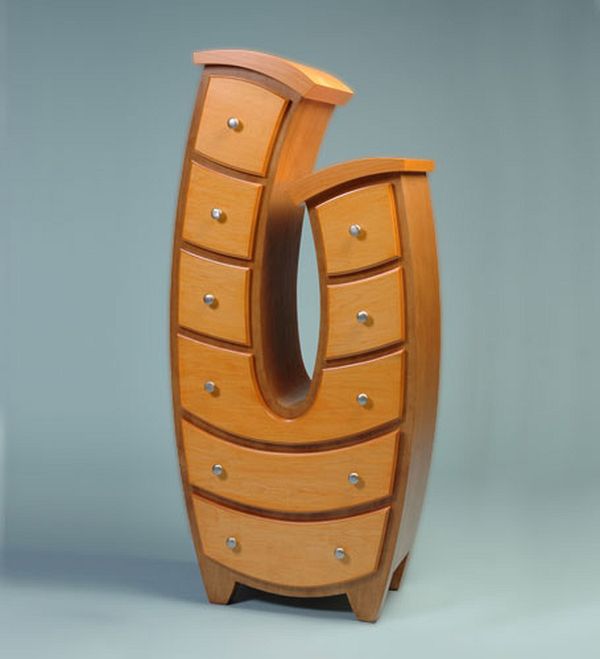
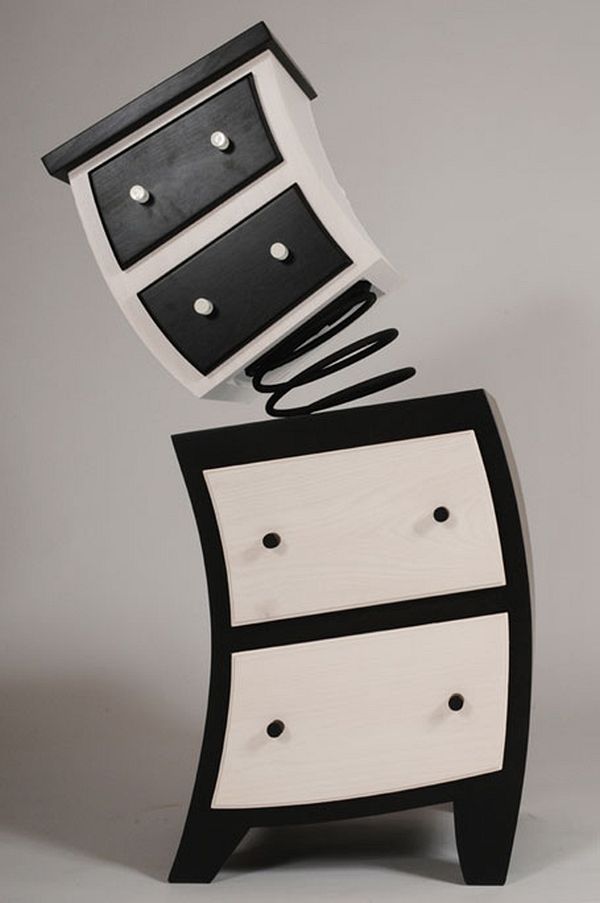
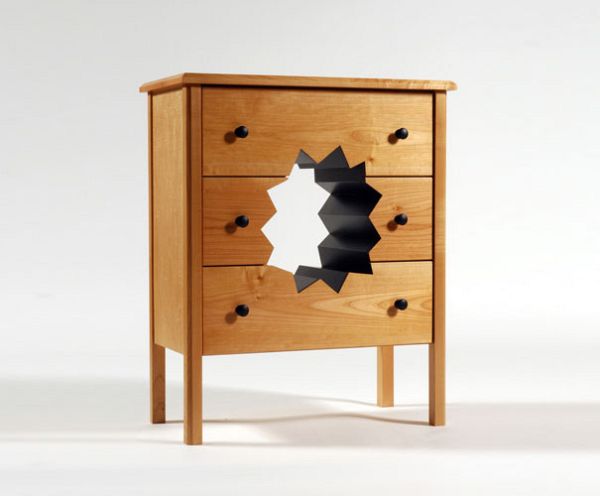
Titles attached to many of the studio’s better-known works—burnt tables, cracked cabinets, boom forms, melting cases—describe events frozen mid-action. Fire, impact, and soft collapse become permanent silhouettes. Finish work has to support the story: charred-looking edges, split façades, or drooping corners only convince when craftsmanship is clean enough that viewers trust the distortion as choice. The same logic applies to pieces that lean, explode, or crumple: every curve is a drawing problem solved in wood, not a cartoon pasted onto a box.
Where “weird” earns a place in serious rooms
Not every home needs a coffee table mid-prank. That misses the point of looking. Pieces like these sharpen perception by exaggeration. Weird design, at its best, is critique delivered as a laugh—an argument that domestic objects can carry narrative without quitting their day jobs as places to sit, store coats, or set a lamp. In an era of identical flat-pack silhouettes, that interruption has cultural value even if you never commission a melting armoire yourself.
There is also a craft argument inside the comedy. Complex curves and pictorial surfaces demand planning, templates, and patient assembly. Children’s museums and playful public installations have used related language—furniture that invites approach instead of intimidation. Adult collectors keep the more extreme commissions as conversation anchors: objects that make guests ask “Does that open?” before they ask anything polite. The answer is often yes, which is part of the delight. Function survives the joke; it is simply no longer the only story the object tells.
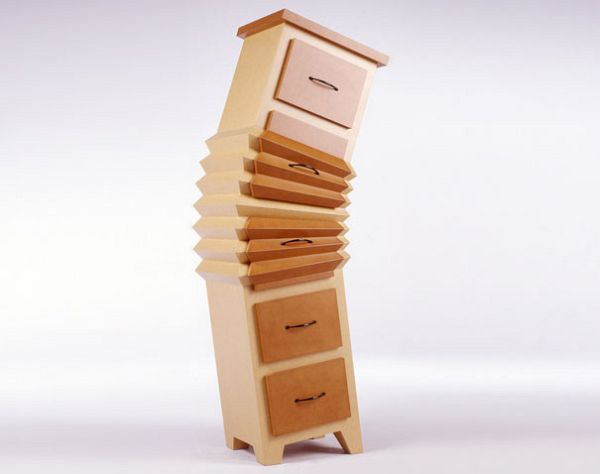
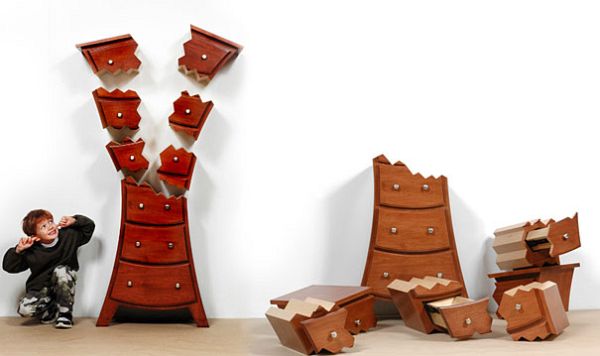
Studio photography against plain backdrops helps the silhouettes read cleanly. No lifestyle staging is required; the forms carry the narrative alone—peel, fold, tip, lean, explode. That clarity is why the work travels so well in design roundups. You understand the premise in a second, then spend longer wondering how the drawers actually work and what kind of mind insists wood should behave this way. The demilked-era roundups that first spread these images online were right about one thing: once you have seen a bench peel open like a tin, ordinary cabinetry looks newly solemn.
If straight lines are the grammar of conventional furniture, Straight Line Designs wrote in italics and exclamation points. The pieces remain useful reminders that wood can hold a joke without becoming a prop, and that the strangest furniture often asks for the steadiest hands in the shop.

Comments
Continue reading
15 Modern Kitchen Island Designs: Layouts, Materials, and Built-Ins
Fifteen kitchen island ideas—from dual black-and-white stations and fluted wood to cooktop islands, produce bins, and furniture-style pieces—with planning notes on clearance and function.
Chaise Lounge Designs: Elegant Reclining Seats for Real Rooms
From oversized velvet statements to slim modern forms—how to choose, place, and style a chaise longue so it feels inviting, not purely decorative.
Couch Ideas for Your Home: Style and Buy Guide
Choose a sofa by room measure, silhouette, fabric, and sit-test comfort—practical furniture guidance with style cues, no hard-sell affiliate pitch.