
Studded Boots: Hardware, Height, and Cold-Weather Attitude
A practical style guide to studded boots—lengths, colors from black to plum and emerald, and how to wear them with dresses, skirts, and skinnies.
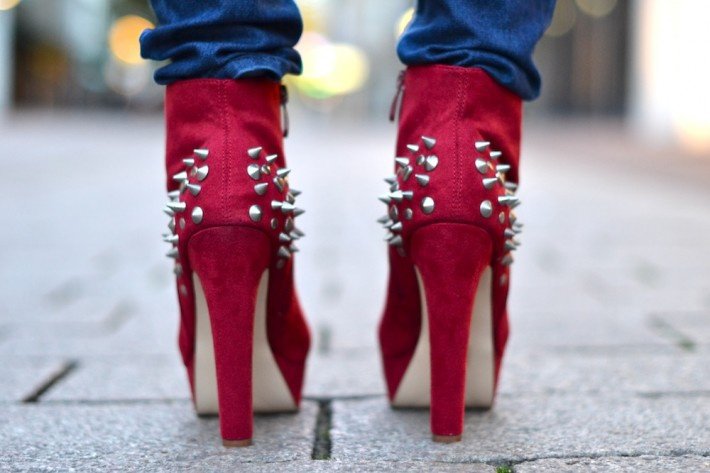
When the temperature drops, a certain kind of dresser does not say “winter.” They say “boots season.” Dresses stay in rotation, skirts refuse to hibernate, and skinny trousers suddenly look unfinished without something hard at the ankle. In that climate, studded boots became the loudest quiet upgrade of the colder months around 2013: same silhouette you already trusted, plus metal that caught light, attitude, and just enough danger to wake up a soft knit dress.
Studs are not subtle hardware. They announce that the shoe is doing more than weatherproofing. The trick — then and now — is choosing a pair that looks intentional with your clothes, not borrowed from a costume trunk or stranded in a single night-out fantasy.
What “studded” actually means on a boot
Hardware comes in moods. Pyramid studs feel sharper and more rock-adjacent. Dome studs read softer, almost jewelry-like. Flat rivets can look industrial. Mixed sizes create denser texture; a single marching line along a shaft or toe cap reads graphic and controlled. Tiny nailhead studs can almost disappear until light hits them; oversized cones refuse to whisper.
Placement changes the personality. Studs clustered on the toe shout first and can make even a simple jean look tougher. A spine of metal up the back of the heel adds drama you mostly see in motion. Scattered hardware across a shaft turns the whole boot into texture. Minimal metal at the ankle or along a zipper can be enough if the rest of your look is already busy with zippers, chains, or bold jewelry.
Material matters as much as metal. Smooth leather makes studs look polished and deliberate. Suede softens the aggression and pairs easily with knits and soft dresses. Patent amplifies shine until the boot risks competing with itself — fine for night, riskier for daytime errands. Distressed leather plus heavy studs can tip into costume; cleaner leather usually ages with more dignity.
Lengths and how they change an outfit
Booties stop near the ankle and work hardest with cropped trousers, skinny jeans, and skirts that need a solid base. They are the easiest entry if you are stud-curious but not ready for a full shaft of metal. A studded bootie under a midi skirt is often more modern than a taller boot shouting from mid-calf.
Mid-calf styles bridge seasons and proportions. They can look sharp with a straight jean or unexpectedly polished under a coatdress. Knee-high studded boots are the statement piece: best with shorter hemlines, slim pants tucked cleanly, or a dress that would otherwise feel too sweet. Over-the-knee versions demand restraint everywhere else — plain tights, simple jewelry, one idea at a time.
Heel height steers the message. A block heel keeps studs wearable for walking and weather. A stiletto pushes the boot toward evening. A flat or low wedge can look tough and practical, especially in black leather with limited hardware. If you live on pavement, prioritize stability over drama; a beautiful boot you cannot walk in becomes furniture.
Color beyond basic black
Black remains the default because metal already supplies contrast. Brown and camel studded boots warm up denim and cream knits without the hard edge of black. Taupe and taba sit between those worlds and photograph beautifully against gray city light.
If you want the pair to lead the outfit, richer colors earn their keep. Plum and deep burgundy feel seasonal without screaming novelty. Emerald and other jewel tones turn the boot into the accessory, which means the rest of the look should calm down — dark denim, a clean coat, minimal bag hardware. Metallic boots with additional studs are usually one step too many unless the clothing is almost monastic.
Match metal to your other jewelry when you can. Silver-toned studs sit easily with cool zippers and white-gold pieces; brass and antique gold lean warmer with cognac leather and gold jewelry. Mixing metals is fine if one clearly dominates and the rest of the outfit stays quiet.
What to wear with them
Studded boots earn their reputation under dresses. A soft jersey or floaty day dress plus hard hardware is a classic contrast: sweetness meeting bite. Midi skirts with opaque tights and a tucked sweater do similar work. Mini lengths need a confident stride and weather that cooperates; cold wind plus short hems plus heavy boots can look stylish in photos and miserable in practice.
With trousers, keep the line clean. Skinny or slim cigarette shapes tuck or stack neatly. Wide legs can work if the boot has a strong silhouette and the hem is intentional — cropped or pooling on purpose, not accidentally swallowing the studs. Leather leggings amplify the edge; soft wool trousers civilize it. Avoid competing textures at the ankle: frayed hems, stacked socks, and dense studs rarely share space well.
Outerwear should not fight the boot. A clean wool coat, a leather biker, or a simple belted trench usually wins. Heavily embellished jackets plus heavily studded boots can tip into costume. If both pieces have metal, let one be quieter. Bags follow the same rule: one hardware story per outfit is often enough.
- Day uniform: dark skinny jeans, oversized knit, black studded bootie, structured tote.
- Dress formula: solid midi, leather jacket, knee-high studs, small crossbody.
- Office-adjacent: charcoal trousers, silk blouse, low-heel studded ankle boots with restrained hardware.
- Weekend edge: straight denim, white tee, camel coat, brown studded boots.
Buying, breaking in, and living with hardware
Check construction where studs meet leather. Loose posts snag tights and fall off on transit seats. Interior lining should not scratch. Walk on a hard floor in the shop if you can — some heavily studded soles click in a way you will either love or regret on office floors and museum galleries.
Comfort is not optional. Padding at the ankle, a stable heel, and enough toe room matter more when the boot is visually loud; you will notice pain faster if every step also flashes metal. Break them in at home before a long day. Consider weatherproofing spray on suede before the first wet commute.
Care is straightforward: wipe metal so it does not dull under city grime, condition leather so studs do not sit on cracked hide, and store boot shafts upright so they do not crease oddly around hardware clusters. If a stud loosens, fix it early; one missing cone can make an expensive pair look abandoned.
You do not need a closet full of studded pairs. One well-chosen boot — right height, honest color, hardware you will still like next winter — can reset dresses, skirts, and skinnies for an entire cold season. The forecast may insist on winter. Your feet can still insist on boots season.

Comments
Continue reading
Fall Outfit Formulas with Boots and Leggings
How to wear boots and opaque leggings through autumn—base layers, boot heights, sweaters and coats, color recipes, and quick checks so the classic cold-weather uniform still looks intentional.
Statement Boots: Structure, Hardware, and Color
A fashion gallery of sculptural heels, metal hardware, saturated suede, and evening embroidery—how to read statement boots as design, not ads.
Funny Animal Signs That Warn People (While Animals Ignore Them)
From a seagull on a no-birds disc to classic zoo and park ironies—why animal warning signs get funny, and what the rules are still for.