
Statement Boots: Structure, Hardware, and Color
A fashion gallery of sculptural heels, metal hardware, saturated suede, and evening embroidery—how to read statement boots as design, not ads.
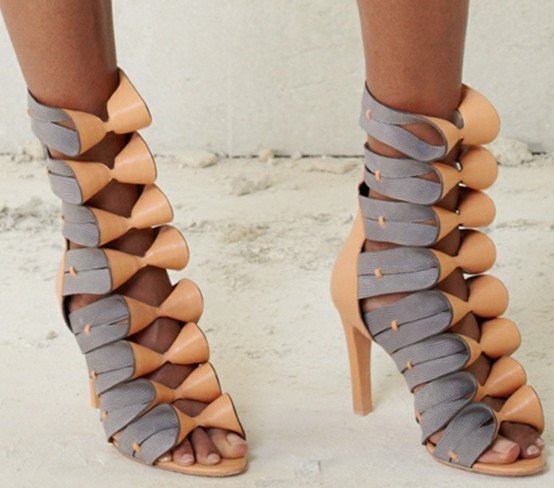
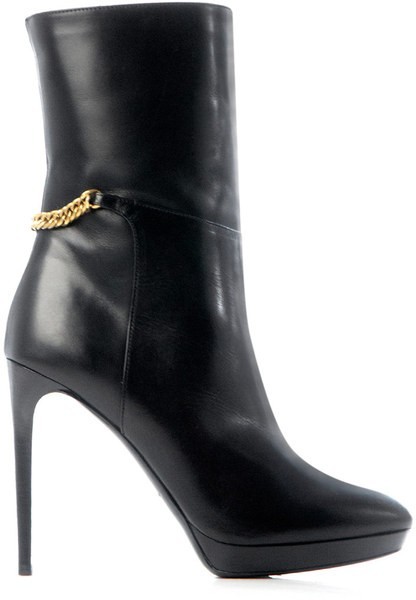
Boots do more work than almost any other shoe. They finish an outfit, protect the foot, and announce attitude before anyone notices the bag or the coat. In the early 2010s, fashion photography and product shoots leaned hard into that drama: sculptural heels, metal hardware, saturated suede, and ankle shapes that behaved like miniature architecture. This gallery gathers that moment—statement boots photographed as objects and as worn pieces, not as a shopping list.
What follows is a walk through silhouettes, materials, and styling cues you can still use when you look at footwear today. Keep the images open beside the text; each frame is doing a different job.
Why boots dominated the fashion frame
A boot gives a photographer more surface than a sandal and more vertical line than a low shoe. Straps, buckles, embroidery, and heel geometry become compositional tools. Editors loved them because a single pair could carry a whole spread: color blocking against a white seamless, texture under hard studio light, or the tension of a worn-in leather against bare skin.
For wearers, the same qualities made boots feel decisive. Ankle boots shortened trousers without looking unfinished. Tall heels lifted evening looks without needing a separate “party shoe.” Hardware—silver toe caps, gold buckles, dangling tassels—turned functional closures into jewelry for the foot. None of that was new in fashion history, but around 2012 it felt newly photogenic: clean backgrounds, close crops, and boots treated like sculpture.
Structure first: cages, cones, and open toes
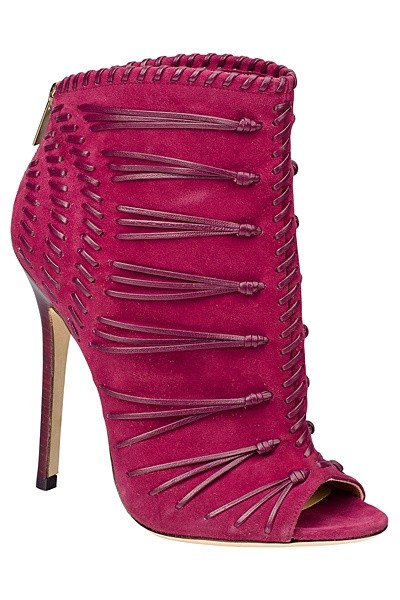
Some of the most memorable frames in this set are not classic closed boots at all. They are high, open constructions that climb the shin with gathered straps, alternating soft loops and harder cone-like forms. The effect sits between gladiator sandal and architectural cage: the foot is visible, but the silhouette reads as armored and ornamental at once.
Look at how the materials split the job. Smooth leather-like planes catch light; ribbed or pleated fabric softens the rhythm; a thin stiletto keeps the line sharp. Pieces like this are rarely about daily commuting. They are about proportion—how much vertical activity the eye can handle before the rest of the outfit should go quiet. Pairing them with simple clothes is not a cliché; it is how the shoe stays readable.
Hardware as attitude
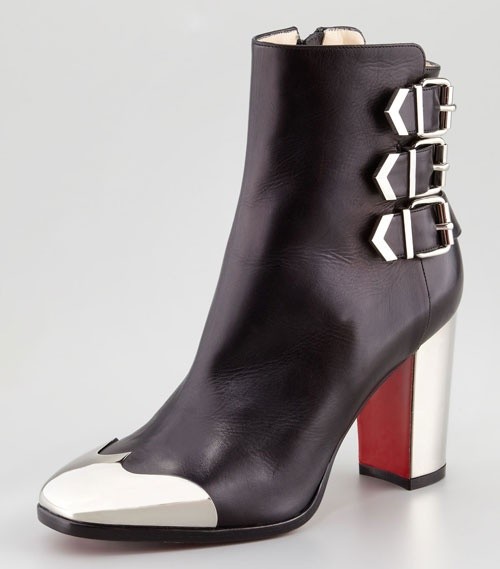
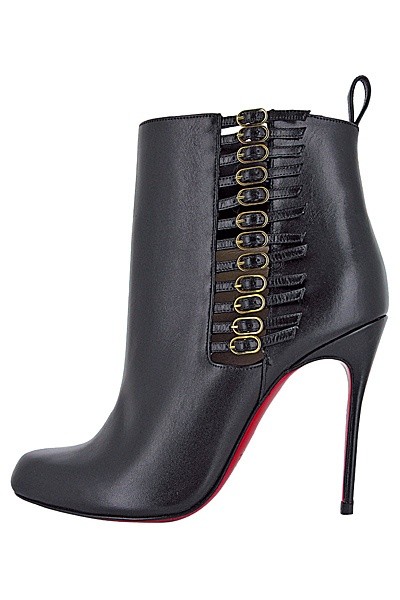
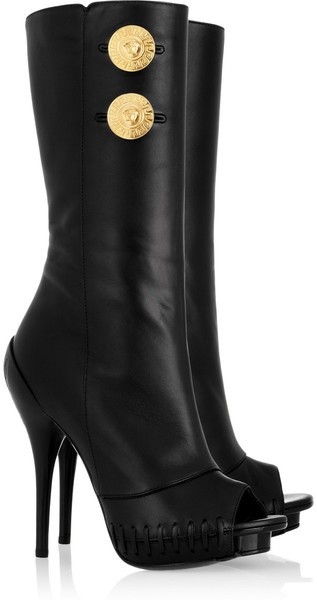
Metal on boots is never neutral. A polished silver toe cap, arrow-tipped straps, and stacked buckles push a black leather ankle boot toward rock and motorcycle codes even when the last is refined. Square toes and block heels add weight; a flash of signature sole color—famously associated with certain Paris houses—tells you the object is also a brand signal.
In product photography, those details matter because they survive compression and small screens. You can lose subtle stitching at thumbnail size; you rarely lose a mirror-bright heel or a row of buckles. That is why early-2010s boot galleries often look “loud” in retrospect: the camera was selling recognizability, and hardware was the fastest shorthand.
If you are studying these images for style rather than shopping nostalgia, ask a practical question: which metal finishes would still sit beside your wardrobe’s existing jewelry? Cool silver next to warm gold can fight; matching the temperature of your usual metals keeps the boot from feeling costume-like.
Color that does the talking
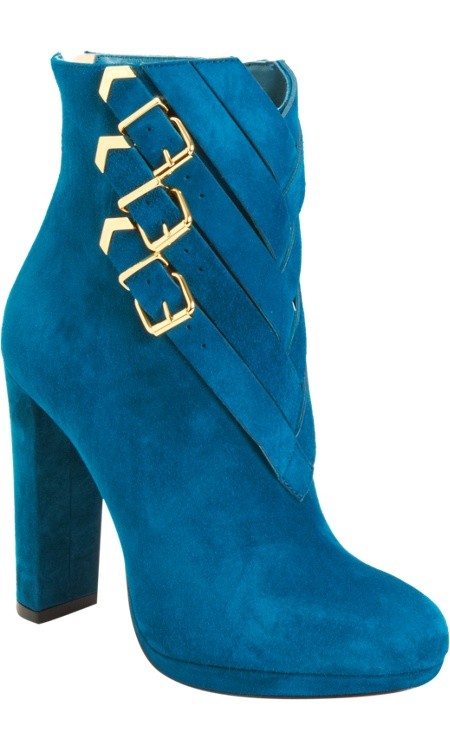
Suede in a saturated teal or peacock blue does not need much help. Matte nap absorbs light differently than polished leather, so the same block heel and strap layout can feel softer and more seasonal. Gold-tone buckles and chevron tips against that blue create a deliberate contrast: cool body, warm accents.
Color boots reward restraint elsewhere. Denim, charcoal, cream, and black let the shoe keep the lead. Patterned tights or busy prints usually steal the frame. In a gallery context, the white seamless background is doing the same editorial job—removing competition so pigment and hardware can argue cleanly.
Evening detail: embroidery, tassels, and height
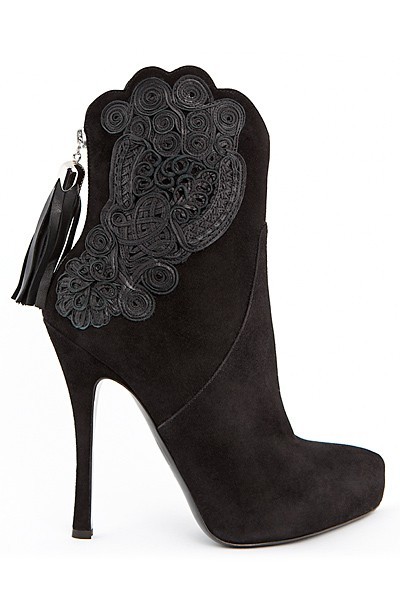
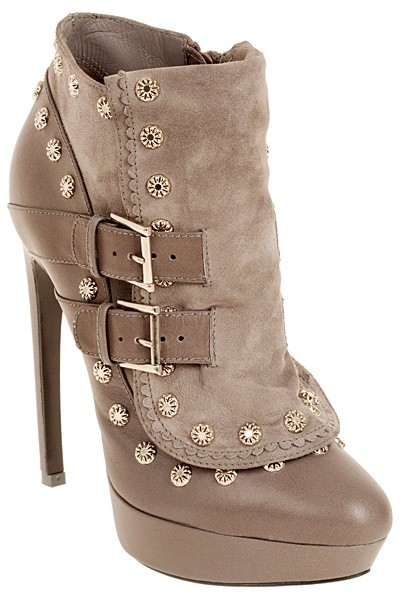
Black suede with raised soutache swirls and a leather tassel sits in another register: evening ornament rather than street toughness. The thin stiletto and pointed toe lengthen the leg; the embroidery adds a three-dimensional patch of shadow that photographs richly even in monochrome.
Boots like these teach a useful rule about “statement” footwear. One loud zone is enough. If the ankle is embroidered and tasselled, the rest of the look can stay architectural—clean lines, controlled volume. The boot becomes the jewelry, and jewelry elsewhere can step back.
Reading a boot the way a stylist does
When you scan a gallery like this, ignore brand mythology for a moment and sort by craft decisions:
- Shaft height — ankle, mid-calf, or climbing higher changes how trousers and skirts break.
- Toe shape — almond, square, and pointed toes alter the formality of the same heel.
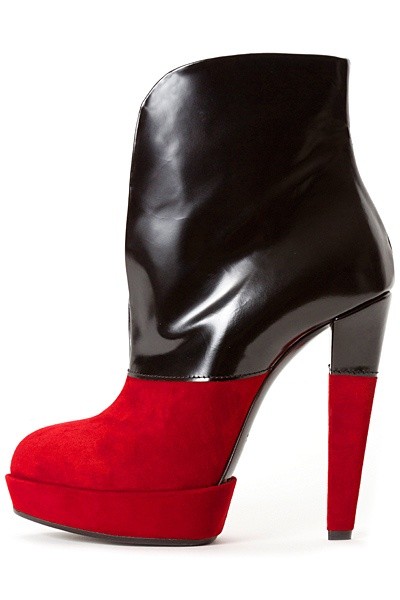
- Heel type — stilettos sharpen; blocks stabilize and modernize; sculpted heels become sculpture themselves.
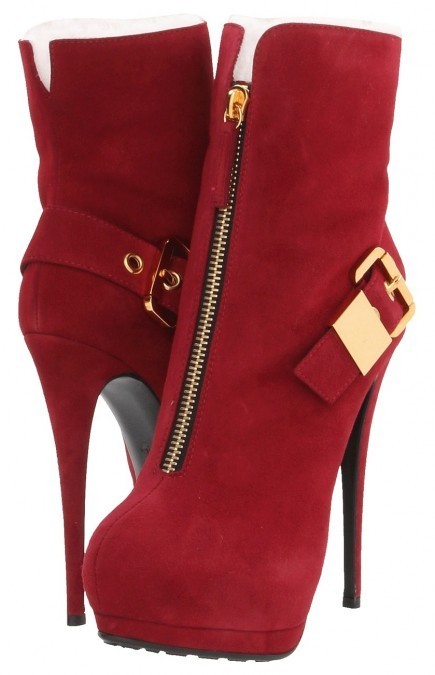
- Closure language — zippers disappear; buckles and straps perform.
- Surface — patent reflects, suede absorbs, mixed materials create rhythm.
Those five checks explain why two black boots can feel unrelated. One is a quiet workhorse; another is a stage prop. The images here lean toward the second category without abandoning wearable silhouettes.
Styling notes that still hold
Skinny trousers tucked or cropped just above the shaft keep ankle boots graphic. Wide trousers need a taller heel or a more substantial sole so the fabric does not swallow the shoe. With dresses, consider the hem: a mid-calf dress plus an ornate ankle boot can chop the line; a shorter hem or a longer, continuous silhouette usually looks cleaner.
For color boots, treat the shoe as you would a bright bag: either echo a small accent elsewhere or leave the rest monochrome. For heavily embroidered or caged designs, let texture elsewhere stay flatter—matte knits, simple denim, unfussy coats.
Comfort is part of styling, even in a picture gallery. Extreme heels change gait and posture; that changes how clothes hang. If a boot only works seated in a studio, it is still valid as design—but it is a different object from a boot meant for city pavement.
What this gallery is for
These photographs belong to a lifestyle-and-fashion curiosity tradition: collect striking examples, look closely, and borrow ideas. They are not a seasonal lookbook with prices and affiliate links. They are a visual vocabulary—metal, suede, embroidery, cage construction, saturated color—that still explains why boots keep returning to magazine covers and street style alike.
Next time you stand in front of a shoe wall or scroll a product grid, try the stylist checklist above before you chase a trend name. If the construction, heel, and surface already make sense for how you move and dress, the boot will do the rest of the talking—just as these frames do.

Comments
Continue reading
Fall Outfit Formulas with Boots and Leggings
How to wear boots and opaque leggings through autumn—base layers, boot heights, sweaters and coats, color recipes, and quick checks so the classic cold-weather uniform still looks intentional.
Studded Boots: Hardware, Height, and Cold-Weather Attitude
A practical style guide to studded boots—lengths, colors from black to plum and emerald, and how to wear them with dresses, skirts, and skinnies.
Funny Animal Signs That Warn People (While Animals Ignore Them)
From a seagull on a no-birds disc to classic zoo and park ironies—why animal warning signs get funny, and what the rules are still for.