
The Hobbit Character Posters: A 2012 Portrait Campaign
Seventeen An Unexpected Journey character sheets—Thorin to Bilbo—and how franchise lockups plus costume detail sold Jackson’s company of faces.
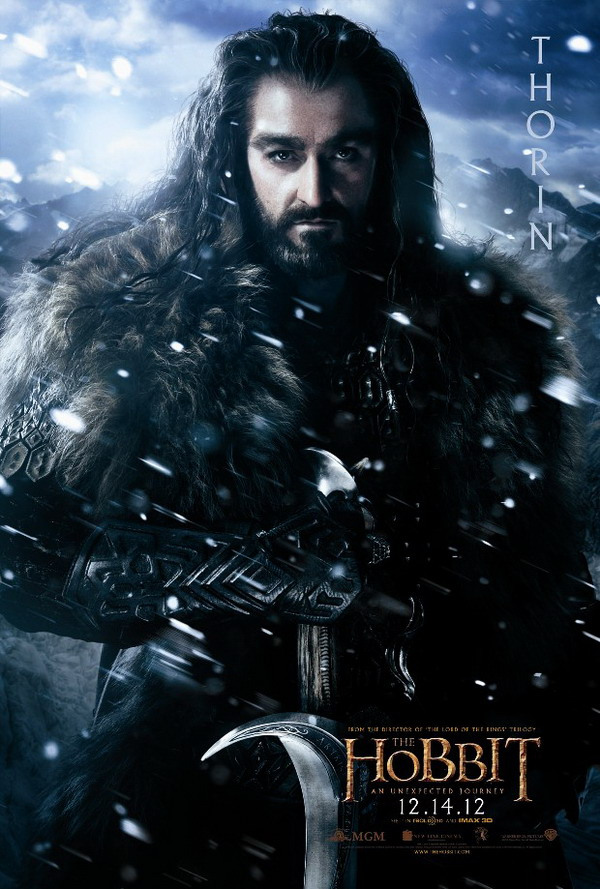
In early November 2012, a few weeks before theaters opened for The Hobbit: An Unexpected Journey, New Line Cinema and MGM released a grid of seventeen character posters. Each sheet behaved like a miniature one-sheet: a vertical name, a portrait built from costume and weather, and a repeated franchise lockup announcing the December 14 date, premium formats, and studio marks. Roundups such as Emile Eid’s gallery helped the set travel quickly online. The job was not only to list cast. It was to teach viewers how Peter Jackson’s return to Middle-earth wanted to look—tactile, cold or golden by turns, and unmistakably bridged to The Lord of the Rings without making Fellowship nostalgia the only hook.
Character campaigns fail when ensembles blur into identical “hero lighting.” This one succeeds by treating hair, kit, and props as heraldry. You can skim the grid at thumbnail size and still separate a king from a scribe, a musician from a scarred fighter, a hobbit from a dwarf. That readability is a design achievement as much as a casting one, and it is why the posters still repay a slow scroll years later.
Thorin’s poster sets the leadership key. Richard Armitage fills the frame in fur and scale-like armor, hands firm on a blade, snow and storm-blue air behind him. The vertical “THORIN” mark and gold title block establish the chrome every other sheet will echo: director credit to the Rings trilogy, the Hobbit logo, RealD and IMAX lines, the studio strip. Command arrives through posture and weather before any copy explains lineage or the Lonely Mountain.
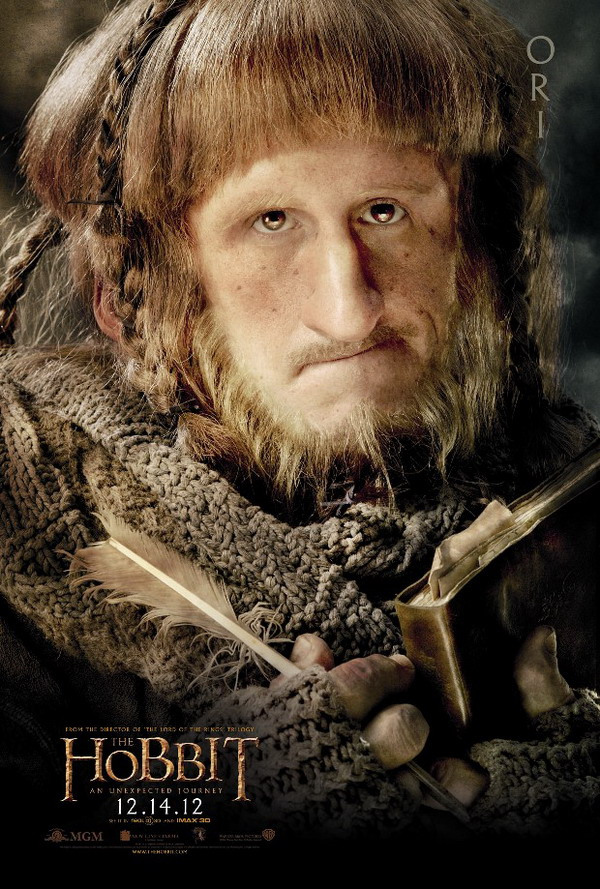
Ori answers with a different grammar. Adam Brown’s earnest face, knitted cowl, quill, and worn journal announce record-keeping rather than conquest. Placed near Thorin in a gallery scroll, the contrast does story work immediately: a company needs both steel and memory. Good franchise design lets props carry exposition so marketing text can stay short and the audience still feels oriented.
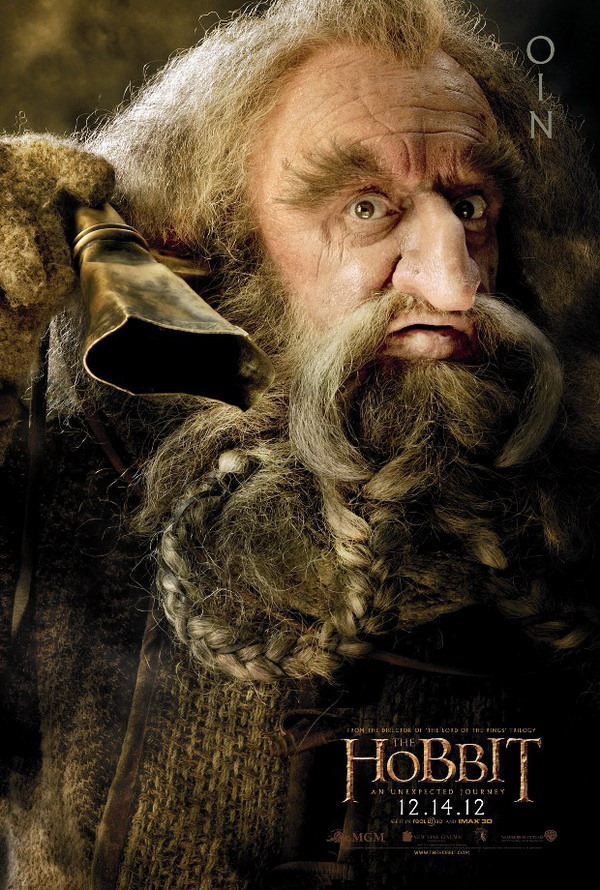
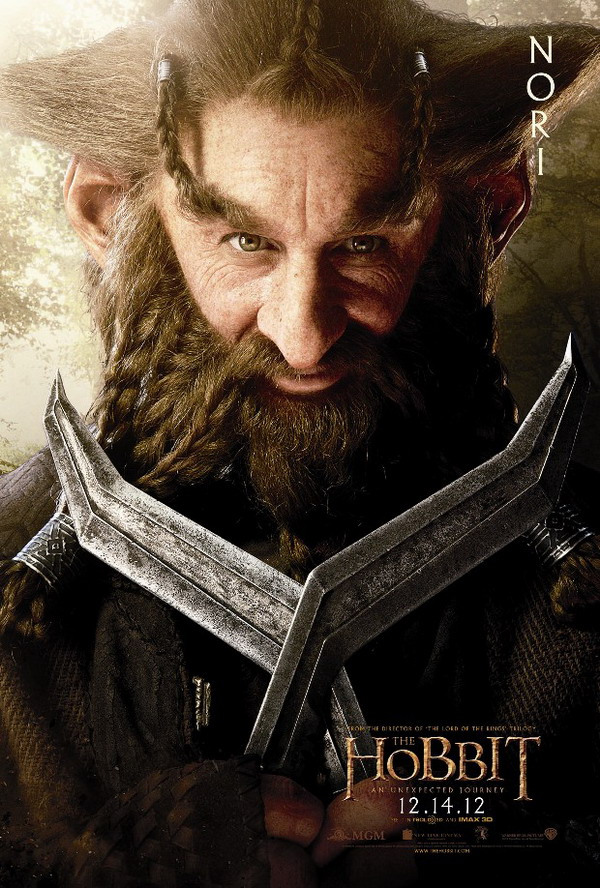
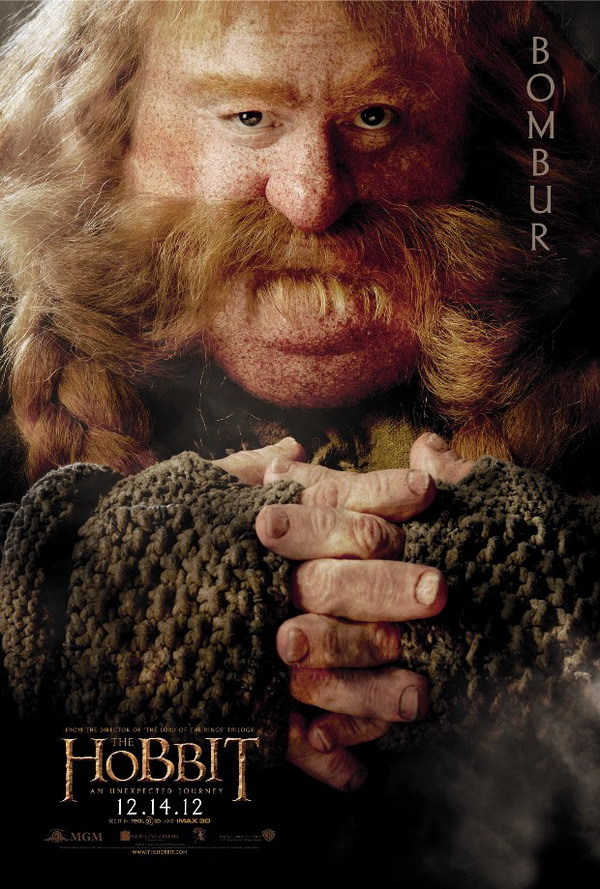
Through the middle stretch of the set, dwarf after dwarf receives a distinct grooming and weapon language—braids, hats, axes, layered leather—so thirteen companions never collapse into one bearded texture. Fantasy marketing often fails that test by cloning the same chin-up glare across an entire roster. Here, silhouette and accessory do the differentiating. Even without memorizing every name on first pass, a viewer can feel the company’s variety and start assigning roles: heavy, comic, cautious, fierce.
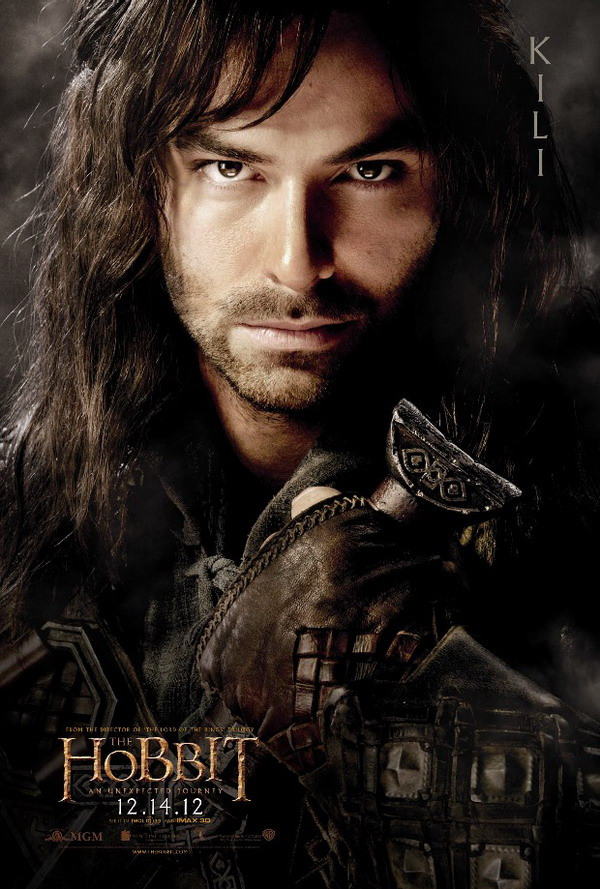
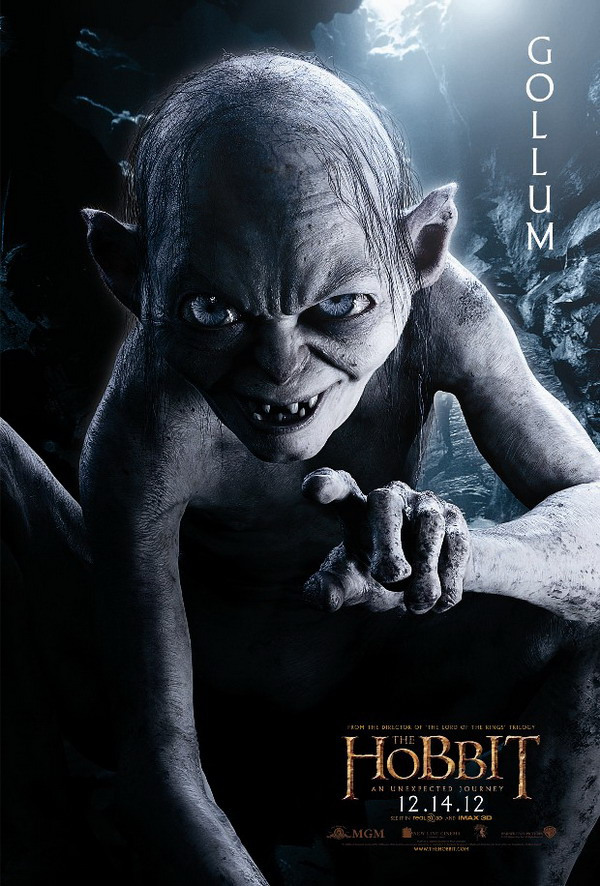
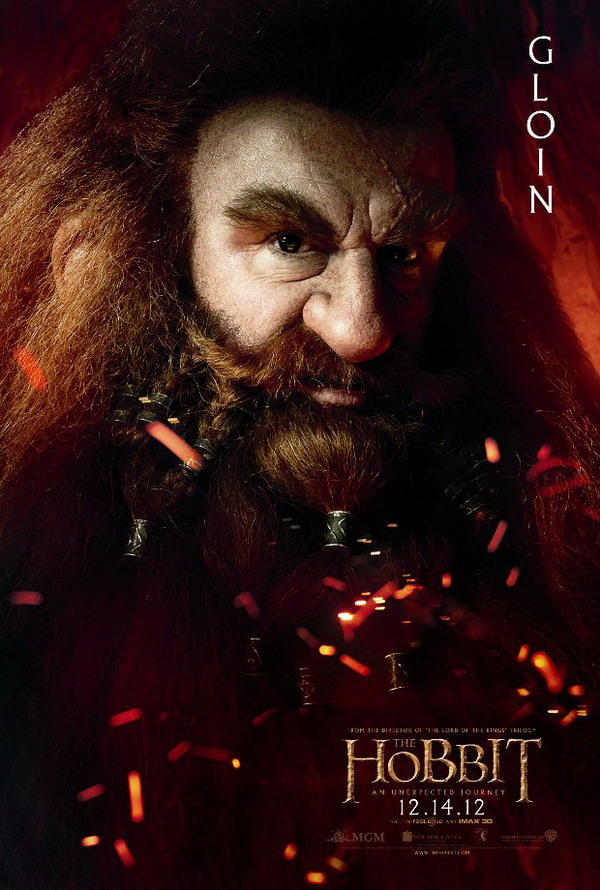
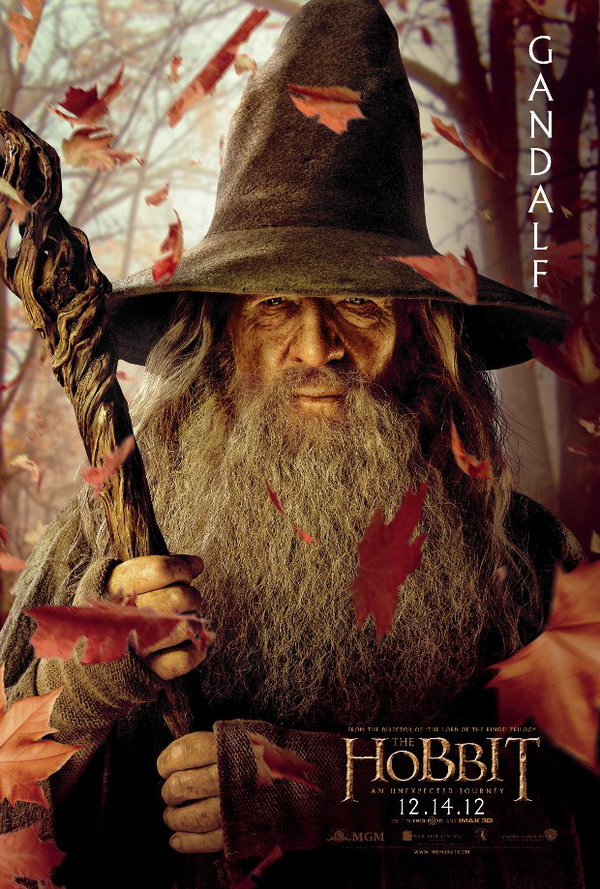
The repeated chrome that holds seventeen portraits together
Ignore faces for a moment and the template becomes obvious. Each poster is a vertical study with shallow atmospheric cues—falling snow, forest haze, smoke, leaf bokeh—so the figure stays monumental. Names run along an edge in a restrained serif that refuses to compete with Weta Workshop-level costume detail. The lower third repeats the same lockup: “From the director of The Lord of the Rings trilogy,” the textured gold Hobbit mark, An Unexpected Journey, 12.14.12, format line, and studio marks for MGM, New Line, Warner Bros., and partners.
That repetition is strategy, not laziness. In 2012 the audience already trusted Jackson’s Rings films; what they did not yet know was the emotional temperature of this new company. Uniform chrome lets portraits swing from grim to gentle without the campaign looking like seventeen unrelated fan arts pasted into one folder. Designers working on any ensemble franchise can steal the rule: repeat the system, vary the soul.
Color grading across the set also works like casting. Cool sheets push danger and altitude. Warmer sheets suggest Shire edges, counsel, or humor. When a reader flips from ice-blue kingship to leaf-lit gentleness, the emotional map of the quest starts to appear before anyone mentions dragons or contracts.
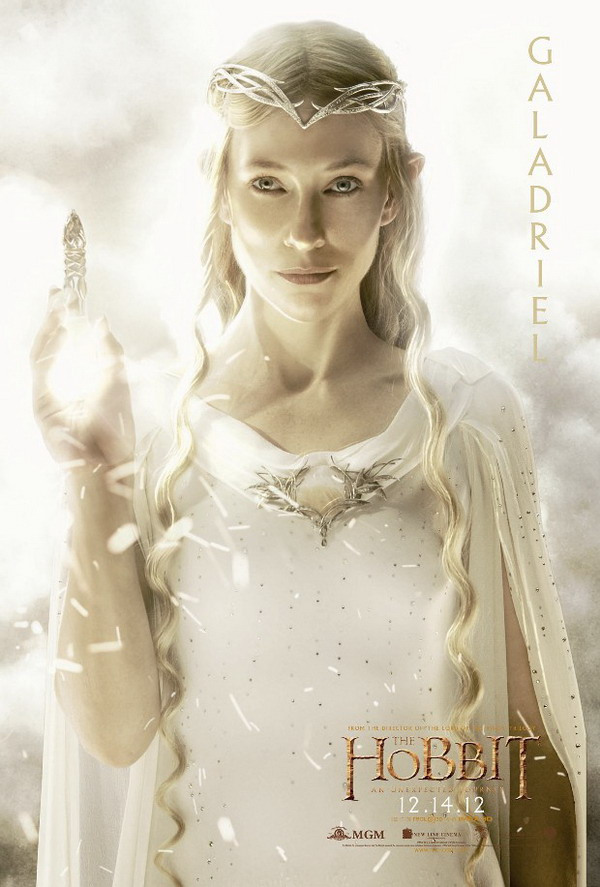
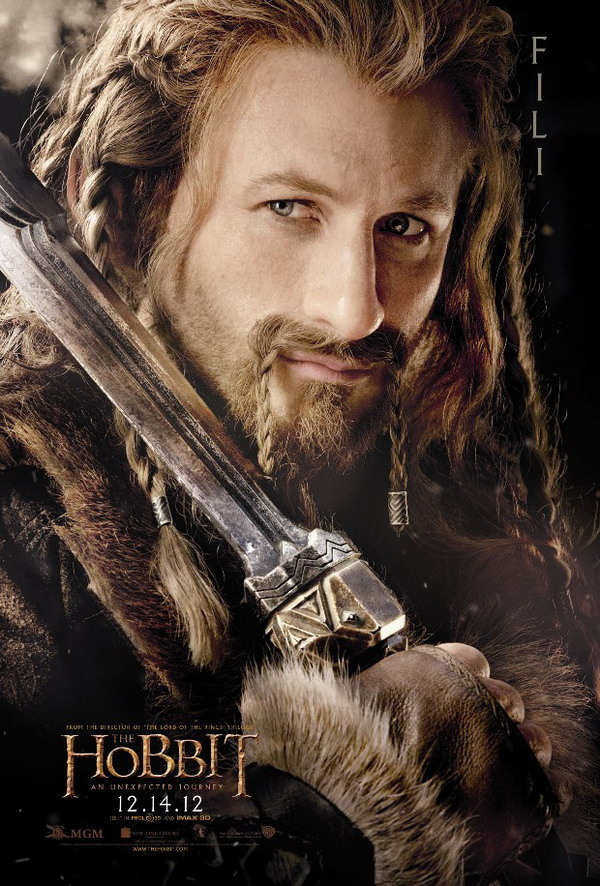
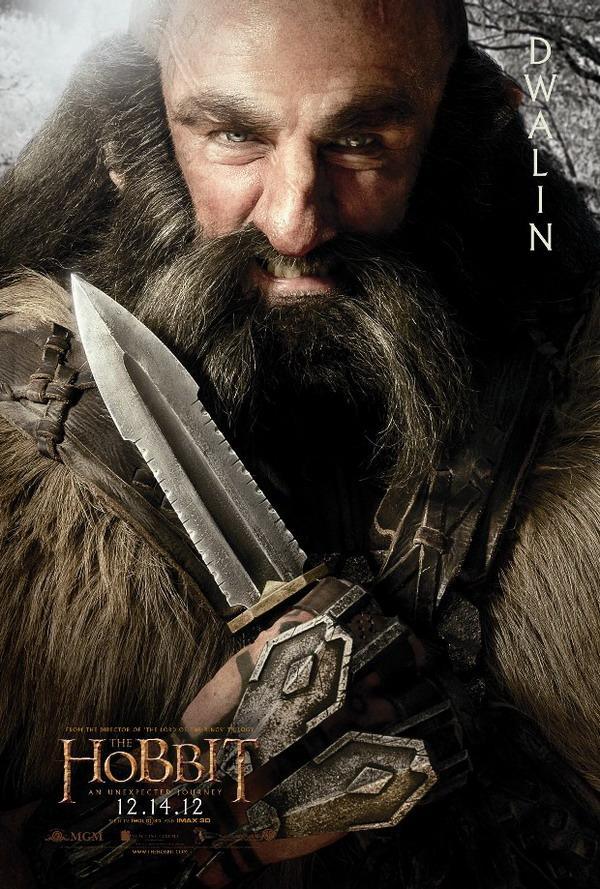
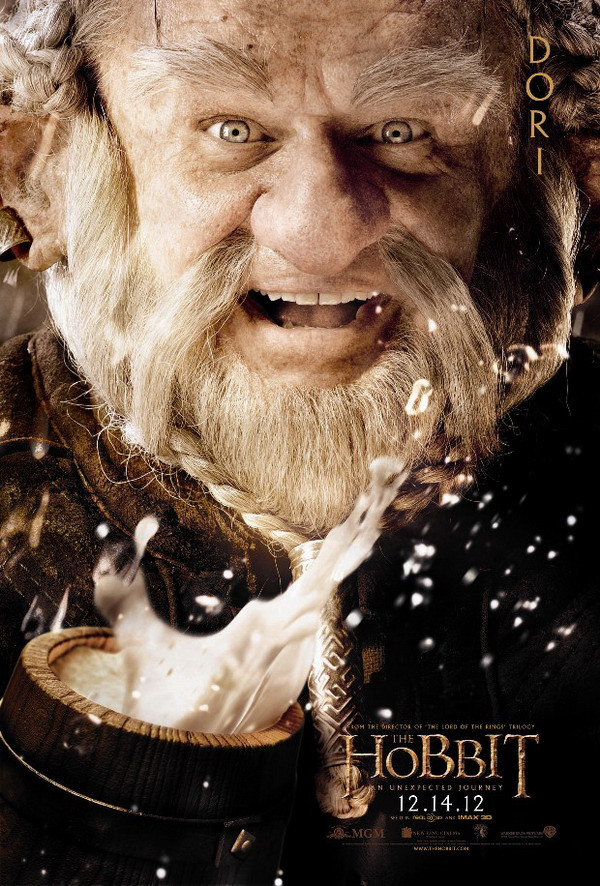
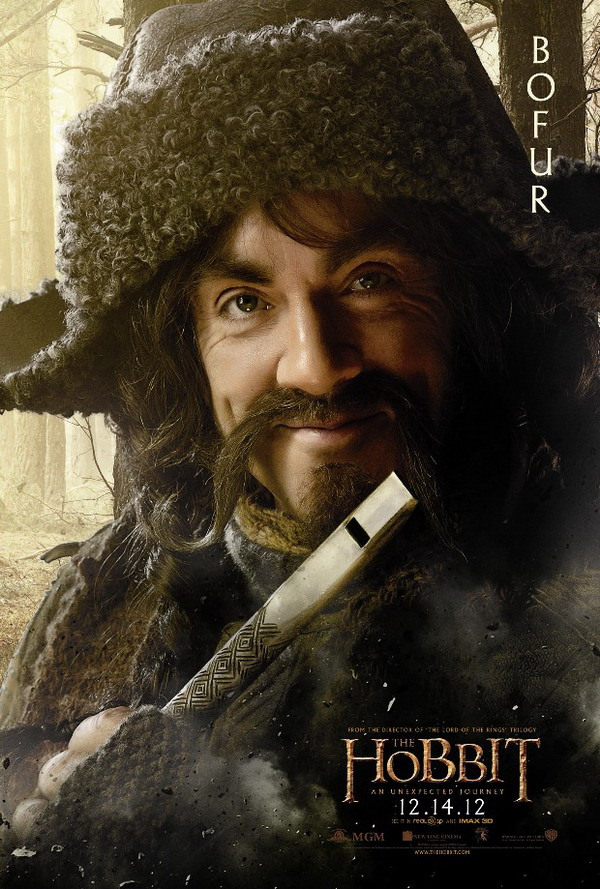
Bofur’s sheet is the campaign’s open smile. James Nesbitt wears the floppy fur hat, keeps a patterned flute near his chest, and stands in soft forest gold. Among sterner portraits it signals that the company includes musicians and jokers, not only claimants and killers. Tone management across a poster grid is a real problem in franchise art; warmth here is a deliberate palette choice, not leftover location light from a random still.
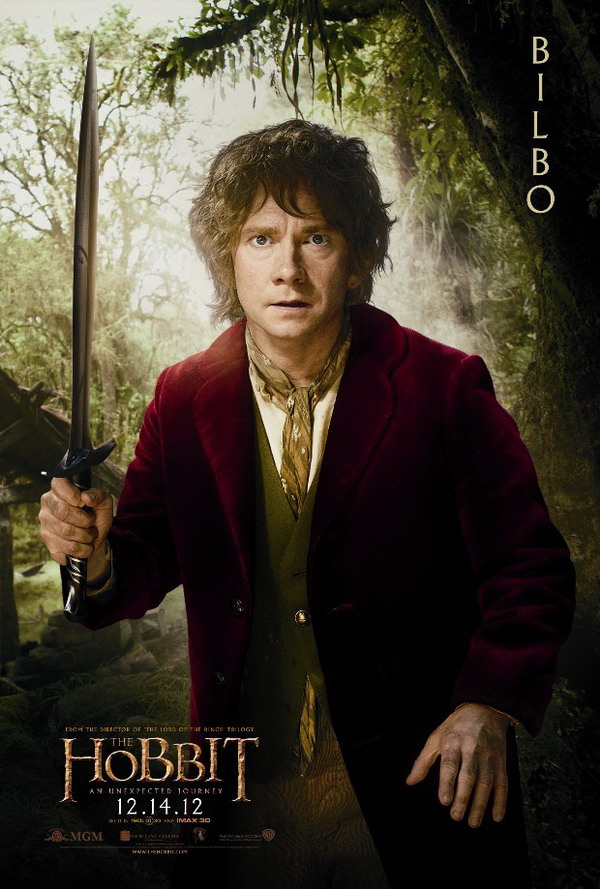
Bilbo recenters the title character. Martin Freeman appears in burgundy velvet and waistcoat, Sting held upright, mossy greens around him, eyes still half-startled. He is not Thorin’s mirror image. He looks like someone who might turn around and go home. That contrast is the story’s engine, and the poster set stages it without a synopsis paragraph. Franchise marketing often over-explains; this portrait trusts costume, prop, and expression to do the work.
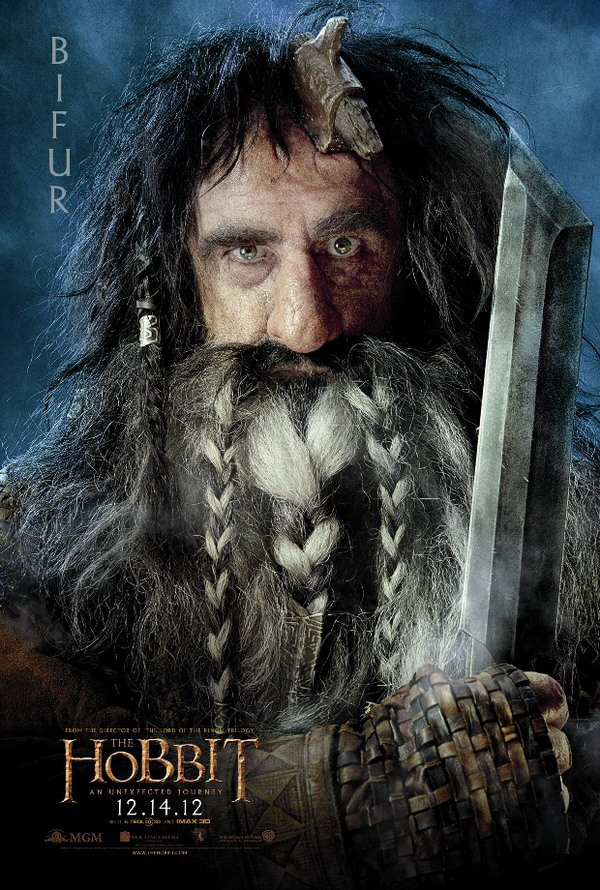
Bifur refuses polish on purpose: an axe fragment buried in the brow, a heavy cleaver, cold blue mist, braided beard like armor. Jackson’s Middle-earth advertising has long sold practical grit beside magic. This image is the grit, readable even when shrunk for a phone feed. It also reminds viewers that the dwarf company is not a single personality multiplied thirteen times—injury, mood, and weapon choice become identity markers.
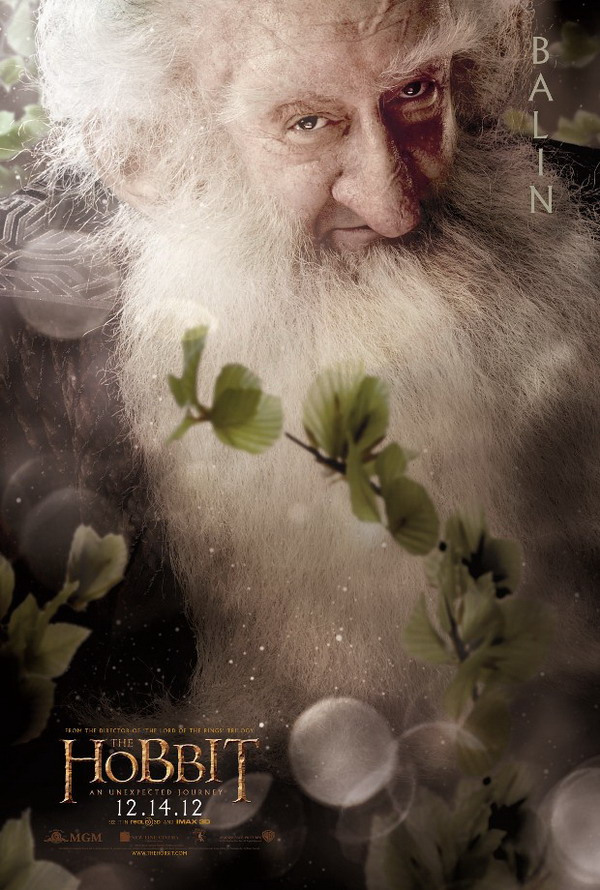
Balin often lands near the end of gallery scrolls: white beard, green leaves soft in the foreground, honeyed bokeh like floating embers. Ken Stott’s expression reads as counsel beside Thorin’s steel. Pair Balin with Thorin and you already understand a political and emotional range inside the company—authority and advice—before either character speaks a line on screen.
Magazine pages, web galleries, and franchise memory
Empire’s magazine package that week treated Hobbit art as collectible pages; the web release turned those pages into a shareable stack. The dual life matters. Print invites lingering on embroidery, metalwork, and facial hair craft. The browser invites comparison—open two tabs, weigh Bilbo against Bifur, Ori against Thorin, Bofur’s grin against Thorin’s weather. Character posters earn their keep when they survive both modes without losing detail or coherence.
Entity framing stays clear throughout: this is The Hobbit: An Unexpected Journey, Jackson’s first film of the later trilogy, marketed with the Rings director credit as bridge language. The posters do not pretend to be independent fantasy fashion editorials. They are franchise instruments that happen to be carefully art-directed—studio logos and date lines included—so fandom and formal marketing stay in the same frame.
For anyone studying cast campaigns, the checklist is short and reusable. Give every figure a prop grammar and a weather grammar. Lock the logo, date, and studio strip so variance feels intentional. Let costume detail carry names audiences are still learning. Avoid identical hero lighting across an ensemble. Leave room for one grin in a sea of glares. Prefer vertical names that do not crush the portrait.
Scroll the seventeen sheets once for faces, then again for systems—type placement, lower-third chrome, color temperature, prop silhouettes. The second pass is where the campaign stops being noise and starts being design: a company introduced as portraits before it ever walks into Bag End.

Comments
Continue reading
Funny Animal Signs That Warn People (While Animals Ignore Them)
From a seagull on a no-birds disc to classic zoo and park ironies—why animal warning signs get funny, and what the rules are still for.
How to Find Local Amenities on Vacation: Mechanics, Haircuts & More
Locate trustworthy local services and everyday spots while traveling or settling in—using publications, reviews, map apps, neighbor tips, and low-pressure exploration.
Kristen Stewart for V Magazine, Spring Preview 2013
V81’s Wild at Heart cover story—Kristen Stewart shot by Inez & Vinoodh, styled by Joe McKenna, in pale minimal spring glamour.