
The Artistry of the Skies: Aerial Light for Photographers and Filmmakers
How altitude rewrites light and perspective for stills, film, and reference-gathering artists—plus safety habits—without the product plugs of older sky-photography tips.
Artists who work with sky—photographers, painters, filmmakers—often treat the air as both subject and studio. From the ground, clouds are ceilings. From above, they become terrain: ridges, valleys, soft cliffs lit from angles you never see when you look up through a city haze. The “artistry of the skies” is not only romance. It is a practical change of vantage that rewrites light, scale, and narrative in a single climb.
This piece stays with that idea as the original source did: aerial seeing as creative opportunity, film and stills as cousins, safety as non-negotiable craft. What it drops are product plugs and battery-brand asides. What it keeps is the useful claim—sky work rewards people who plan access, respect weather, and treat altitude as a medium.
Why altitude changes the picture
Light behaves differently when you are above a cloud deck. Sun that filtered weakly through haze can strike cloud tops with hard specular brilliance. Shadows fall across vapor the way they fall across hills. A developing cumulonimbus, viewed from beside or above rather than from underneath, stops being a gray threat and becomes a sculptural mass with a bright crown and a dark body. Photographers chase that geometry because it is rare at street level and difficult to invent convincingly in a studio.
Perspective shifts, too. Roads shrink into diagrams. Coastlines become calligraphy. A field of turbines or a river bend reads as design rather than as destination. For painters and digital artists who source their own references, that firsthand aerial plate is more controllable than a borrowed stock still: you choose time of day, altitude, heading, and how much horizon to include. Creative control here is not a slogan. It is the difference between painting what someone else’s flight path happened to catch and painting what you went up to find.
Stills that treat clouds as landscape
Aerial still photography has a long documentary history—survey, mapping, military reconnaissance—but artists have always borrowed its tools for quieter ends. A single frame of cloud tops at golden hour can carry the emotional weight of a landscape painting without a single tree in sight. The “subject that doesn’t move” fantasy is only partly true: the aircraft moves, the light moves, the cloud evolves. What stays relatively stable, for a few seconds, is the mass itself. That is enough for a sharp still if shutter speed, vibration control, and shooting angle are managed.
Hiring a private pilot for a short photo flight, or building toward a pilot certificate if you fly often enough to justify the training, remains a real path for people who need repeatable access. The economic point still holds in spirit: buying a day of skilled flying can be cheaper than renting the wrong kind of production package for the wrong kind of shot—if you know what you need and brief the pilot clearly. Briefing matters more than bravado. Altitude, airspace, camera mount rules, open-door or window techniques, and time over target are craft decisions, not vibes.
Film language from above
Cinema taught mass audiences to expect the aerial establishing shot: the approach to a city, the sweep along a ridge, the reveal of a road vanishing into desert. Even now, a large share of viewers rarely fly. Aerial perspective remains unfamiliar enough to feel special when it is done with intention. Low-budget productions that can source a few clean aerial plates often look more ambitious than their ground-only peers—not because altitude is magic, but because it expands geography without building sets.
Drone technology changed the lower altitudes dramatically. Smooth tracking that once required a crane, a cable, or a costly helicopter pass can, in some locations and under some rules, be done with a well-flown small aircraft and a stabilized camera. That does not erase manned flight. Helicopters and light planes still own certain heights, distances, and weather windows. Drones excel at intimate approaches and controlled repeats; manned aircraft still own longer legs and heavier camera packages. Artists who treat both as tools—rather than as status symbols—tend to choose by shot design, not by fashion.
Liberation is a real psychological effect of being aloft, and it is easy to oversell. Changing scenery can loosen a stuck visual idea. So can different physical sensations: climb, descent, bank, and the constant negotiation with wind. Use that freshness. Do not confuse it with permission to skip planning. Inspiration that arrives at three thousand feet still has to land as a usable file, a legal flight, and a safe return.
Safety as part of the art
Sky work fails first when safety is treated as optional atmosphere. Instruments, weather briefings, fuel margins, and maintenance are not romance killers; they are what make the romance possible twice. Artists who fly regularly learn the same lesson musicians learn about instruments: neglect becomes audible—or, in aviation, irreversible—fast.
Practical habits beat brand loyalty. Know your aircraft’s systems well enough to notice when something is wrong. Keep batteries and electrical systems within the standards your aircraft and regulator require. Respect visibility minima. If you are photographing with a door open or a window removed, practice the camera choreography on the ground so you are not inventing it in turbulence. If you are directing a drone, know local airspace rules, people and property distances, and when not to fly. The sky is inspiring partly because it is indifferent. It will not protect your shot list for you.
Making sky art without a plane
Not every artist needs a cockpit. Ground-based sky work remains a full medium: long exposures of star fields, time-lapse of storm anvils, paintings built from careful observation of color temperature at dusk, photographs of light shafts through breaks in overcast. The aerial vantage is one powerful option among several. What the aerial option uniquely offers is the top-lit cloud and the map-like earth—views that rearrange hierarchy so that vapor becomes landform and cities become texture.
If you do get a chance to fly with a camera—friend’s lesson, scenic hop, planned photo flight—treat it like a short residency. Decide beforehand whether you want cloud architecture, coastline geometry, or moving shadow. Shoot more than you think you need, because vibration and reflection will discard frames. Then edit slowly on the ground, where your hands are steady and your judgment is not still buzzing from the climb.
The skies remain broad, unpredictable, and unusually generous to people who look carefully. Photographers, painters, directors, and writers have all drawn from that generosity. The craft is not buying altitude for its own sake. The craft is learning what altitude does to light—and returning with images that could not have been made from the sidewalk.

Comments
Continue reading
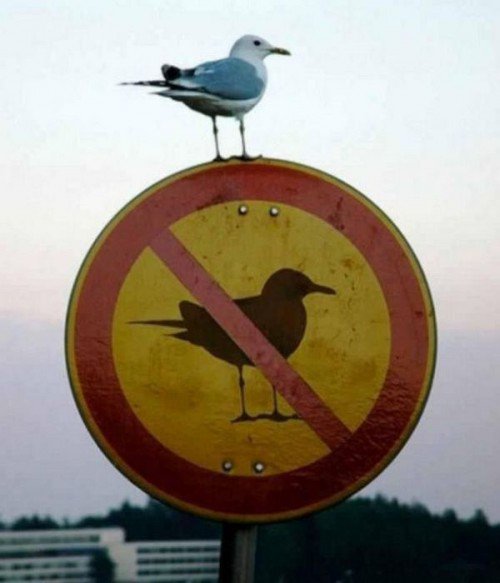
Funny Animal Signs That Warn People (While Animals Ignore Them)
From a seagull on a no-birds disc to classic zoo and park ironies—why animal warning signs get funny, and what the rules are still for.
How to Find Local Amenities on Vacation: Mechanics, Haircuts & More
Locate trustworthy local services and everyday spots while traveling or settling in—using publications, reviews, map apps, neighbor tips, and low-pressure exploration.
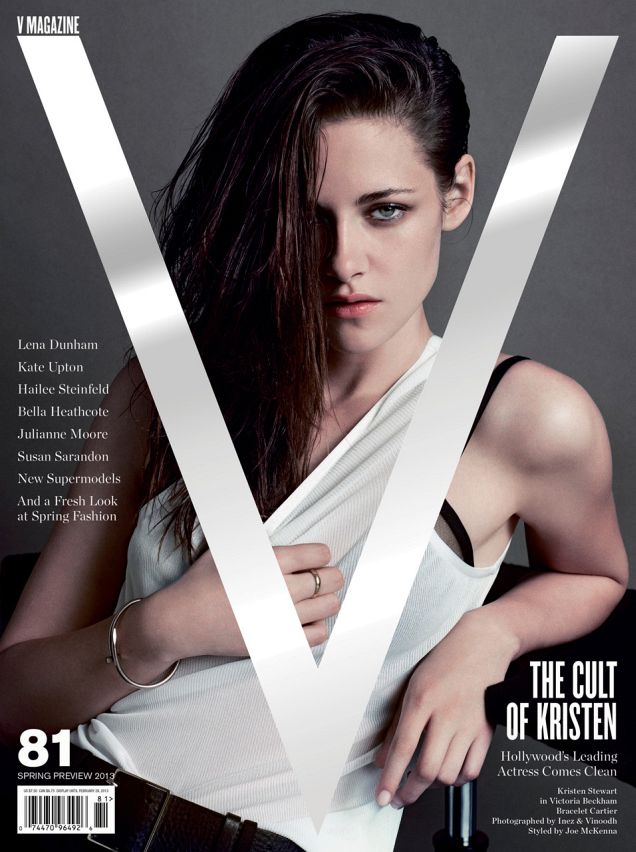
Kristen Stewart for V Magazine, Spring Preview 2013
V81’s Wild at Heart cover story—Kristen Stewart shot by Inez & Vinoodh, styled by Joe McKenna, in pale minimal spring glamour.