
Carly Paige Transforms Herself into Celebrities and Characters
Montreal’s self-taught Carly Paige—then at Sephora, aiming for film FX—built a weekly gallery of celebrity and character faces on her own skin, from Mystique to Heisenberg.
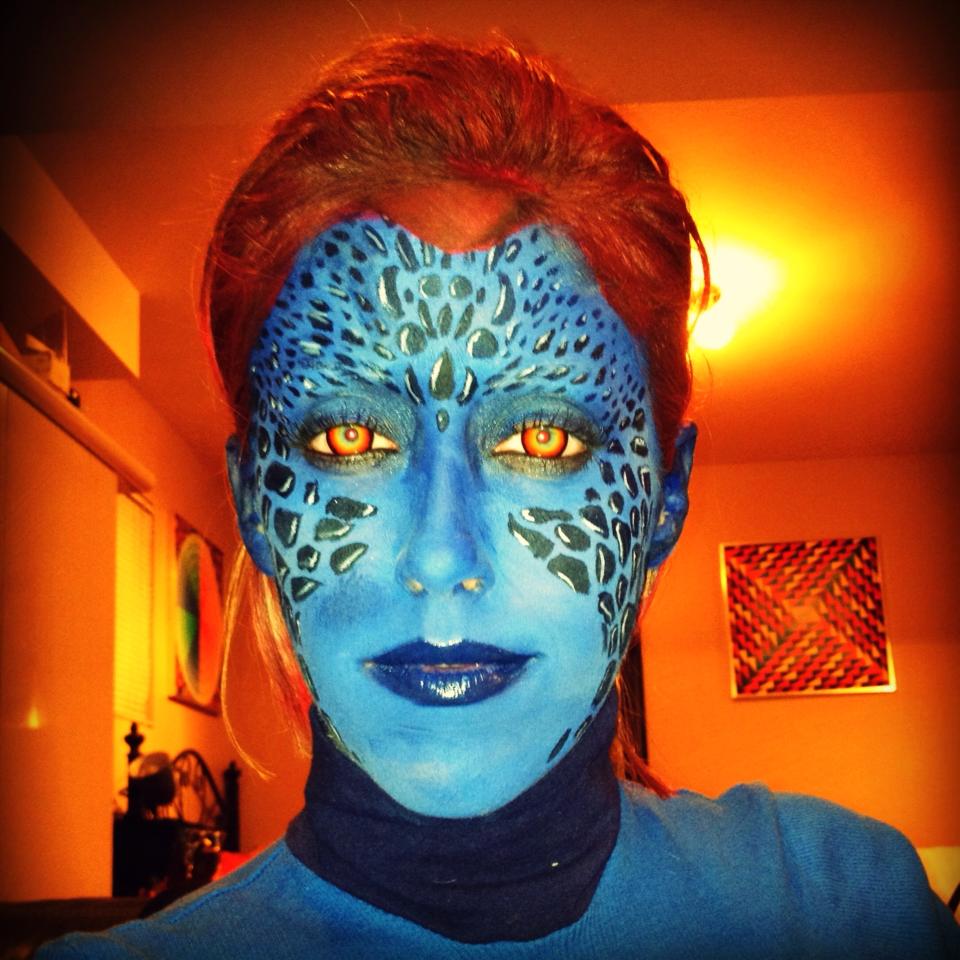
Some makeup artists chase trends. Carly Paige chased likeness. In the early 2010s the Montreal-based, self-taught artist posted weekly transformations in which she became celebrities, film characters, and pop-culture icons using cosmetics, wigs, contact lenses, and a willingness to pull ridiculous faces for the camera. The results were hard to dismiss as costume-party shortcuts. Faces reorganized. Jawlines shifted with contour. Familiar public images arrived on a private person who, between looks, was simply herself.
Around the time this gallery first circulated in 2013, Paige was in her mid-twenties, working retail makeup at Sephora while building a portfolio aimed at film and special-effects work. She had only been pushing special-effects-style self-portraits seriously since late 2012. The speed of improvement—and the range of subjects—is part of what made the series travel across design and pop-culture sites.
Self-taught, public critique, professional aim
Paige has described posting the pictures to invite criticism because she wanted a career in movie makeup and needed outside eyes. The audience arrived faster than planned. What began as a feedback loop became a recognizable body of work: one artist, one face, many temporary identities. Retail shifts supplied product knowledge and material experiments; nights and days off supplied the time to paint, photograph, and wipe everything away.
That dual life matters to how you read the images. These are not always studio campaigns with a full prosthetic department. Many rely on paint, powder, hair pieces, and optical tricks—makeup as sculpture and caricature rather than only as beautification. The craft sits in the middle ground between beauty counter precision and Halloween ambition, executed with enough anatomical attention that viewers do a double take.
Celebrity and character as two different problems
Turning into a living celebrity—Angelina Jolie beside Brad Pitt, Beyoncé, Ellen DeGeneres, Jay Leno, Pamela Anderson, Charlize Theron, Michael Jackson—demands recognition of bone structure, signature grooming, and public persona. Viewers already carry a mental template. The makeup must hit enough landmarks to trigger that template without needing a wax-museum exactness that paint alone cannot deliver.
Fictional and hyper-stylized characters ask for different courage. Captain Jack Sparrow needs grit, smudged romance, and pirate asymmetry. The Joker needs comic menace that still reads as a face. Mystique needs blue skin logic and mutant glamour. Wolverine needs animal aggression in brows and healing-scar attitude. Walter White as Heisenberg needs the bald severity and glasses geometry of Breaking Bad’s antihero. The puppet from Saw needs doll horror that makeup can suggest even when foam and resin would help. Mona Lisa asks for painted stillness—art-historical calm on living skin.
Paige’s series treats both categories as weekly problems to solve. The variety is the curriculum: soft glamour one week, creature design the next, masculine celebrity contour after that. Learning across genres is how a self-taught artist builds range that hiring departments notice.
Angelina Jolie and Brad Pitt
Beyonce
Captain Jack Sparrow
Ellen Degeneres
Jay Leno
Joker
Mystique
Mystique is a useful showcase because beauty and creature work collide. Blue body color, scaled or scaled-suggesting texture, and fierce eye styling have to coexist with a still-readable human gaze. In Paige’s take, the camera holds a close, square confrontation: you are meant to recognize the X-Men reference and still notice brushwork, edges, and how far paint can push skin toward comic-book logic without collapsing into a flat mask.
Pamela Anderson
The puppet from Saw
Walter White – Heisenberg Breaking Bad
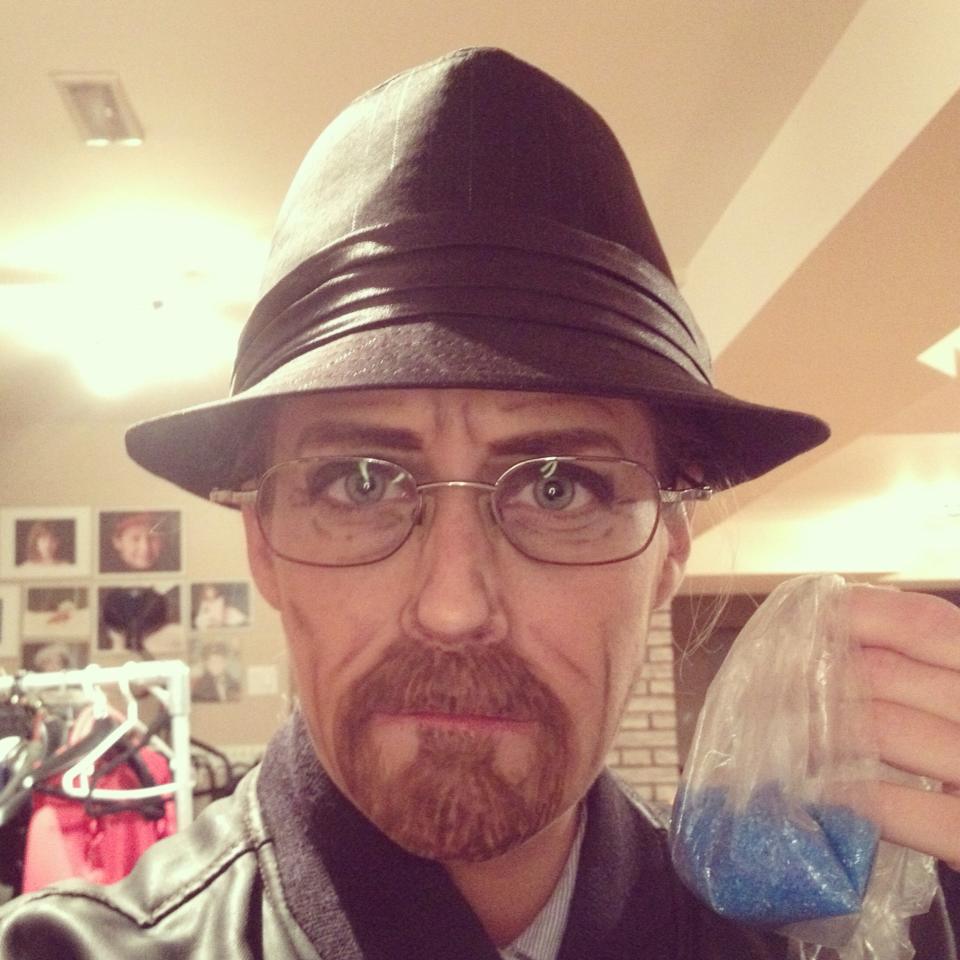
Heisenberg is almost the opposite problem from Mystique: desaturation, severity, and a masculine silhouette built from brow, cheek hollows, scalp treatment, and the prop language of glasses and goatee. Bryan Cranston’s character is so photographed that small errors would shout. Paige’s version aims for instant genre recognition—the chemistry-teacher-turned-kingpin icon—while remaining obviously a makeup transformation rather than a CGI double. That honesty is part of the appeal. You are invited to see both the character and the craft.
Wolverine
Charlize Theron
Michael Jackson
Mona Lisa
and this is Carly Paige with no makeup
Performance is part of the medium
Wigs and lenses help, but expression finishes the illusion. A dead-eyed celebrity match fails; a slightly exaggerated mouth or tilted chin can sell the joke and the tribute at once. Paige’s work often leans into that theatricality. The photographs are not clinical before-and-after medical charts. They are performance stills from a one-person repertory company.
Including a no-makeup reference at the end of the run is not modesty theater. It resets the viewer’s calibration. After a dozen identities, the plain face reminds you that every look was temporary labor on the same canvas. The series becomes less about fame cosplay and more about range: how far one artist can travel without leaving her own bones.
From Sephora counter to screen ambition
Period interviews framed Paige’s goal clearly: special-effects makeup for film. The weekly public gallery functioned as both practice and proof. In an industry that still asks for portfolios, a self-assigned curriculum of Joker-to-Jolie problems is a serious way to demonstrate adaptability. Later coverage noted her move beyond the cosmetics-store day job as opportunities grew; the early internet archive remains a record of how that ambition looked in progress—imperfect, prolific, and oddly intimate because the model is always the maker.
Credit matters in a feed culture quick to strip names from images. These transformations belong to Carly Paige’s hand and face. Looking at Mystique or Heisenberg here is looking at her problem-solving under a deadline she set for herself: invent someone else by Tuesday, photograph it, wash it off, invent again.
What the gallery still teaches
Watch how contour and color temperature invent gender presentation, age, and species cues. Notice how few looks rely on beauty’s usual flattery; many deliberately uglify, harden, or alienate. That willingness is closer to character makeup than to influencer glow. Students of the craft can study the silhouette changes across the list—Sparrow’s chaos versus Leno’s chin architecture versus Mona Lisa’s composure—and ask which landmarks carry recognition hardest.
You do not need every celebrity title to feel the through-line. Two surviving frames and a roster of attempts already argue the thesis: identity, on camera, is partly costume and partly courage. Paige practiced both in public, one famous face at a time, until the person underneath became famous for disappearing on purpose.

Comments
Continue reading
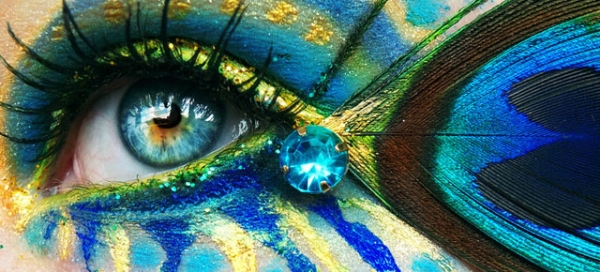
Makeup Art by Svenja Schmitt
Berlin artist Svenja Schmitt (PixieCold) builds macro eye worlds from pigment, glitter, feathers, and props—temporary theaters photographed before they wash away.
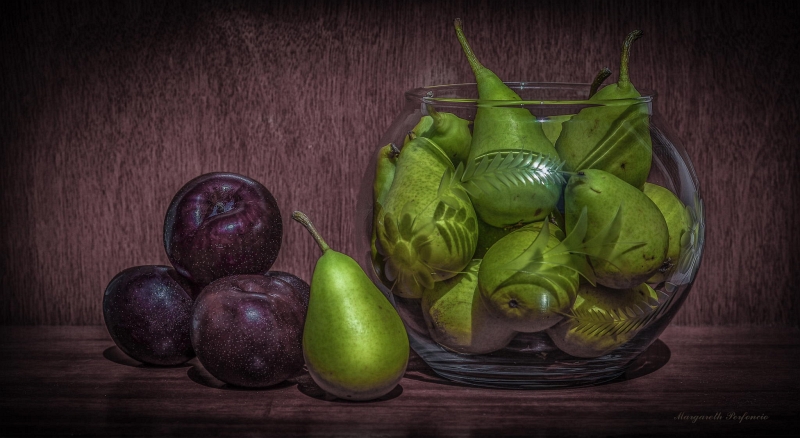
Still-Life Photography by Margareth Perfoncio
São Paulo photographer Margareth Perfoncio’s still lifes of food and flowers—Old Master light, dark wood, and tables that feel inevitable.
Meaningful Love Quotes for Inspiration (and Ink)
Meaningful love quotes that still feel true — short lines for tattoos, gifts, and everyday reminders, with placement and wording tips.