
Alicia Savage’s Surreal Self-Portraits of Travel
Boston photographer Alicia Savage turns road trips into Destinations self-portraits—literal miles and metaphorical journeys layered through curiosity and post-production.
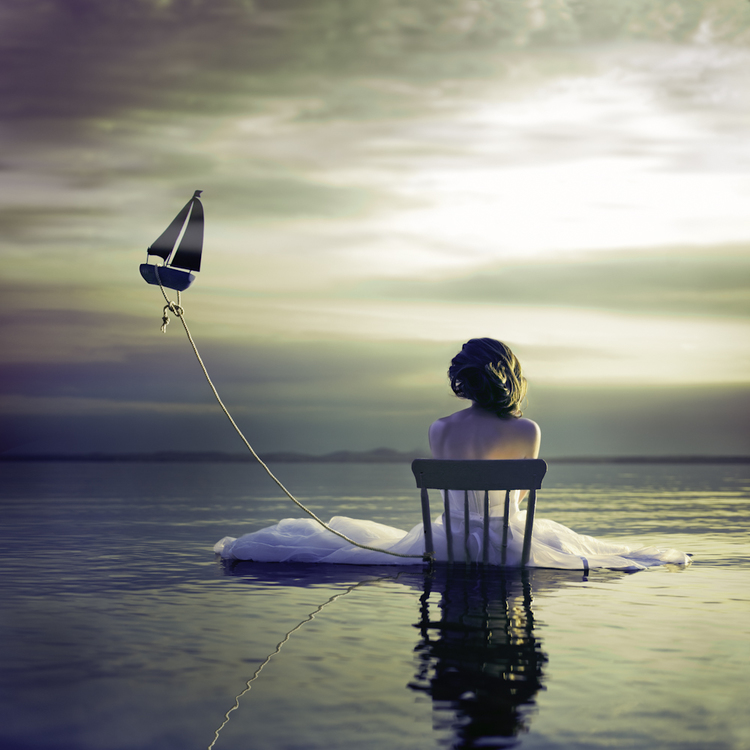
Alicia Savage photographs travel as if the road were a mirror that only works when she stands in it. Based in Boston, Massachusetts, she uses self-portraiture to document a life in motion—literal trips and the quieter migrations of mood, memory, and curiosity. The fine-art frames that gathered attention in the early 2010s feel less like vacation proof and more like chapters from a private atlas: places entered, identities tried on, landscapes revised until they match an interior weather.
A Boston practice built on self as subject
Savage’s own description of the work is unusually clear about purpose. Around the period this feature first appeared, she framed her photography as documentation of her life and mind as a twenty-nine-year-old woman exploring the world—fed by surroundings and recent travels, not by a studio brief. Self-portraiture was not a branding gimmick. It was a method for staying present inside experience while also stepping outside it long enough to see the pattern.
Photography has opened my mind and heart to understand myself and the world beyond what is assumed; to always be inspired by my curiosity and imagination of what is and could be.
That sentence does two jobs at once. It rejects “what is assumed”—the default tourist image, the default woman’s portrait, the default meaning of a place—and it keeps imagination on the payroll. Savage’s surreal edge comes from that permission. The camera records a body in a location, then curiosity asks what else the location might become if memory and longing were allowed to edit the air.
Destinations: road trip as metaphor engine
Her ongoing Destinations work treats travel as both itinerary and allegory. A literal road trip supplies uncharted backroads, ancestral homesteads, borrowed light, and the practical problem of making a picture before the day ends. The metaphorical trip asks who she is becoming between mile markers. Vintage dresses, symbolic objects, and carefully chosen postures turn each stop into a scene from a life examined rather than merely consumed.
Face often stays hidden or turned. Anonymity is not erasure; it is hospitality. When features are withheld, viewers can project their own journeys onto the silhouette without colliding with a too-specific biography. The figure becomes a stand-in for anyone who has ever stood in a new place hoping the landscape would explain them back to themselves. Surrealism here is gentle—an unfamiliarity layered onto real ground—rather than a carnival of impossible creatures.
Two landscapes: the place and the file
Savage has described post-production as a second place where new landscapes are layered and exposed. That matters for understanding the “surreal” tag on these self-portraits of travel. The first landscape is physical: weather, architecture, roadside quiet, the color of a particular afternoon. The second landscape is interpretive: color grading, compositing, selective emphasis, the small fictional pressures that make a documentary moment feel like a remembered dream.
Because she also builds props, sets, and accessories when needed, the practice sits between constructed photography and travel diary. Some images are planned; others arrive by impulse when a location suddenly rhymes with an inner question. The finished print does not always advertise which mode produced it. What stays consistent is the echo she names herself: internal and external, past and present, known and unknown.
Family history as a second map
Travel in Savage’s work is not only outbound tourism. It also moves backward through family history—homesteads, inherited textures, the strange intimacy of standing where relatives once stood. Self-portraiture lets her occupy those sites as both descendant and stranger. The body becomes a temporary bridge between archive and now. That bridge can look surreal because time itself is surreal when it collapses into one frame: a contemporary woman wearing the mood of an older story inside a landscape that has outlived both.
Influences she has cited in artist materials—figures such as Tommy Ingberg’s minimal surreal reflections, or Cindy Sherman’s identity constructions—help locate the work without trapping it. Savage’s contribution is the travel spine. Identity is not only performed in a studio; it is tested against miles, weather, and the awkwardness of being a visitor who is also trying to belong for the length of a shutter release.
How to read a Savage travel portrait
Begin with geography even when the geography has been gently rewritten. Ask what kind of place this is: shoreline, field, interior, threshold. Then ask what the body is doing that a casual tourist would not do. The gap between tourism and performance is where her meaning lives. Notice clothing as time machine—fabric that suggests another decade or another role. Notice whether the figure approaches the land, turns from it, or seems suspended between departure and arrival.
Give post-production credit without reducing the picture to “Photoshop magic.” The digital layer is a thinking tool, the way a novelist revises a draft. If the sky feels heavier than meteorology, that weight may be emotional accuracy. If edges soften into dream, the soft edge may be how memory actually stores a trip after the suitcase is unpacked.
Why self-portraits of travel still matter
Most travel photography argues that you were there. Savage’s images argue that being there changed the person who returned—or at least asked a question the person could not answer yet. In a culture flooded with location tags and proof-of-presence smiling, a turned face in a charged landscape reads as almost radical. It values interior consequence over social evidence.
There is also a craft lesson for anyone who photographs alone on the road. Self-portrait travel work requires packing patience: tripod or timer, willingness to look odd in public, acceptance that some locations will refuse your idea. It rewards people who treat curiosity as equipment. Savage’s quote about imagination of “what is and could be” is not soft inspiration-poster language in context; it is a working brief for every stop.
A short field checklist
- Choose one place that already feels half-familiar—ancestor ground, a roadside return, a city corner you keep circling—and photograph yourself as a guest rather than a conqueror.
- Hide enough of the face that a stranger could borrow the posture.
- Make one frame that stays faithful to the found light, then one frame that lets post-production admit what the day felt like afterward.
- Write three words before you leave the site: what you hoped to find, what you actually found, what still will not name itself.
Look again at the image above with those prompts in mind. Alicia Savage’s surreal self-portraits of travel do not ask you to decode a secret symbol set. They ask whether your own journeys have left a similar residue—half map, half mood—and whether you have been willing to stand inside that residue long enough for a photograph to tell the truth about it.

Comments
Continue reading
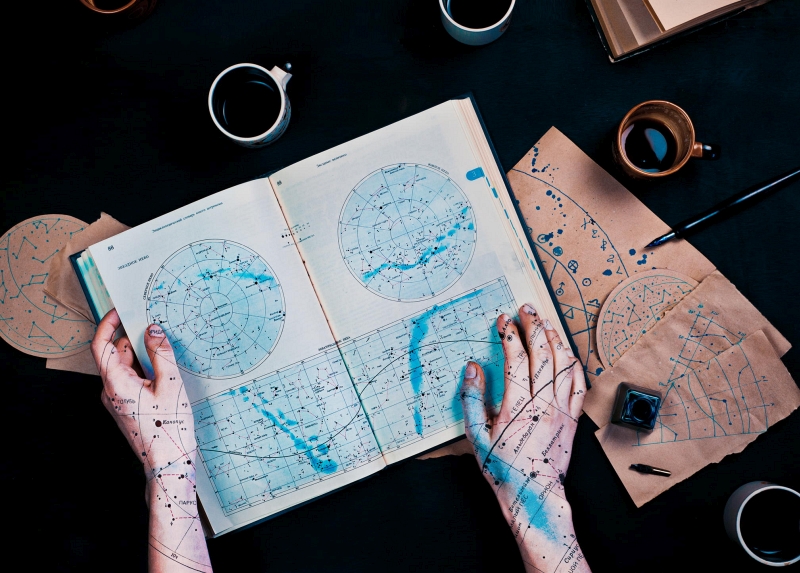
Entrancing Surreal Still Life by Dina Belenko
Khabarovsk photographer Dina Belenko turns coffee, books, and sugar into dreamlike still-life stories—portraits of objects that feel as alive as people.
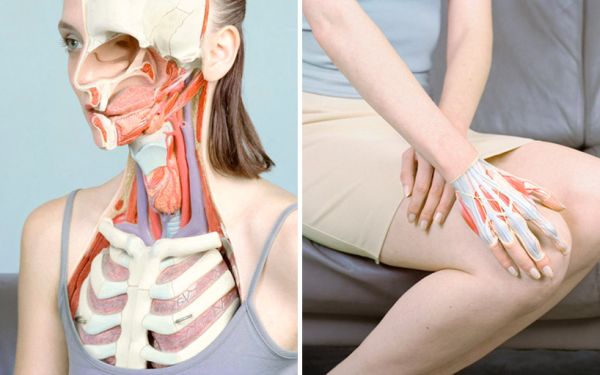
Koen Hauser's Modische Atlas der Anatomie: Fashion Portraits as Elegant Dissection
Dutch artist Koen Hauser's 2000 series Modische Atlas der Anatomie merges fashion photography with anatomical curiosity through early digital manipulation—still unsettling, still elegant.
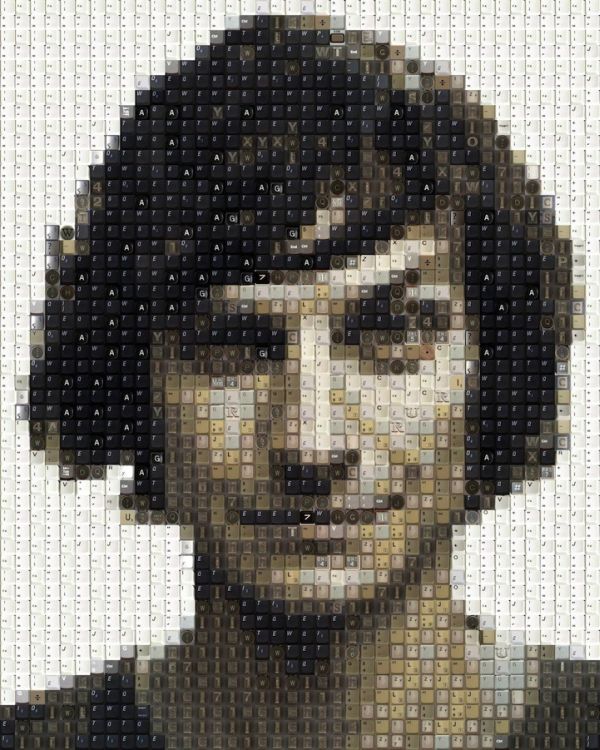
Guy Whitby’s Celebrity Portraits Made of Computer Keys
Australian artist Guy Whitby (WorkByKnight) builds meticulous celebrity mosaics from keyboard keys, calculator pads, and phone buttons—analogue-to-digital faces in tile form.