
Origami: ESMA’s Paper-World Initiation for a Reluctant Apprentice
Haiko ignores his grandfather’s folding art until a strange paper world makes every crease count—an ESMA 2012 dialogue-free fable of craft and inheritance.
Paper remembers every crease. That is both the charm and the threat of origami: once a fold exists, the sheet carries it forward, even when the final silhouette looks calm. The 2012 French graduation short Origami, produced at ESMA (École Supérieure des Métiers Artistiques), builds an initiatory adventure on that material truth. Joanne Smithies, Éric De Melo Bueno, Michael Moreno, Hugo Bailly Desmarchelier, and Camille Turon co-directed the dialogue-free 3D film—about eight minutes nineteen seconds in Unifrance’s listing—following a boy named Haiko who would rather not inherit his grandfather’s folding art until a strange paper world makes literacy in creases feel like survival.
Unifrance’s synopsis stays usefully small: Haiko does not care about the origami his grandfather wants to pass on; the day he becomes trapped in a strange world of paper, the initiatory journey begins. Themes tagged to the film—childhood, family, work, travel—map onto that arc without stretch. Childhood supplies stubbornness. Family supplies the skill waiting on the table. Work is folding itself. Travel begins when paper stops being a hobby and becomes a landscape. Music is credited to Till Sujet; sound recording credits associated with the release include José Vicente and Yoann Poncet. The school year on circulating copies is ESMA 2012.
Inheritance as a dramatic machine
Teaching stories fail when the elder is only a scold and the child is only a rebel posing for independence. Origami uses a cleaner contract. The grandfather’s art is specific and tactile—you can show it with hands—so the film can treat skill as something physical rather than abstract “wisdom.” Haiko’s indifference is equally concrete. He is not delivering an anti-tradition speech; he is simply uninterested in a patient craft that does not yet feel like his life. The plot’s pressure arrives when interest stops being optional. Inside a paper realm, folding becomes navigation. He must practice what he dismissed because the environment demands competence, not because a narrator moralizes.
That structure is older than animation schools: reluctant apprentice, forced education, return with understanding. What the ESMA team adds is a material pun. The world behaves like sheets, edges, and transforms. Even without cataloguing every marvel for readers who have not screened the film, the published logline keeps the metaphor honest. The portal is not a random fantasy door decorated with origami stickers afterward. The craft is the portal logic.
Graduation film as proof of finish
ESMA’s 3D Animation & FX end-of-studies projects are designed as travel documents: readable characters, coherent worlds, festival-ready runtime, premises that survive without spoken explanation. Origami fits the brief. Unifrance’s technical sheet lists French production, digital creation, stereo, 16:9, color, no dialogue, and a short-film classification under animated film with 3D and fable or legend leanings. Those bureaucratic lines describe an artistic bet. If acting, design, and staging are clear, speech is optional.
Five co-directors can sound like committee fog. In a graduation pod, the shared credit usually means split labor under one locked concept—modeling, animation, lighting, sets, story. The risk is a stitched tone. The reward is density: more finished corners than a solo thesis often affords. Circulating uploads and school-adjacent pages that simply call the piece a wonderful student short are thin as criticism, yet they track with the project’s ambition. Viewers remember a complete fantasy system, not a lighting test wearing a plot. A Facebook page for the film circulated during its online life, another small sign the team treated the short as a public object rather than a private reel.
Paper ethics under fantasy pressure
Real origami punishes haste. A wrong fold compounds; impatience becomes visible architecture. Animation about folding can dramatize that ethic without a classroom lecture. Show a character who wants shortcuts, then place him where shortcuts collapse the path. Initiation implies trials—obstacles that teach through doing. Because the film is a fable, paper can heighten into architecture, terrain, or transformation while still pointing back to the grandfather’s table. Responsible discussion keeps the emotional hinge clear: Haiko and his grandfather first, paper world as pressure system second. Specific creature inventories or ending mechanics belong to the screening, not to invention. What remains verifiable is the order of operations the synopsis encodes—refusal, immersion, practice.
French student films have long staged global visual cultures; the careful way to describe Origami is to keep credited story ahead of mood-board assumptions. The short sells transformation: indifference becomes engagement because the environment requires a hand skill. That is also a description of animation education itself. Teachers can demonstrate a rig forever; students only own the rig when a shot fails without it. Folding, here, is pedagogy made adventurous.
What makers steal even if they never fold paper
Designers can steal material unity: choose one substance and let locations obey its physics and poetry. Animators can steal failure language—mis-folding as dramatic mistake rather than random slapstick. Directors can steal the reluctance contract: the hero should need the skill for a story reason. Producers of student work can steal Unifrance-style logline discipline—two sentences, one name, one trap, one journey. Composers and sound teams, looking at Sujet, Vicente, and Poncet’s credited roles, can remember that a mute picture still needs a musical and acoustic argument for wonder, threat, and learning.
There is an industrial lesson too. Graduation films sometimes chase spectacle until story evaporates, or chase message until spectacle dies. Origami aims at the overlap. The grandfather’s art looks wondrous when the world becomes paper; it looked boring when it was only homework. Boredom and wonder can be the same craft at different temperatures. The short understands that shift and builds its eight minutes around it.
Hold the crease
Rewatch with patience as your meter. Where does the film slow enough for a fold to matter? Where does it accelerate because Haiko finally treats speed as something earned? Paper fantasies often hide production love in surfaces—edge light, fiber, color shifts as initiation deepens—even when you cannot name every technique pass. Treat the title as a rule set, not a mood board.
Haiko begins where apprentices begin: at the edge of someone else’s mastery, unimpressed. The paper world does not request admiration. It requests competence. Between those two requests the short performs its ceremony of initiation—sharp where a crease must be sharp, slow where only slow work opens the next path, and finally legible as a gift that had been waiting on the table before any portal opened. Folding, in this telling, is how attention becomes form. The film simply makes that sentence travel.

Comments
Continue reading
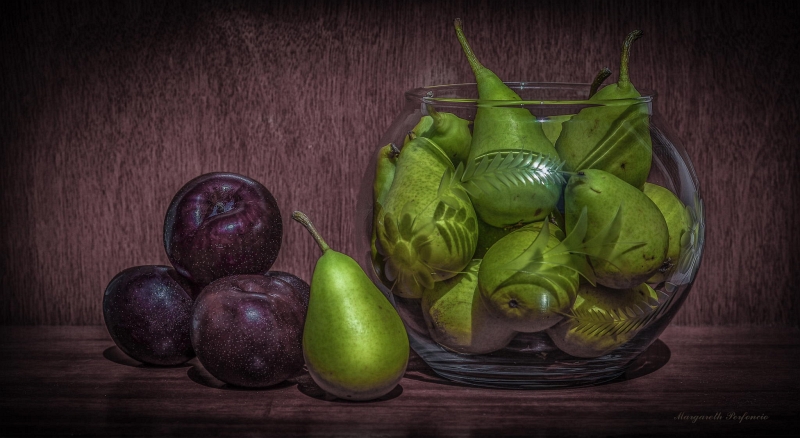
Still-Life Photography by Margareth Perfoncio
São Paulo photographer Margareth Perfoncio’s still lifes of food and flowers—Old Master light, dark wood, and tables that feel inevitable.

Meaningful Love Quotes for Inspiration (and Ink)
Meaningful love quotes that still feel true — short lines for tattoos, gifts, and everyday reminders, with placement and wording tips.

Christina Hess’s Animals From History: Costumed Pets as Playful Portraits
Illustrator Christina Hess reimagines historical icons as ornate animal portraits—Elvis Petme and friends—mixing puns, costume detail, and soft history lessons.