
Francis: Dave Eggers’s Radio Horror, Animated by Richard Hickey
From This American Life to CGI: Eggers’s Quetico legend becomes a Not to Scale short that keeps the knocks, the notebook, and the unanswered dark.
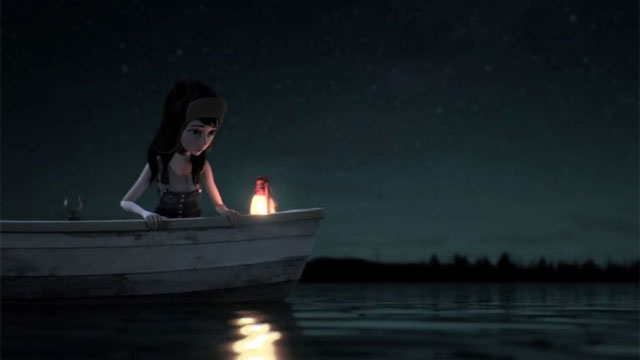
Some animated shorts invent a world from concept art. Francis begins as a voice you were never supposed to see. Novelist Dave Eggers wrote the piece for a This American Life episode on adventure after host Ira Glass asked a group of writers—Eggers among them, alongside names such as Neil Gaiman in the same broadcast hour—for new adventure stories. Listeners met Francis Brandywine first as radio: intimate, paced, unfinished in the way campfire warnings are unfinished. Director Richard Hickey, working with producer Kevin Batten under the Not to Scale banner, later turned that narration into a CGI short with a team of roughly forty people. Festival screenings included Cannes and Raindance. Runtime listings hover around seven to eight minutes depending on the catalogue. The pictures did not replace Eggers’s words. They built a climate around them.
That cross-media path is the short’s real subject as much as the lake is. Radio horror lives in suggestion. Feature-style CG usually lives in evidence. Hickey has to honor both contracts at once: enough image to hold a festival screen, enough shadow to leave the worst facts unsettled. Contemporary coverage from Short of the Week praised exactly that balance—production values high enough for theatrical polish, storytelling still governed by an urban-myth posture rather than a monster-manual reveal.
A park that flips from postcard to warning
Eggers’s narrator grows up in suburban Chicago and summers in Quetico Provincial Park along the Minnesota–Ontario border. The remembered park is canoe routes, portages, wildlife, star-soaked nights, water described as clean enough to drink straight from the lakes. Then the narrator refuses the idea of returning—not after what happened to a seventeen-year-old named Francis Brandywine. Beauty does not leave the frame. Meaning changes. Isolation, sold to tourists as peace, becomes the condition that makes a single night on deep water intolerable.
Published synopses of the animated film stay faithful to that frame. Francis is restless, dark-haired, drawn toward leaving the well-trod path. On a family camping trip she waits until the others sleep, takes a rowboat onto one of the deeper lakes, and looks for solitude: stars, a journal, quiet. Accounts of the radio story and the short describe knocking from below the boat, pauses long enough for self-doubt, then knocks returning louder until calm collapses into panic and a chain of bad decisions. By morning the boat can be found. Francis cannot. A notebook remains with a cryptic scrawl. The adaptation does not convert that residue into a tidy autopsy or a named creature with a lore bible.
How the camera serves a voice it cannot out-talk
Analysts of the short have pointed out Hickey’s decision to keep the omniscient voice-over and let visuals potentiate rather than replace it: facial and body language, wide shots that shrink a boat inside a lake, camera moves that unsettle, off-screen space reserved for whatever answers from the water, editing rhythm that tightens as control slips. Those tools matter because the prose is already doing primary storytelling. When narration is this strong, the worst directorial mistake is illustrating every clause. The better move is supplying temperature—cold air, wet wood, a sky too clear to comfort anyone alone—while protecting ambiguity.
Credits associated with the film include editors Tim Hall and Mike Hackett, sound by James Lyme, and music by Scuta Salamanca. In a knock-driven narrative, sound and silence are architecture. How long you wait, whether score telegraphs or withholds, how underwater volume is implied without a tour of the depths—these choices decide if the short feels like a motion-comic or like a night you cannot leave. Hickey’s character-animation background shows in the small human tells: a teenager talking herself back to calm, then losing the argument with the lake.
Why CG for a story that could have been live action
Folklore and urban legend on screen often default to live-action found footage or practical night shoots. Short of the Week noted how unusual it felt, in 2014, to see that mode carried by computer-generated imagery instead of the charming-dark stop-motion lineages audiences already associated with animated dread. CG here is not a flex for its own sake. It solves production problems: deep-lake night work, controlled lighting, a water surface that can behave like a character without endangering a cast. Dark production design and low-key lighting become the short’s weather system. The goal is unease, not photoreal tourism.
A crew of about forty for a single-digit runtime also signals industrial seriousness. Literary properties sometimes get inflated into features that dilute their single-night intensity. Francis keeps the container matched to the material: one park, one boat, one bad hour, one leftover notebook. That discipline is part of why the adaptation works. Adventure, in Glass’s commission, was a theme prompt. Eggers answered with adventure curdling into warning. Hickey films the curdling.
Horror that refuses the mascot
Many animated horrors over-explain. They show the thing, name the thing, defeat the thing. Francis keeps the campfire contract. You learn enough to fear Quetico’s deepest rooms and not enough to sleep. Reviewers who respond to the film often praise exactly that vagueness: we know, and we do not really know. The narrator’s distance from Francis—sharing a landscape more than a personal bond—reinforces the secondhand chill. You inherit a trail story the way hikers do. You are not solving a missing-person case. You are understanding why a place got crossed off a list.
For writers, the lesson is that strong audio prose can survive translation if ambiguity is protected. For animators, the lesson is that voiceover is not a crutch when images argue with comfort instead of captioning sentences. For producers, the lesson is that a radio hour can wait for the right visual team without losing voltage if the words were built to last.
What remains on the page
When the short ends, the documentary facts of the legend stay thin on purpose: boat found, girl gone, writing left behind. That incompleteness is not a missing third act; it is the engine. Watch once for atmosphere. Watch again for the negotiation between voice and frame—when the camera agrees with the prose, when it holds back, when silence becomes the loudest cut. The notebook is still the last object on the table. Whatever is scrawled there, the film treats it as evidence that refuses to behave like evidence. Eggers wrote the first version for ears. Hickey built a second version for eyes that still lean forward like listeners, waiting for the next knock, unsure whether the water will answer again.

Comments
Continue reading

Still-Life Photography by Margareth Perfoncio
São Paulo photographer Margareth Perfoncio’s still lifes of food and flowers—Old Master light, dark wood, and tables that feel inevitable.
Meaningful Love Quotes for Inspiration (and Ink)
Meaningful love quotes that still feel true — short lines for tattoos, gifts, and everyday reminders, with placement and wording tips.
Christina Hess’s Animals From History: Costumed Pets as Playful Portraits
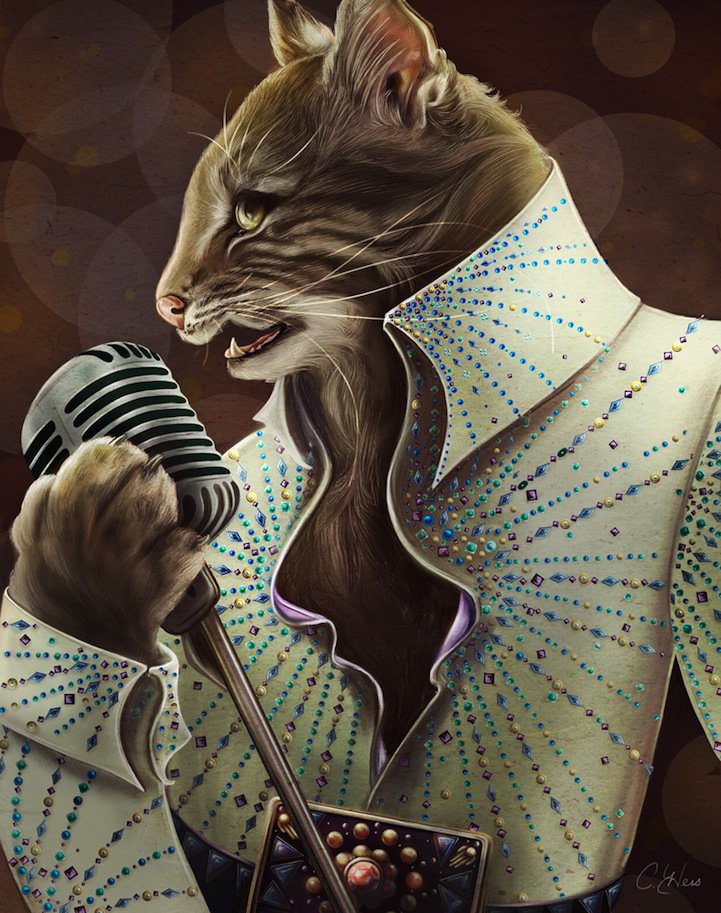
Illustrator Christina Hess reimagines historical icons as ornate animal portraits—Elvis Petme and friends—mixing puns, costume detail, and soft history lessons.