
Caminandes: Blender’s Patagonian Llama Comedy Series
Pablo Vazquez’s open-movie llama shorts from the Blender Foundation—Llama Drama, Gran Dillama, and Llamigos—mix Chuck Jones timing with FLOSS filmmaking.
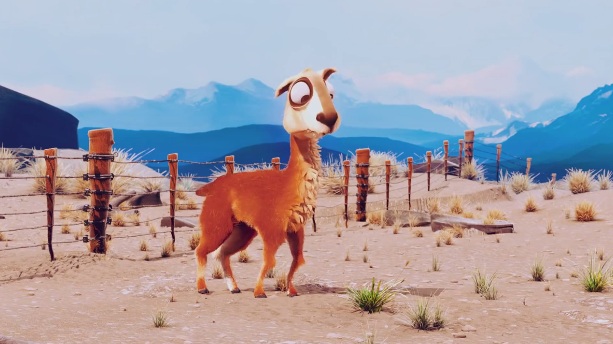
Some animated shorts feel like polished studio calling cards. Caminandes feels more like a travel postcard that learned slapstick: a stubborn Patagonian llama, a few hard obstacles, and comedy timing borrowed from classic cartoon physics. Created by Argentine animator Pablo Vazquez and produced with the Blender Foundation, the series became one of the most watched open-movie projects of the 2010s—not because it chased prestige, but because it was funny, free to watch, and built in tools anyone could download.
The title itself is a compact map. “Caminandes” blends Spanish camino/caminar (path / to walk) with the Andes, the long mountain chain often called the spine of South America. Vazquez comes from Patagonia, and the films keep returning to that southern landscape: dry plains, fences, winter light, and the kind of empty roads that make a small creature look heroic simply for crossing them.
Koro, the llama who will not quit
Across three shorts, the hero is Koro—often described as a young llama / guanaco figure—whose personality is mostly persistence. He is not a trickster genius. He is closer to a Wile E. Coyote who somehow kept his dignity: he sees the goal, tries the obvious solution, fails in a readable way, and tries again. The supporting cast is equally economical. An armadillo appears as a calm contrast to Koro’s panic. Later, a Magellanic penguin named Oti turns a berry hunt into a rivalry. The series never needs a crowded ensemble. One clear want plus one clear obstacle is enough.
The films openly tip their hat to Chuck Jones and mid-century theatrical cartoon language. That influence shows up less as pastiche costumes and more as staging: silhouettes that read in a second, takes held long enough for dread to bloom, and payoffs that feel mechanical in the best sense—cause, effect, boom. If you grew up on Tex Avery or Looney Tunes timing, Caminandes will feel familiar without copying any one gag beat for beat.
Three shorts, three problems
Caminandes 1: Llama Drama (2013). The first episode was produced quickly at the Blender Institute by Pablo Vazquez, Beorn Leonard, and Francesco Siddi, with music by Jan Morgenstern. Koro struggles to cross what looks like a desolate road—an everyday barrier that an armadillo handles without drama. The joke is almost architectural: emptiness, timing, and the humiliation of being less competent than a creature who barely seems to notice the problem.
Caminandes 2: Gran Dillama (2013). The second short expands the production team (including Hjalti Hjalmarsson, Andy Goralczyk, and Sergey Sharybin among later contributors) and sharpens the series’ open-movie ambitions. Koro wants food on the other side of a fence and again takes inspiration from the armadillo—this time with a literally shocking result. The title is another Spanish wordplay mash-up, in keeping with the project’s love of compact verbal jokes. Morgenstern’s score for this episode later won the 2014 Jerry Goldsmith Award for Best Score for an Animated Short Film at the International Film Music Festival in Córdoba, Spain—a reminder that “small open project” and “serious craft” are not opposites.
Caminandes 3: Llamigos (2016). Winter arrives, berries become scarce, and Koro meets Oti. The third film pushes character interplay harder: less lone-hero slapstick, more duo conflict. The comedy still runs on physical problem-solving, but the emotional temperature warms because rivalry implies relationship. By this point the series had a clear identity—Patagonia, persistence, cartoon clarity—and enough goodwill that audiences were ready for a new foil.
Why the Blender connection matters
Caminandes is not only a story about a llama. It is also a public demonstration of FLOSS (free/libre open-source software) filmmaking. Production tools associated with the project include Blender for 3D, plus GIMP and Krita for image work, on Linux. Following the Blender Foundation’s open-movie model (familiar from films such as Sintel and Tears of Steel), later episodes were released with assets, documentation, and Creative Commons licensing so students and independents could study real production files rather than only finished pixels.
That choice changes how the shorts circulate. People share them as entertainment, then reopen them as classrooms. A fence gag becomes a lighting reference. A facial take becomes a rigging lesson. A winter berry fight becomes a case study in staging two characters in a tight environment. The films succeed twice: once as comedy, once as curriculum.
It also explains the project’s tone online. Because the files were meant to be opened, the production culture around Caminandes felt less like a locked vault and more like a workshop with the doors open. That does not make the art automatic. Open tools still demand taste, timing, and labor. What openness removes is the false idea that professional cartoon energy requires a sealed pipeline no outsider can inspect.
Comedy built from landscape
Patagonia is not painted as tourist postcard beauty alone. It functions as a comedy machine: long sightlines that make danger approach slowly, fences that turn hunger into geometry, roads that turn crossing into an epic. The landscape is sparse enough that every prop matters. When the series introduces electricity, winter berries, or a rival animal, the new element lands hard because the world has been keeping inventory low.
That sparseness also protects the cartoons from over-explaining. There is little dialogue burden. Emotion travels through body acting, camera placement, and sound. Morgenstern’s music does a large share of the storytelling—announcing hope, dread, or false triumph before the next pratfall. In short-form animation, music is often treated as garnish. Here it behaves like a co-writer.
What to watch for on a second viewing
First watches of Caminandes usually chase the punchlines. Second watches are better for craft. Notice how often the camera treats Koro like a stage actor in a wide frame, then pushes in only when humiliation peaks. Notice how the armadillo’s calm movement sells the joke without a single wink to camera. Notice how the color and weather shift between episodes while the character design stays consistent enough for merchandising-brain recognition—even though the project’s real “product” was learning, not toys.
If you animate, steal the discipline rather than the llama: one character, one desire, one environment that argues back. If you produce, steal the publishing model: finish something watchable, then release enough process that the next person can climb faster. If you simply like cartoons, enjoy the fact that a free, open-source pipeline can still land a Jerry Goldsmith Award and a worldwide audience.
Koro never becomes a complicated antihero. He stays a creature who wants the other side of the fence. In cartoon terms, that is plenty. The path across the Andes—literal or comic—only needs one foot in front of the other, preferably without touching the live wire.

Comments
Continue reading

Still-Life Photography by Margareth Perfoncio
São Paulo photographer Margareth Perfoncio’s still lifes of food and flowers—Old Master light, dark wood, and tables that feel inevitable.

Meaningful Love Quotes for Inspiration (and Ink)
Meaningful love quotes that still feel true — short lines for tattoos, gifts, and everyday reminders, with placement and wording tips.

Christina Hess’s Animals From History: Costumed Pets as Playful Portraits
Illustrator Christina Hess reimagines historical icons as ornate animal portraits—Elvis Petme and friends—mixing puns, costume detail, and soft history lessons.