
Elena Shumilova’s Farm Photo Essay: Sons and Animals
Russian photographer Elena Shumilova’s natural-light portraits of her sons among dogs, rabbits, cats, and farm creatures—a rural photo essay of childhood and companionship.
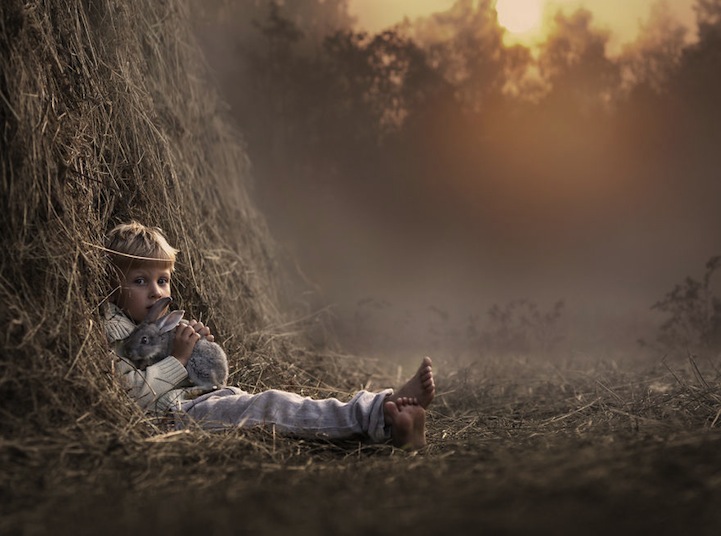
Elena Shumilova’s photographs of her sons among farm animals became a quiet internet event in the early 2010s: soft light, rural Russia, small boys, and creatures that feel less like props than co-protagonists. The work reads as a photo essay about childhood proximity—to animals, weather, and a mother’s patient lens—rather than as a stunt or a studio fantasy. Dogs, rabbits, cats, ducklings, and the wider farm menagerie share the frame with two young brothers whose faces carry the day’s real weather.
Shumilova, a Russian mother and photographer with a background that includes architecture and art study, did not begin as a lifelong professional shooter. She acquired her first serious camera around early 2012 and, within a short stretch of daily practice, built a body of images that traveled Flickr, 500px, and editorial sites worldwide. The subjects were close at hand: her sons—often identified in period coverage as Yaroslav and Vanya—and the animals of the family farm in the Russian countryside near Tver / Andreapol territory, where lakeside village life and changing seasons supply endless light problems worth solving.
Mother, sons, and a working farm as cast
Preserve the entities as they are. This is not anonymous stock “kids with pets.” It is Elena Shumilova photographing her own children in the place they live, among animals the household keeps and loves. Coverage from the mid-2010s describes a farm ecology that can include cows, chickens, geese, sheep, and the large alabai dog Misha—companions who appear again and again because the boys’ days actually include them. The bond on camera is the bond off camera, edited for clarity and mood but rooted in routine.
That routine matters to how the pictures feel. Shumilova has described shooting during the day so she does not lose time with her children, then processing at night. The workflow is maternal and artistic at once: presence first, archive second. Viewers who only see the golden haze sometimes miss that discipline. The tenderness is earned by repetition, not by a single lucky afternoon.
Natural light as the real special effect
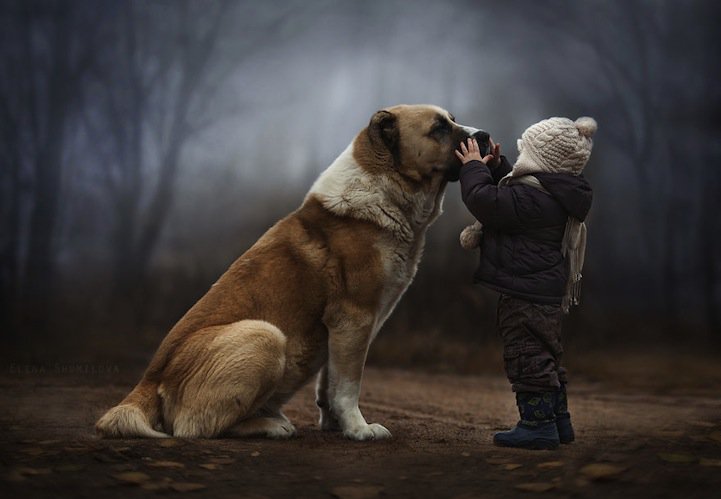
Shumilova has said she prefers natural light indoors and out, and that she loves conditions others might avoid: fog, smoke, rain, snow, street lamps, candlelight—anything that adds visual and emotional depth. That preference explains why her farm pictures rarely look flat. Mist softens a dirt road. Winter trees become graphic. A doorway turns into a stage for a boy and a rabbit. The rural landscape is not backdrop wallpaper; it is an active weather system collaborating with the exposure.
She has also spoken about trusting intuition when composing—wanting to express a feeling she cannot always name. That admission fits the pictures. They are not documentary in a hard-news sense, nor pure fiction. Some frames feel gently guided; others feel caught. The blur between staged and candid is part of the spell. Childhood itself often sits in that blur: half play, half performance for a parent who happens to be holding a camera.
Why the series travels beyond cute
“Cute” is the shallow reading. The deeper one is nostalgia for a kind of unhurried attention—time spent outdoors with animals before screens rewrite a child’s day. International features in outlets that covered Shumilova around 2014–2015 returned to that homesickness for a simpler sensory world. Viewers project their own childhoods onto Russian fields they may never visit. The boys become stand-ins; the dog becomes every loyal dog; the fog becomes memory weather.
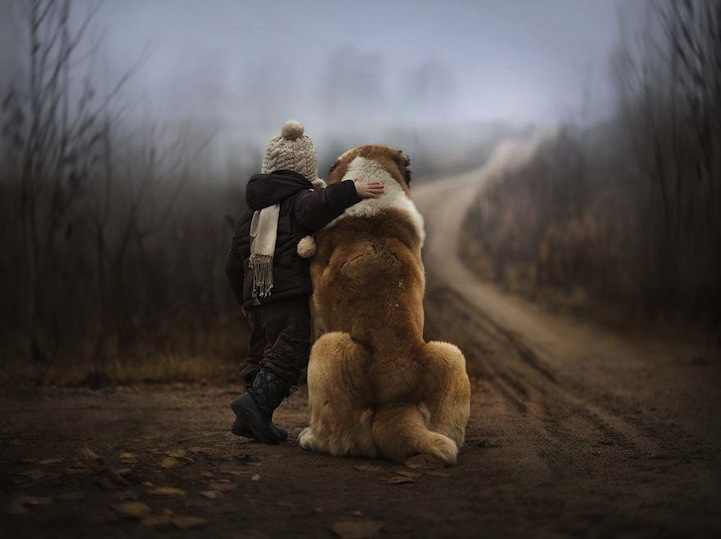
Technically, the work rewards slow looking. Faces catch rim light. Animal fur holds detail without stealing the emotional center. Horizons stay quiet. Color grading leans warm or muted depending on season, but the grammar stays consistent: child + creature + place + light. Once you learn that grammar, each new frame feels like another stanza in the same essay.
Reading the three images on this page
The photographs collected here keep that grammar intact. One frame opens on the human–animal encounter that made the series famous—an immediate invitation into Shumilova’s farm world. Another widens or shifts the pairing, reminding you that the boys’ companions change with the day: soft rabbits one afternoon, dogs or birds another. A third holds the cinematic quiet that editorial sites loved—the sense that a still can carry narrative without a caption explaining the plot.
Together they function as a miniature photo essay: mother behind the camera, sons in front of it, animals as family, countryside as atmosphere. No product pitch is required. The pictures are the point.
Craft notes for anyone who wants to learn from her
You cannot copy someone else’s children or farm, but you can borrow principles. Shoot when the light has character, not only when it is convenient. Stay close enough that gestures read—small hands on fur, a glance between boy and dog. Edit at a remove from the chaos of the day so selection is calm. Prefer weather that adds depth over weather that only looks “nice.” Most of all, photograph relationships you actually inhabit. Shumilova’s authority comes from living inside the scenes.
Gear talk from the period often mentions a Canon DSLR and a short telephoto such as a 135mm for compression and intimacy. Useful, not magical. The magic is access and patience. A mother who shoots daily builds a library; a tourist with one golden hour builds a postcard.
Where the essay sits now
Years after the first viral wave, Shumilova’s farm portraits remain a reference for family photographers chasing atmosphere without cynicism. Books and features later collected strands of this work for wider audiences, but the core story stays local: a Russian mother, her sons, their animals, and the land that holds them. Keep those names and roles clear when you share the images. Credit Elena Shumilova. Remember the boys as her children, not stock models. Let the animals remain farm companions, not props rented for a mood board.
Scroll the frames once for warmth. Scroll again for light. The second pass is where the photo essay reveals itself—not as a pile of adorable moments, but as a sustained attention to how childhood looks when it still shares a yard with living creatures and weather that refuses to wait for perfect conditions.

Comments
Continue reading

Funny Animal Signs That Warn People (While Animals Ignore Them)
From a seagull on a no-birds disc to classic zoo and park ironies—why animal warning signs get funny, and what the rules are still for.

How to Find Local Amenities on Vacation: Mechanics, Haircuts & More
Locate trustworthy local services and everyday spots while traveling or settling in—using publications, reviews, map apps, neighbor tips, and low-pressure exploration.

Kristen Stewart for V Magazine, Spring Preview 2013
V81’s Wild at Heart cover story—Kristen Stewart shot by Inez & Vinoodh, styled by Joe McKenna, in pale minimal spring glamour.