
Ruby da Cherry: Career Profile of the $uicideboy$ MC
A career-focused look at Aristos “Ruby da Cherry” Petrou—from New Orleans roots and SoundCloud-era $uicideboy$ to Grey Day tours and Duckboy side projects, without invented dollar figures.
Ruby da Cherry is not best understood as a spreadsheet of dollars. He is best understood as a New Orleans-bred rapper, vocalist, and multi-instrumentalist whose work with the duo $uicideboy$ helped define a generation of underground hip-hop—abrasive, self-produced, emotionally blunt, and built outside major-label gatekeeping. This profile sticks to career, craft, and catalog. It does not invent personal fortune figures.
Born Aristos Norman Petrou on April 22, 1990, and raised in Metairie, Louisiana, Ruby grew up between Greek Cypriot family roots on his father’s side and the musical gravity of the New Orleans area. Music started early: violin around age seven, drums by ten, school bands, then the local punk circuit. Before the duo took off, he worked as a waiter in his father’s restaurant into the mid-2010s—an ordinary job that sat beside an increasingly serious commitment to making records.
From punk drummer to $uicideboy$
Petrou’s pre-duo years include time as drummer in the punk band Vapo-Rats. Frustration with bandmates’ lack of urgency pushed him toward a harder pact with his cousin Scott Arceneaux Jr.—known onstage as $crim. The cousins formed $uicideboy$ around 2013–2014 with a stark all-in mindset: treat the project as the plan, not a hobby with a soft exit. That intensity shows up in the music’s themes and in how quickly they flooded platforms with material.
Their early path ran through SoundCloud and Bandcamp, not radio. The Kill Yourself series of short projects, beginning with Kill Yourself Part I: The $uicide $aga in 2014, established a tone—dark samples, Memphis-rap ghosts, talk of depression, addiction, and suicidal ideation that mainstream rap still often soft-pedaled. Collaborations with underground peers (including early work connected to artists like Bones and later projects with Pouya) helped them travel beyond Louisiana without abandoning a G*59 identity.
Before the duo’s full ascent, Petrou had already released solo mixtapes under the name Oddy Nuff da Snow Leopard, including The Jefe Tape (2012) and Pluto (2014). Pluto even carried an early commercial collaboration with Arceneaux—evidence that the cousins’ partnership predated the brand the world now recognizes.
Underground breakthrough and chart arrival
$uicideboy$ built a cult audience the hard way: relentless releases, lo-fi aggression, and a visual language that matched the lyrics. Gray/Grey (2015) and the Pouya collaboration $outh $ide $uicide widened the underground footprint. Radical $uicide (2016), produced with Getter, pushed them onto Billboard’s rap charts—proof that a SoundCloud-native act could register commercially without sanding off the edges.
The debut studio album I Want to Die in New Orleans arrived September 7, 2018, on their own G*59 Records. It became their first top-ten Billboard 200 album and framed years of touring life and local memory as a full-length statement. Fan favorites such as “Paris” and streaming mainstays like “…And to Those I Love, Thanks for Sticking Around” (later certified platinum by the RIAA) showed how far the catalog could travel while remaining emotionally heavy.
In 2019 they released the EP Live Fast, Die Whenever with Blink-182’s Travis Barker (and a featured turn from Korn’s James Shaffer), and launched the first Grey Day tour—an annual live franchise that would become central to how fans experience the project: communal, loud, and tightly tied to the G*59 roster and guest bills.
Albums, sobriety, and a longer arc
After a quieter stretch linked to sobriety and recovery, the duo returned with Long Term Effects of Suffering (2021), then Sing Me a Lullaby, My Sweet Temptation (2022). Further projects—DirtiestNastiest$uicide with Germ, the YIN YANG TAPES seasonal EPs nodding to 1990s Memphis rap, later albums including New World Depression (2024) and subsequent releases—kept the catalog moving instead of freezing the act in its SoundCloud origin story.
Personally, both members have spoken publicly about addiction. Arceneaux has discussed sobriety beginning in 2019; Petrou entered rehab in October 2020 after an intervention and has described staying sober while still acknowledging marijuana use in some accounts. Those chapters matter to the career narrative because the music’s subject matter and the artists’ lives were never cleanly separated. Fans who connected to the darkness also watched the pair try to survive it.
What Ruby brings to the duo
In $uicideboy$, $crim is widely associated with production (often under aliases) and a large share of the beat architecture, while Ruby da Cherry is the multi-instrumentalist’s ear in the booth: vocals that can switch from melodic hooks to harsh bars, a punk-honed sense of dynamics, and a presence that makes live shows feel physical. The duo’s music swings between melancholy and aggression—Three 6 Mafia DNA, cloud-rap haze, trap drums, and New Orleans place-names that keep the geography specific.
They own and operate G*59 Records, with distribution arrangements that have allowed them to stay independent in branding even as audiences scaled up. That independence is part of Ruby’s career story: success measured in sustained output, touring circuits, and a loyal base rather than in guest-verse chasing or trend hopping.
Solo paths and alter egos
Outside the duo, Petrou has continued to use alter egos as pressure valves. The Oddy Nuff era sits in the pre-fame archive. In 2023 he returned under the Duckboy persona with punk-leaning albums such as tragic love songs to study to [vol. 5] and existential hymns for the average sigma (vol. 9), later extending that lane with additional Duckboy releases. Those projects reconnect Ruby to the drum-kit and punk energy of his teens without asking $uicideboy$ to become a different band overnight.
Collaborations across the underground—Night Lovell, Ghostemane, Germ, and others in and around the Grey Day orbit—have kept his name circulating as both duo member and scene participant. The through-line is consistency: dark humor, blunt mental-health talk, and a refusal to polish the music into something safer for casual playlists.
How to read “success” without fake net-worth math
Articles that invent or recycle dollar estimates for Ruby da Cherry usually lean on guesswork—streaming screenshots, tour anecdotes, or lifestyle rumors that cannot be verified from public financial disclosures. A responsible career profile skips that theater. What can be said with confidence is structural: a long-running independent duo with charting albums, platinum-certified singles, annual arena-scale tours under the Grey Day banner, a owned label imprint, merchandise culture tied to a strong aesthetic, and a solo side that keeps expanding.
Those are career facts. They explain why Ruby da Cherry became a central figure in underground rap without requiring a fabricated bank balance. Fans who care about craft already know the better metrics: the Kill Yourself lineage, the New Orleans albums, the Grey Day nights, the Duckboy detours, and a voice that still sounds like it is arguing with itself in public.
If you came here looking for a number, leave with a timeline instead. Aristos Petrou’s path—from Metairie kid with a violin and a drum kit, to waiter, to Vapo-Rats drummer, to half of $uicideboy$—is the story worth keeping. The money chatter fades. The records and the tours are what remain audible.

Comments
Continue reading
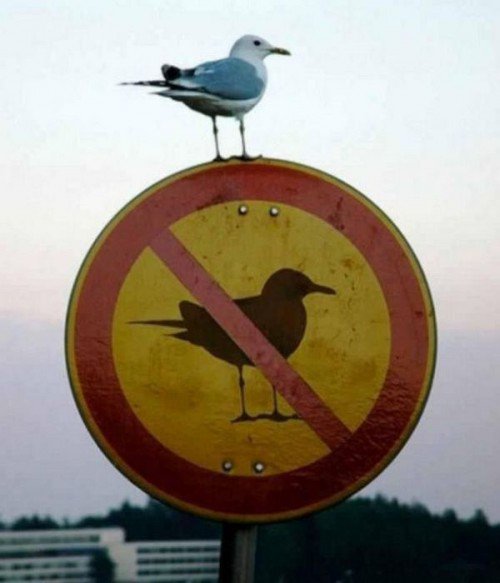
Funny Animal Signs That Warn People (While Animals Ignore Them)
From a seagull on a no-birds disc to classic zoo and park ironies—why animal warning signs get funny, and what the rules are still for.

How to Find Local Amenities on Vacation: Mechanics, Haircuts & More
Locate trustworthy local services and everyday spots while traveling or settling in—using publications, reviews, map apps, neighbor tips, and low-pressure exploration.

Kristen Stewart for V Magazine, Spring Preview 2013
V81’s Wild at Heart cover story—Kristen Stewart shot by Inez & Vinoodh, styled by Joe McKenna, in pale minimal spring glamour.