
Rihanna for GQ, December 2012: Obsession of the Year
A historical look at Rihanna’s GQ Men of the Year cover and Mario Sorrenti portfolio from December 2012—Unapologetic-era styling, credits, and context.
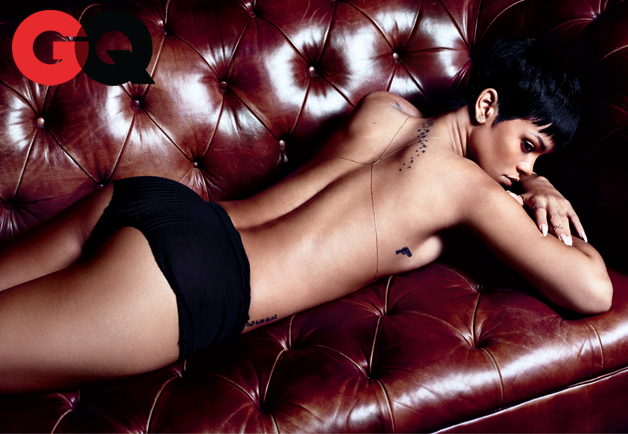
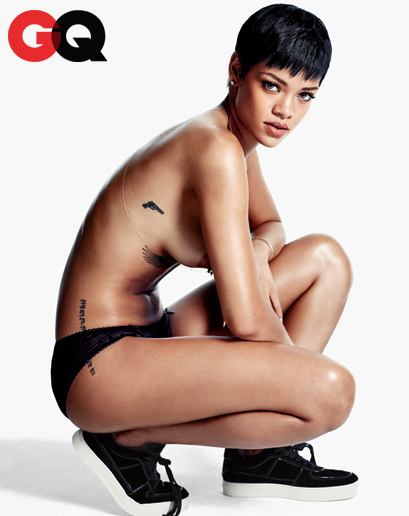
In November 2012, GQ’s December Men of the Year issue put Rihanna on the cover as “Obsession of the Year”—a fashion-and-fame feature locked to one crowded stretch of her career, not a generic celebrity drop-in. Photographer Mario Sorrenti shot the portfolio. Writer Jay Bulger’s story followed her through a New York night that moved from Emilio’s Ballato to a Hotel Gansevoort penthouse and on to Griffin, describing the paparazzi swarm and the unfiltered persona she was projecting that season. The images gathered here belong to that editorial moment: late 2012, glossy men’s-magazine maximalism, and a pop star between album cycles who treated visibility as part of the work.
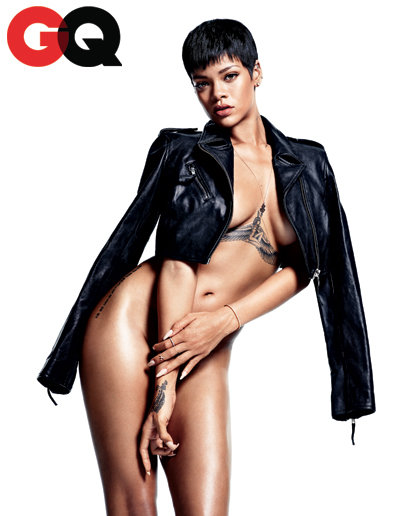
The calendar around the cover was dense. Unapologetic arrived on November 19, 2012. The 777 Tour—seven cities in seven days, launching mid-November—was about to fold press and fans into a flying entourage from Mexico City through Toronto, Stockholm, Paris, Berlin, London, and New York. GQ’s nearly nude cover, with Rihanna in an unzipped AllSaints cropped biker jacket, functioned as both fashion provocation and rollout punctuation. She was twenty-four, already a global chart presence, and openly playing with the line between control and chaos that Bulger’s piece tried to track from close range.
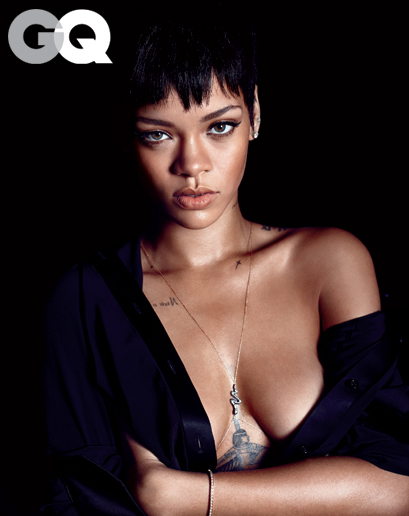
A Men of the Year cover that centered her
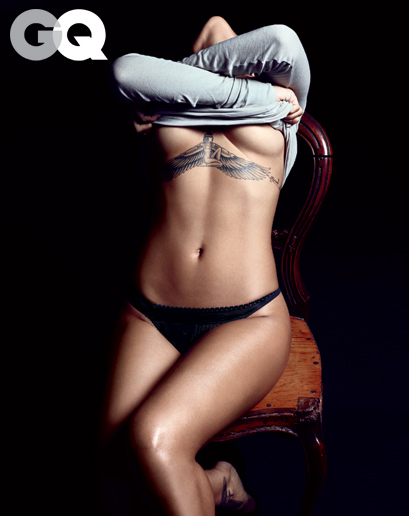
GQ’s December Men of the Year franchise usually celebrates a slate of male figures across film, sports, music, and public life. Naming Rihanna Obsession of the Year put a woman—and a then-inescapable pop presence—at the visual center of the package. The title language was pure magazine theater: desire framed as cultural weather. What the photographs delivered was Sorrenti’s clean, high-contrast studio eroticism—body as graphic shape, wardrobe reduced to punctuation, jewelry and shoes doing as much compositional work as clothing.
Published credits underline that economy. Looks moved across an AllSaints jacket with a Cartier bracelet on the cover; Givenchy by Riccardo Tisci; Rick Owens tops with Cosabella and Manolo Blahnik; Stella McCartney lingerie with Alejandro Ingelmo sneakers; additional pieces routed through Opening Ceremony. The styling was not costume-pop in the theatrical, mask-changing sense associated with some of her peers that year. It was closer to a fashion closet emptied until attitude remained—consistent with how Rihanna was presenting herself onstage, in tweets, and on Instagram that autumn.
Entertainment sites seized on the cover within hours of its reveal. The conversation mixed admiration, moral panic, and fashion-credit hunting in the usual proportions of 2012 internet culture. What lasts is the assignment itself: a major men’s title using its year-end franchise to freeze one artist’s image at album-release velocity.
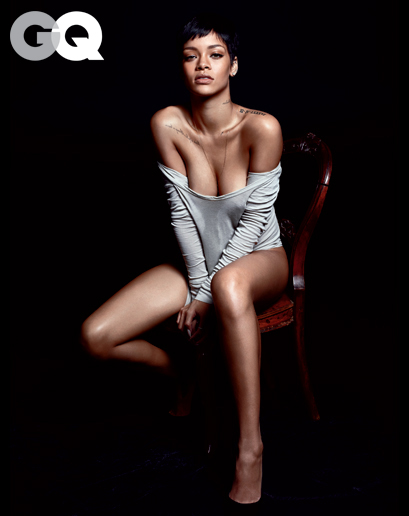
Sorrenti’s eye and the December 2012 look
Mario Sorrenti’s fashion work often favors skin, shadow, and direct gaze over busy narrative sets. Here that approach met a subject already fluent in camera confrontation. Several frames keep wardrobe minimal—lace, pumps, sneakers—so posture, hair, and tattoo detail carry the page. The goddess Isis tattoo beneath her chest, visible on the jacket cover and related images, became part of the press chatter around the issue, another reminder that the shoot documented a specific body at a specific time rather than a generic glamour template that could be swapped among stars.
Lighting stays studio-hard. Negative space matters. The poses alternate between confrontational upright stance and reclining or crouched shapes that use the frame edge as a second character. Compared with red-carpet armor or later industrial Fenty-era campaigns, this set sits squarely in the Unapologetic window: black-heavy styling, nightlife energy, and a willingness to court men’s-magazine codes while still driving the narrative. It is a period piece of celebrity publishing, when a single cover cycle could dominate entertainment blogs for a week and then settle into a dated-but-iconic reference file.
The story running beside the pictures
Bulger’s GQ profile did not pretend to be a neutral career retrospective. It shadowed an evening: dinner at Emilio’s Ballato—the Nolita Italian restaurant long tied to downtown mythology, with her signed photograph already on the wall—then the push through photographers into private rooms and a nightclub finish. The prose leaned on contradiction as its engine: Bible-verse tweets beside explicit Instagram moments; theatrical peers who hide behind costume versus a star who performed as if the mask were optional. Whether that reading was complete matters less now than the fact that the magazine sold a myth of access alongside Sorrenti’s stills.
Readers in 2012 met the package while tabloid coverage of her personal life remained constant background noise. The editorial’s job, in magazine terms, was to convert that heat into “obsession”—a word that flatters the audience’s attention as much as the subject. Looking back, the December 2012 issue works best as a timestamp: Rihanna on the verge of Unapologetic, mid-777-Tour planning, years away from the full Fenty business chapter, already treating fashion shoots as extensions of album eras rather than separate side gigs.
That timestamp also clarifies what this page is not. It is not a career-spanning Rihanna gallery, not a Met Gala roundup, not a beauty-campaign archive, and not a present-tense celebrity news update. Keeping the boundary tight preserves the feature’s historical shape.
Why this feature stands apart from other Rihanna pieces
Rihanna’s published image bank is enormous—tour posters, beauty contracts, red-carpet metamorphoses, later entrepreneurial portraits. This gallery stays with one assignment: GQ, December 2012, Mario Sorrenti, Men of the Year / Obsession of the Year. The clothes are sparse by design. The mood is studio heat rather than couture armor. The cultural hook is a men’s magazine crowning a woman as the season’s fixation during an album-and-tour blitz. Those limits are the point. Without them, the photographs dissolve into another undifferentiated “Rihanna glam” pile and lose the editorial story that made the December issue talkable.
As fashion history, the shoot also marks a late crest of print-magazine event culture. Social platforms already amplified every cover, yet the physical December issue still functioned as an object people argued about in comments and group chats. The AllSaints jacket, the near-nude framing, the Obsession title, the Sorrenti credit—those were the talking points. The photographs remain the primary evidence.
More than a decade on, the frames still read as committed studio work: strong lighting, controlled poses, styling that refuses filler. They do not need a breaking-news rewrite. They belong to the winter of 2012, when GQ put Rihanna on its Men of the Year cover, Sorrenti made the pictures, Bulger tried to keep pace with a night that already felt like content, and an album-tour machine was spinning at full speed. Scroll them as that artifact—one cover cycle, one photographer, one December issue—and the gallery keeps the purpose its pathname promises.
via (GQ)

Comments
Continue reading
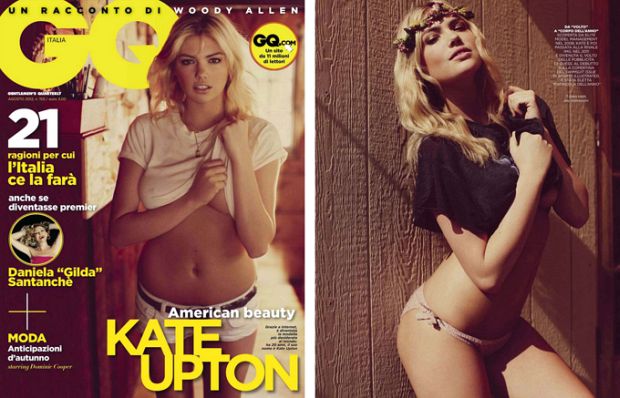
Kate Upton for GQ Italy, August 2012
Guy Aroch photographs Kate Upton for GQ Italia’s August 2012 cover, styled by Emily Current and Meritt Elliot—soft, retro-leaning European men’s-magazine sensuality.
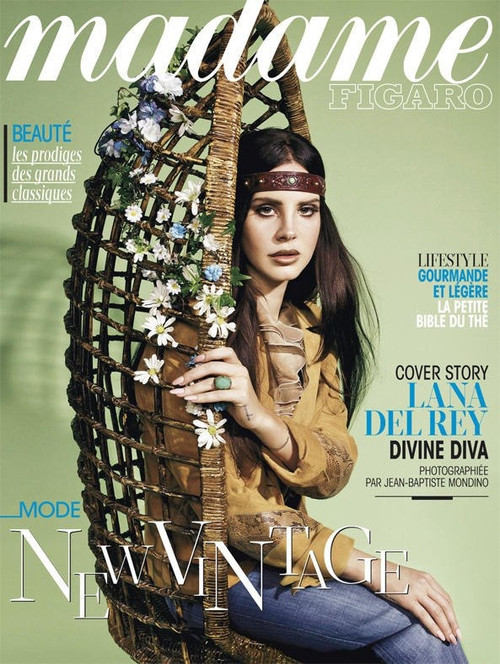
Lana Del Rey for Madame Figaro, January 2013
Jean-Baptiste Mondino’s Paris haute-hippie cover package for Madame Figaro’s January 2013 issue—suede, bronze light, and French weekly glamour.
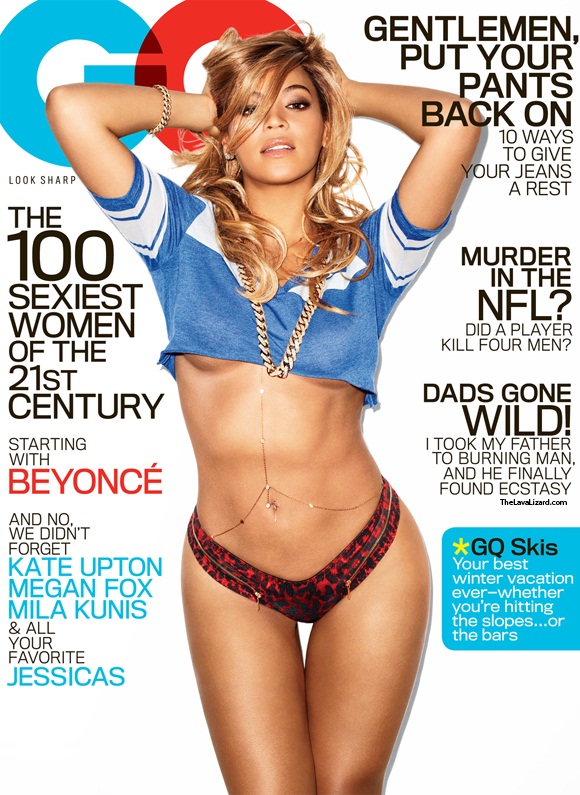
Beyoncé for GQ, February 2013
Period context for Beyoncé’s GQ February 2013 cover feature—work ethic, album collaborators, influences, and Super Bowl prep, with the editorial images.