
Beyoncé for GQ, February 2013
Period context for Beyoncé’s GQ February 2013 cover feature—work ethic, album collaborators, influences, and Super Bowl prep, with the editorial images.
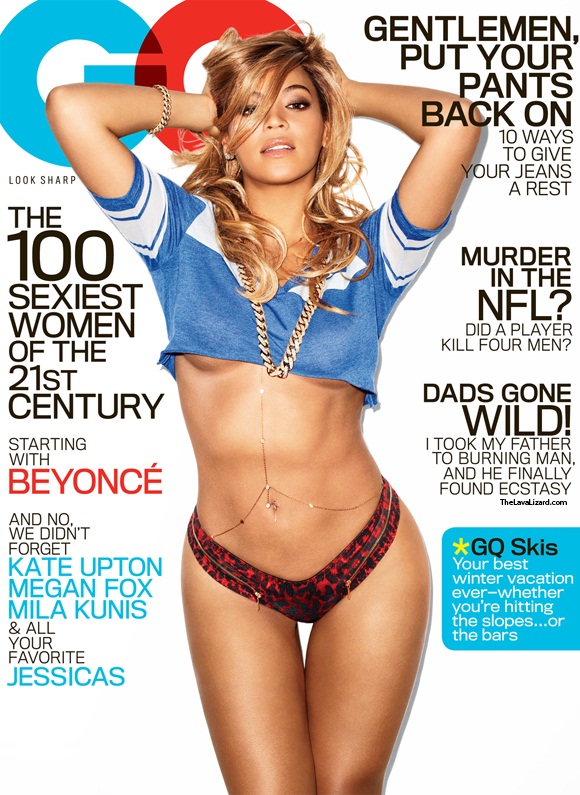
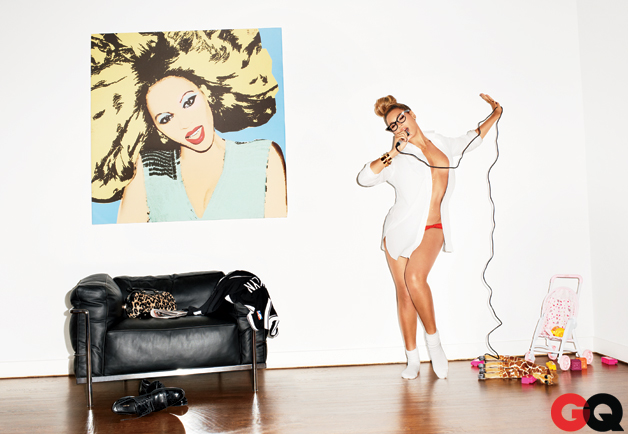
GQ’s February 2013 issue arrived at a precise point in Beyoncé’s public timeline: Super Bowl XLVII halftime weeks away, an HBO documentary she had largely controlled herself on the horizon, and a new solo album still taking shape with collaborators she was willing to name in print. The feature—often remembered for its Terry Richardson photographs as much as for the interview—was a period cover story about work, authorship, and performance standards, not a later-career retrospective written with hindsight.
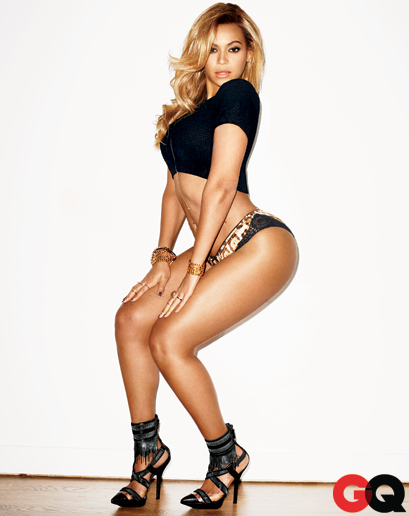
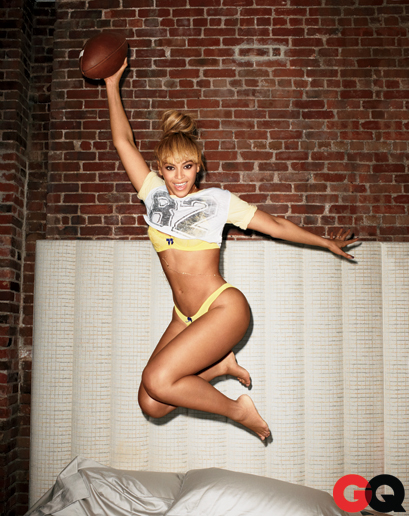
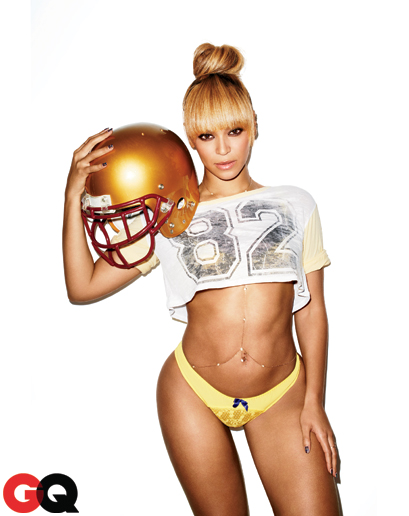
Read it inside that 2013 frame. The images below are the editorial stills that circulated with the feature. The quoted passages are drawn from the interview excerpts that accompanied this gallery, the same lines that news sites repeated when the issue reached newsstands in January 2013.
A cover story timed to a public surge
By early 2013, Beyoncé was speaking as someone who had already met a long-held professional deadline. In the GQ conversation she described a childhood goal of reaching a point, by age thirty, where she could choose her own work. She said she had reached that position, felt fortunate for it, and still measured the cost in sacrifice and effort—reminding herself, in her own phrasing, that she deserved what the labor had bought. The tone was not triumph-for-its-own-sake. It was a worker’s accounting at a moment when the calendar was about to get louder: stadium rehearsal, documentary release, album cycle.
Magazine features of that season often framed her as a brand as much as a singer. The more useful reading of the GQ piece is narrower. It is about how she described process—how songs started, who was in the room, what older records she still measured herself against, and how she prepared a show the size of the Super Bowl without treating rehearsal as mystique.
On her work ethic: “I worked so hard during my childhood to meet this goal: By the time I was 30 years old, I could do what I want. I’ve reached that. I feel very fortunate to be in that position. But I’ve sacrificed a lot of things, and I’ve worked harder than probably anyone I know, at least in the music industry. So I just have to remind myself that I deserve it.”
Collaborators, songwriting, and an R&B compass
Asked about the album then in progress, she named a circle that bridged 1990s R&B fluency with pop craft: Pharrell, Timbaland, Justin Timberlake, and The-Dream. The shared premise, as she put it, was a desire to recover a feeling from the years when R&B sat at the center of the mainstream. That statement matters historically because it places the unfinished 2013 record inside a conversation about genre temperature, not only about celebrity guest lists.
Her account of songwriting had shifted with time. Earlier, she said, she often began with lyrics and then found tracks—sometimes matching an idea already in her head to a melody. By the GQ interview she described writing with other writers, beginning from a title or concept, singing the idea in the booth, and building layers together. Influence talk stayed rooted in records rather than fashion: Prince, rock/soul edges, D’Angelo, 1960s doo-wop, Aretha Franklin, Diana Ross. The list reads like a working library, not a press-kit collage.
On her collaborators for her upcoming album: “I’ve been working with Pharrell and Timbaland and Justin Timberlake and Dream. We all started in the ’90s, when R&B was the most important genre, and we all kind of want that back: the feeling that music gave us.”
On songwriting: “I used to start with lyrics and then I’d find tracks—often it was something I had in my head, and it just so happened to go with the melody. Now I write with other writers. It starts with the title or the concept of what I’m trying to say, and then I’ll go into the booth and sing my idea. Then we work together to layer on.”
On the album’s influences: “Mostly R&B. I always have my Prince and rock/soul influences. There’s a bit of D’Angelo, some ’60s doo-wop. And Aretha and Diana Ross.”
Motivation behind the hooks
Even when talking about a song remembered as playful, she insisted on a deeper starting point. “Bootylicious,” she noted, could sound silly on the radio and still come from a response to commentary about her body and from a Southern woman’s self-definition. Motivation, in her summary, stayed tied to expression, healing, laughter, or rejoicing—reasons that make the catalog feel continuous even when the packaging changes.
That is one reason the February 2013 feature still functions as a useful editorial artifact. It captures Beyoncé describing craft in ordinary workshop language while the photographs sell glamour and athletic swagger. Readers who only remember the cover image miss the interview’s insistence on revision, study, and intention.
On her inspirations: “Even the silliest little thing that you hear on the radio, it comes from something deeper. ‘Bootylicious’ was funny, but it came from people saying that I had gained weight and me being like, ‘I’m a southern woman, and this is how southern women are.’ My motivation is always to express something or to heal from something or to laugh and rejoice about something.”
On her upcoming performance at the Super Bowl: “One of the reasons I connect to the Super Bowl is that I approach my shows like an athlete. You know how they sit down and watch whoever they’re going to play and study themselves? That’s how I treat this. I watch my performances, and I wish I could just enjoy them, but I see the light that was late. I see, ‘Oh God, that hair did not work.’ Or ‘I should never do that again.’ I try to perfect myself. I want to grow, and I’m always eager for new information.”
The Super Bowl as study hall
Her Super Bowl comments are the clearest window into how she wanted preparation understood. She compared show craft to film study in sports: watch the opponent, watch yourself, correct the late light cue, retire the hair choice that failed, refuse to repeat the move that did not work. The stadium date was not framed as a coronation. It was framed as another chance to gather information under pressure.
Set against the photographs—formal, stylized, sometimes almost athletic in costume language—the quote recalibrates the feature. The images sell presence. The interview sells revision. Together they explain why the February 2013 GQ package became a bookmark in fashion and music blogs that winter: it was timed to a live event, grounded in studio talk, and styled like a statement.
How to read the gallery now
Look at the set as a 2013 editorial object. Do not stretch it into later album-rollout mythology or into net-worth chatter that the interview never needed. Notice how the pictures alternate between close portraiture and wider stylized poses, and how the text keeps returning to collaborators, influences, and rehearsal habits. The page’s job is the same as the magazine package’s job was then: hold the images and the working notes in one place for anyone searching for Beyoncé’s GQ February 2013 moment.
If one line from the feature still organizes the rest, it is the athlete analogy—because it turns celebrity preparation into something inspectable. Late light, wrong hair, discarded choreography: those are editable facts. In a cover story otherwise dense with aura, they are the details that keep the interview useful.

Comments
Continue reading
Kate Upton for GQ Italy, August 2012
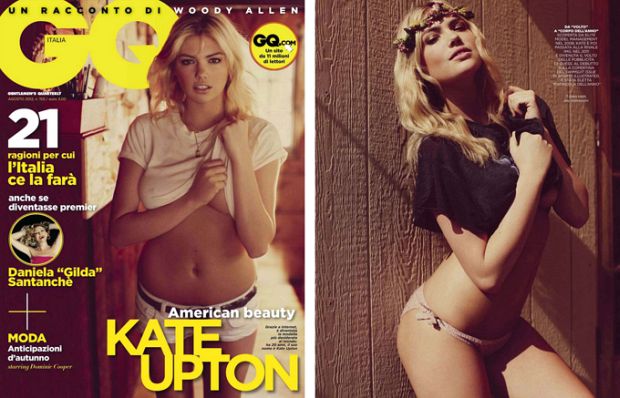
Guy Aroch photographs Kate Upton for GQ Italia’s August 2012 cover, styled by Emily Current and Meritt Elliot—soft, retro-leaning European men’s-magazine sensuality.
Beyoncé for Vogue US, March 2013 Power Issue
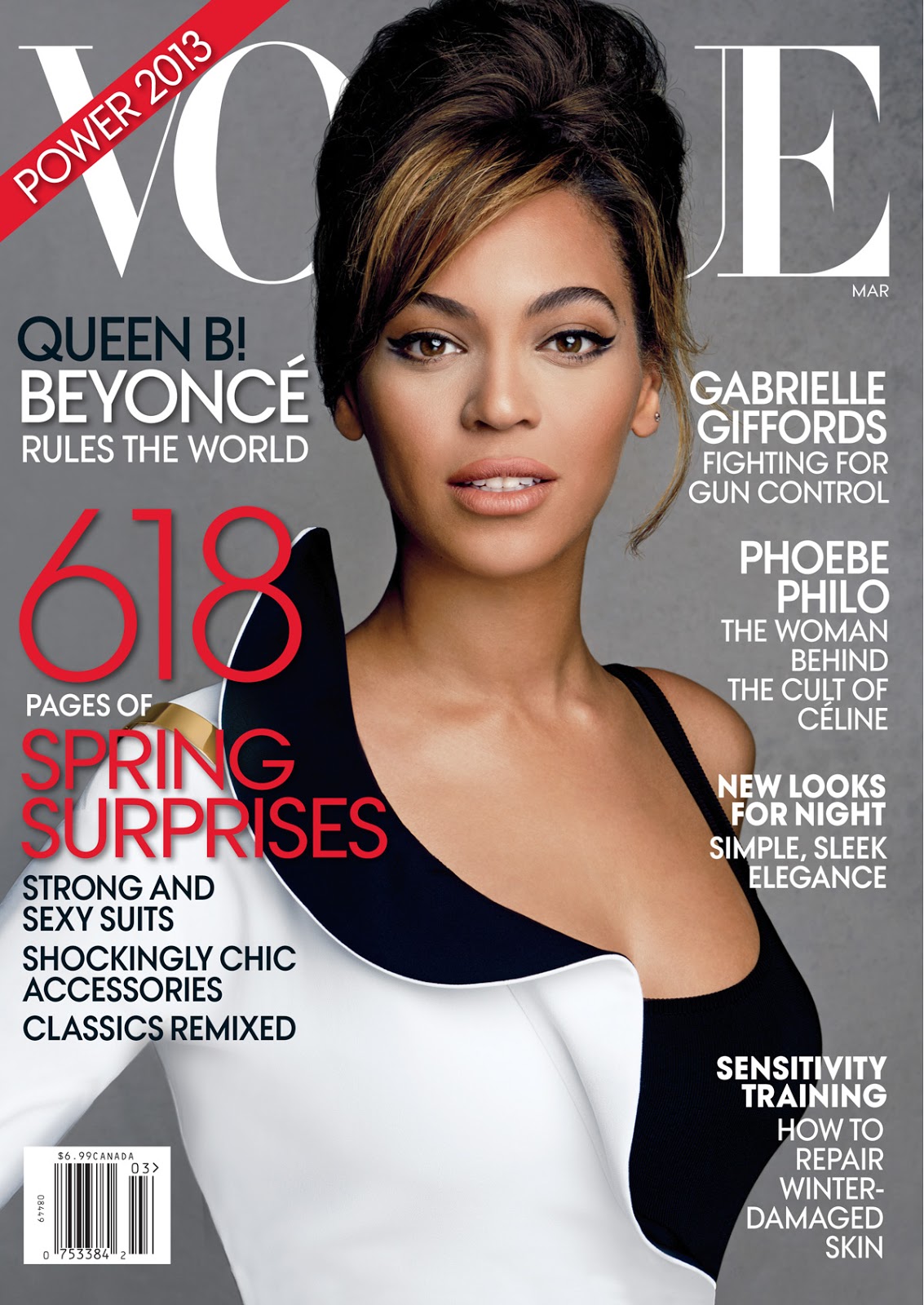
Beyoncé on the March 2013 Vogue US Power Issue—Patrick Demarchelier’s period editorial of fashion, control, and cover-star glamour.
Rihanna for GQ, December 2012: Obsession of the Year
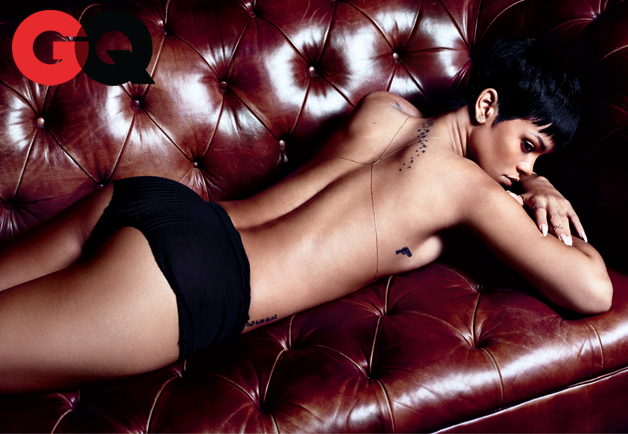
A historical look at Rihanna’s GQ Men of the Year cover and Mario Sorrenti portfolio from December 2012—Unapologetic-era styling, credits, and context.