
Soey Milk: Portraits Where Calm Sits Beside Calamity
Soey Milk paints composed women against turbulent fields of color and gesture—figurative calm held inside pictorial unrest.
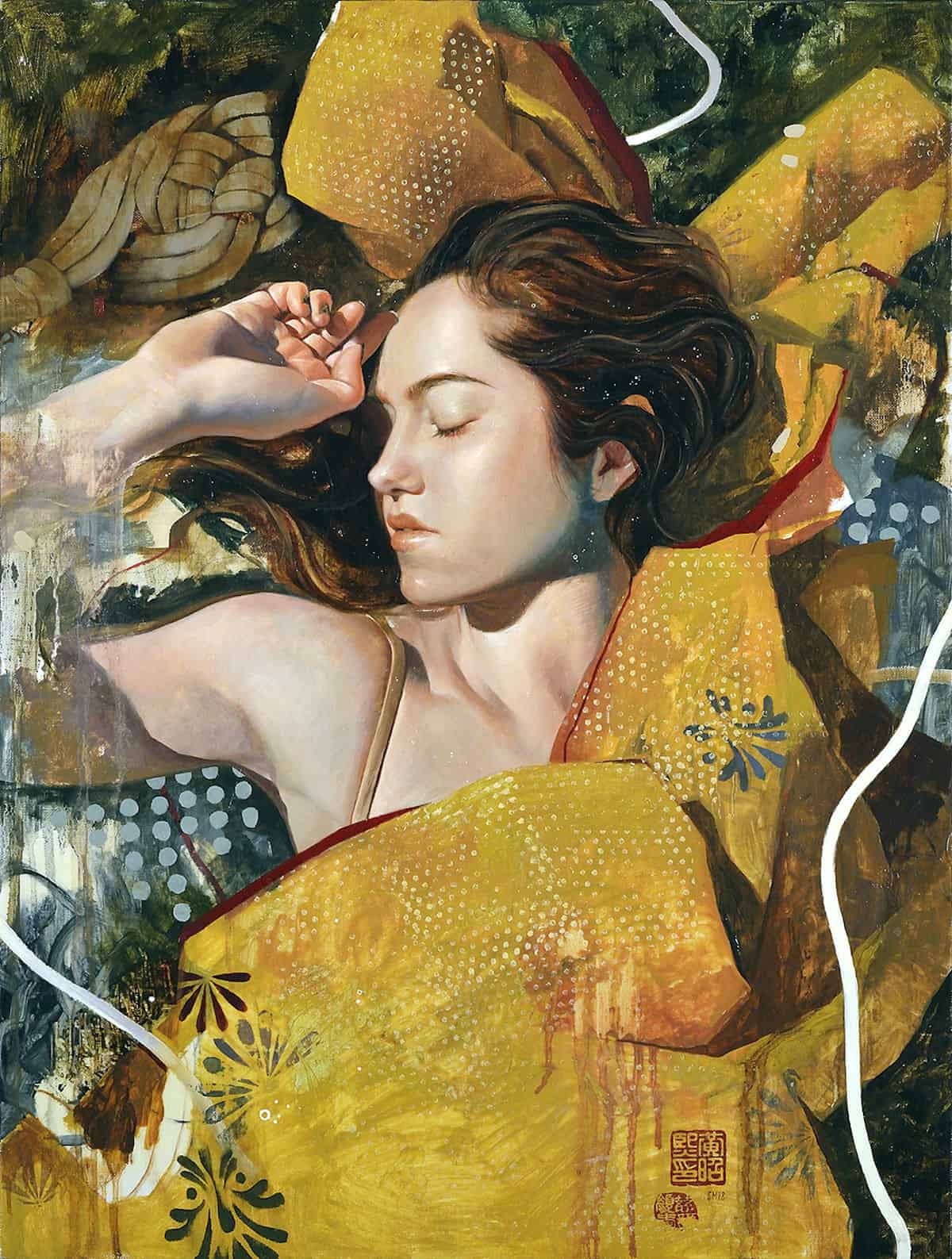
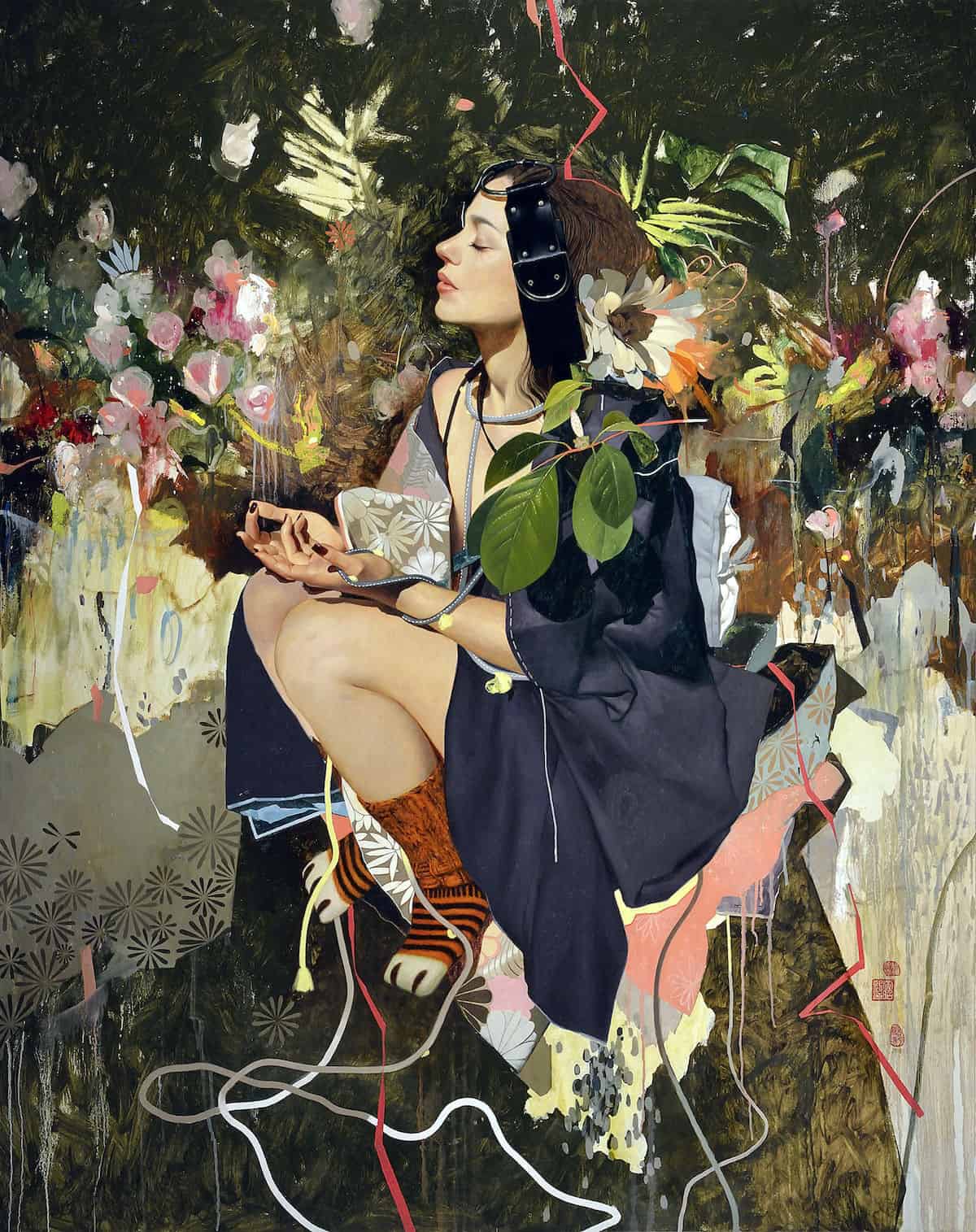
Soey Milk paints women who look composed even when the world around them does not. Faces arrive with careful focus—skin, gaze, and posture held in a quiet register—while color, gesture, and texture spill behind or around them like weather that refuses to settle. That friction is the point of looking. Calm does not erase disturbance; it sits beside it.
Born in Seoul in 1989 and long based in Southern California, Milk works in a figurative tradition that still feels personal rather than academic. Friends and people from her life often become sitters. Memory supplies the mood. A painting can mark a season, a relationship, or a private shift that never appears as a caption. Viewers meet a person first, then notice how the surface behaves once the eye leaves the face.
Push and pull on a single surface
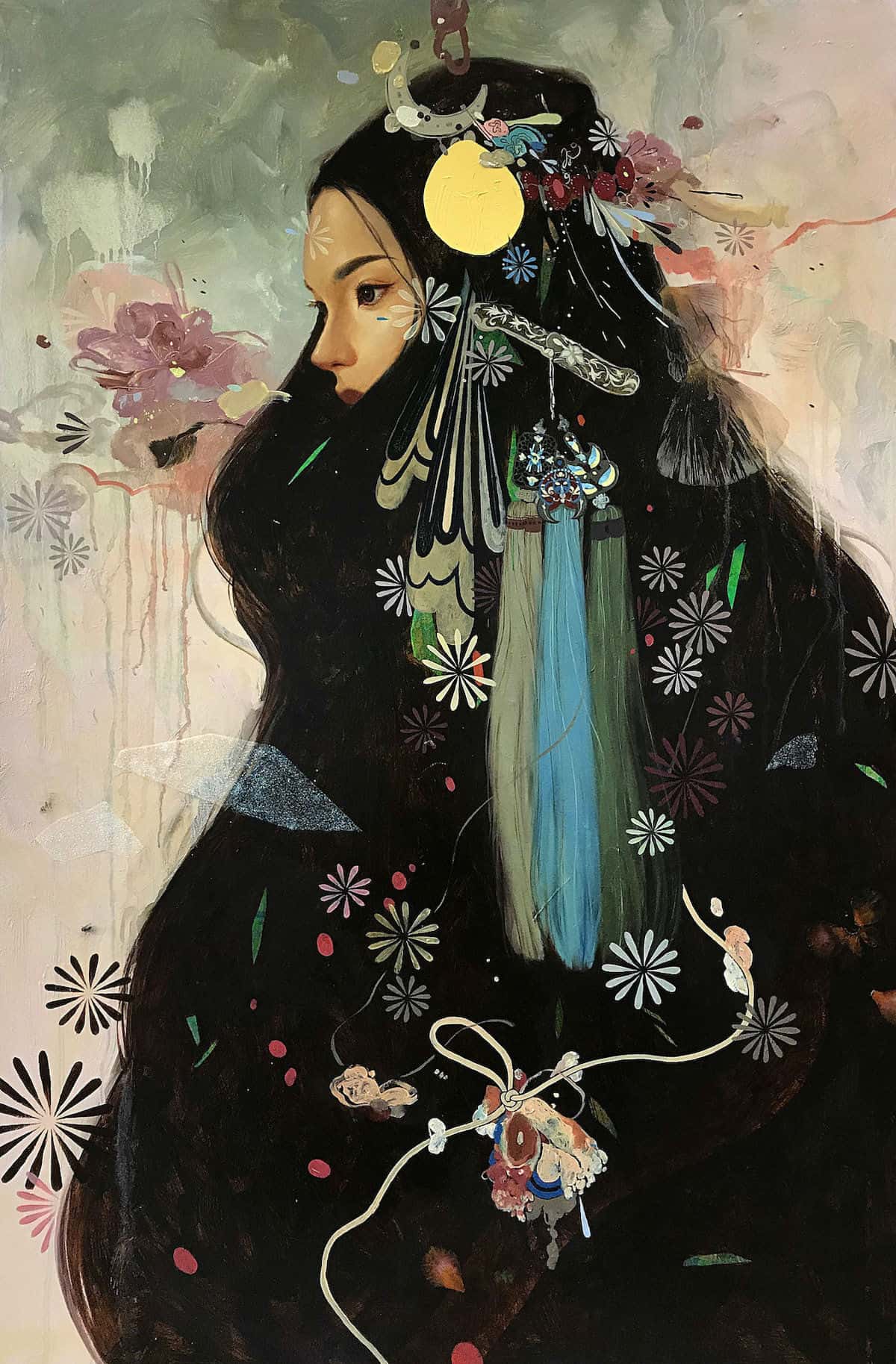
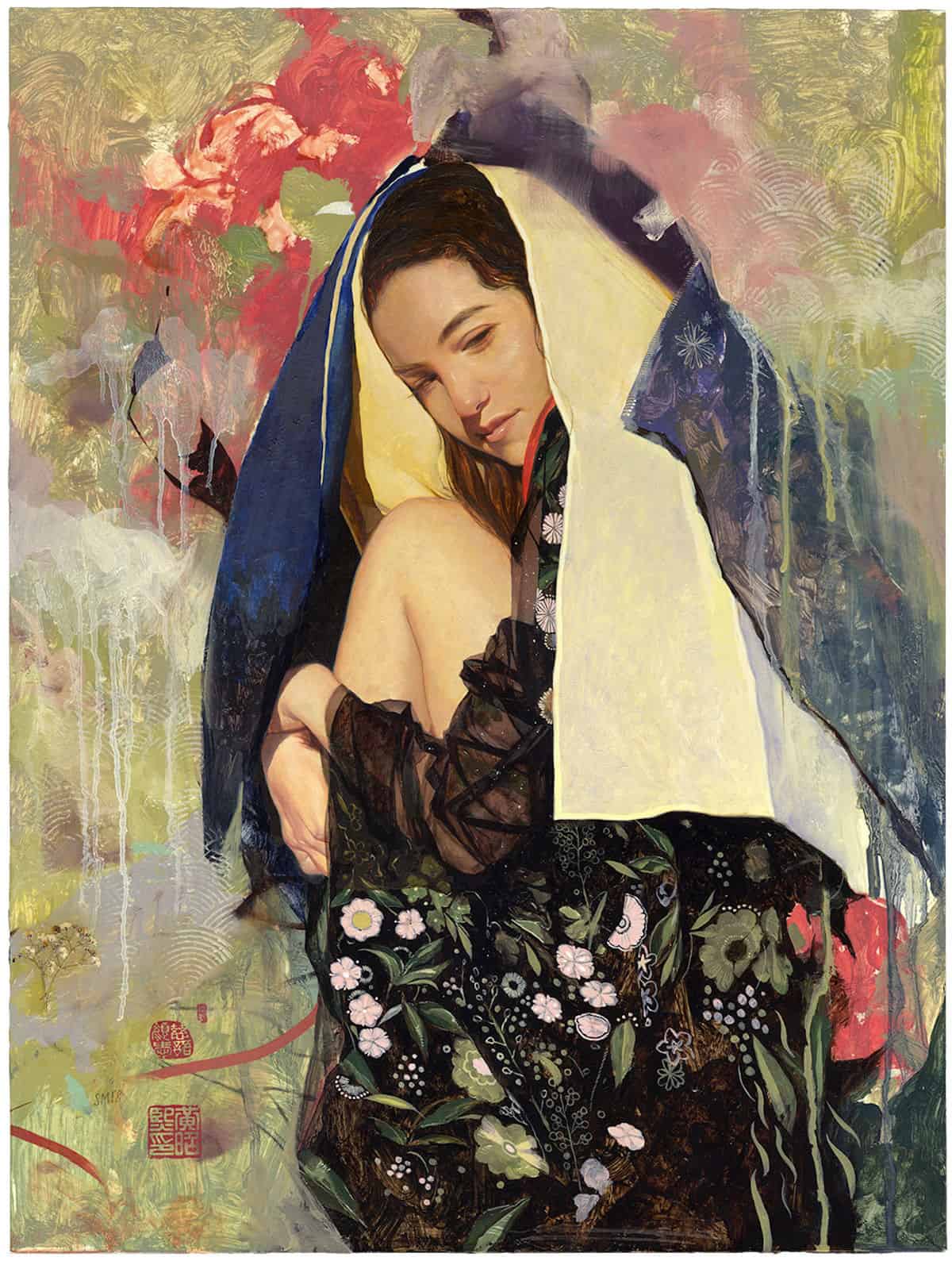
Milk’s compositions rely on contrast you can feel before you name it. The head and features are tightly rendered, often with a near-photographic clarity that asks for slow attention. Behind or around that clarity, brushwork loosens. Strokes stay visible. Paint can drip, smear, or pool. Patterns interrupt. Fabrics and botanical suggestions arrive without needing to behave like a literal room.
The effect is a visual push and pull: the portrait holds still while the field around it refuses to sit still. That tension echoes the title’s pairing of calm and calamity. Calm lives in the modeled cheek, the steady mouth, the controlled light on hair. Calamity—or at least unrest—lives in color that breaks its own edges, in backgrounds that feel closer to weather systems than to wallpaper, and in motifs that do not politely explain themselves.
Nothing here requires a dramatic narrative to work. A seated figure can look almost private, as if the viewer interrupted a thought. The drama is in how paint is allowed to behave once the likeness is secured. Realism becomes an anchor, not a rule for every square inch.
Where an idea starts
Milk has described inspiration as something that can arrive anywhere, which is why she tries to notice it when it does. A piece often begins as a tiny scribble—an idea that appears while she is thinking about something else and lands on a napkin or scrap. She does not treat the studio day as a corporate plan with a fixed outline. Openness is part of the method: everyday life feeds the work, so the paintings stay tied to lived time rather than to an invented mythology alone.
Drawing still matters. Sketching can function as a blueprint—a careful search for a path before oil builds the final surface. Studies let her test posture, ornament, and the balance between figure and field. Later, layers and glazes thicken the decision. She has spoken about working on several paintings at once, which suits a practice that needs drying time and room for revision.
Because the sitters are often people she knows, the portraits carry a double life. They are images of women in art history’s long line of looking, and they are also markers on a personal timeline. A viewer may not know the private story; the painting still communicates that a story existed. That is one reason the faces feel specific rather than generic fashion types.
Heritage, textiles, and invented rooms
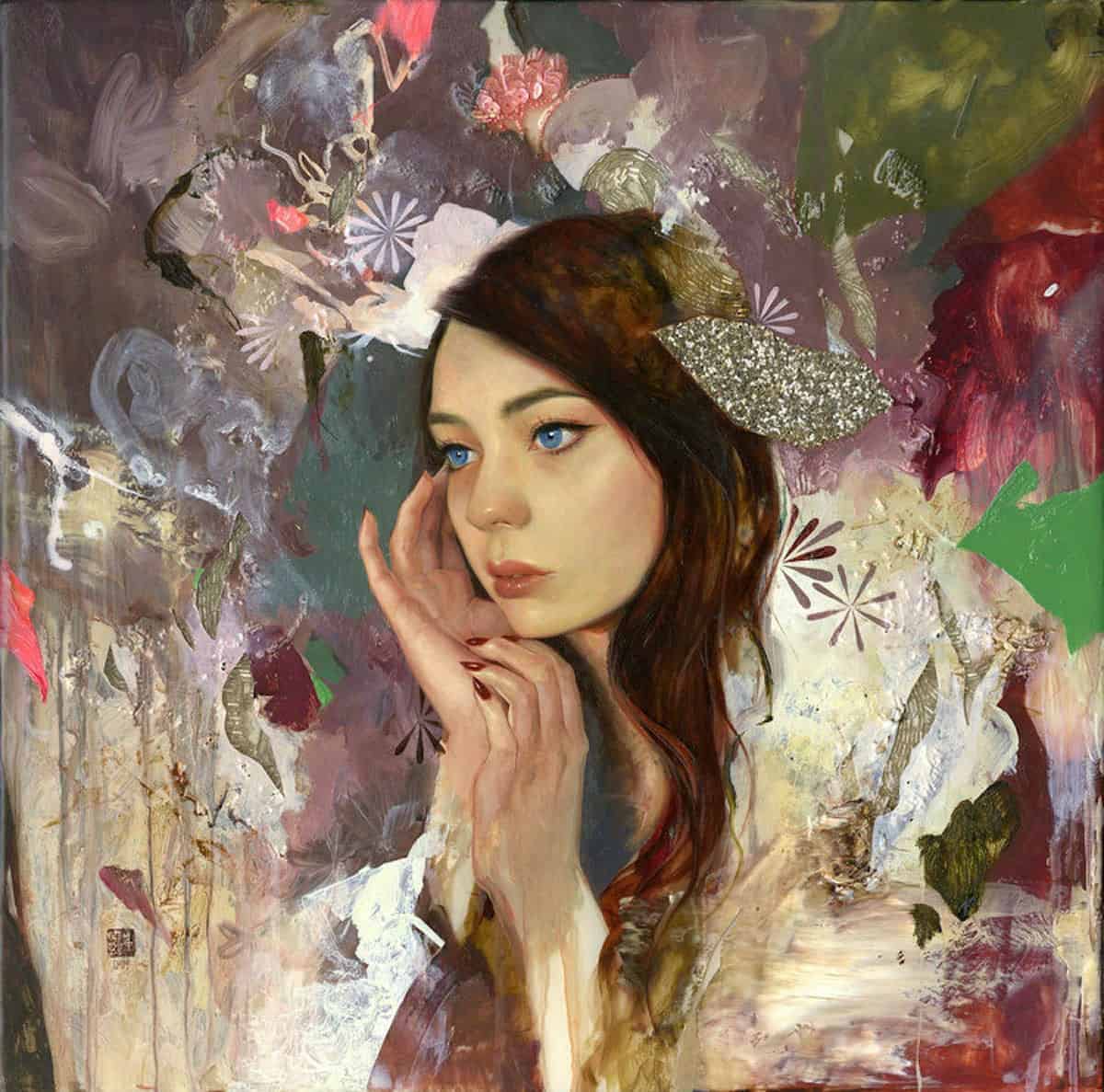
Milk’s Korean background surfaces not as costume illustration but as a reservoir of motif and sensibility. Commentators have noted affinities with Minhwa—traditional folk painting that carries mythology and everyday symbolism—and with a taste for ornate pattern that can turn a background into its own character. Fabrics, ribbons, botanical shapes, and collage-like passages of wallpaper or textile can create rooms that feel half-remembered and half-invented.
Those environments rarely behave like documentary interiors. They behave like emotional climates. A figure may rest inside color that refuses to flatten into a single plane. Ornament can feel protective one moment and overwhelming the next. The “calm” of the face becomes more striking because the surrounding field keeps shifting between beauty and unrest.
Materials reinforce that range. Oil on canvas remains central, yet Milk has also worked on linen and copper and has embedded or painted over found fragments—fabrics, gold leaf, even accidental studio objects sealed into a surface. Texture becomes meaning: something once ordinary is pressed into the painting’s weather system. The result can look luxurious and slightly strange at the same time.
Reading the motifs without forcing a slogan
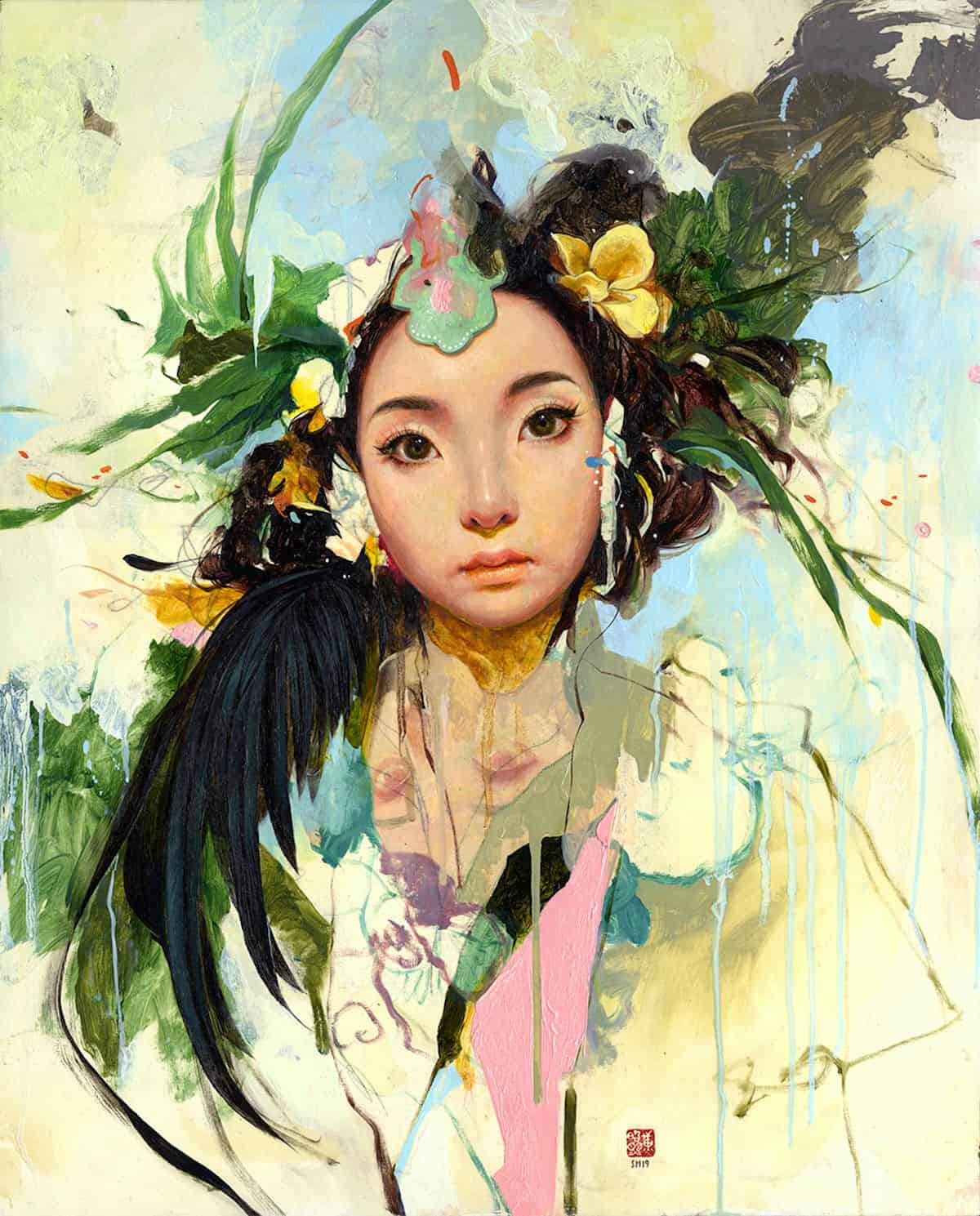
These works invite interpretation without handing over a single slogan. Recurring questions float near the surface: how much of a person is visible in a likeness? How does beauty relate to interior weather that is less polished? What happens when decorative richness borders on excess? Milk’s women can appear tender and slightly opaque at once—faces that welcome looking while keeping private ground.
That opacity is useful. It keeps the paintings from collapsing into illustration for a mood board. Instead of telling you what to feel, they stage a condition: composure held against turbulence. Some viewers will emphasize the sensual staging of fabric and body. Others will stay with the technical contrast between finish and freeness. Both readings are available because the surface supports them.
It also helps to notice what is not happening. These are not journalistic scenes of disaster. “Calamity” here is pictorial—disruption of paint, of space, of certainty—more than a depicted event. The word names energy, not a news headline. That distinction matters for anyone arriving through the page’s title and expecting literal catastrophe. The catastrophe, if any, is emotional and formal.
How to look at the paintings in this gallery
Start with the face. Notice where the edges are sharpest and where edges dissolve. Then step your attention outward: where does the background begin to behave like weather or textile rather than architecture? Look for drips, abrupt color changes, and patterned interruptions that refuse to sit politely behind the figure.
Next, track temperature. Warm flesh against cooler fields, or saturated ornament against quieter skin, can create the emotional rhythm of a piece even before you invent a story. Ask what the subject seems to be withholding. Stillness in the eyes can make the surrounding motion louder.
Finally, treat the sequence of images as related experiments rather than a single plot. Across Milk’s body of work, the same negotiation repeats with new costumes and climates: a person held carefully while the world of paint around them stays unstable. That repetition is not sameness; it is a method testing how much unrest a composed figure can carry.
Why the pairing still feels contemporary
Figurative painting keeps returning because people never stop wanting to meet a face. What keeps Milk’s approach current is the refusal to choose only one register. Pure photorealism can feel sealed. Pure abstraction can lose the human stake. By letting both registers share a canvas, she stages a condition many viewers recognize without needing a manifesto: we present a composed self while private weather continues underneath.
The paintings also sit comfortably in a long conversation about women as painted subjects—desired, decorated, watched—while shifting some of the power back toward specificity. These are not interchangeable muses. They are particular people filtered through memory, fashion, and studio experiment. Ornament does not erase them; it complicates the air they breathe on the canvas.
If you leave with one practical habit of looking, make it this: when a portrait feels “beautiful,” check the edges of that beauty. See whether the paint behind the face agrees with the calm or argues with it. In Soey Milk’s work, the argument is often where the painting becomes most alive—and where calm and calamity stop being opposites and start sharing the same room.

Comments
Continue reading
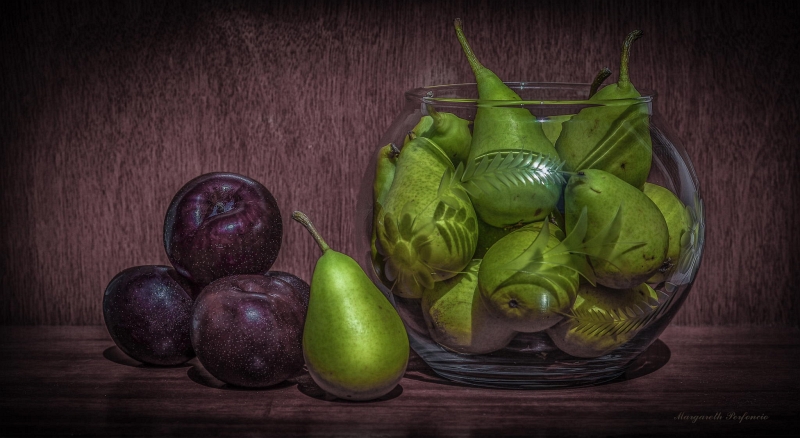
Still-Life Photography by Margareth Perfoncio
São Paulo photographer Margareth Perfoncio’s still lifes of food and flowers—Old Master light, dark wood, and tables that feel inevitable.

Meaningful Love Quotes for Inspiration (and Ink)
Meaningful love quotes that still feel true — short lines for tattoos, gifts, and everyday reminders, with placement and wording tips.

Christina Hess’s Animals From History: Costumed Pets as Playful Portraits
Illustrator Christina Hess reimagines historical icons as ornate animal portraits—Elvis Petme and friends—mixing puns, costume detail, and soft history lessons.