
Pearly Wedding Shoes for Brides: Ideas and How to Choose
Pearl, crystal, and lace bridal shoe inspiration—how embellishment works with dresses and jewelry, plus fit and day-of practicality tips.
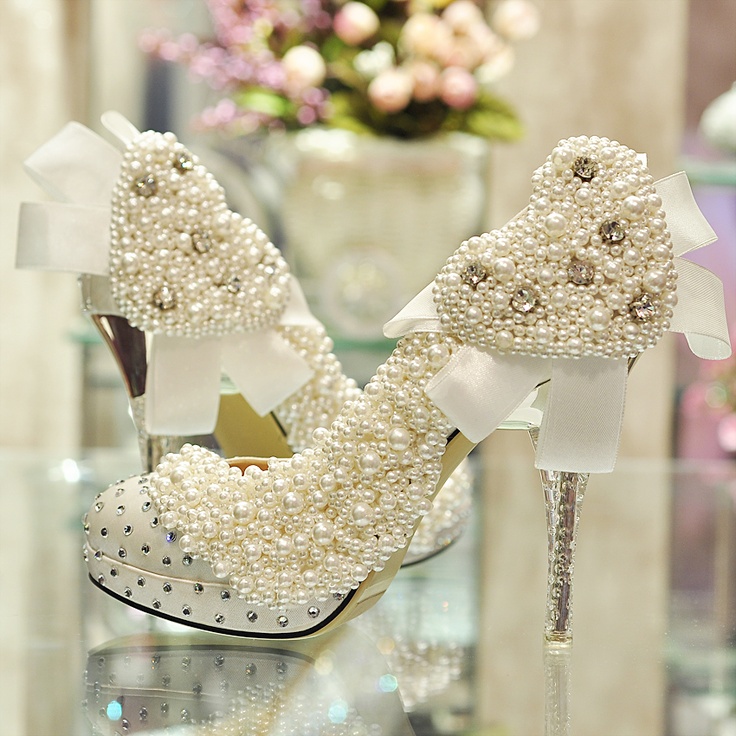
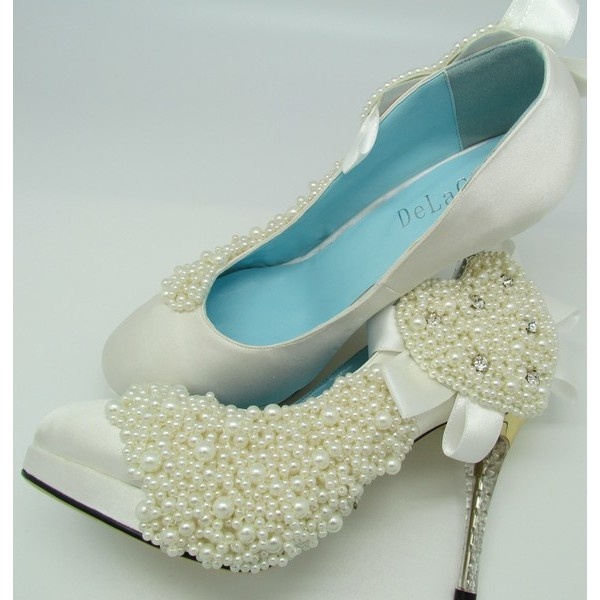
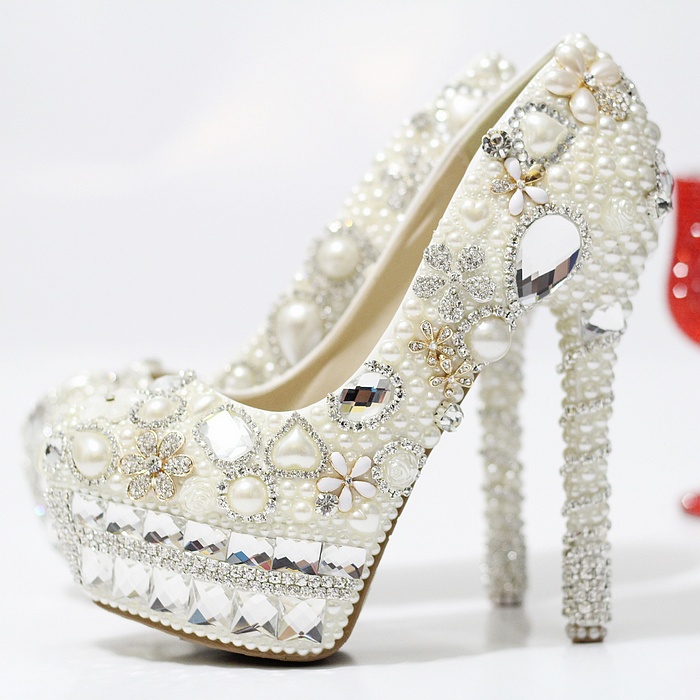
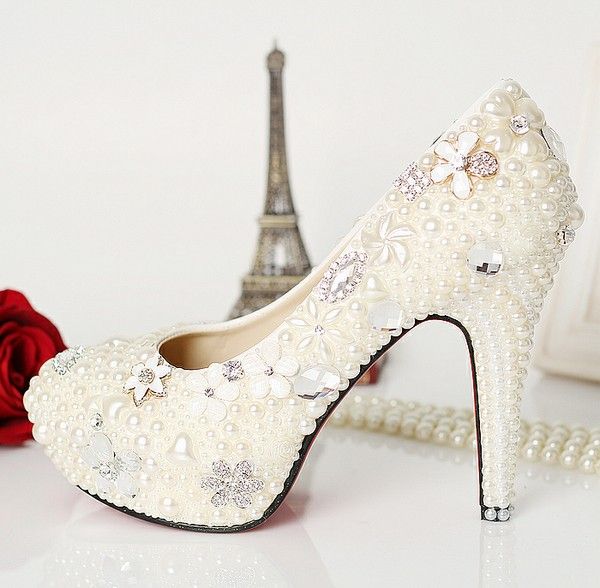
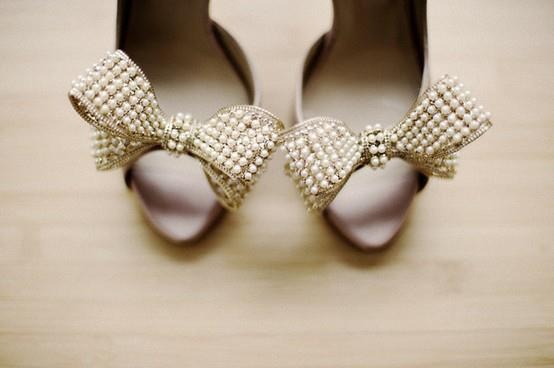
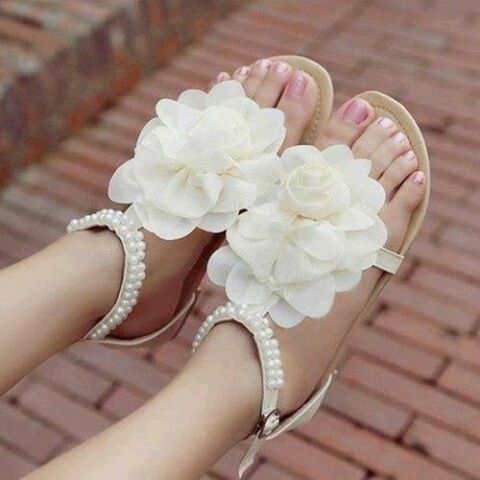
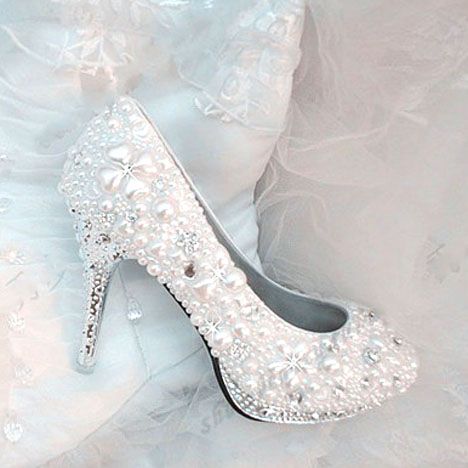
Pearls have long signaled polish at a wedding—on necklaces, in embroidery, scattered across veils. In the early 2010s the same quiet shine moved firmly onto shoes. Bridal footwear covered in pearls, or mixed with rhinestones and lace, offered a way to carry the accessory language of the dress down to the floor. The pairs gathered here show that mood: ivory and soft neutrals, clustered beads, crystal catch-lights, and silhouettes from classic pumps to more playful heels. Use them as a visual brief while you decide what “pearly” should mean for your own day—not as a shopping cart, but as a vocabulary of texture and light.
Why pearl works on bridal shoes
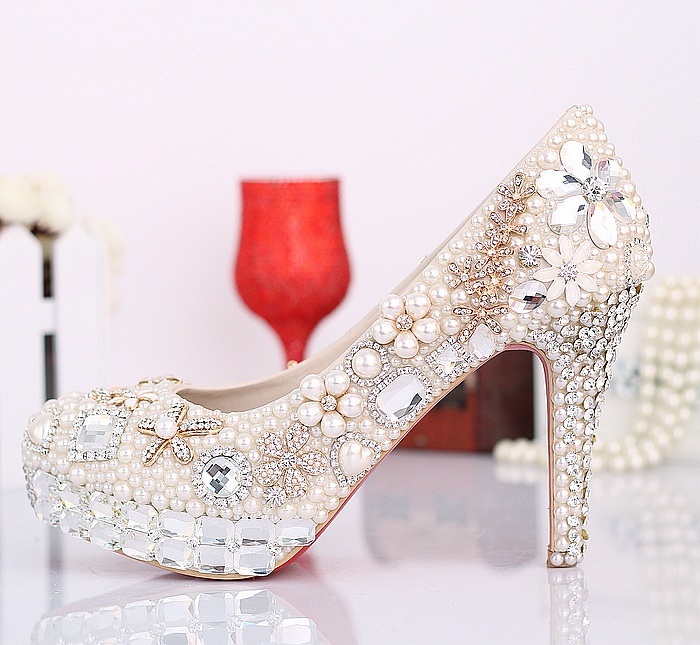
Pearl sits between sparkle and matte. Unlike a shoe paved only in clear crystals, pearl embellishment reads softer in photographs and less theatrical in daylight ceremonies. That softness pairs well with lace, silk, and tulle—fabrics that already carry romance without needing neon shine. Designers and stylists lean on pearl when the dress embroidery already uses seed pearls or when the jewelry plan is a classic strand; matching the shoe to that vocabulary keeps the look intentional instead of accidental.
Symbolism helps, but comfort and silhouette decide the day. Pearls suggest elegance and continuity more than trend-chasing. Still, a beautiful toe box that hurts by the first dance will photograph as a limp. Treat embellishment as the second decision after fit, heel height, and walking surface. Guests rarely remember a shoe brand; they remember whether you looked at ease walking toward people you love.
Color temperature matters more than many brides expect. Bright optical-white pearls can read cool against ivory satin. Cream, champagne, and soft blush pearls often sit more naturally beside warm dress fabrics and gold jewelry. If your gown swatches slightly pink or gold in sunlight, bring a fabric scrap when you try shoes so you are matching reality, not a phone screen.
How embellishment usually appears
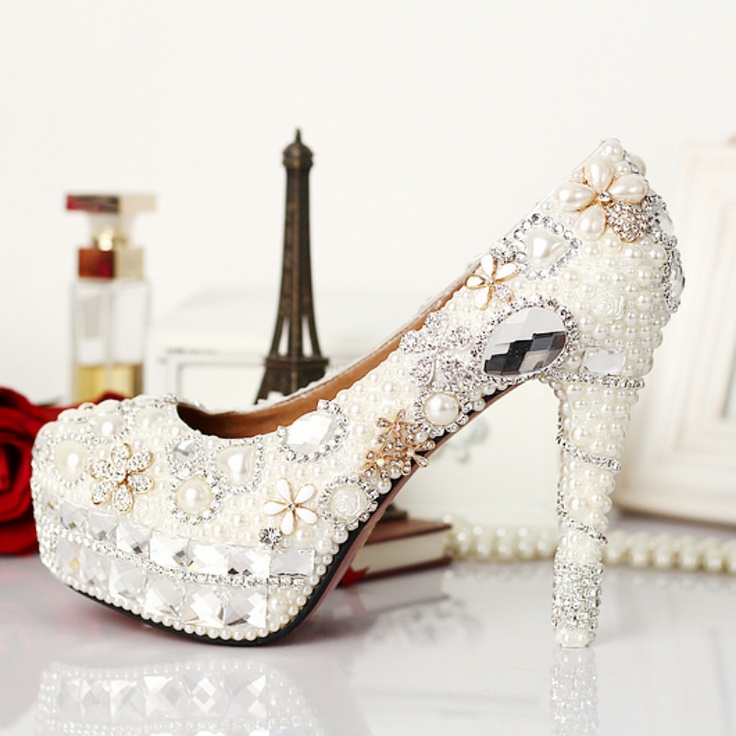
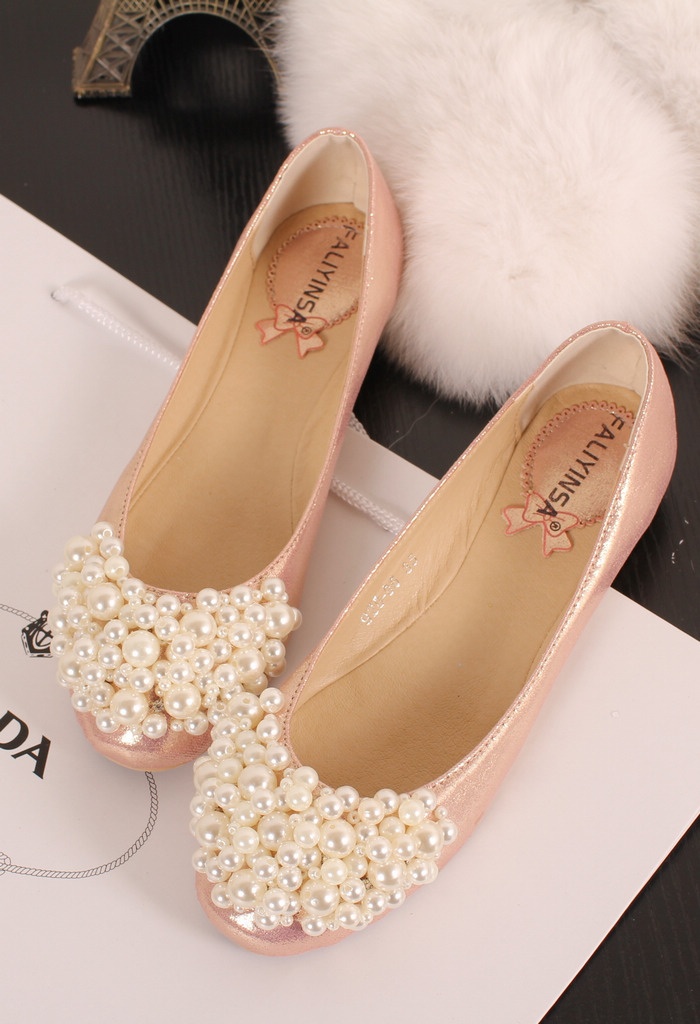
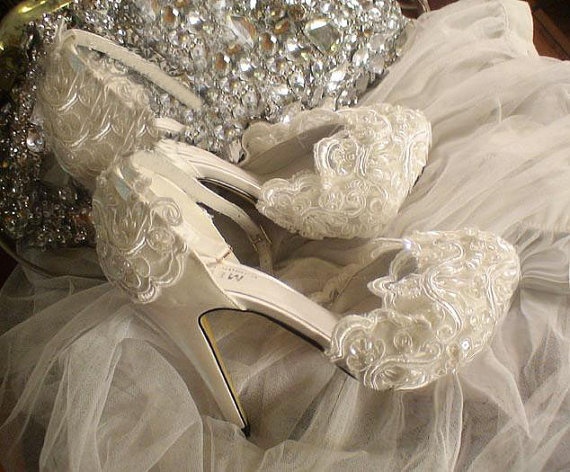
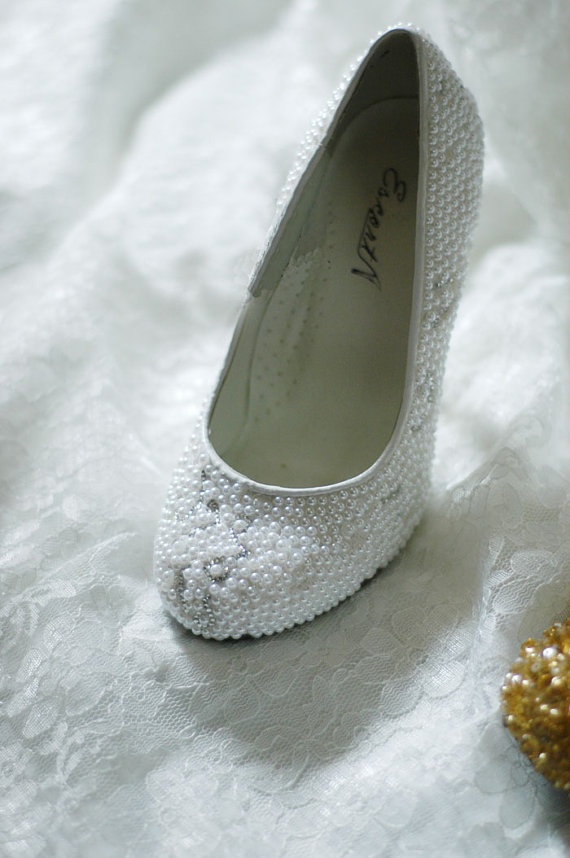
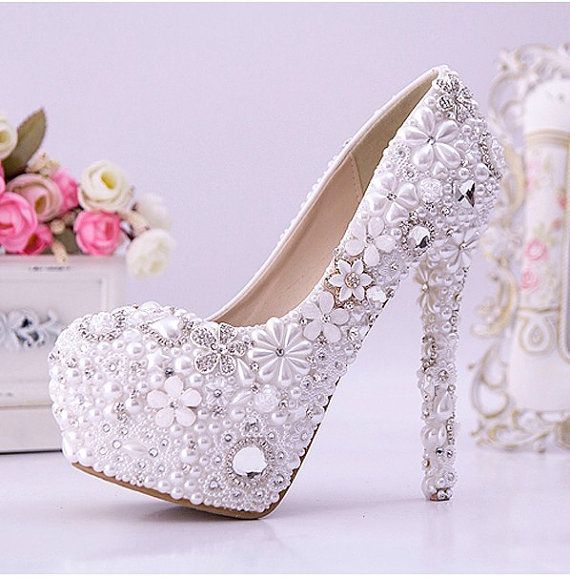
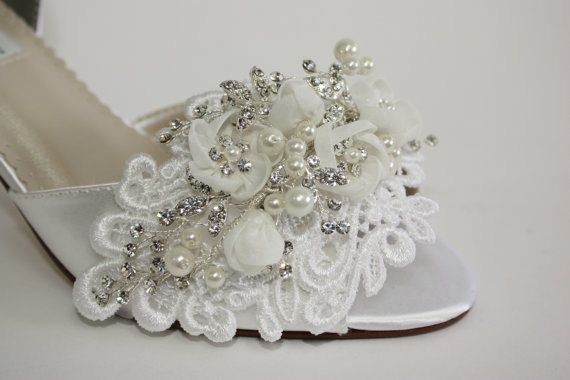
Some shoes use dense pearl coverage across the vamp, creating a jeweled surface that catches every step. Others place a single cluster at the toe or along a strap, letting smooth leather or satin dominate. Rhinestones often appear as accents between pearls—tiny mirrors that wake up evening light without turning the shoe into a disco ball. Lace overlays add texture: the pearl sits on top of a familiar bridal material, so the shoe feels continuous with the gown rather than like a separate costume piece.
Open styles—sandals, peep toes, ankle straps—show skin and make pearl edges more visible. Closed pumps hide more of the foot and push attention to the upper’s decoration and the heel line. Platform soles can help with height if you want drama without an extreme pitch; just confirm you can walk the aisle and outdoor paths you have actually booked, not only a boutique carpet. A shoe that thrives on flat marble can sink or wobble on lawn, gravel, or wooden decking.
Also notice scale. Large costume pearls read bold and fashion-forward; tiny seed pearls read couture-adjacent and quieter. Neither is wrong. Large pearls photograph well from a distance in group shots; fine seed work rewards close-up detail frames. If your photographer loves hemline and shoe details, denser texture pays off. If your priority is a clean full-length silhouette, a lighter cluster may serve you better.
Matching shoes to dress and jewelry
If the gown already carries heavy beading, a quieter pearl shoe—perhaps a slim strap with a modest cluster—avoids visual noise at the hem. If the dress is clean satin or crepe, a more decorated shoe can become the deliberate accent, especially in portraits that catch the hemline mid-step. Coordinate metal tones: silver-toned settings beside cool crystals, warmer cream pearls beside gold jewelry. Mixing every shimmer language at once—pearl shoe, crystal belt, gold cuff, silver hair vine—can look busy rather than rich.
Think about the ceremony lighting. Outdoor noon light flattens rhinestones and favors the soft roundness of pearl. Candlelit receptions reward a little crystal mixed in. Photographers often love a detail shot of pearl shoes against stone, wood, or bouquet ribbons; leave a few minutes in the timeline for that frame if the shoes are part of your aesthetic story. Tell the photographer in advance so the shot is intentional, not a rushed afterthought while guests are seating.
Veil and train length also change how shoes read. A cathedral train hides footwear for much of the ceremony; peep-toe sparkle may matter more at the reception when the train is bustled. A tea-length or short dress puts shoes on permanent display, so fit and finish deserve extra scrutiny—scuffs and missing beads show immediately.
Fit, weather, backup flats, and day-of practicality
Embellished shoes can be stiffer than plain satin pumps. Break them in at home on clean floors, check for rubbing at the heel, and bring blister supplies. If pearls are glued rather than sewn, ask how the pair handles light rain or grass; some outdoor venues punish delicate uppers. A second pair of simple flats or block heels in a matching color keeps you dancing after formal portraits. Many brides change after the ceremony photographs—pearly statement shoes for the aisle, softer shoes for hours of standing.
Budget ranges vary widely. Hand-applied pearl work costs more than printed or lightly studded designs. Decide whether you want heirloom-level craftsmanship or a season’s look; both are valid if the fit is honest. Avoid last-minute online orders without returns when sizing is uncertain. Measure both feet late in the day, and if you will wear fashion tights or bare feet, try the shoe the same way. Feet swell; a perfect morning fit can fail by cocktail hour.
Weather planning is unglamorous and useful. Humid summers make satin cling and adhesives soften. Cold venues stiffen materials. Keep a small emergency kit: fashion tape, a spare pearl or crystal if the maker supplied extras, alcohol wipes for scuffs, and clear nail polish for catching a loose thread on lace overlays. Assign someone—not you—to hold the kit.
How to use this gallery when you decide
Scan for silhouette first, then density of pearl, then the mix with crystal or lace. Save two or three references that share a mood with your dress rather than collecting every sparkly pair online. Take those references to a fitting so the stylist or shoe clerk can translate “pearly” into a real size and heel you can walk in. If you are customizing a plain pump with sew-on pearls, practice on a thrift shoe first; spacing and adhesive choice matter more than you expect. Uneven rows look handmade in the wrong way.
Ask practical questions in the shop: Can the heel tip be replaced? Is the embellishment sewn or glued? What happens if one pearl loosens—can it be repaired locally? Will the dye lot match if you need a second pair later? Those answers separate a wearable keepsake from a fragile prop.
Pearl wedding shoes succeed when they feel continuous with the rest of the bridal language—jewelry, dress texture, and the formality of the venue—while still letting you move. The examples above sketch the range: dense jeweled surfaces, delicate clusters, lace-and-pearl hybrids, and clean pumps with just enough shimmer. Pick the version that matches your ceremony’s light and your feet’s patience, then let the photographs catch the rest.

Comments
Continue reading
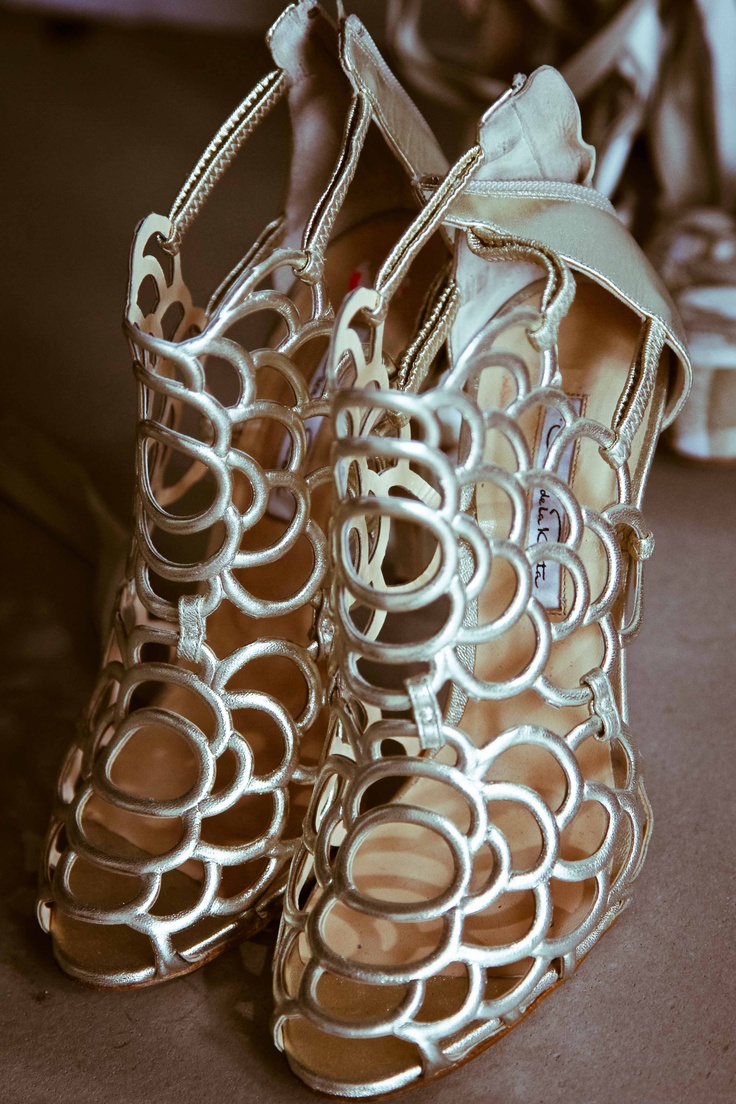
High-Heeled Party Shoes: How to Choose Sparkle That Still Walks
A fashion guide to evening heels—height, toe shape, metallics, and fit—so party shoes look dazzling and still survive the dance floor.
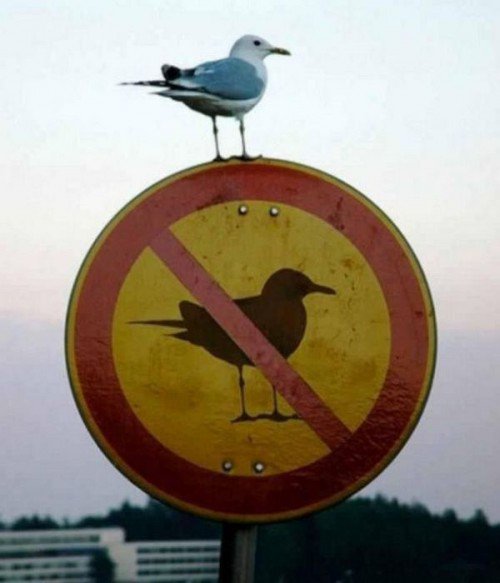
Funny Animal Signs That Warn People (While Animals Ignore Them)
From a seagull on a no-birds disc to classic zoo and park ironies—why animal warning signs get funny, and what the rules are still for.
How to Find Local Amenities on Vacation: Mechanics, Haircuts & More
Locate trustworthy local services and everyday spots while traveling or settling in—using publications, reviews, map apps, neighbor tips, and low-pressure exploration.