
Train Passengers Turned into Cartoon Characters by October Jones
Birmingham illustrator Joe Butcher (October Jones) matched sticky-note cartoon heads to unsuspecting commuters—and turned a long train ride into a daily comedy gallery.
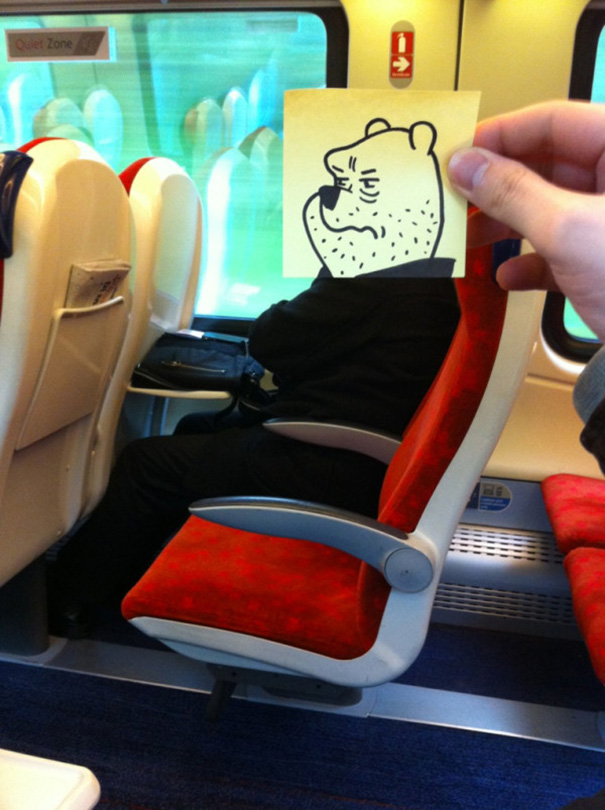
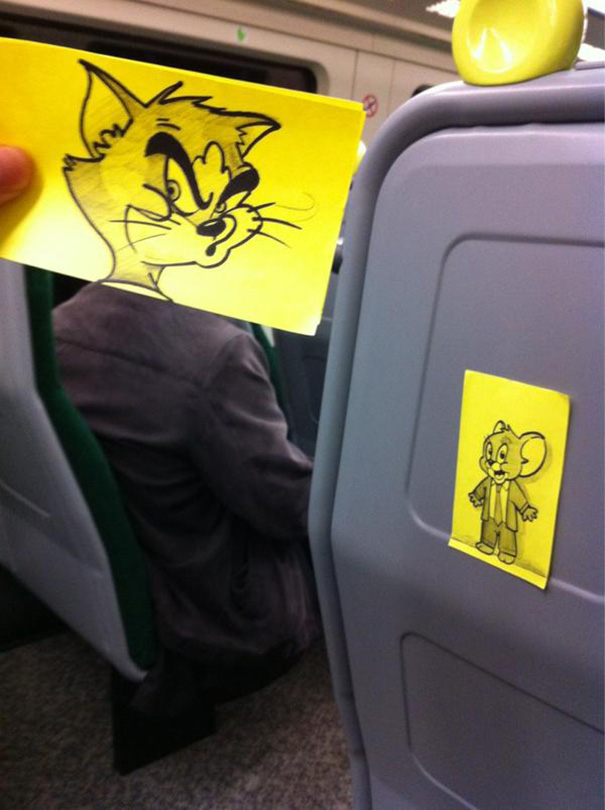
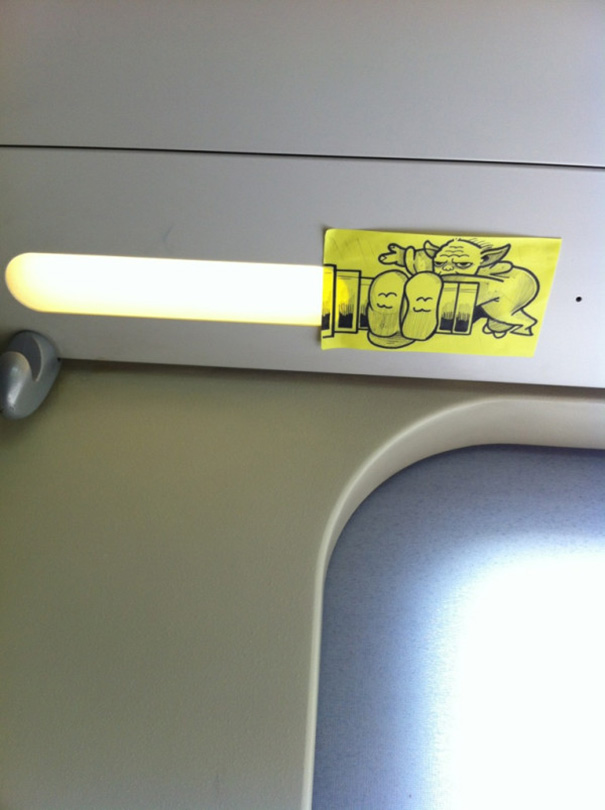
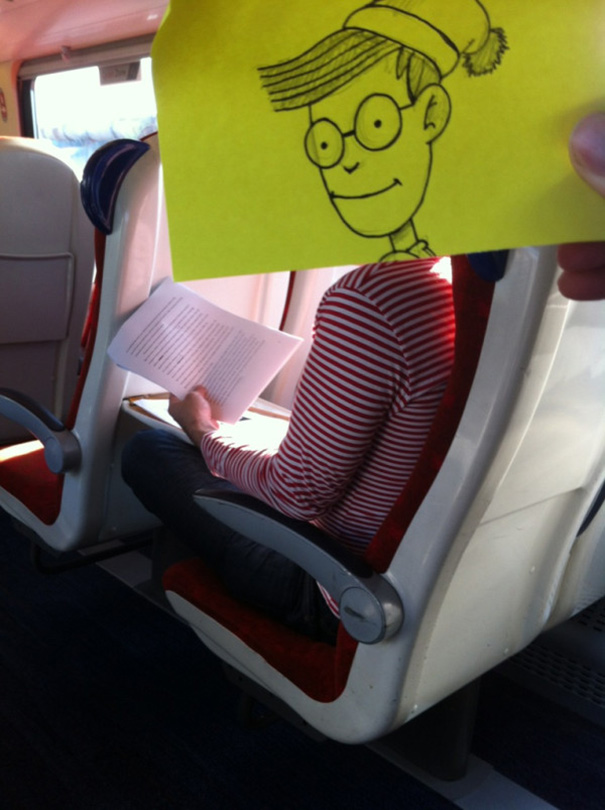
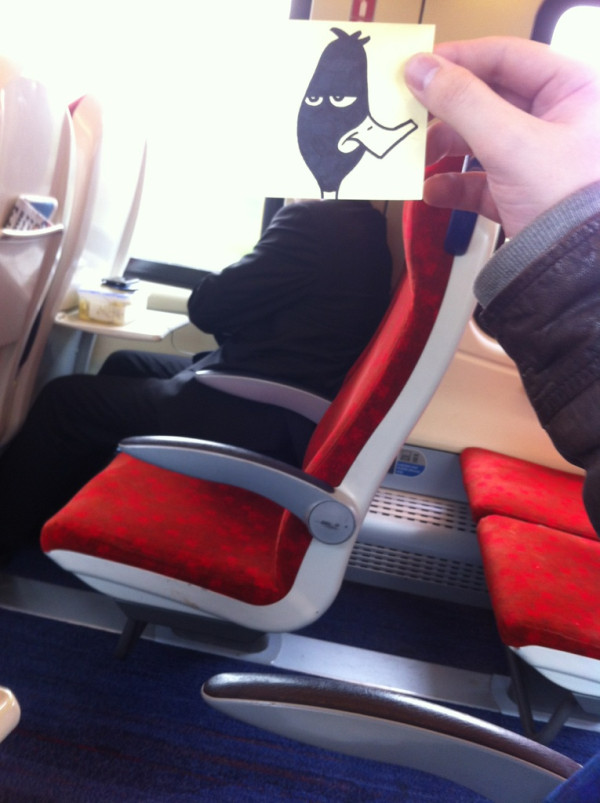
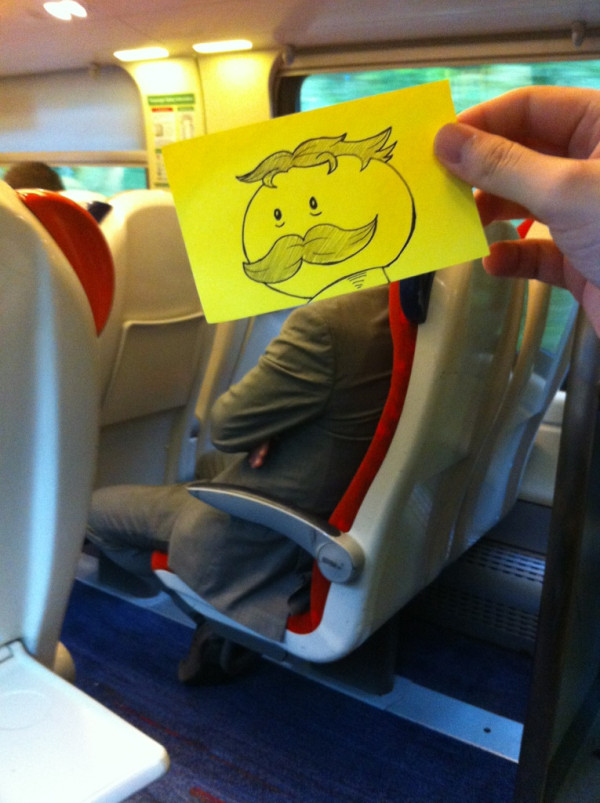
Most train rides are a negotiation with boredom: headphones, email, the window. Birmingham-born illustrator and animator Joe Butcher—better known by the pen name October Jones—chose a third option. On his commute he drew cartoon heads on sticky notes, lined them up with the coats and postures of strangers across the carriage, and photographed the mashups as if Batman, Winnie the Pooh, or a grumpy Mickey Mouse had bought a season ticket. The joke lands because the bodies stay real. A puffer jacket becomes the Hulk’s bulk. A long black coat becomes a comic-book silhouette. The faces are pure cartoon; the commute is not.
Butcher trained in animation at the University of Wolverhampton and later worked in media and children’s learning software. Outside that day job he built a large audience with the Tumblr-turned-book project Texts From Dog, a running gag about a canine texting in deadpan voice. The passenger series sits in the same spirit: small tools, sharp timing, daily output. He has said he started the drawings to fight a long commute, then posted them because they might brighten someone else’s journey. Stealth was part of the craft—he claimed he was never caught mid-sketch—because the humor depends on the subject remaining oblivious.
How the gag is built
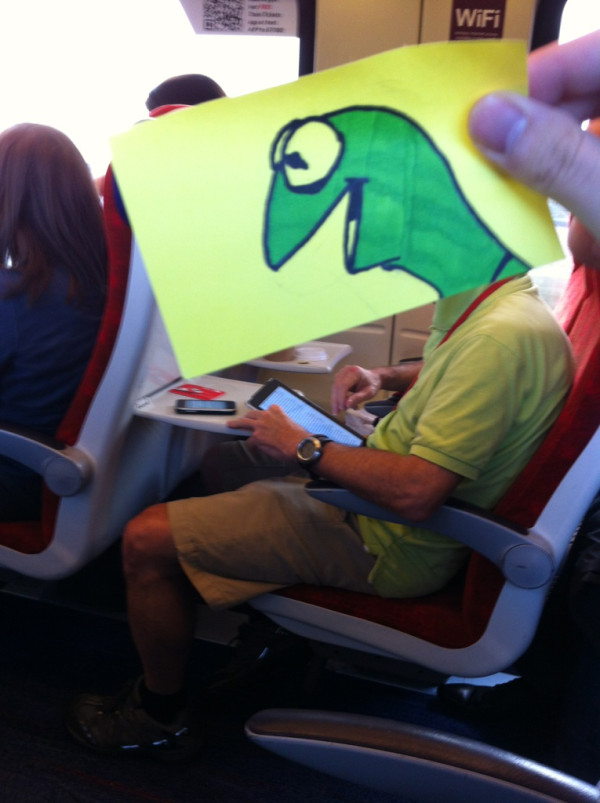
The method is almost absurdly simple, which is why it reads so cleanly in a photo feed. A sticky note is cheap, quiet, and the right size for a phone camera held at arm’s length. Marker lines stay bold enough to survive carriage lighting and compression on social media. The hard part is matching. Jones looked for color and attitude first: green fabric for a monster, yellow for a bear, a red jacket that could host a superhero jawline. Expression did the rest. A clenched Mickey Mouse reacts to someone laughing at his squeaky voice. A weary Pooh looks like he forgot to shave before the 7:42. ET appears to phone home in the quiet zone. The caption, when there was one, finished the skit; the alignment did the visual work.
Camera trickery here is mostly patience. Hold the note so the neckline meets the passenger’s collar. Keep the depth of field shallow enough that the carriage softens. Shoot before the stranger turns. The result is not digital face-swap; it is paper theater held for one frame. That honesty is why the series still feels handmade years after the first viral wave around early 2014. You can see the paper edge if you look for it. The magic is that most people do not look for it first—they look for the character.
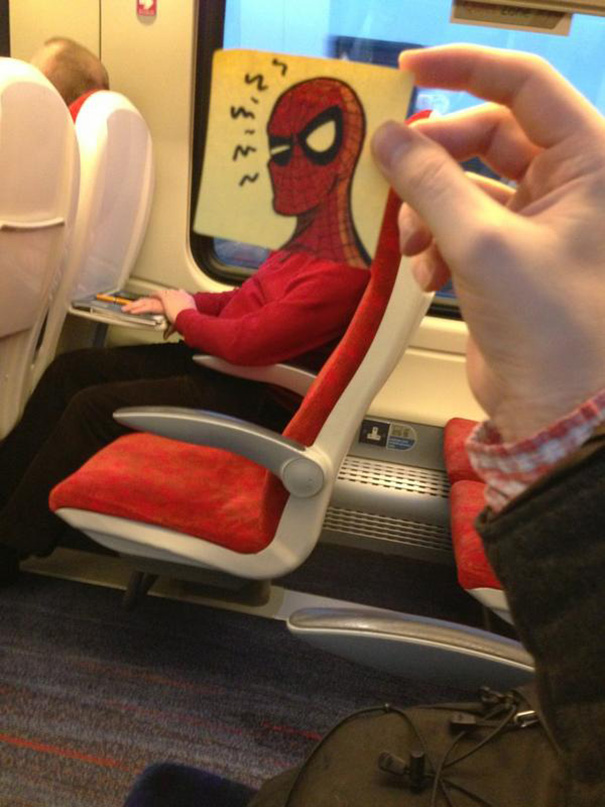
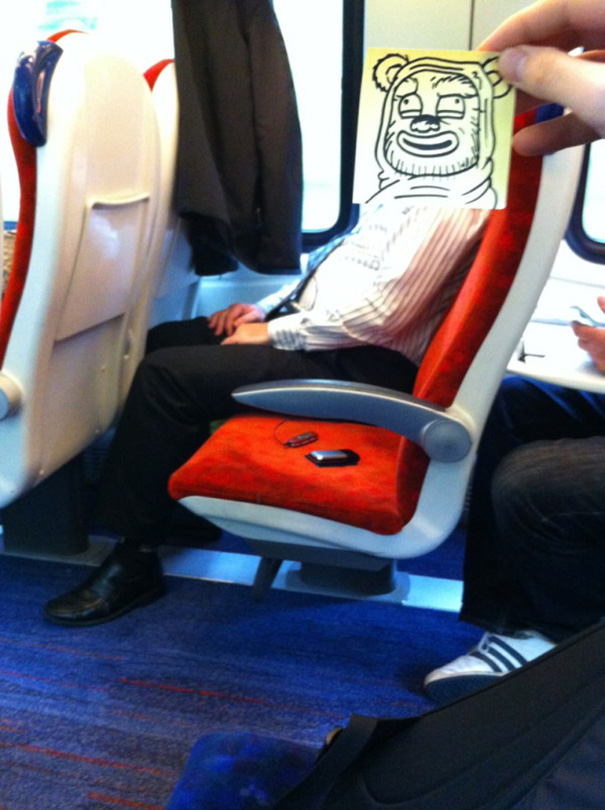
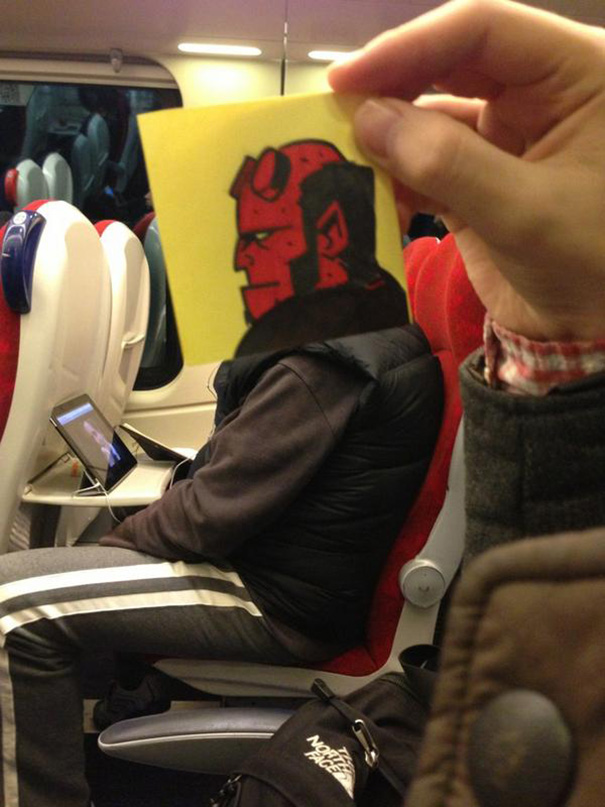
Cast of the carriage
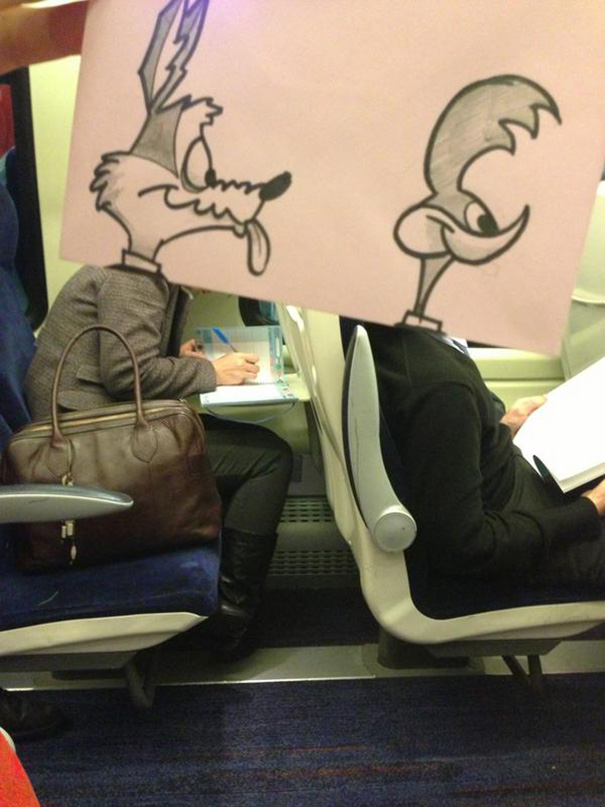
Across the gallery, pop culture does most of the casting. Superheroes and Saturday-morning faces dominate because their silhouettes read in a thumb-sized crop: Spider-Man, Batman, Hellboy, Daffy Duck, Kermit, Penfold. Chase gags appear too—Wile E. Coyote and Road Runner sharing a carriage aisle as if the Acme catalog had a UK rail franchise. The characters are familiar on purpose. Recognition is the punchline’s setup; the stranger’s real clothes are the punchline’s delivery.
What keeps the series from feeling mean is tone. The drawings exaggerate, but they rarely target body shape as cruelty. They target costume and posture as costume designers would: “this coat wants to be a cape,” “this scarf wants to be a collar.” The passengers become accidental cosplayers. That framing matters ethically as well as comedically. Street photography of strangers always carries risk; Jones’s paper masks turn the stranger into a cameo rather than a roast. Still, the subjects did not consent to starring roles—another reason the work lives better as affectionate prank than as a model for invasive phone photography.
Why the series traveled so far
By 2014 the images were circulating well beyond Jones’s own followers. News sites and design blogs picked up the sticky-note commute because it solved a shared problem with charm: how to make dead time feel creative without needing a studio. A montage of the cartoons gathered a large YouTube audience; stills hopped across Tumblr, Twitter, and roundup galleries. The format was perfect for the era—vertical enough for phones, narrative enough for a caption, repeatable enough for a daily habit.
It also sat at a useful intersection of illustration and street photography. Pure street work often asks the viewer to decode social distance. Pure character art asks for imagination without a real body. Jones’s hybrids do both in one glance. You get the cartoon, then the jacket, then the realization that the person never knew. That three-beat read is ideal for scrolling: surprise, recognition, smile. For illustrators, the takeaway was less “go film strangers” than “use the constraints you already have.” A commute supplies lighting, casting, wardrobe, and a deadline—the next stop.
There is also a craft lesson about volume. One clever sticky note is a gag. Dozens become a practice. Jones treated the carriage like a sketchbook with seats. Daily posting forced invention: new characters, new angles, new reactions. That discipline echoes animation training—thumbnails, timing, readable silhouettes—applied to public space instead of a lightbox.
Looking at the gallery
Scan the set for the seams that prove the method. Where does the paper meet the coat? Does the character’s color echo the passenger’s clothes? Is the expression reacting to something in the carriage—a phone, a laugh, the quiet-zone sign—or floating free as pure silliness? The strongest frames answer yes on all three. Weaker ones still amuse, but the best ones feel like frames from a sitcom that happens to be filmed on National Rail.
Notice, too, how little of the train is needed. A seat back, a window reflection, a bit of aisle: enough to certify “this is transit,” not enough to distract from the face swap. That economy is why sticky notes beat elaborate props. Complexity would spoil the stealth and the speed. The series is a reminder that illustration can be a portable performance—one pen, one pad, one phone—rather than a desk-bound product.
If you are an artist stuck in transit yourself, you do not need to copy the prank. You can borrow the observation habit: who in this carriage already looks half-costumed? What silhouette would complete them? Sketch privately in a notebook if public photography feels wrong for your context. The creative win is attention, not going viral. Jones’s commute cartoons remain a bright example of what happens when someone treats ordinary strangers as casting directors already did half the job—and then finishes the job with a smile drawn in marker.

Comments
Continue reading
Still-Life Photography by Margareth Perfoncio
São Paulo photographer Margareth Perfoncio’s still lifes of food and flowers—Old Master light, dark wood, and tables that feel inevitable.
Meaningful Love Quotes for Inspiration (and Ink)
Meaningful love quotes that still feel true — short lines for tattoos, gifts, and everyday reminders, with placement and wording tips.
Christina Hess’s Animals From History: Costumed Pets as Playful Portraits
Illustrator Christina Hess reimagines historical icons as ornate animal portraits—Elvis Petme and friends—mixing puns, costume detail, and soft history lessons.