
Michael Wolber and April Hartley’s 2014 Bend Wildfire Wedding Photos
When the Two Bulls fire forced an evacuation at Rock Springs Ranch, Josh Newton photographed Wolber and Hartley’s abbreviated Bend wedding with care—not spectacle.
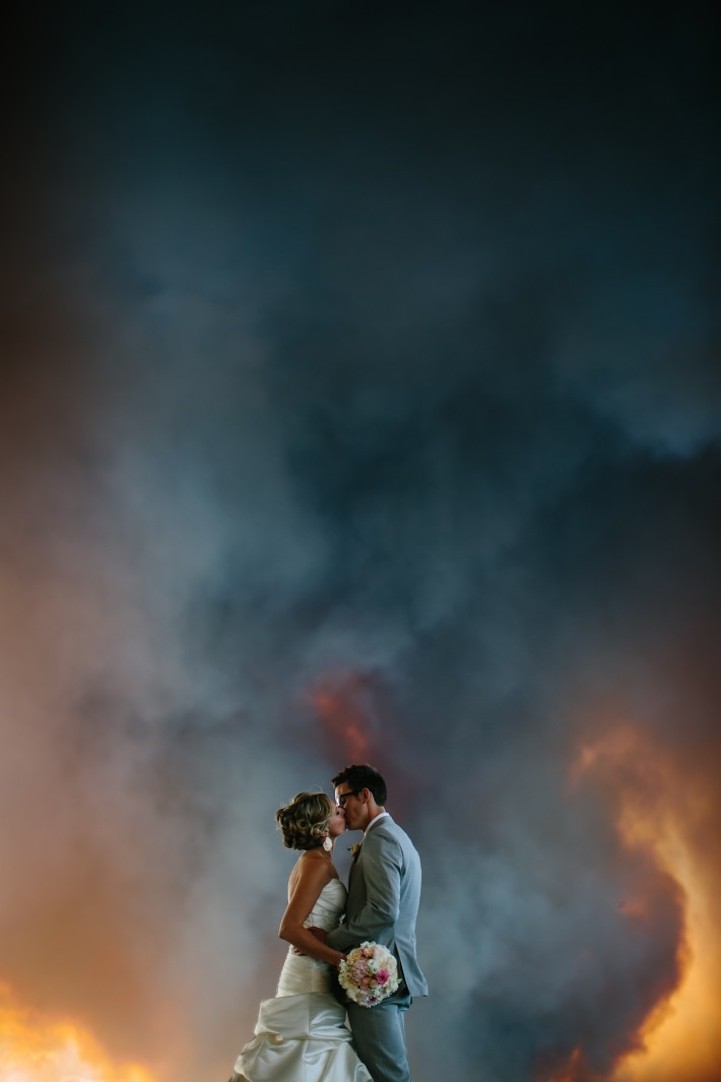
On June 7, 2014, Michael Wolber and April Hartley planned to marry at Rock Springs Ranch near Bend, Oregon. Guests were seated. The late-afternoon ceremony was about to begin. Then a fire truck arrived with sirens, and the Two Bulls wildfire—already burning in the high desert outside Bend—triggered an evacuation order on the venue. What followed was not a photo shoot staged for drama. It was a shortened vow exchange, a full reception relocation, and a brief set of portraits made while people packed under real pressure. Photographer Josh Newton, a childhood friend of the groom, documented that window with skill and restraint.
The story belongs with its names, places, and date intact. The images are striking. The context—firefighters, family, guests moving a wedding, a couple who measured the day by safety and marriage—matters more than the glow on the horizon.
What happened at Rock Springs Ranch
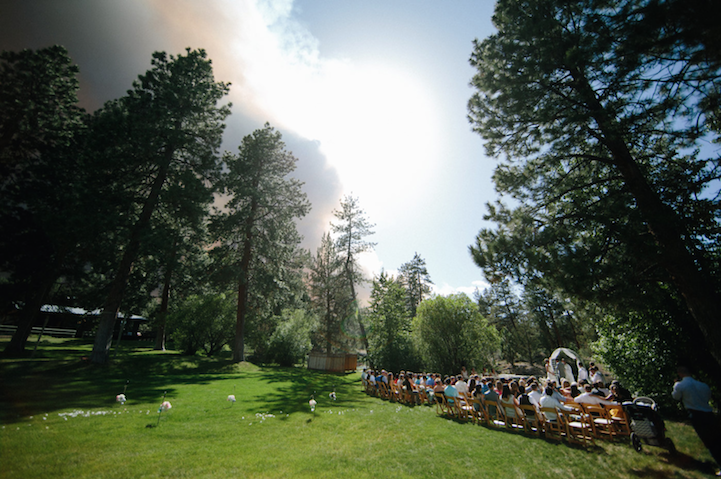
Wolber later told reporters the fire truck’s arrival felt like a movie. The urgency was not cinematic invention. April was about to walk down the aisle when firefighters stopped the ceremony. Her father, in tears, told guests they would have to leave the ranch. Evacuation meant tents, tables, chairs, flowers, cars, and people—everything required to clear an exposed venue near an active fire’s path.
Firefighters then allowed a compressed ceremony before the full move. Guests cheered. Vows were exchanged quickly. The reception plan shifted to Drake Park in downtown Bend. Wolber and Hartley—then living in Aloha and both working at Nike—later said the location change did not ruin the day. They arrived at the park as if celebrating there had been the plan all along. That composure shows in the portraits: calm between two people who had just gotten married under evacuation orders, not a couple seeking danger for a backdrop.
Understanding that sequence protects the story from becoming “disaster tourism.” The Two Bulls fire was a real Central Oregon incident. The ranch sat close enough to require official action. The photographs exist because the day changed, not because anyone ordered smoke for aesthetics.
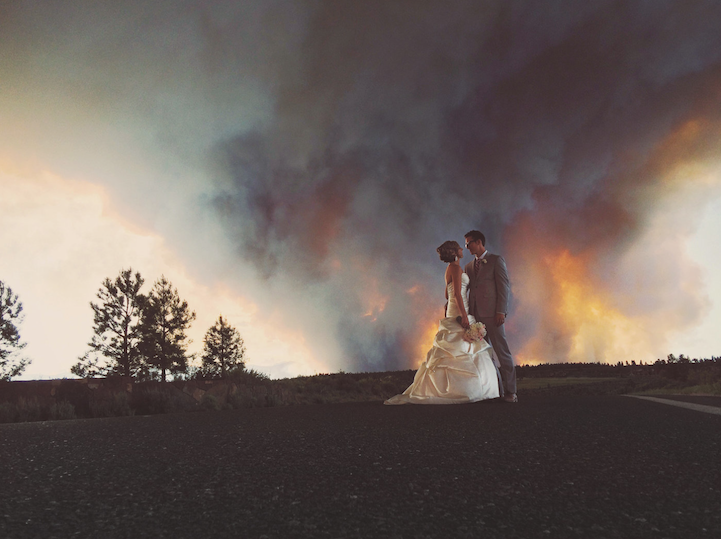
Josh Newton during the move
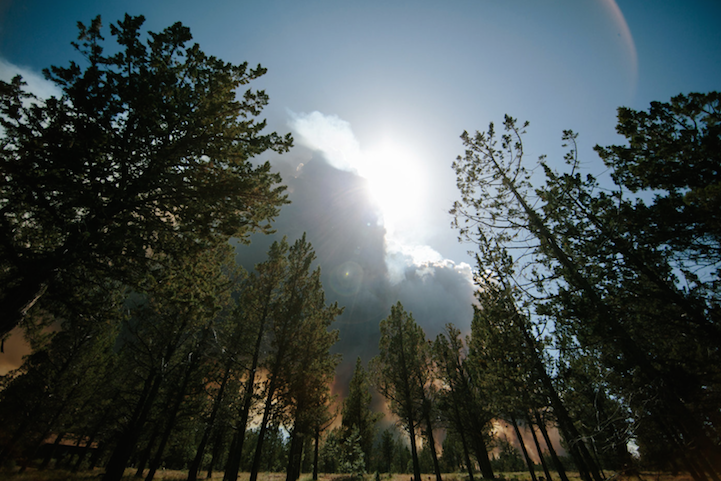
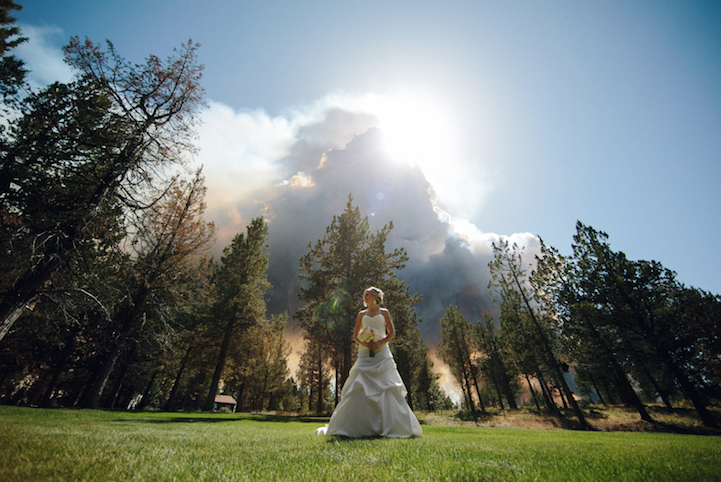
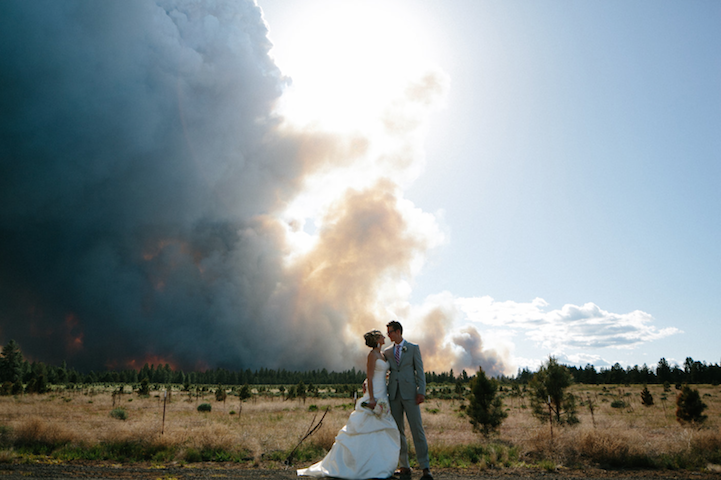
While guests packed and relocated, Newton took the newlyweds aside. He has said he wanted them away from logistics—tables, flowers, vehicles—so they could have minutes as a married couple rather than as emergency coordinators. Based in Santa Barbara and a longtime friend of Wolber’s, Newton convinced them to step away briefly. The frames use the plume and light of the Two Bulls fire as distant context, not as a prop the couple chased.
That distinction blurs once images go viral. In the days after the wedding, one of Newton’s Facebook posts drew tens of thousands of likes and shares. National outlets repeated the story. The photos are memorable because firelight and smoke create an uncommon sky. They are also documents of people who had just evacuated a ranch under orders. Reading them only as epic inspiration misses the guests rebuilding a reception in a city park and the crews managing an active wildfire.
Newton has photographed hundreds of weddings. He noted that every wedding has hiccups, and that nothing of this scale had happened in his experience. The line is useful: it stops the narrative from turning into a template for how to “get wildfire photos.” Nobody should plan around an active fire. These images exist because conditions forced a change, and because a photographer used a short safe window after vows and before the move was complete.
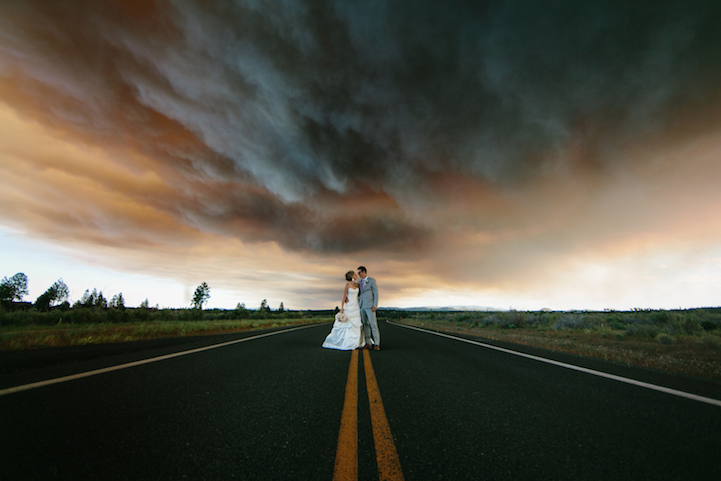
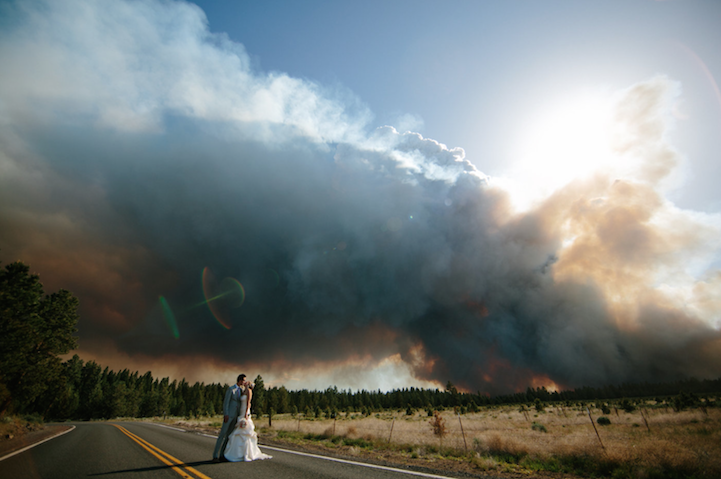
How to look at the photographs
Start with faces, not flames. In several frames, Wolber and Hartley attend to each other more than to the horizon. Newton often places the fire as a distant plane—visible, serious, not theatricalized into a special-effect overlay. Soft focus on smoke can make an image feel painterly; the underlying facts stay hard: dry landscape, wind, an evacuation clock.
Notice what is missing. These are not crowd scenes of panic. Guests are largely off-camera during the portrait set because they were doing unglamorous work: packing and moving. Newton later praised the couple’s attitude and called the day beautiful despite the disruption. Wolber’s remark that they would not change how the day went speaks to resilience after the fact, not to a preference for danger. When you look at dress fabric against orange light, remember the father who had to announce the evacuation and the firefighters who decided when a short ceremony could still happen.
Technical beauty and ethical reading can coexist. The compositions are strong. The light is rare. The correct response is still gratitude that people got married safely and relocated, not envy of the backdrop.
Why the story remains a historical photo essay
Central Oregon summers often bring fire risk. The Two Bulls fire of June 2014 was one incident among many that season, and it intersected a private celebration only because Rock Springs Ranch required evacuation. Media coverage naturally focused on the photographs. A fuller reading includes firefighters who made the call, a father who delivered bad news, friends who rebuilt a reception at Drake Park, and a couple who defined success as being married with everyone accounted for.
Viral wedding images sometimes get stripped of names and turned into mood boards. Resist that here. Michael Wolber, April Hartley, Josh Newton, Rock Springs Ranch, the Two Bulls fire, Bend, Aloha, Nike colleagues among the guests, a honeymoon itinerary that continued after the chaos—these details keep the essay human. The couple’s later comments emphasized beauty and teamwork, not thrill-seeking. Newton’s comments emphasized attitude and care. Those voices should lead any retelling.
For photographers, the craft lesson is quieter than the sky: stay useful during emergencies, protect the couple’s emotional bandwidth, make pictures only when it does not interfere with safety, and credit the people who moved tables as much as the person who held the camera.
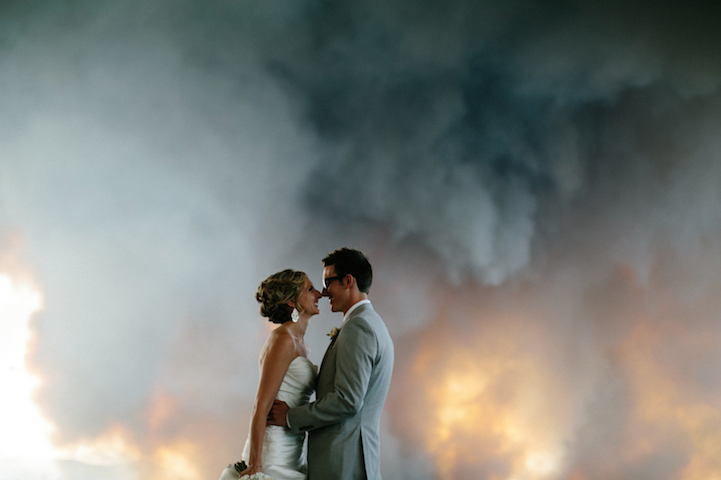
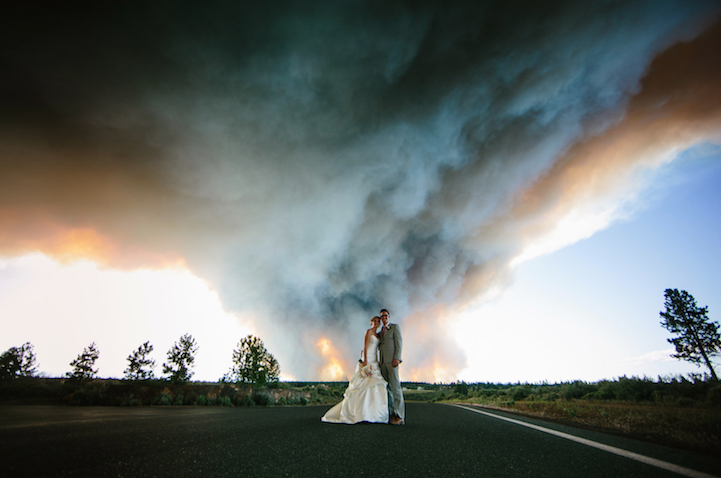
Look once more at how little the couple performs for the lens. Hands hold. Foreheads meet. Suit and dress read against a sky that was never on the timeline. The photographs remain remarkable because Newton balanced beauty with restraint. They remain worth keeping because the fire was not a backdrop anyone ordered—it shortened a ceremony and moved a celebration to Drake Park on a Saturday in June 2014.

Comments
Continue reading

Dramatic Photo Art by Sukron Ma’mun (Ipoenk Graphic)
Cirebon, Indonesia photographer Sukron Ma’mun uses theatrical natural light to frame village life, play, and place in lyrical photo art.

Bird’s-Eye Views: Florian Beaudenon’s Instant Life
Paris photographer Florian Beaudenon’s Instant Life series captures people in their rooms from above—intimate, collaborative overhead portraits of everyday joy.
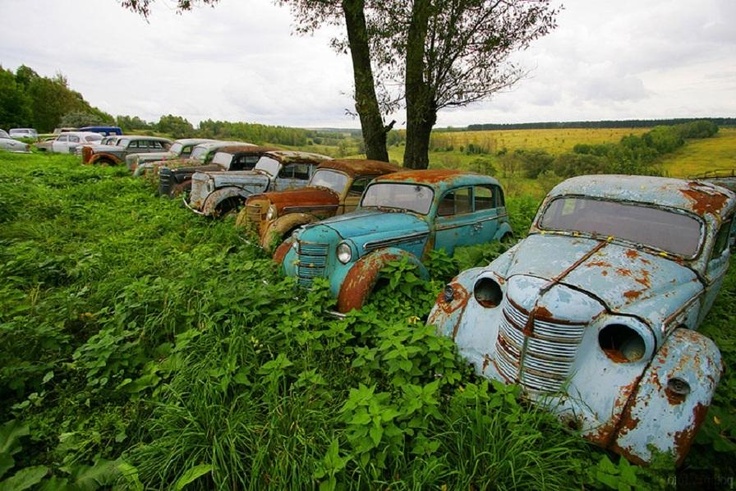
Abandoned Cars Reclaimed by Nature: Rust, Growth, and Quiet Ruin
When neglected vehicles are left outdoors long enough, rust, moss, and trees rewrite them into strange still lifes—sad, photogenic, and slowly returning to the ground.