
Lana Del Rey’s Blue Velvet for H&M: Johan Renck’s Fall 2012 Fashion Film
In September 2012, H&M released Johan Renck’s fully plotted film of Lana Del Rey covering Blue Velvet—the Lynch-tinged centerpiece of her autumn campaign, separate from her Paradise-era videos.
In September 2012, H&M put a fully plotted fashion film online: Lana Del Rey singing a cover of the 1950s standard “Blue Velvet,” directed by Johan Renck. The clip was not a leftover B-side promo and not a clip from her Born to Die cycle. It was the centerpiece of H&M’s autumn campaign—part TV commercial, part mini-movie, part music video—designed so shoppers could watch the entire narrative on hm.com while shorter cuts ran on television.
That hybrid mattered. Plenty of brands borrowed pop stars for lookbooks. Fewer handed a director like Renck a classic song, a Lynchian brief, and enough running time to build a story instead of a thirty-second smile. Del Rey, already a style magnet after her breakout year, became the global face and voice of the season. Print work by Inez van Lamsweerde and Vinoodh Matadin framed the clothes; the film carried the mood.
Why H&M chose Lana Del Rey
H&M announced the partnership in July 2012. Creative director Donald Schneider described Del Rey as a modern feminine figure with a soft attitude who had become a style icon almost overnight. The brand wanted an L.A. noir atmosphere that matched both the fall collection and her public image—retro glamour, shadowed romance, a little unease under the polish.
The campaign plan was unusually layered for a high-street retailer. There would be print. There would be a second winter-facing print chapter later, shot by Sølve Sundsbø. And there would be a film of Del Rey performing “Blue Velvet,” available in full online from around September 20, with edited versions feeding the TV buy. Throughout, she wore H&M fall pieces styled in her own register rather than as a blank mannequin.
For viewers who only knew Del Rey from “Video Games” or “Born to Die,” the H&M film offered a different entry point: not a new original single, but a cover chosen for its cultural freight. “Blue Velvet” already carried Bobby Vinton’s soft-pop sheen and David Lynch’s 1986 film of the same name—suburban surface, subterranean weirdness. Placing Del Rey inside that title was a statement about tone as much as about merchandising.
Johan Renck and the Lynchian brief
Johan Renck directed the piece. By 2012 he was known for fashion films, music videos, and prestige television work, including episodes of Breaking Bad. H&M and press coverage framed the commercial as Lynch-inspired: early-sixties makeup, beehive hair, stone-faced beauty, and deliberately unsettling details. Contemporary write-ups noted a creepy little-person figure wandering the frame—the kind of uncanny accent Lynch fans recognize immediately.
The finished film was described as fully plotted rather than as a montage of pretty outfits. That distinction is useful when you revisit the clip today. Fashion advertising often dissolves into product close-ups. Renck’s cut keeps performance, atmosphere, and narrative beats in the foreground while the clothes do their quieter job. A thirty-second teaser aired first; a behind-the-scenes promo circulated on H&M’s YouTube channel; then the long version arrived for anyone who wanted the complete mini-film.
Del Rey’s vocal approach to the song leans melancholic and deep-toned. The arrangement sits in the same emotional weather as her early catalog without pretending the track is a Born to Die leftover. It was released as a purchasable single as well, so the campaign had a music-retail afterlife beyond store windows.
What the film actually is—and is not
It helps to separate this piece from other 2012 Del Rey releases that share a calendar year but not a purpose. “Blue Velvet” for H&M is a brand film built around a cover. It is not the Paradise-era “Bel Air” promo, which arrived weeks later as a smoky, atmospheric clip tied to her own EP track and filmed in a completely different register. Confusing the two erases the point of each: one sells a seasonal collection through noir pastiche; the other closes an EP with celestial stillness and recycled Summertime Sadness imagery.
Nor is the H&M film a concert capture or a live-band performance video. Its grammar is cinema-advertising: controlled sets, stylized faces, fashion as costume design. Viewers coming for “another Lana music video” still get a performance, but the commissioning logic is retail. That does not make the film less interesting. It makes the collaboration clearer. When a high-street giant hires a prestige director and a polarizing pop figure, the result can either look like a press release with music or like a short that people actually finish. Renck’s cut aimed for the second outcome.
How the campaign rolled out
The sequence of drops mattered to how people encountered the film in autumn 2012. Confirmation of Del Rey as face of the campaign landed in midsummer. Set photography and teases followed. A short commercial edit leaked or aired ahead of the full premiere. Behind-the-scenes material invited curiosity without spoiling the plot. Then H&M posted the complete video online, timed to the collection’s visibility.
That drip-feed is classic fashion-media craft. It also mirrors how music videos worked in the YouTube era: teaser, full clip, social chatter. The difference is the URL destination. Instead of only living on a Vevo channel, the long cut lived as brand content—a reminder that in 2012 the line between “music video” and “fashion film” was already porous, especially for artists whose visual identity was half the product.
Print images by Inez and Vinoodh supplied still icons for magazines and store displays. The film supplied motion and sound. Together they argued that H&M’s fall wardrobe could sit inside a cinematic mood rather than a brightly lit catalog. Whether shoppers bought the clothes is a separate ledger question. As cultural packaging, the campaign succeeded in making a retail season feel like an event.
Watching it as a period piece
Return to the film now and you see early-2010s taste crystallized: Tumblr-adjacent Americana, mid-century hair, slow glamour, and a comfort with uncanny side characters. Del Rey’s public persona was still contested in some corners of music press; fashion preferred her as a ready-made muse. H&M bet on the muse reading. Schneider’s comments about uniqueness and a commercial that “looked like nothing else on TV” were marketing language, but the production values supported the claim better than most celebrity spots of the period.
The cover choice also ages interestingly. “Blue Velvet” as song title already primes Lynch associations before a single frame appears. Once the imagery leans into that association, the film becomes a conversation with cinema history as much as with H&M’s rails. You do not need to own the jacket to understand the vibe. You only need to recognize that beauty and dread can share a room.
For collectors of Del Rey’s visual timeline, the H&M “Blue Velvet” film sits beside her early music videos as a commissioned cousin: same year, same face, different employer, different song, different director. Keep that taxonomy straight and the autumn 2012 calendar makes more sense. One week you are watching a brand mini-movie. Another week you are watching an EP closer wrapped in smoke. Both are Lana Del Rey on camera in 2012. Only one of them was built to sell fall fashion through a classic cover.
If you want a practical way to revisit the piece, watch the long cut first, then the thirty-second TV edit. Notice what survives the trim: usually the most uncanny beat or the most unmistakable Del Rey close-up. Fashion films live or die on whether the short version still feels like a world. This one did—and that is why the full H&M premiere still reads as more than a shoppable afterthought.

Comments
Continue reading
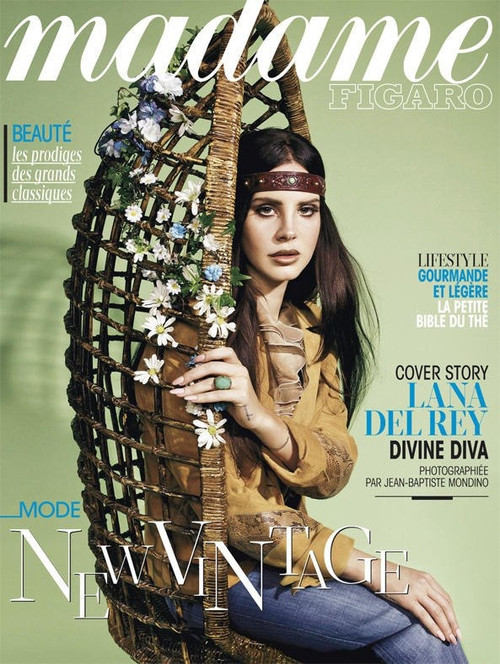
Lana Del Rey for Madame Figaro, January 2013
Jean-Baptiste Mondino’s Paris haute-hippie cover package for Madame Figaro’s January 2013 issue—suede, bronze light, and French weekly glamour.
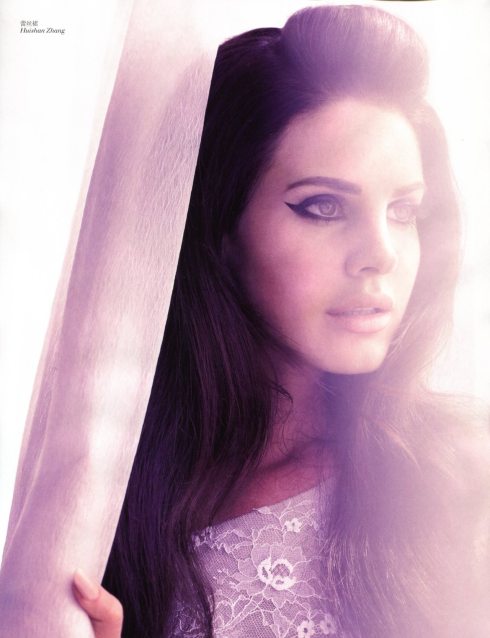
Lana Del Rey for Vogue China: Say Goodbye to the Wonderland
Wee Khim and Grace Lam’s ethereal January 2013 Vogue China story—soft waves, cat eyes, and dreamlike fashion far from French weekly bronze.
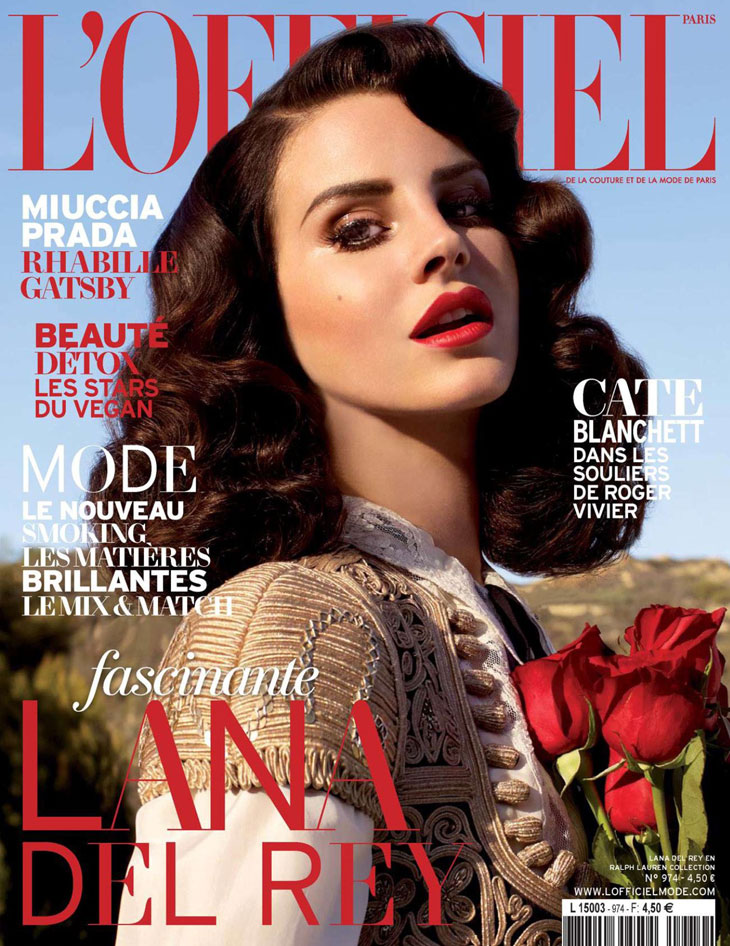
Lana Del Rey for L’Officiel Paris April 2013 by Nicole Nodland
Lana Del Rey’s April 2013 L’Officiel Paris cover story—Nicole Nodland’s Spanish-romantic Rosalita editorial, Vanessa Bellugeon styling, and Paris spring fashion voice.