
Lana Del Rey for L’Officiel Paris April 2013 by Nicole Nodland
Lana Del Rey’s April 2013 L’Officiel Paris cover story—Nicole Nodland’s Spanish-romantic Rosalita editorial, Vanessa Bellugeon styling, and Paris spring fashion voice.
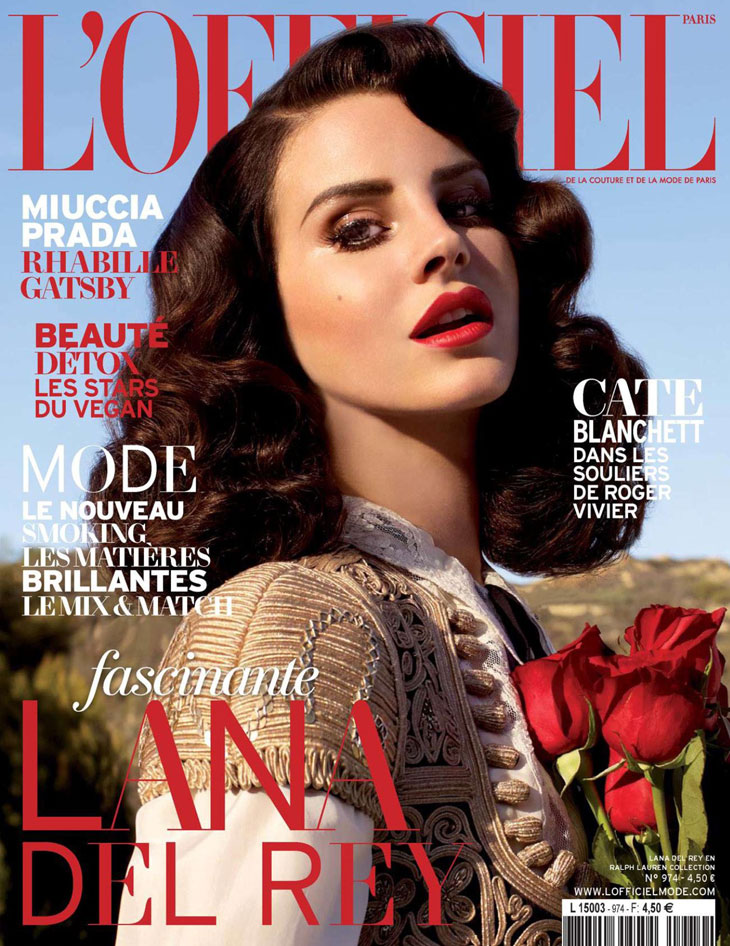
In April 2013, L’Officiel Paris put Lana Del Rey on its cover in a romantic, Spanish-inflected story photographed by Nicole Nodland. Styled by Vanessa Bellugeon, with creative direction associated with Adrien Pelletier and creative consulting by Johnny Blueeyes, the feature—remembered in contemporary coverage under titles such as “Rosalita”—runs as a long Parisian fashion essay: lace, religious costume cues, sunlit drama, and a European magazine voice that treats the singer as a couture-ready heroine rather than a beach-day celebrity. This is a historical look at that issue’s pictures and mood, not a present-tense fashion alert.
L’Officiel’s Paris edition speaks a different dialect from North American summer glossies. The April book sits in spring fashion calendar logic—new season clothes, denser narrative styling, and a French editorial tradition that likes character, costume, and literary heat. Nodland’s images give Del Rey room to play señorita romance, holy-garb solemnity, and lace sensuality across what blogs of the time described as a roughly fourteen-page spread. Hair by Anna Cofone and makeup by Pamela Cochrane—familiar names from Del Rey’s early-2010s fashion circuit—keep the face continuous even when the wardrobe changes nationality of reference.
That continuity of beauty team across multiple 2013 covers is itself a historical clue. Del Rey’s fashion years were not random one-offs; a small circle of collaborators helped stabilize her image while magazines reinvented the surrounding fiction. L’Officiel’s fiction for April was European romance with a Spanish accent. The clothes carry the plot; the face remains the recognizable narrator.
Paris voice, Spanish fantasy
The story’s Spanish theme is costume theater filtered through a French magazine. Ralph Lauren Collection appears in cover-related notes; inside looks reportedly move through Gucci, Dolce & Gabbana, Rochas, and other houses that can carry romantic weight. Lace, veiled or religious silhouettes, and sun-struck settings turn Del Rey into a figure closer to a filmed novella than to a chart-interview companion. That is L’Officiel’s job here: not to explain the album cycle in Q&A snippets alone, but to cast the star inside a fashion fiction with a European accent.
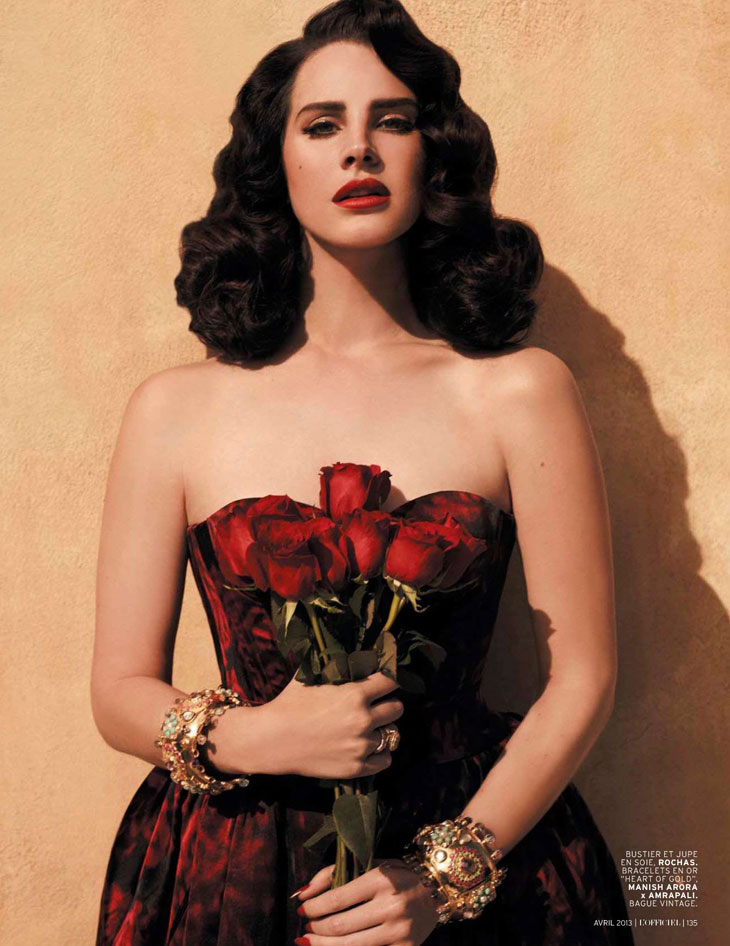
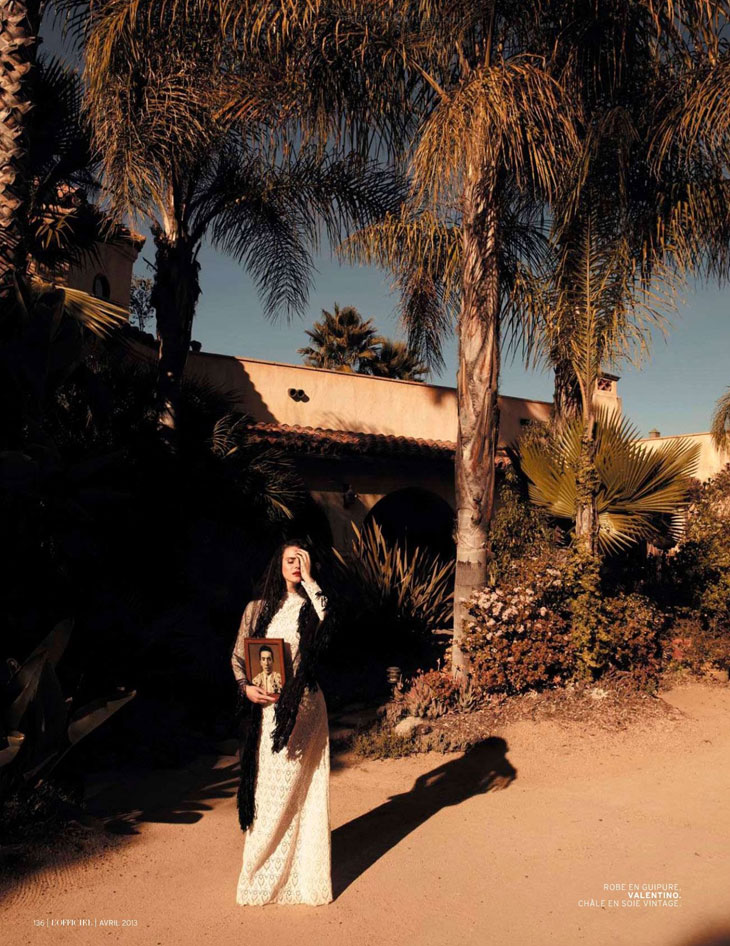
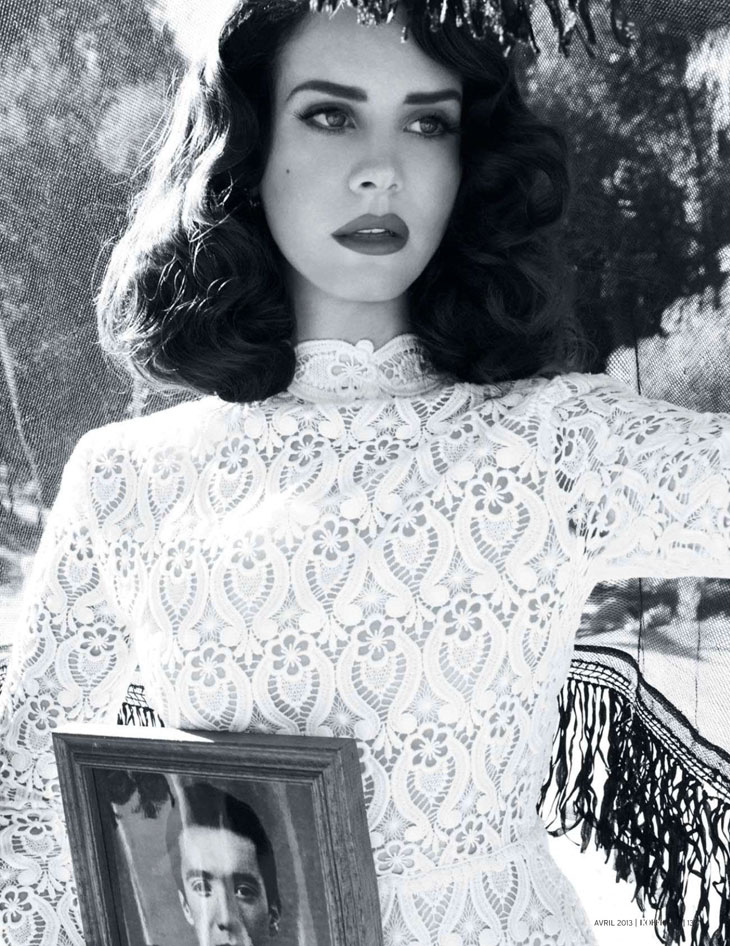
Del Rey’s own early-2013 comments about watching old Spanish films and hearing Spanish guitar in new work rhyme with this wardrobe. Magazines often amplify a muse’s private research into a full editorial climate. Nodland and Bellugeon do that amplification visually: the “actress-señorita” idea becomes pages of posture, fabric, and sacred-secular contrast. Readers in Paris encountered a cover girl who looked borrowed from a Mediterranean melodrama, even as the singer’s passport and chart story remained American.
French fashion media has long enjoyed that kind of casting—American pop figures restyled until they speak the magazine’s visual French. The Spanish quotation adds a third layer: not Paris street, not California motel, but a romantic Iberian fantasy filtered through Paris taste. The result is cosmopolitan pastiche, which is exactly what many high-fashion editorials of the period aimed for. Authenticity of place mattered less than coherence of mood.
Nicole Nodland’s romantic register
Nodland’s camera in this set favors warmth, closeness, and emotional temperature over beach-reportage clarity. Faces fill the frame; fabrics read as touchable; light often feels late-day or interior-sun rather than hard coastal noon. Where a Canadian summer cover might sell openness and shoreline myth, these April pictures sell intimacy and costume density. That difference is country and calendar as much as photographer preference. Paris spring fashion stories have long liked narrative dress-up; April 2013’s L’Officiel simply casts Del Rey as the lead.
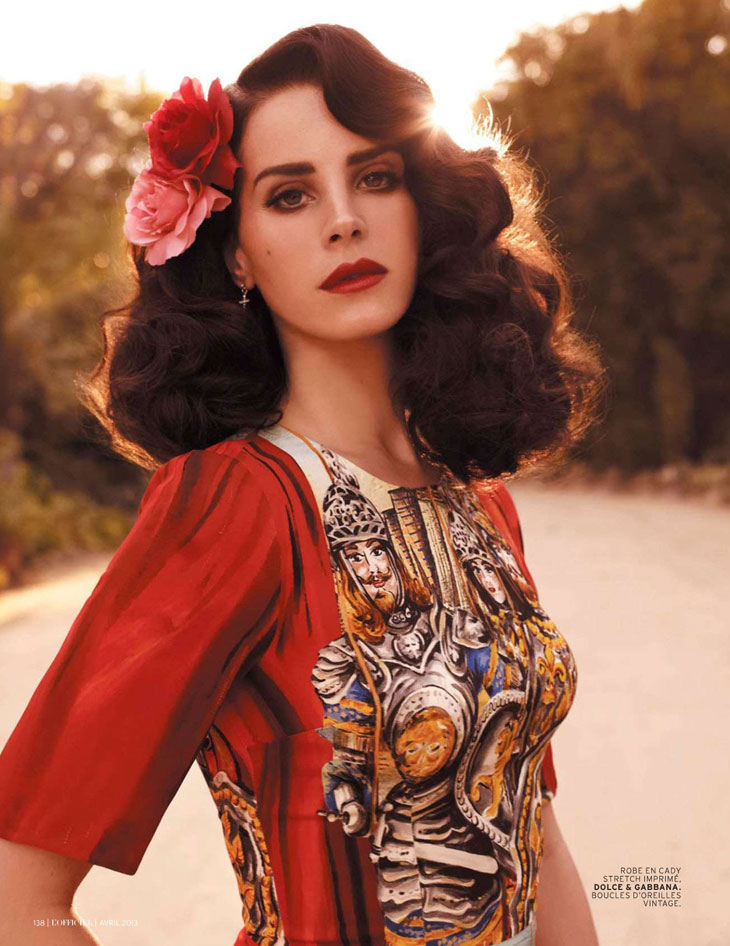
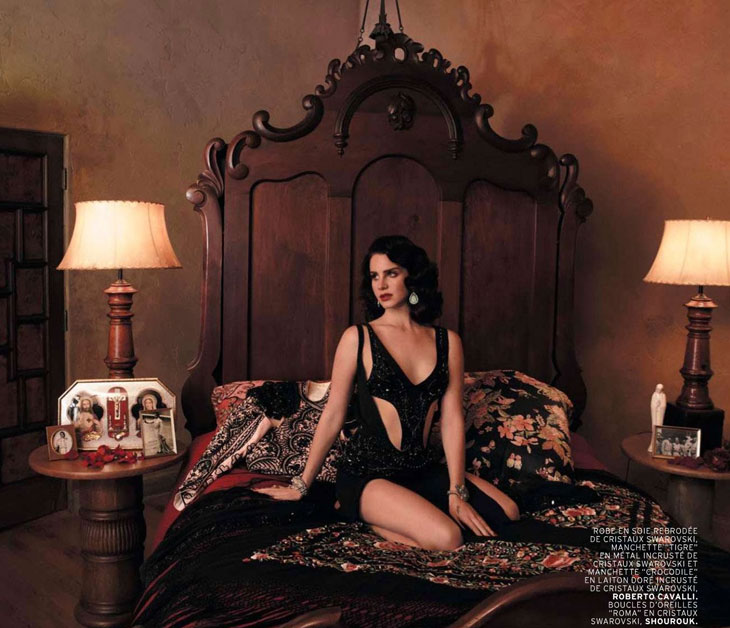
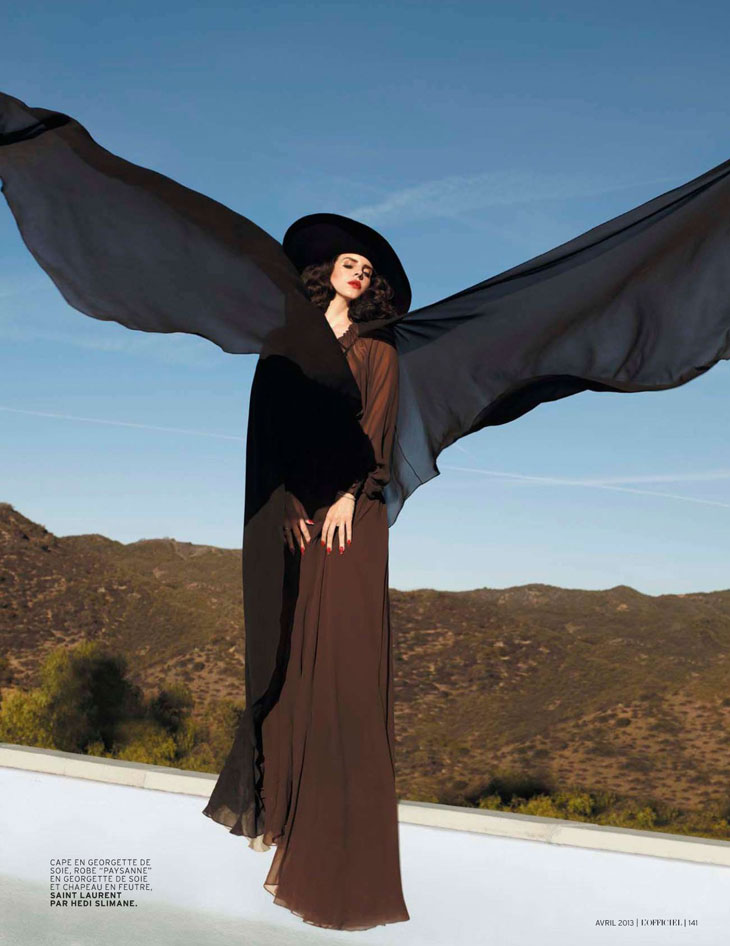
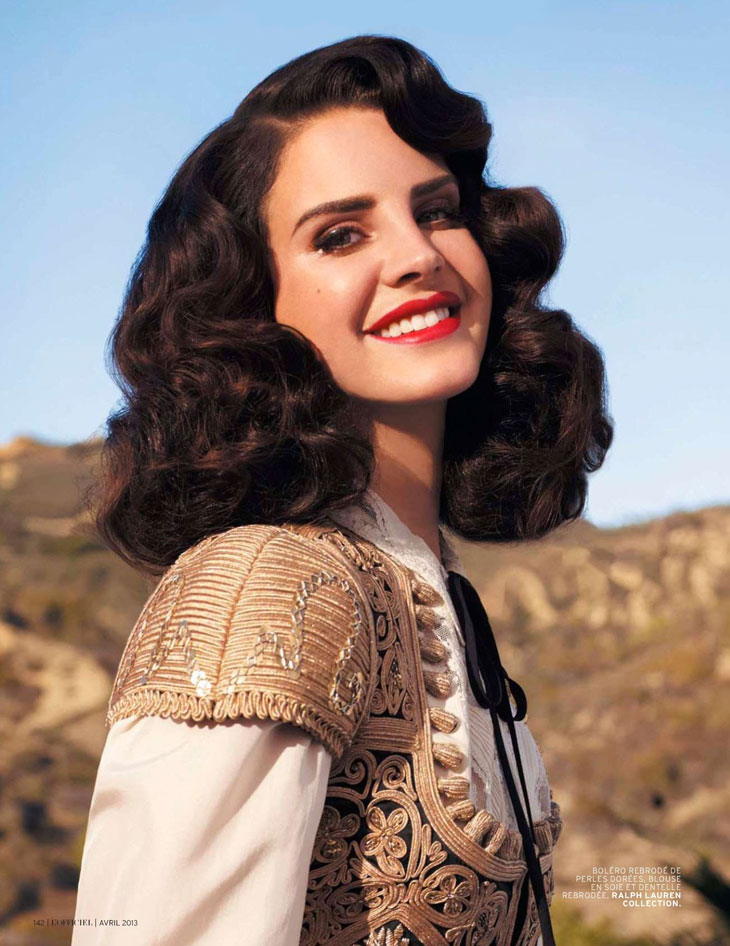
Bellugeon’s styling shifts Del Rey through registers: polished designer cover elegance, lace romance, and looks that flirt with religious iconography. Contemporary write-ups described her moving through varied locations and attitudes—sometimes smouldering, sometimes solemn—without losing the recognizable Del Rey mouth and gaze. Versatility is the modeling thesis. The magazine argues, frame by frame, that the same singer who owned Americana melancholy could also wear European romantic costume without looking like a tourist in the clothes.
Watch how jewelry and hair ornaments change the temperature. A simpler neckline pushes attention to the face and the lace. Heavier ornamentation turns the frame toward costume drama. Nodland’s tighter crops reward lipstick and eye makeup; fuller lengths reward silhouette and fabric weight. Reading an editorial means toggling between those scales instead of skimming for a single “best” dress.
2013 context: after Born to Die, before the myth hardened
By spring 2013, Born to Die had already proven a global commercial force, and Del Rey’s fashion adoption was in full swing. L’Officiel’s cover arrives in that window when magazines competed to redefine her: not only the “national anthem” Americana figure, but a flexible high-fashion subject. Press notes around the issue also nodded to forthcoming music described as more spiritual lyricically—language that sits interestingly beside holy-garb styling even if the magazine’s primary job is clothes, not album preview.
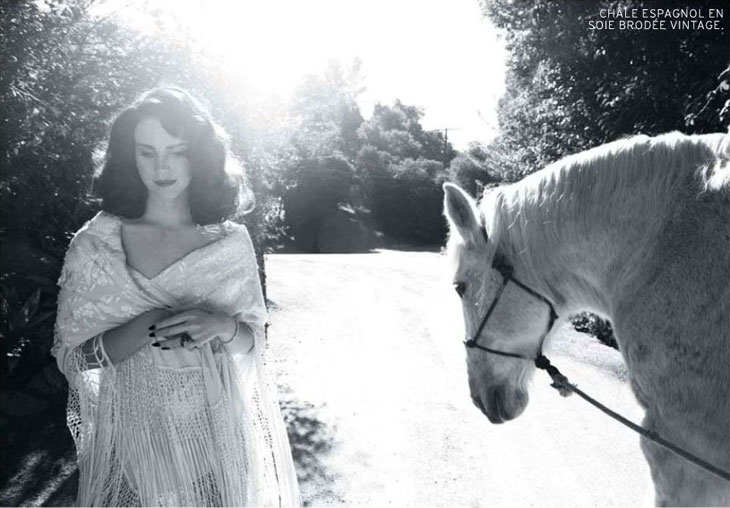
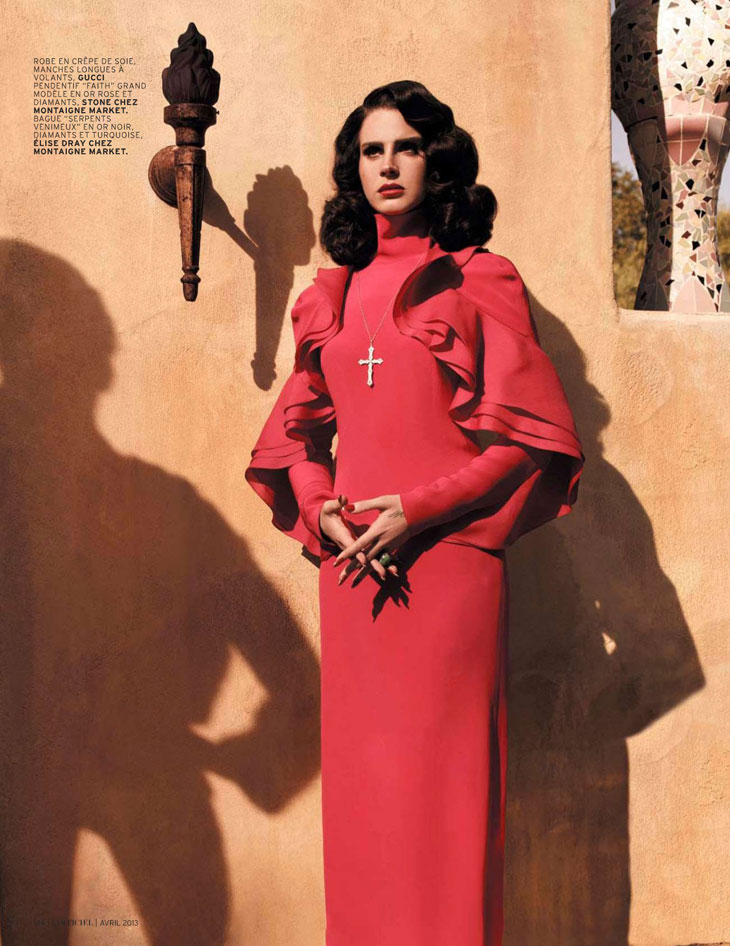
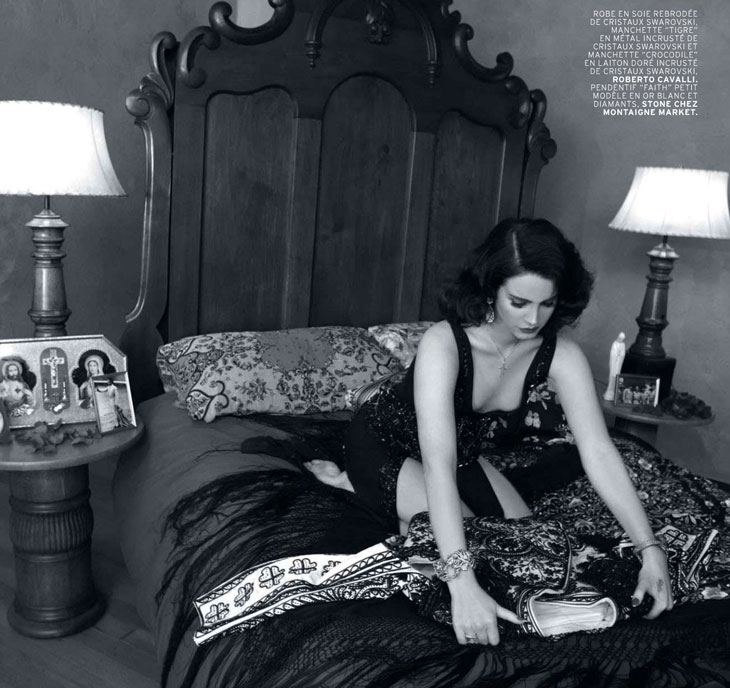
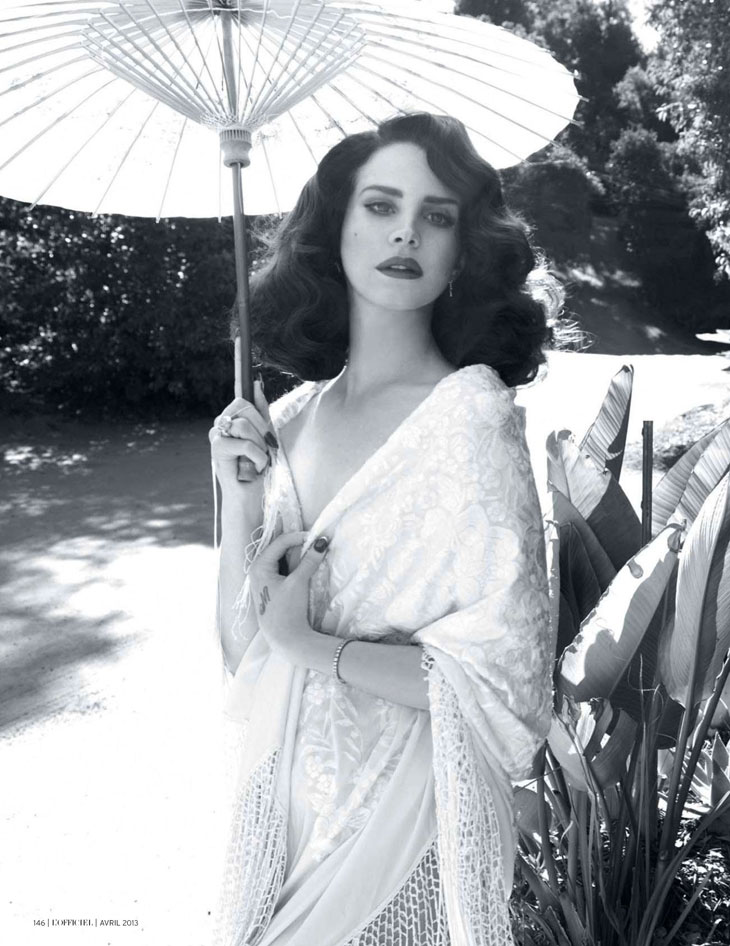
Keep the dating honest. Online galleries and blog posts spread the images in March 2013 ahead of the April cover month—normal for international fashion media. Looking at them now means refusing to flatten 2013 into today’s trends. The lace, the Spanish quotation, the Paris masthead: those are coordinates on a map of that season’s editorial appetite. Johnny Blueeyes’s consulting presence also links this French story to other Del Rey fashion chapters of the period, a reminder that persona management and magazine fantasy were already working in tandem.
Compare, carefully, with the Canadian FASHION Magazine summer cover from the same year. That story—Williams and Hirakawa, Zuma Beach, “Lana Mania”—sold Pacific light and North American newsstand glamour. This L’Officiel chapter sells Paris spring density and romantic costume. Same star, same broad season of fame; different country, different stylist thesis, different weather of desire. Keeping those files separate is how an archive stays useful.
How to read the photographs
Move through the set as if it were a short film rather than a shopping lookbook. Notice when Nodland chooses a full-length costume portrait versus a closer face study. Track how lace and black volumes change Del Rey’s silhouette from bridal softness to dramatic severity. Watch for religious or ceremonial cues and ask what emotion they borrow—solemnity, confession, theatrical piety—without needing the magazine to caption every symbol. Compare a sunlit outdoor frame with a tighter interior-feeling crop; the story’s romance lives in that temperature change.
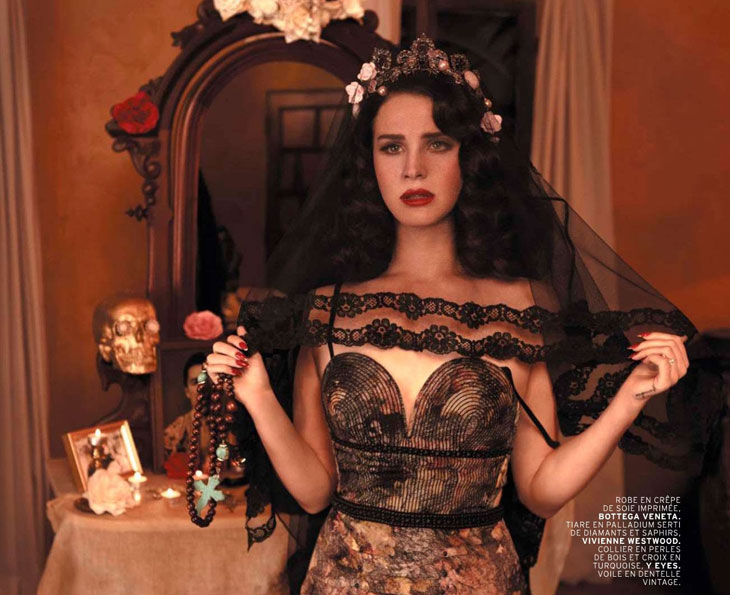
Pay attention to hands and gaze as much as dresses. Del Rey’s modeling strength in this period often lived in stillness—the held look, the slightly parted mouth, the sense of a private narrative interrupted by the shutter. Nodland uses that stillness. Bellugeon’s clothes give it new costumes. L’Officiel’s masthead gives it a Paris address. Together they produce an April 2013 artifact that still reads clearly if you refuse to confuse it with later eras or with beach covers from elsewhere.
File the feature under L’Officiel Paris / April 2013 / Nicole Nodland / Spanish romantic costume. When a later scroll tempts you to merge every Del Rey magazine page into one moodboard, pull this set out again and ask what only Paris April was trying to say. The answer is in the lace and the light: a European romantic novella, twelve or fourteen pages long, starring a California voice in French fashion’s borrowed Spain.

Comments
Continue reading
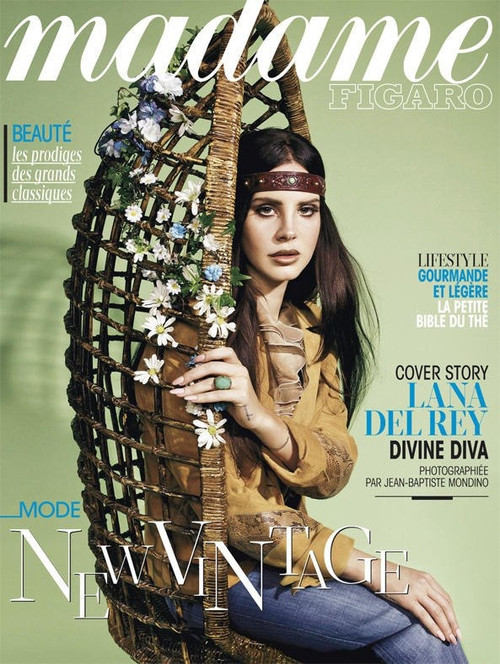
Lana Del Rey for Madame Figaro, January 2013
Jean-Baptiste Mondino’s Paris haute-hippie cover package for Madame Figaro’s January 2013 issue—suede, bronze light, and French weekly glamour.
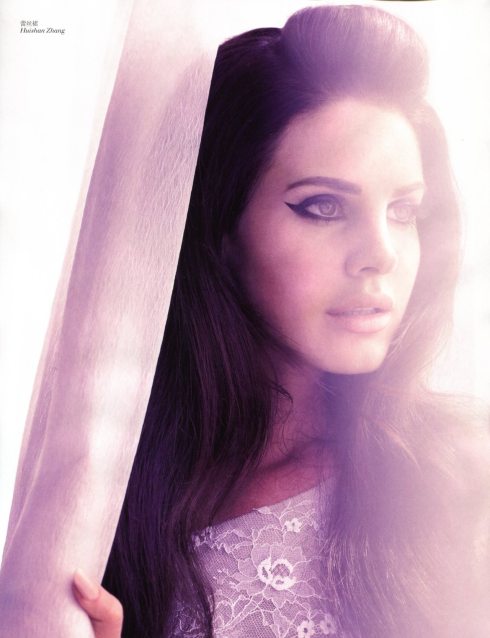
Lana Del Rey for Vogue China: Say Goodbye to the Wonderland
Wee Khim and Grace Lam’s ethereal January 2013 Vogue China story—soft waves, cat eyes, and dreamlike fashion far from French weekly bronze.
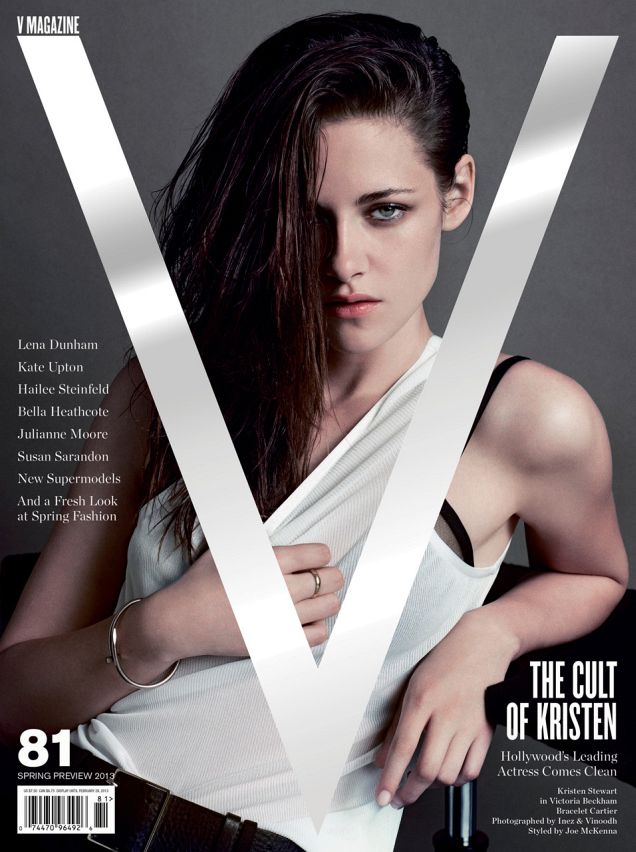
Kristen Stewart for V Magazine, Spring Preview 2013
V81’s Wild at Heart cover story—Kristen Stewart shot by Inez & Vinoodh, styled by Joe McKenna, in pale minimal spring glamour.