
Light Up Your Home with Fall Lanterns
Seasonal lantern ideas for porch, mantel, and table—materials, placements, fillers, color stories, and safety tips to warm autumn evenings.
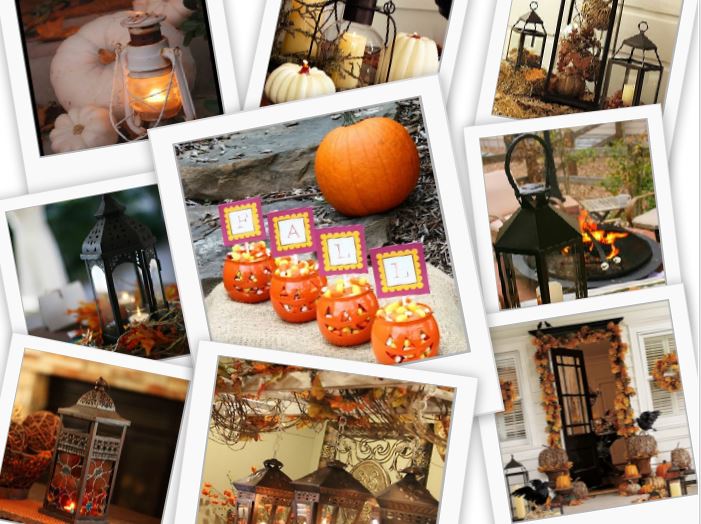
When autumn color arrives, lanterns are one of the simplest ways to bring that warmth indoors and onto the porch. A lantern does what a flat wreath cannot: it throws light into the early dark, marks an entry path, and turns a side table or step into a small stage. This guide gathers practical ways to light your home with fall lanterns—styles, placements, materials, and safety—without the hard sell.
Fall décor often starts with leaves and pumpkins. Lanterns earn a permanent spot in the mix because they work after the Halloween candy is gone and still look right through Thanksgiving. Choose a few strong placements, keep the palette coherent, and let the glow do the heavy lifting.
Why lanterns suit the season
Daylight shortens. Porches and living rooms that felt bright in July need a second light source that feels softer than overhead fixtures. Lanterns deliver directional, contained light—candles, LED pillars, or string lights inside a frame—so the room gains pools of warmth instead of a single harsh wash.
They also scale. A single oversized lantern by the door reads as a statement. A trio of mixed heights on a console reads as collected, not cluttered. Glass, metal, wood, and woven frames all photograph beautifully with autumn foliage, which is why lanterns dominate seasonal mood boards—but the real test is how they look at 6 p.m. on a Tuesday when you come home with groceries.
Materials and styles that read “autumn”
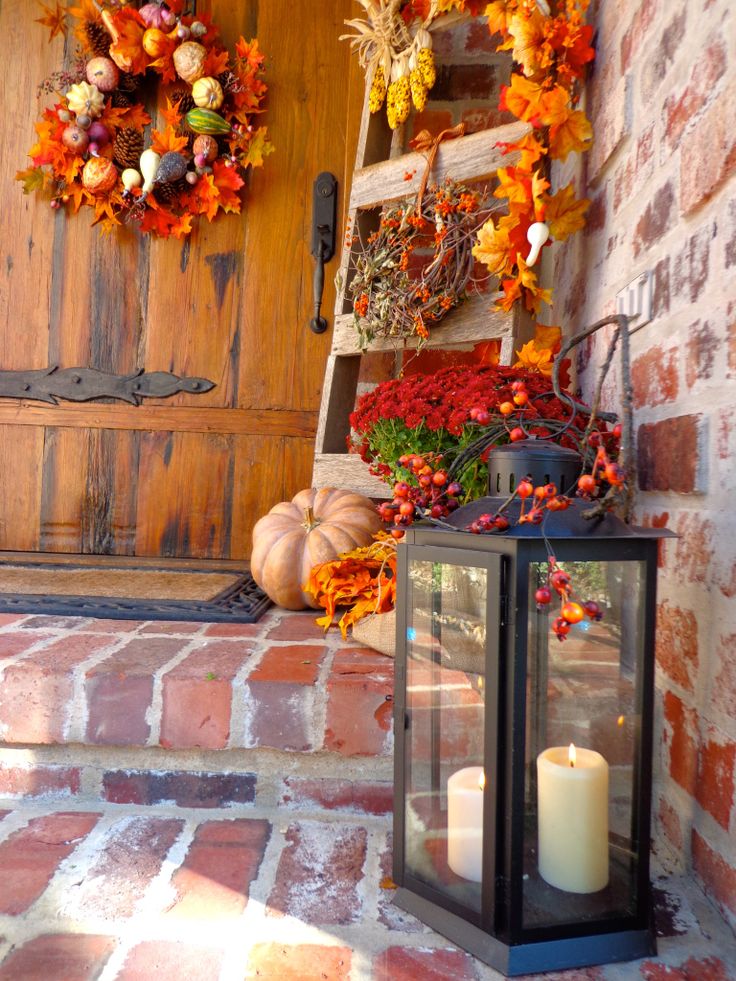
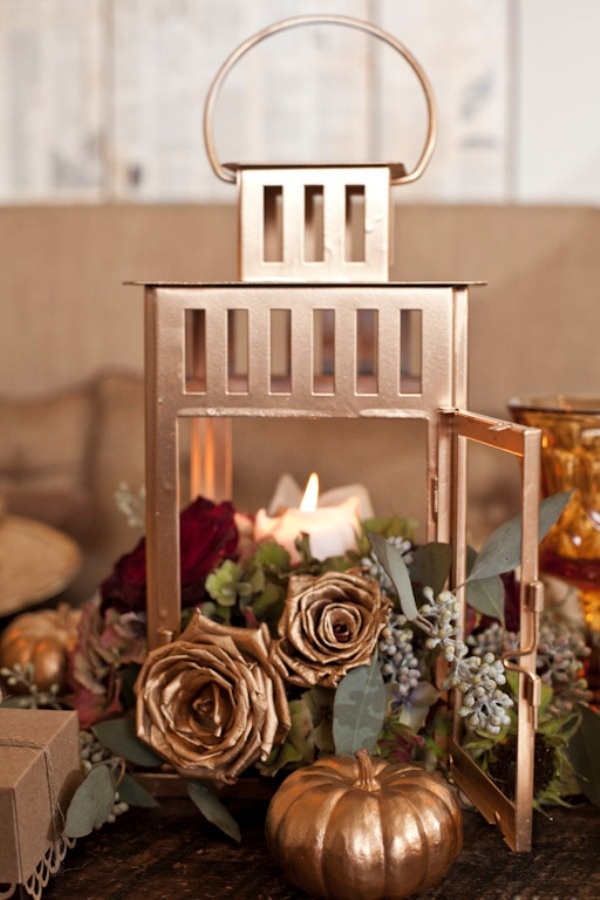
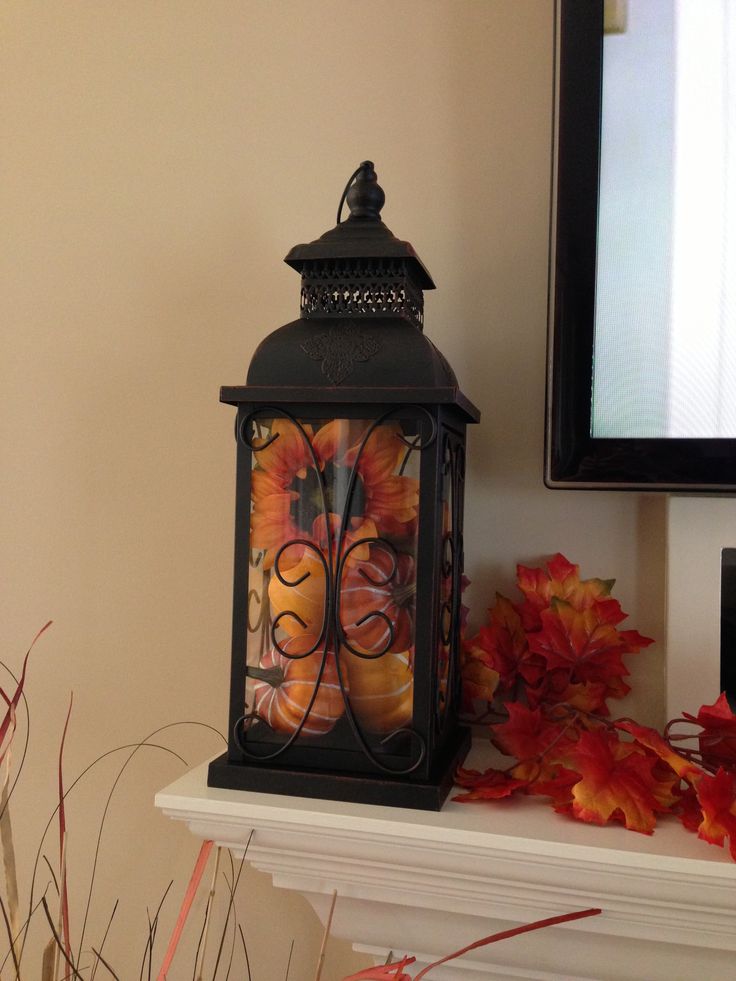
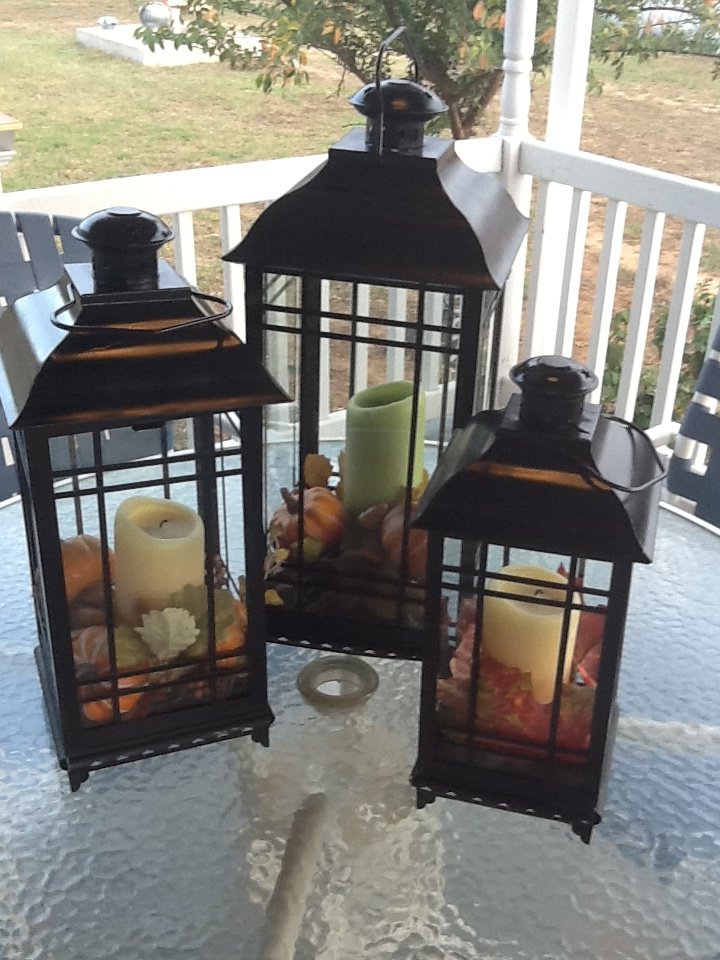
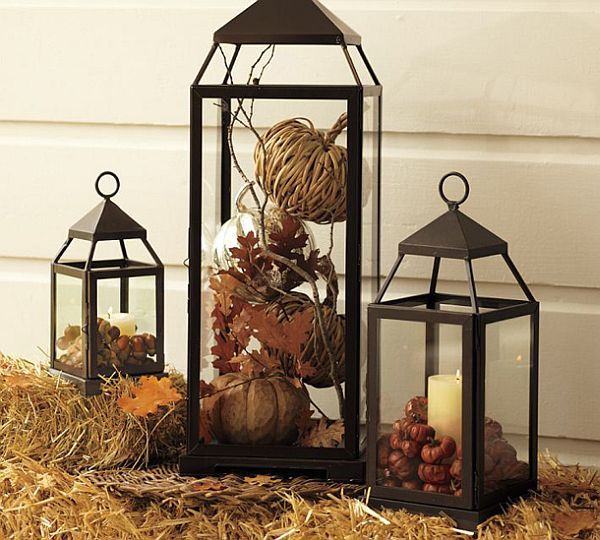
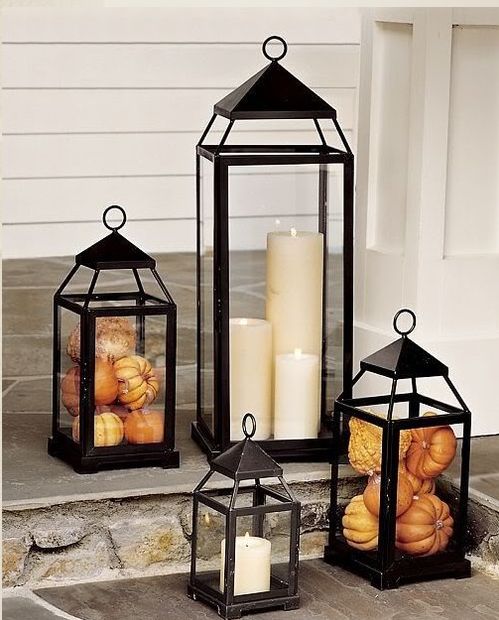
Metal frames in black, bronze, or weathered zinc feel architectural. Pair them with ivory candles and a few dried stems tucked at the base—not stuffed inside where flame risk rises.
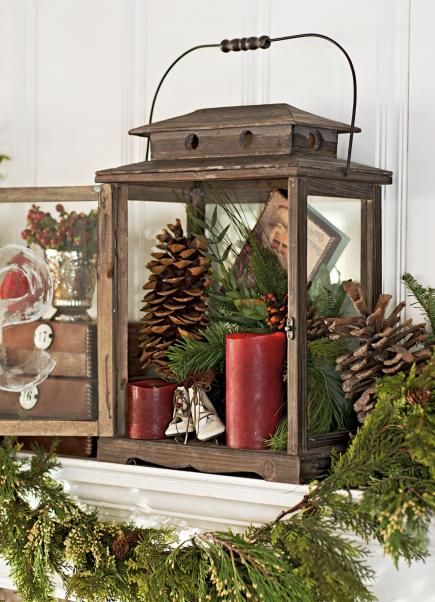
Wood and lantern hybrids lean rustic: think distressed finishes, rope handles, or barn-inspired proportions. They sit well on porches beside mums and hay bales without looking costume-y if you keep colors muted—cream, rust, olive, deep green.
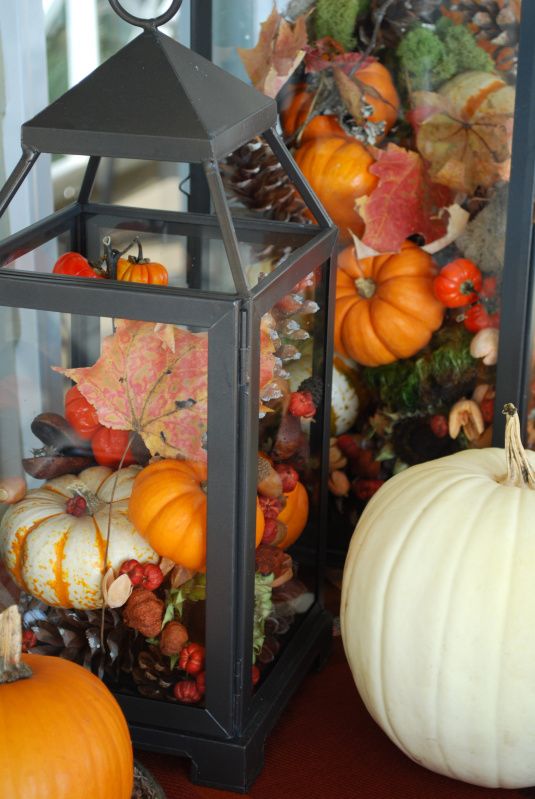
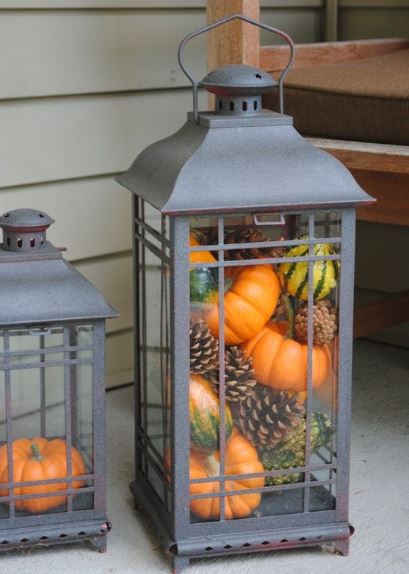
Glass hurricanes and apothecary shapes show off what you put inside: pinecones, acorns, cinnamon sticks, or battery candles nestled in lentils or moss. Clear glass keeps the look airy; smoked glass deepens the mood for evening.
Woven and paper lanterns (used carefully, usually with LEDs) add texture. Outdoors, protect paper from rain; indoors, hang them where they will not brush curtains or heat sources.
Porch and entry placements
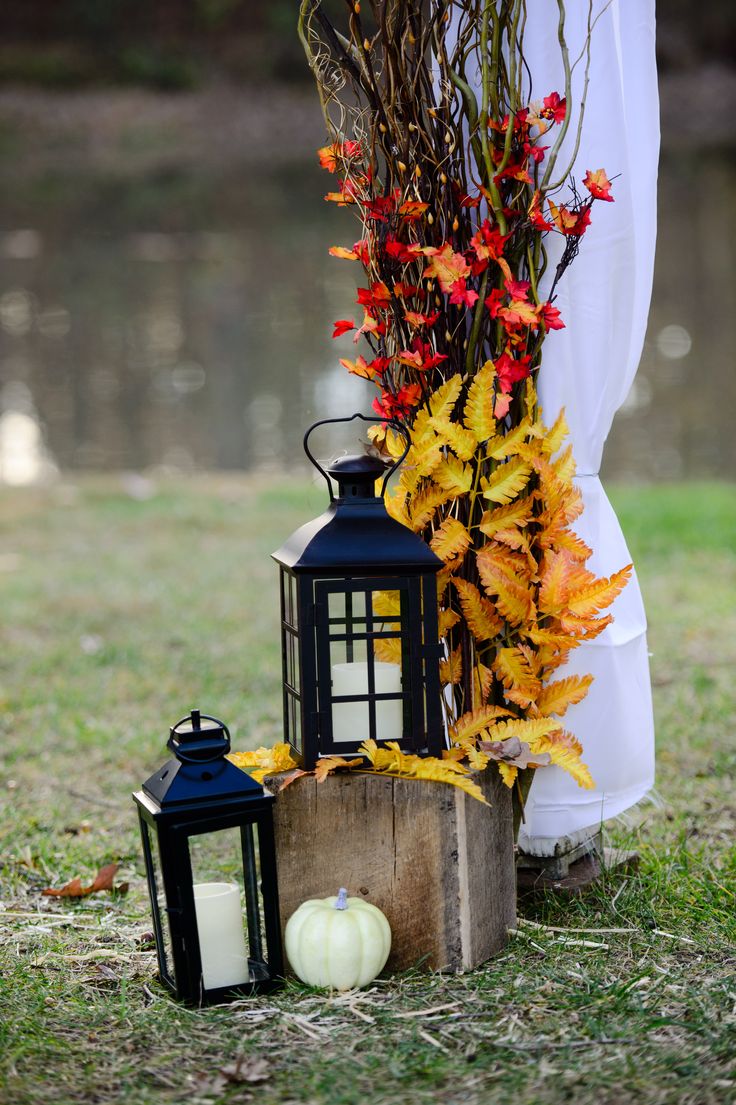
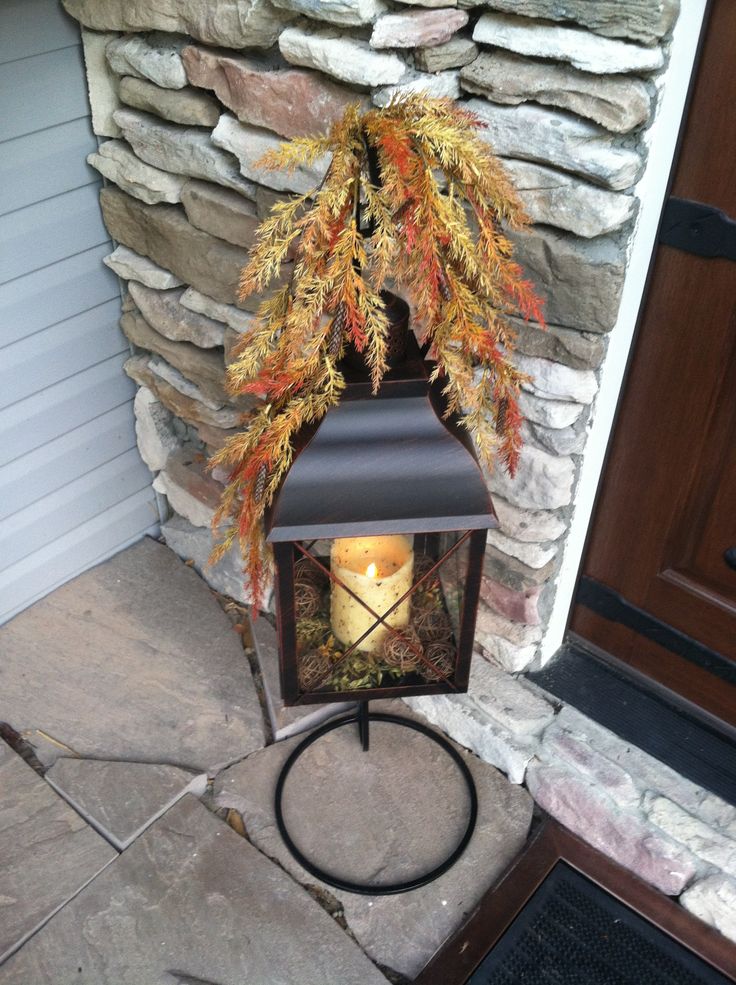
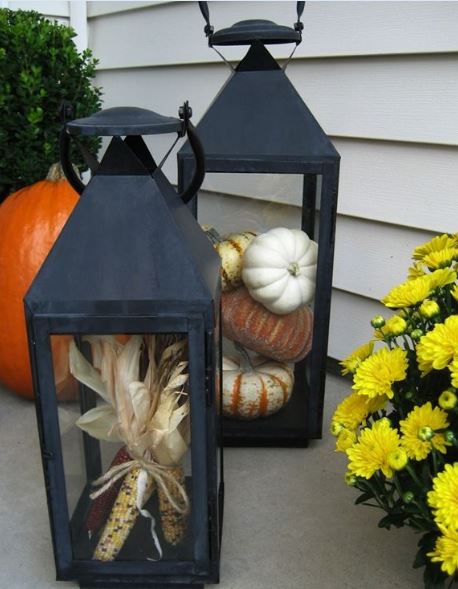
The front entry is the classic lantern stage. Flank the door with a matched pair for symmetry, or break the rule with one tall lantern and a shorter companion clustered with a pumpkin and a pot of chrysanthemums. Keep walkways clear: lanterns should guide feet, not trip them.
Steps work when each lantern sits fully on a tread with room to pass. Battery candles are wiser outdoors than open flames—wind and pets do not negotiate. If you use real candles on a covered porch, never leave them unattended and keep them away from dried wreaths and leaf piles.
Hang lanterns from shepherd hooks or sturdy hooks only if the hardware is rated for the weight and the swing path clears heads and doors. A lantern that bonks every guest is décor fighting the house.
Indoor rooms: fireplace, table, and corners
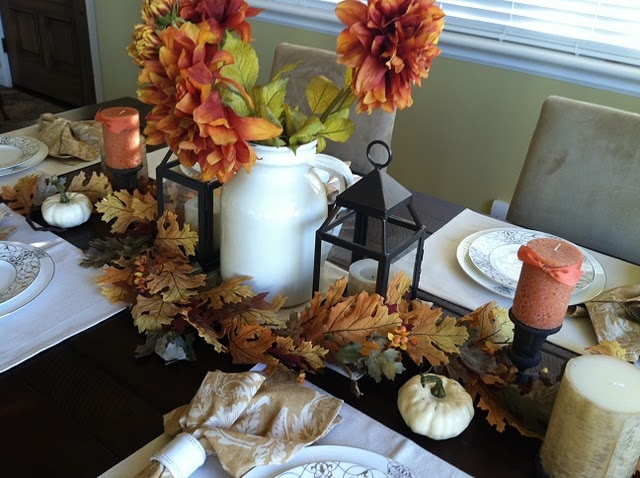
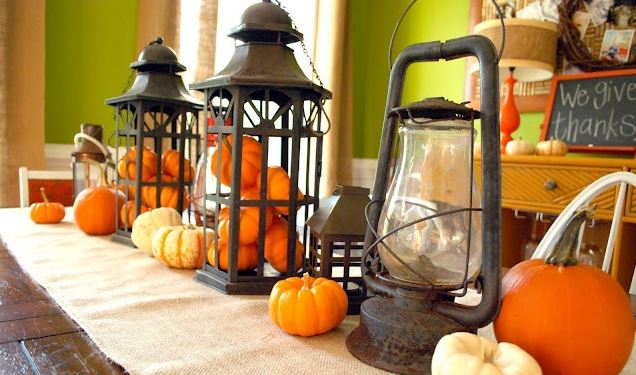
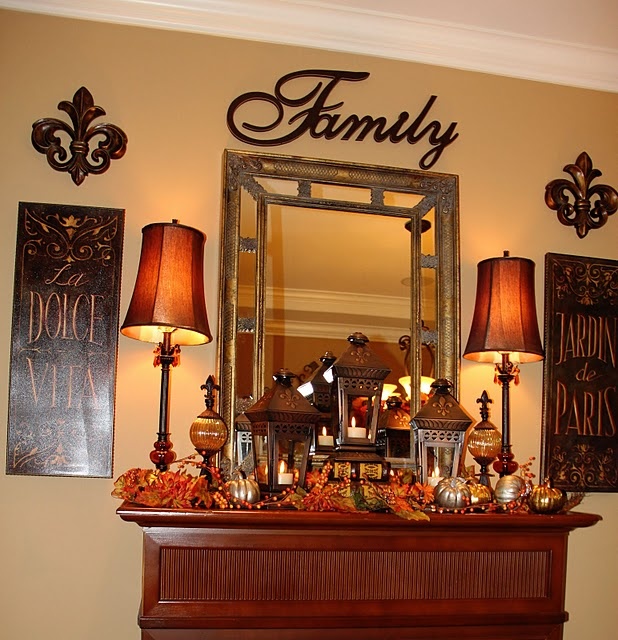
Inside, lanterns replace the need for a dozen scattered candles. On a mantel, stagger two or three heights and leave negative space so the arrangement breathes. On a dining table, a low lantern (or a pair) keeps sightlines open across the meal; tall lanterns belong on sideboards instead.
Living-room corners that go dark after sunset love a floor lantern with an LED pillar. Reading chairs gain atmosphere from a medium lantern on a side table—just keep cords and open flames away from throws.
Bathrooms and hallways can take a single small lantern with a battery tea light for guest season. The goal is a trail of soft light from door to gathering room, not a haunted-house obstacle course.
What to put inside (safely)
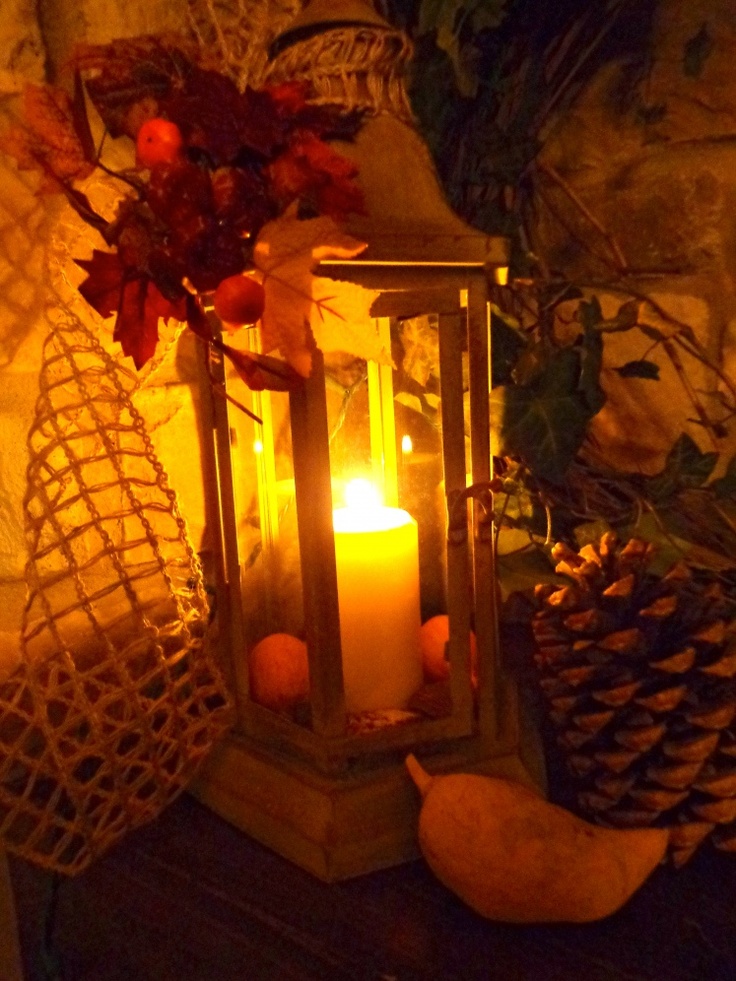
Fill is half the look. For flame candles, keep the chamber clear of dried leaves and fabric. For LED candles, you can nestle filler around the base: moss, river stones, cinnamon sticks, wheat stalks cut short, or a shallow layer of corn kernels. Vary texture more than color so the palette stays calm.
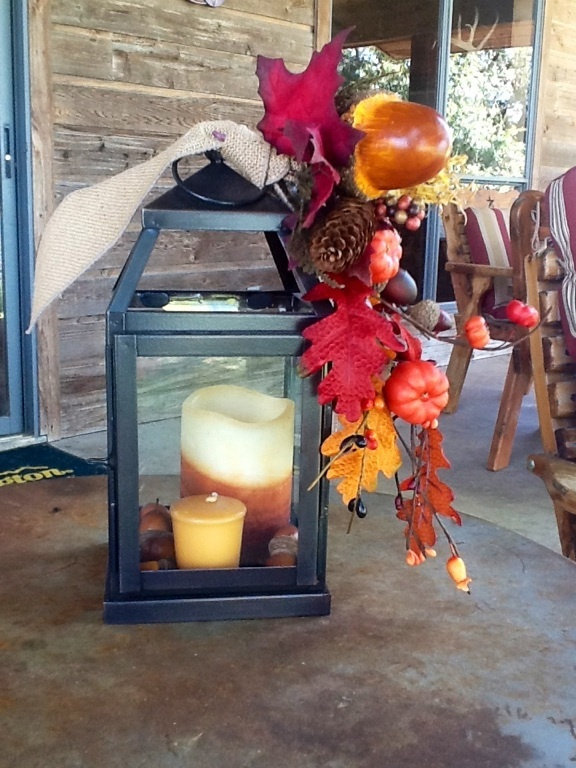
Mini pumpkins and gourds belong beside lanterns more often than inside them—heat and moisture are unkind to produce in enclosed glass. A sprig of eucalyptus or a ribbon tied to the handle can finish the piece without blocking light.
Color stories that hold together
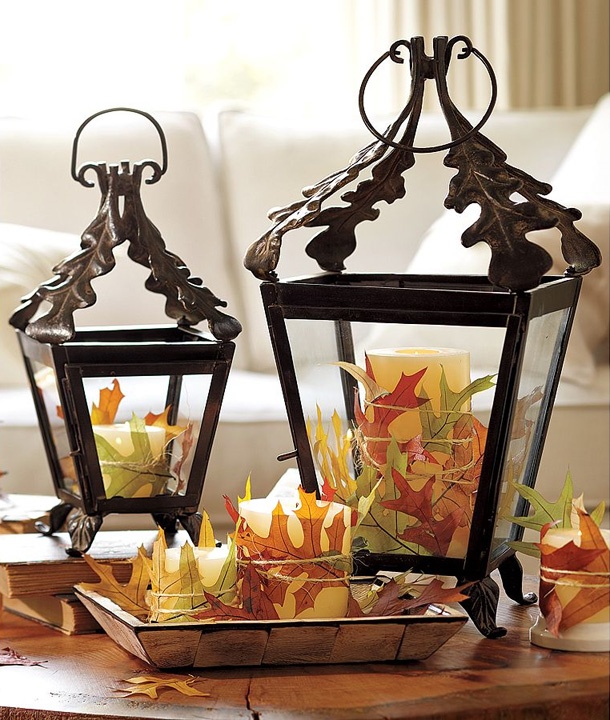
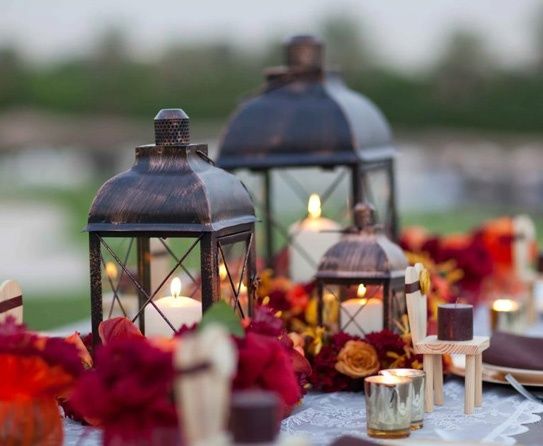
Pick one story and repeat it. Harvest neutrals: cream candles, natural wood, soft gray metal, dried wheat. Deep autumn: black frames, burgundy ribbon, copper accents, dark green foliage. Orchard bright: clear glass, orange mini pumpkins nearby (not touching flames), green leaves, white lights.
Too many stories at once—glitter, skulls, plaid, and mercury glass all competing—reads as a store display, not a home. Edit. Three materials repeated across porch and living room will look more expensive than twelve one-off novelties.
DIY and thrift without the clutter
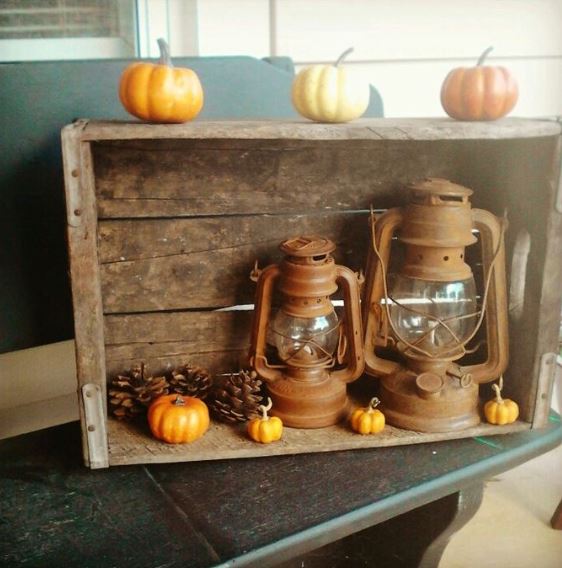
Thrifted lanterns are often sturdier than seasonal impulse buys. Clean glass with vinegar, touch up rust with matte spray if needed, and swap in fresh candles. Mason-jar lanterns with wire hangers still work for casual porches; elevate them with consistent ribbon color rather than mixing every craft-store print.
If you craft paper or leaf wraps for glass, use LED lights only. Real flame plus dry leaves is a fire drill waiting to happen. Spray adhesive and Mod Podge projects should cure fully outdoors or in a ventilated space before they come near any heat source.
Safety checklist before you light up
- Prefer LED candles outdoors and anywhere pets or kids roam.
- Keep real flames away from curtains, dried wreaths, and leaf filler.
- Stable footing on steps—no wobbly edges.
- Extinguish or switch off before bed and before leaving the house.
- Check battery compartments for corrosion when storing until next year.
Storage between seasons is part of the craft. Empty batteries, wipe glass, wrap fragile panes in newspaper, and keep ribbons and fillers in a labeled bin so next October starts in minutes. A lantern that survives packing is worth more than a trend piece that cracks in the attic.
Start with two placements—door and dining table, or mantel and porch—and live with them a week before buying more. When the light pools where you actually sit and walk, the season shows up without another shopping bag.

Comments
Continue reading
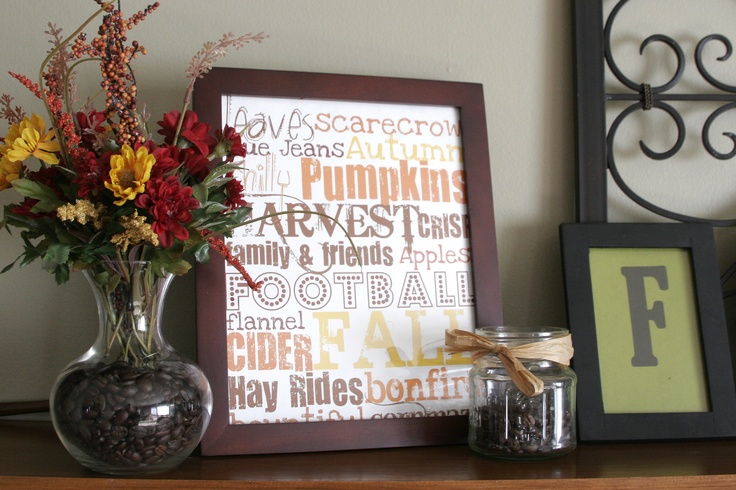
Fall Mantel Decor Ideas with Pumpkins, Candles, and Leaves
Style a fireplace or buffet mantel for autumn with pumpkins, nuts, candles, and foliage—height, color lanes, and a short checklist for small or long shelves.
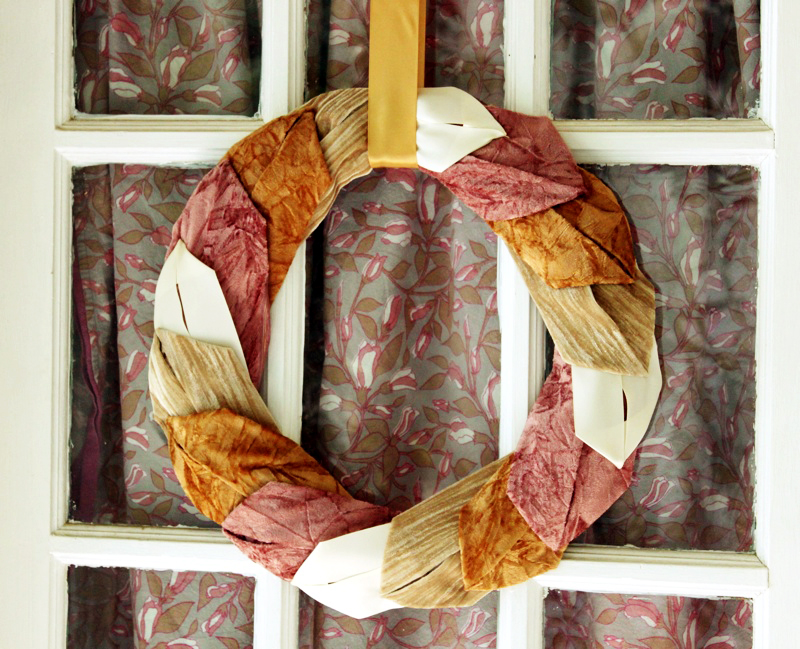
14 DIY Autumn Wreath Tutorials for Fall Doors and Entries
Fourteen autumn wreath projects—yarn argyle, burlap, magnolia, felt leaves, cork, foraged finds, and more—with materials and steps for each.
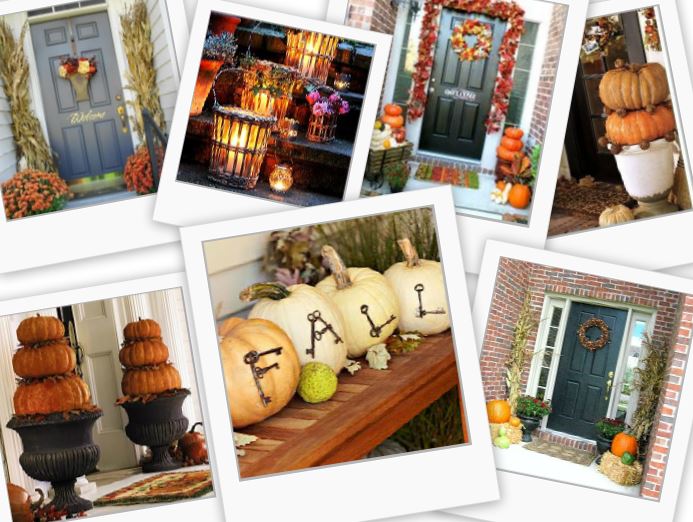
Front Porch Decorations for Autumn
Shape an autumn porch with height, earth tones, mums, pumpkins, and natural texture—gallery ideas that keep the path clear and the welcome warm.