
Intricate Money Origami Models by Won Park: Dollar-Bill Craft
Won Park—the Honolulu money folder—turns dollar bills into animals, insects, and objects with no cutting or glue, aligning print and crease into sculpture.
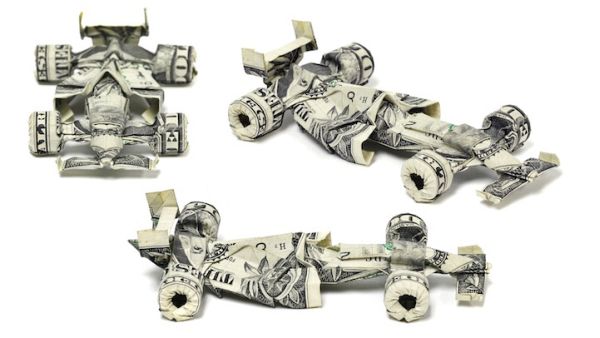
Won Park folds United States dollar bills into animals, insects, vehicles, and everyday objects with a precision that makes currency look like chosen art paper. Based in Honolulu and often called “the money folder,” he works inside origami’s classic discipline—no cutting, no gluing—while accepting the stubborn limits of a bill: fixed size, printed face, fibrous strength. The models in this gallery show how far those limits can be pushed when the fold lines are engineered as carefully as the subject.
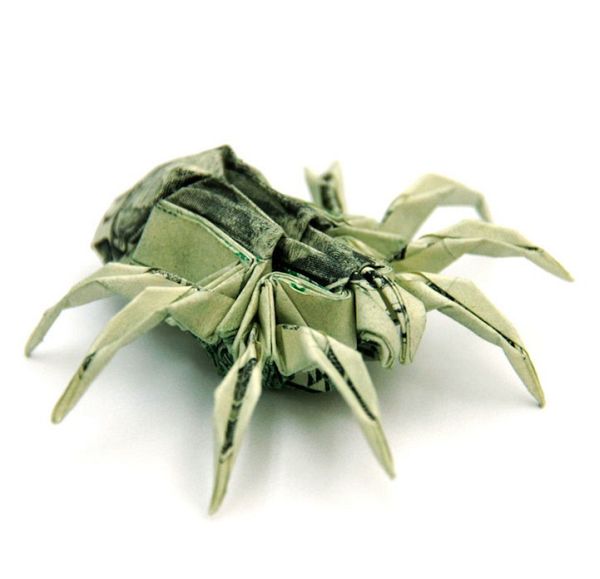
Money origami sits at a lively intersection of craft and wit. The medium is familiar in every wallet; the result is not. A koi whose scales seem drawn from the bill’s own engraving, a jacket with lapels suggested by portrait edges, a spider spanning more than one note—each piece asks you to forget spending power for a moment and see paper engineering instead. That shift—from tender to sculpture—is the editorial heart of the work.
Why a dollar bill works as origami paper
Won Park has described discovering the dollar as a folding medium when ordinary paper was not at hand. Currency paper is strong, slightly textured, and resistant to tearing through hundreds of creases. That toughness matters. Complex models demand repeated pre-creasing, collapsing, and shaping; ordinary gift wrap would shred under the same abuse. The bill’s rectangular proportions become a design constraint the way a square sheet is a constraint in traditional origami—except here the rectangle never changes size, so scale must come from inventiveness, not from larger stock.
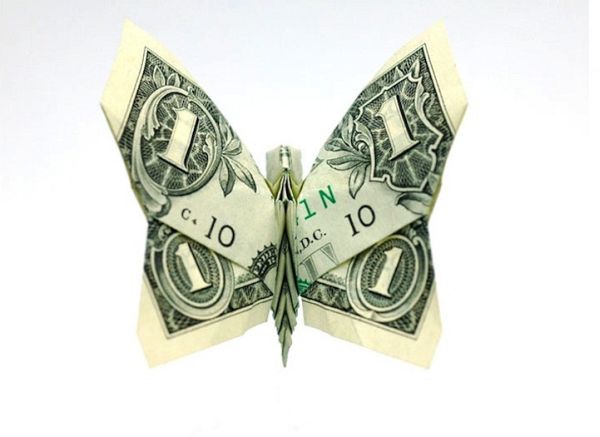
Print is not decoration to ignore. Serial numbers, borders, seals, and portrait details can be aligned to become scales, eyes, windows, or pattern. Park’s well-known koi is often cited for how the bill’s graphics fall into place as fish anatomy. That marriage of print and fold is part of the craft pleasure: the model is not only shaped paper; it is a collaboration with engraving design, hijacked for sculpture. A fold that hides Washington’s face is a different aesthetic choice from a fold that turns a seal into an eye.
Most pieces begin with a single dollar; denser subjects may use two or three bills while still avoiding adhesives. Multi-bill constructions raise engineering questions—how modules lock, how weight balances, how legs or wings hold without wire. The answers live in crease patterns and tension, not in hidden tape. When glue is forbidden, honesty becomes part of the beauty. You trust the form because every joint is paper talking to paper.
Humidity, hand oils, and soft creases are practical enemies. Folders who try money models quickly learn that crisp early stages matter; a muddy pre-crease multiplies into a soft final silhouette. Park’s finished pieces look sharp because the process respects that physics.
From childhood folds to public recognition
Won Park was born in Korea and moved to the United States as a young child. He began folding around age six, learning first from his mother, then from library books as the models grew harder. Money folding entered in middle school and became a specialty as the resilience of the bill proved ideal. Presenting work at the OrigamiUSA Convention in 2002 helped bring his dollar models to a wider folding community; complexity and reputation rose together afterward.
Books such as Dollar Origami, Extreme Origami, and later animal-focused titles extended the craft beyond gallery surprise into teachable sequences. Step diagrams for a Formula 1 car, a praying mantis, a stag beetle, or that signature koi turn spectacle into practice for folders willing to sweat the details. Publishing matters in origami culture: a model that cannot be transmitted dies as a one-off; a model that can be taught enters a living repertoire. Park’s books also document how far dollar folding can go when treated as serious design rather than party trick.
Park’s own framing is worth holding: origami as art, not merely technique. Technique is the grammar; art is the decision about subject, proportion, and which printed accident becomes intentional feature. Watching a finished dragon or race car, you are seeing hundreds of micro-choices about where volume should live and where the paper should stay flat. Those choices are why two folders can follow related sequences and still produce different character in the finished animal.
Media attention—features, book covers, short videos of folding demos—helped the “money folder” nickname stick. Visibility can flatten craft into novelty. Looking at the gallery with patience pushes back: these are not one-fold party hats. They are long sequences with failure modes, revisions, and a designer’s eye for silhouette.
Subjects, humor, and difficulty
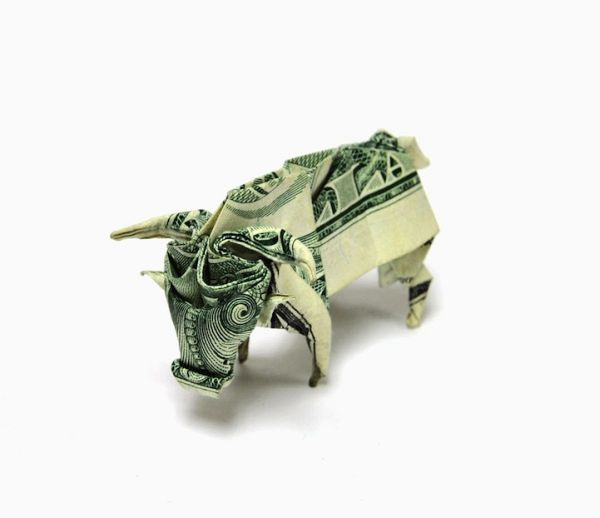
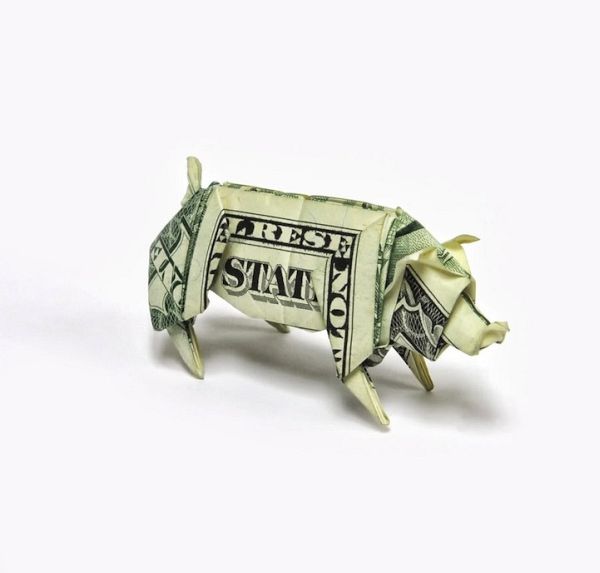
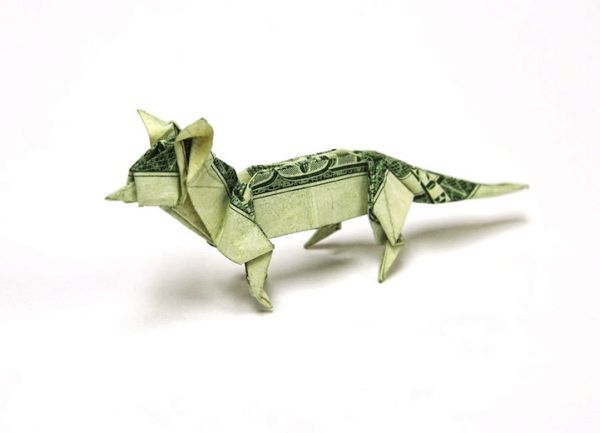
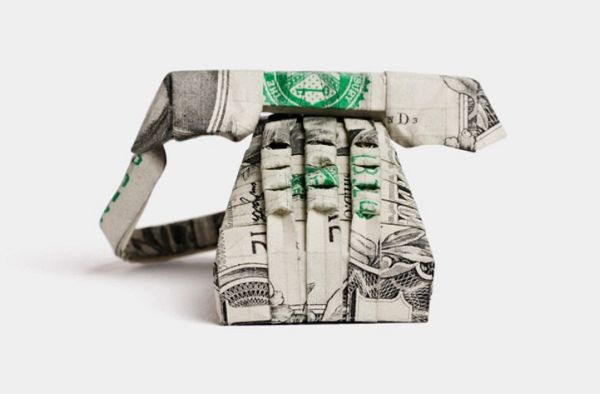
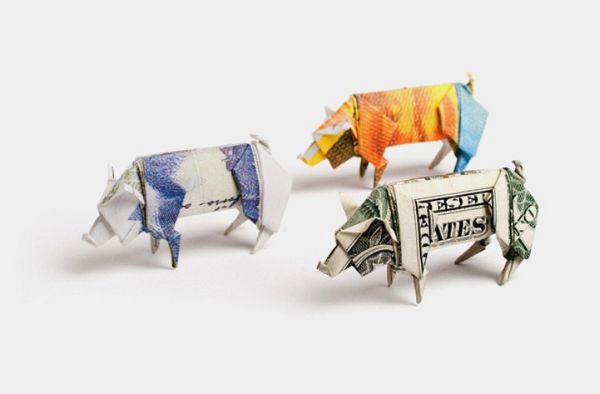
The range in Park’s money work runs from charming to punishing. Animals and insects dominate many favorites because organic curves test a stiff rectangle. Vehicles and hard-edged objects test clean geometry. Occasional mundane or comic subjects—objects you would not expect to meet in green ink—keep the practice from solemnity. Humor is built into the medium: folding money into a pig or a toilet is already a joke before the craft impresses you. The laugh and the respect can arrive in the same second.
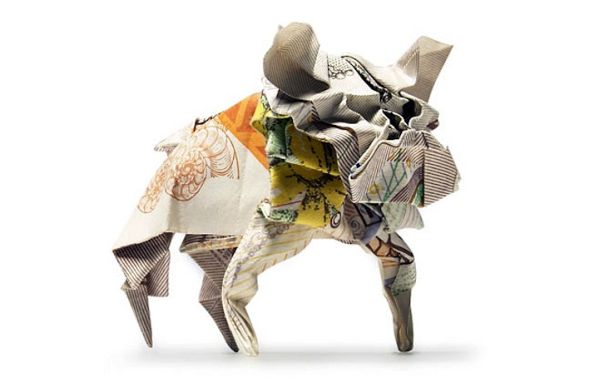
Difficulty is not only fold count. It is paper management under fatigue, humidity, and the risk of a wrong collapse late in the sequence. Currency does not forgive muddy creases the way soft kami sometimes does; edges show. Photographing the finished models against simple backgrounds, as in this set, emphasizes silhouette and print alignment—the two things a viewer can judge without knowing the crease pattern. A good photo of money origami is almost a craft critique: if the outline wobbles, you see it.
For craft readers, useful questions follow each image. Was one bill enough? Where did the portrait go—hidden in a fold or featured as a face? Which edges became limbs? How does the model stand or rest without a hidden armature? Those questions turn admiration into study. They also connect Park’s work to the wider origami community’s values: diagram clarity, fairness about materials, and respect for models that hold their shape without cheating.
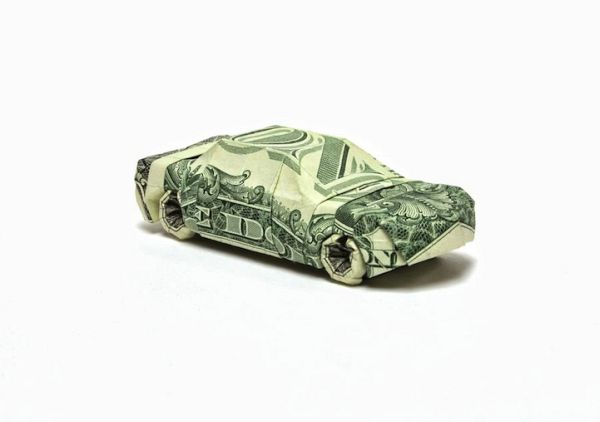
Compare a sleek vehicle with a many-legged insect in the set. One celebrates planar facets and symmetry; the other celebrates tension and tiny appendages. Both are arguments about what a fixed rectangle can still become.
Looking as a folder, not only as a fan
If you fold, start smaller than the gallery’s hardest pieces. Simple dollar folds teach tension and corner control before you attempt multi-hour insects. Use bills you can sacrifice; practice creases dull crispness, and crispness is half the beauty. Work on a clean, hard surface with dry hands. When a diagram from Park’s books disagrees with your intuition, trust the diagram longer than your impatience—money models often look wrong until a late collapse snaps them into recognition.
If you do not fold, look anyway for craft intelligence. Notice how volume is suggested with minimal paper. Notice symmetry versus deliberate asymmetry. Notice when the green of the bill is used as local color for a leaf, a car panel, or a wing. The art is thrift: maximum subject from a fixed rectangle. That thrift is a useful metaphor beyond origami—limits as collaborators rather than excuses.
Won Park’s money origami earns attention because it respects both the rules of folding and the stubborn personality of cash. Each finished model is a small argument that legal tender can be temporarily withdrawn from commerce and returned as sculpture—creases sharp, print recruited, glue never invited to cheat the form.

Comments
Continue reading
Still-Life Photography by Margareth Perfoncio
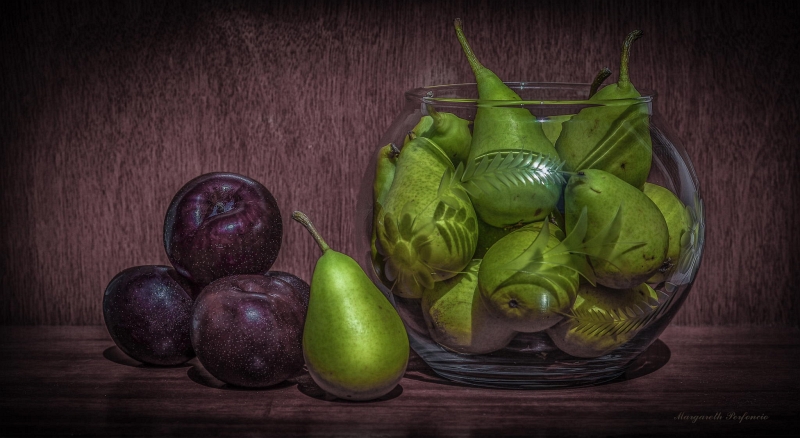
São Paulo photographer Margareth Perfoncio’s still lifes of food and flowers—Old Master light, dark wood, and tables that feel inevitable.
Meaningful Love Quotes for Inspiration (and Ink)
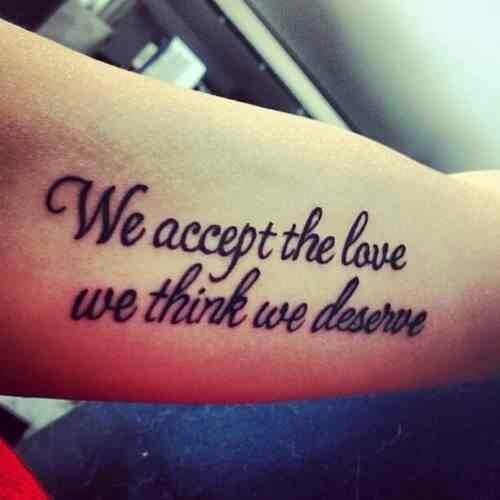
Meaningful love quotes that still feel true — short lines for tattoos, gifts, and everyday reminders, with placement and wording tips.
Christina Hess’s Animals From History: Costumed Pets as Playful Portraits
Illustrator Christina Hess reimagines historical icons as ornate animal portraits—Elvis Petme and friends—mixing puns, costume detail, and soft history lessons.