
Imaginative Moon Photography by Adrian Limani
Albanian photographer Adrian Limani poses his brother against the full moon so silhouette and lunar disk become a shared game—holding, leaping, and slam-dunking the night sky.
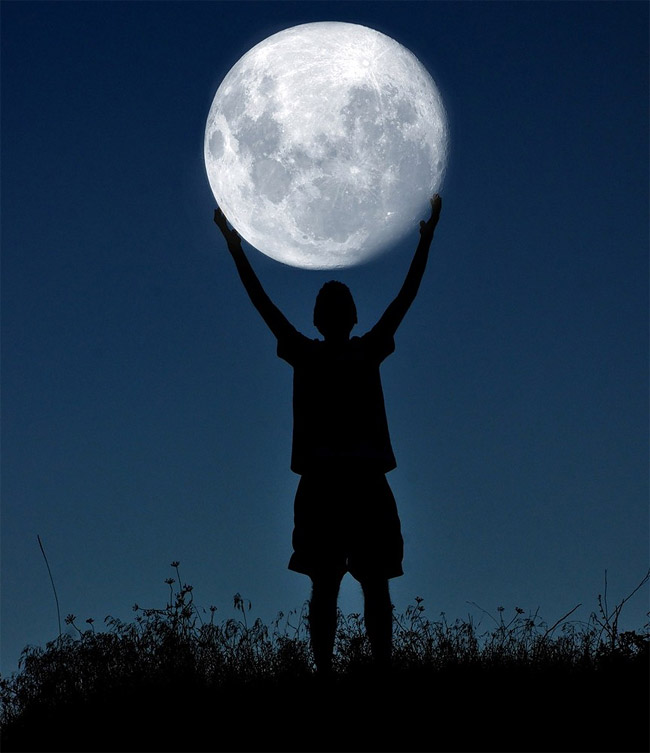
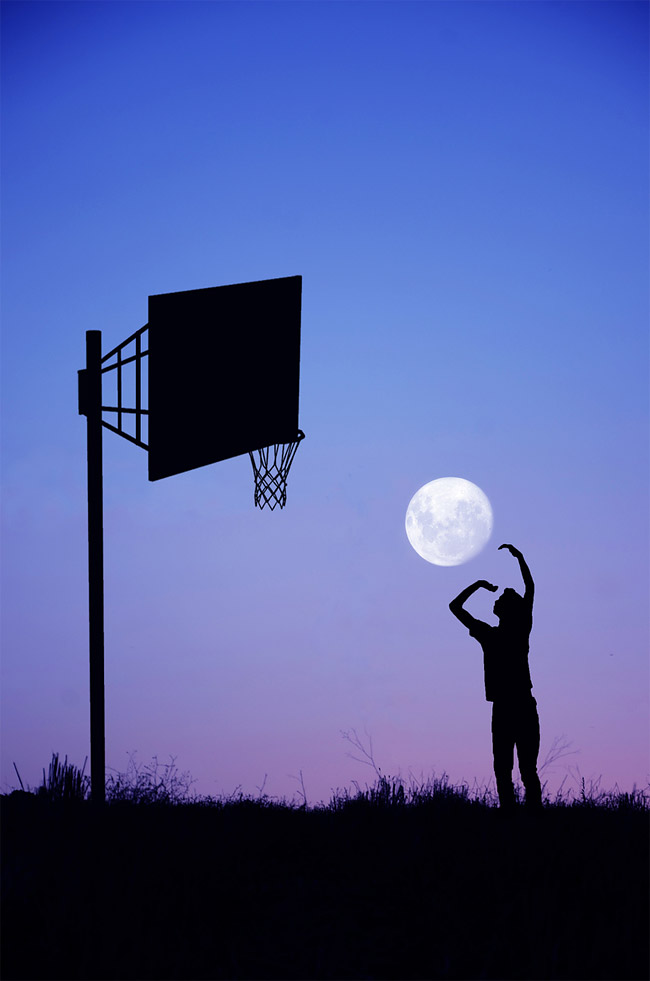
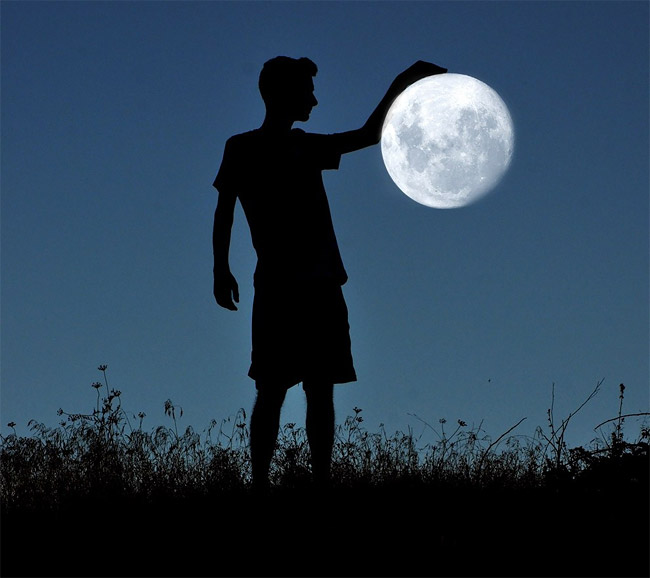
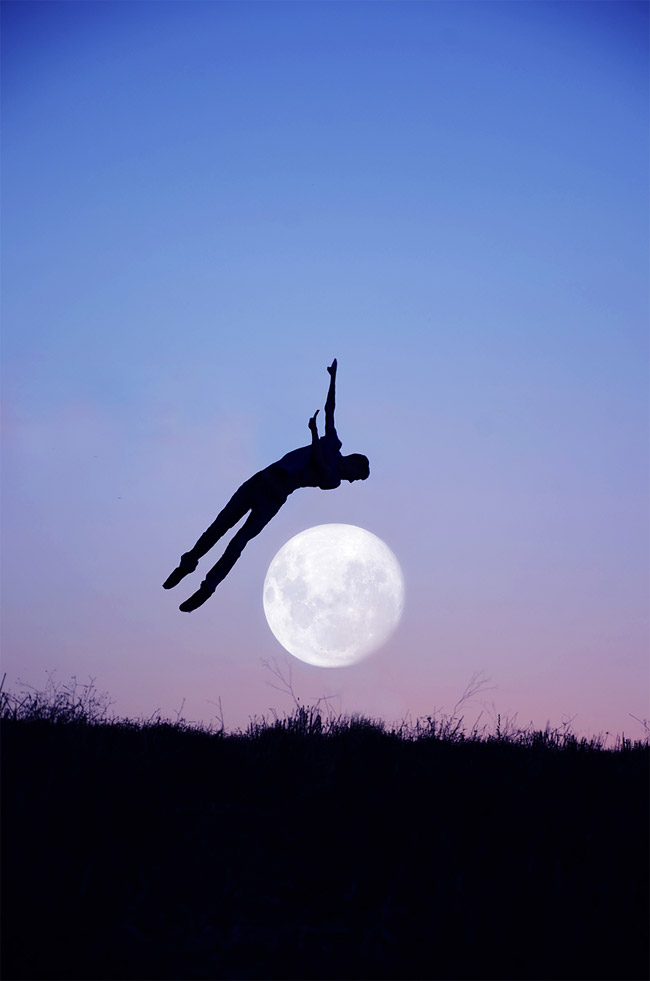
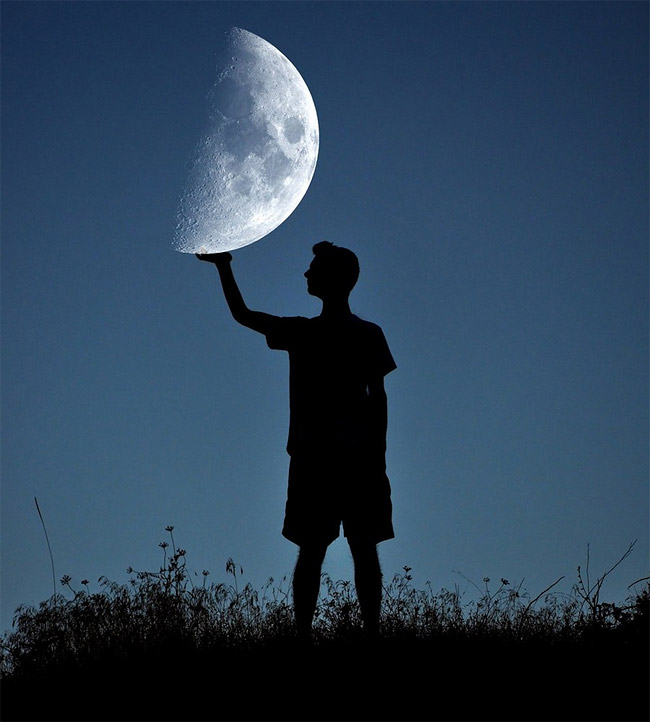
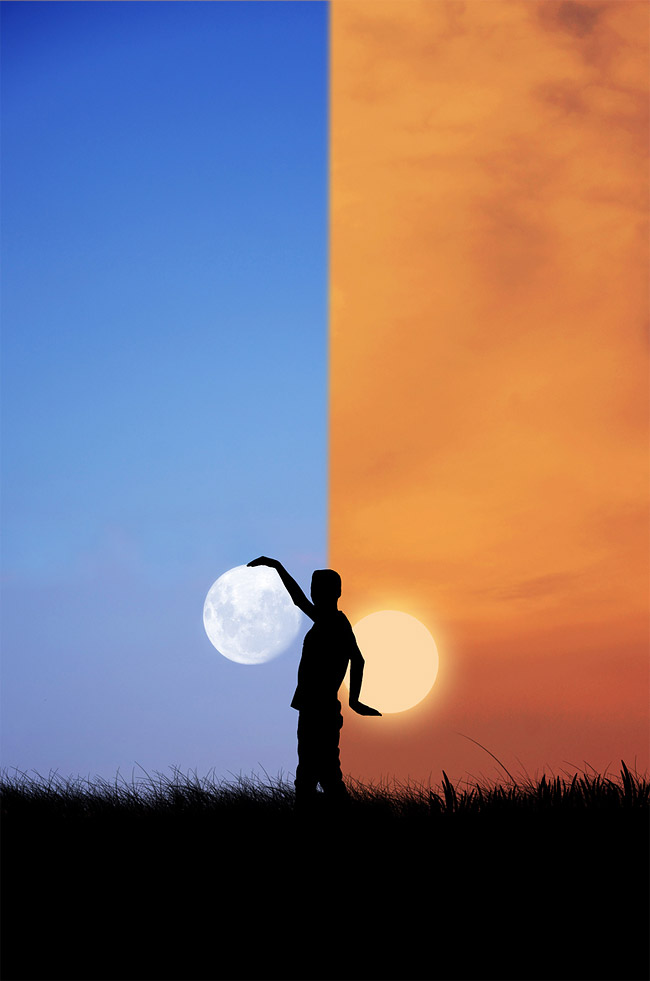
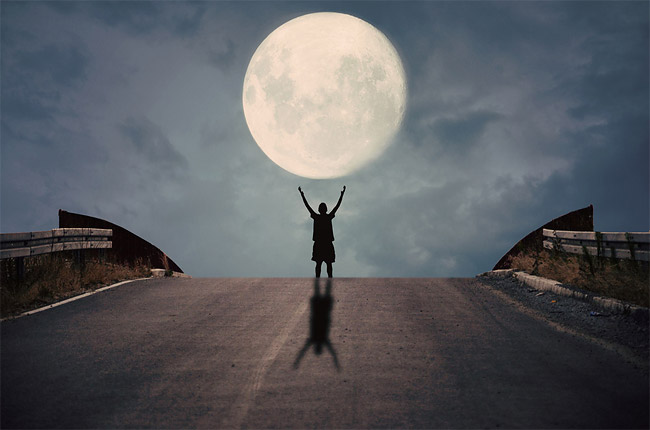
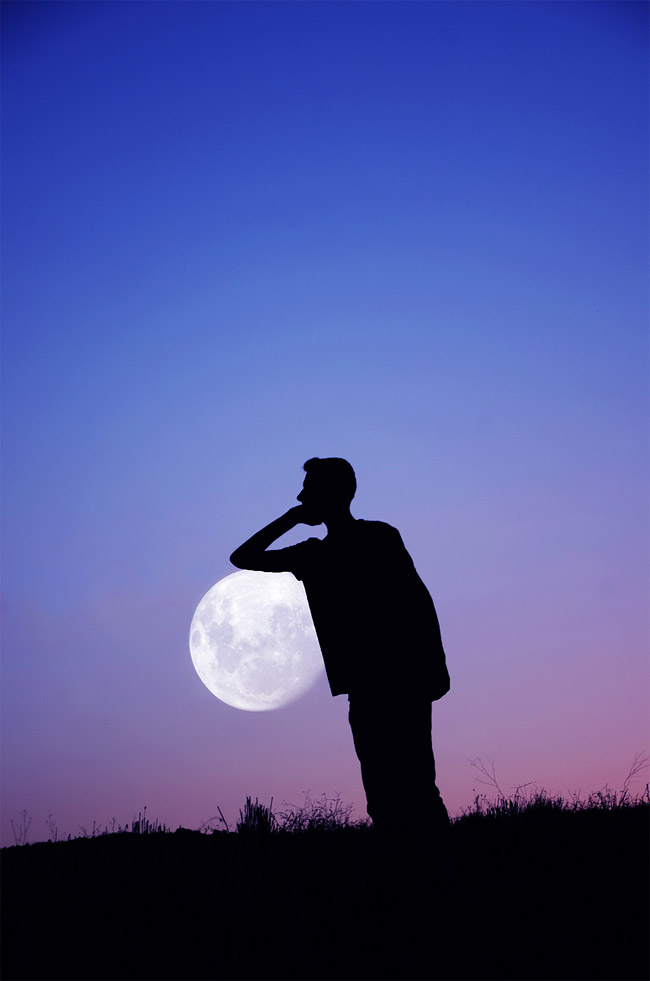
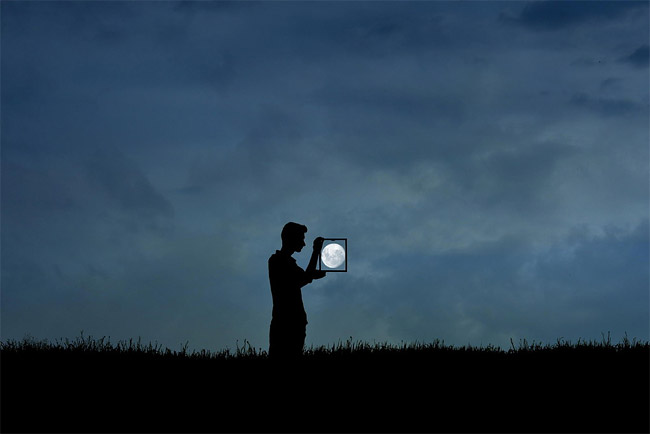
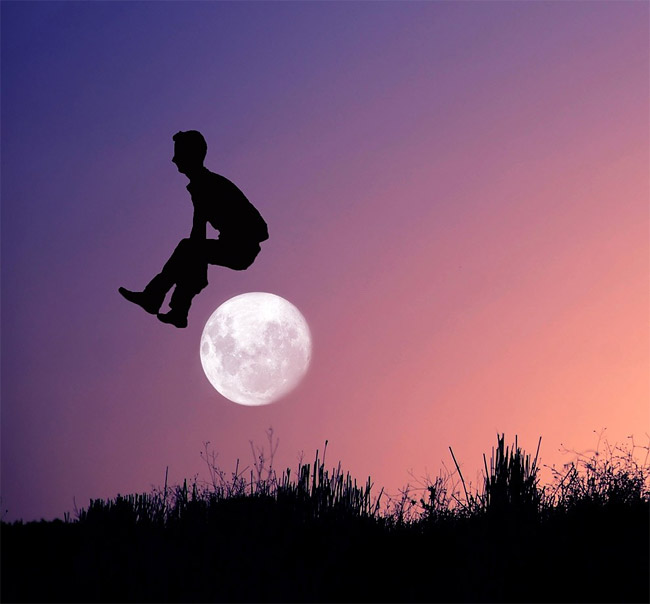
Adrian Limani turns the full moon into a prop you can almost borrow. In his best-known imaginative moon photographs, a silhouetted young man—his younger brother—holds the lunar disk above his head, leaps over it, leans on it like an armrest, or plays basketball with it as if gravity had agreed to a joke. The pictures are optical illusions built from timing, distance, and clear night air rather than from a CGI render farm. They look playful because they are. They look impossible because the scale of the moon meets the scale of a human body at just the right instant.
Limani is an Albanian self-taught photographer and fine art artist whose moon series, often discussed under titles like Moon Game, circulated widely in the early 2010s across design blogs, science-curious sites, and photo communities. He has described living somewhere you cannot do much, so imagination becomes a way to cross borders. The moon series is that statement made visible: limited location, unlimited game, one bright circle, and a collaborator willing to jump.
Brother, ball games, and a lunar cast
The model is family. Using his younger brother keeps the collaboration informal and athletic—poses read as play, not as fashion direction. Limani has said ball games inspired the concept of playing with the moon. Once that idea locked, the moon stopped being only a pretty disk in the sky and became a basketball, a hurdle, a held object, a thing you could dunk or balance. The series thrives on verbs. Each frame answers a slightly different question: Can you rest on it? Jump it? Palm it? Shoot it through an invisible hoop?
Many frames were made around September and October 2012 in Raince, Serbia, working with the Harvest Moon and Hunter’s Moon. Weather cooperated: clear skies gave him a clean lunar circle and serene negative space. He has emphasized weather as a crucial element. Without clarity, the illusion softens into mush and the joke loses its outline. With clarity, silhouette and disk snap into a single graphic sentence you can read across a room.
How the illusion actually works (without killing the magic)
These photographs do not require you to believe someone physically lifted the moon. They require alignment. A person in the foreground, placed carefully relative to a distant moon, can appear to touch, hold, or jump the bright circle. Exposure choices keep the figure as black cutout while the moon stays luminous. The brain does the rest, marrying two scales that do not belong together in ordinary experience.
What makes Limani’s versions stick is inventiveness inside that simple machine. One trick repeated becomes a meme that dies in a week. A sequence of variations becomes a world with rules. Holding, leaping, resting, dunking—each pose rewrites the moon’s job description. The series feels entertaining because it keeps finding new verbs for the same noun, and because the brother’s body language sells commitment. Half-hearted pointing would look like a tourist snapshot. Full athletic commitment sells the game.
Practical ingredients behind the look:
- Silhouette discipline — the body reads as icon, not as portrait detail or fashion catalog.
- Precise relative scale — moon size in frame matched to gesture size so contact feels plausible.
- Athletic timing — jumps and reaches caught at peak readability, not mid-stumble.
- Clear-sky priority — haze would blur the joke and muddy the disk’s edge.
- Narrative play — each shot implies a rule of a private game you were not invited to, but can still enjoy.

Limani’s stated rules of originality
In interviews around the series, Limani returns to a few durable ideas. He likes to create his own rules as a path to originality. Reality is what we see; imagination is what we put into the work. Limitations in photography, he argues, live mostly inside the photographer. Music and movies feed inspiration. Those comments fit the moon pictures unusually well: the optical technique is available to many night shooters; the playful grammar—the decision to treat the moon as sports equipment—is his.
He has also offered a sharper line about pleasure and embarrassment—“Most things in life are moments of pleasure and a lifetime of embarrassment; photography is a moment of embarrassment and a lifetime of pleasure.” Read beside the moon series, it sounds like a field note. Asking a brother to leap against the night sky for a weird idea is briefly awkward. The resulting image keeps paying out delight long after the cold hands and repeated takes are forgotten.
Why these shots feel different from “pretty moon” photography
Landscape moonrise pictures sell awe: color gradients, reflections on water, a big disk over a mountain ridge. Limani’s imaginative moon photography sells interaction. The moon is not only scenery; it is a co-actor. That shift matters for how people look at the work. Viewers often want the trick explained and the play enjoyed. Awe is still present—the disk is gorgeous—but comedy and kinship sit in the foreground. You smile before you analyze.
Compare that approach to painterly surreal composites elsewhere in fine art photography, where skies and figures may be assembled in software for dream atmosphere. Limani’s moon game is mostly optical and performative. The night is real. The brother is real. The impossibility is a matter of viewpoint and timing. That keeps the series light on its feet and easy to remember: slam-dunking the moon is a sentence you can tell someone at lunch without needing an art-theory preface.
Field notes if you want to try a respectful homage
Do not copy poses frame-for-frame as if the series were a checklist. Do learn the constraints that make the illusion readable:
- Check moonrise and moonset timing; pick a clear night and arrive early enough to adjust.
- Scout a place with a clean horizon or open sky behind the figure so edges stay sharp.
- Use a longer lens or careful distance to enlarge the moon relative to the person.
- Expose for silhouette; protect the lunar disk from blowing out into a featureless blob.
- Direct gestures that read in profile—arms and legs matter more than facial expression.
- Shoot many frames; peak jump moments vanish, and small alignment errors kill the gag.
Expect failure. Clouds arrive. Timing slips. The moon looks tiny. The series that looks effortless online is the public tip of patient nights and a sibling willing to jump again.
Where the moon game sits in a wider practice
Limani’s later recognition and other collections—dreamy worlds, silhouettes, experimental work shown internationally—show that Moon Game was a breakthrough concept, not a one-theme career cage. Still, this page’s job is the moon play: imaginative photographs where a person treats the lunar disk as equipment for joy. That topic needs no inflation into a full awards encyclopedia. The frames already argue for curiosity, collaboration, and the usefulness of inventing your own rules when the landscape feels small.
Next clear full moon, look up and ask what game it could join if someone stood in the right place. Adrian Limani already answered with a brother, a camera, and a night willing to cooperate—and the pictures still look like they are having more fun than night photography is usually allowed.

Comments
Continue reading
Laurent Laveder’s Moon Games: Playful Lunar Photography
A gallery feature on Laurent Laveder’s Moon Games—forced-perspective photographs where people appear to hold, throw, and play with the real rising moon.

Dramatic Photo Art by Sukron Ma’mun (Ipoenk Graphic)
Cirebon, Indonesia photographer Sukron Ma’mun uses theatrical natural light to frame village life, play, and place in lyrical photo art.

Bird’s-Eye Views: Florian Beaudenon’s Instant Life
Paris photographer Florian Beaudenon’s Instant Life series captures people in their rooms from above—intimate, collaborative overhead portraits of everyday joy.